Musical Instruments & Listening
Identify the instrument in a recorder replacement joint enquiry
A recorder replacement joint enquiry identifies one instrument within a shared purchase before a component answer is applied to another member of the offer.
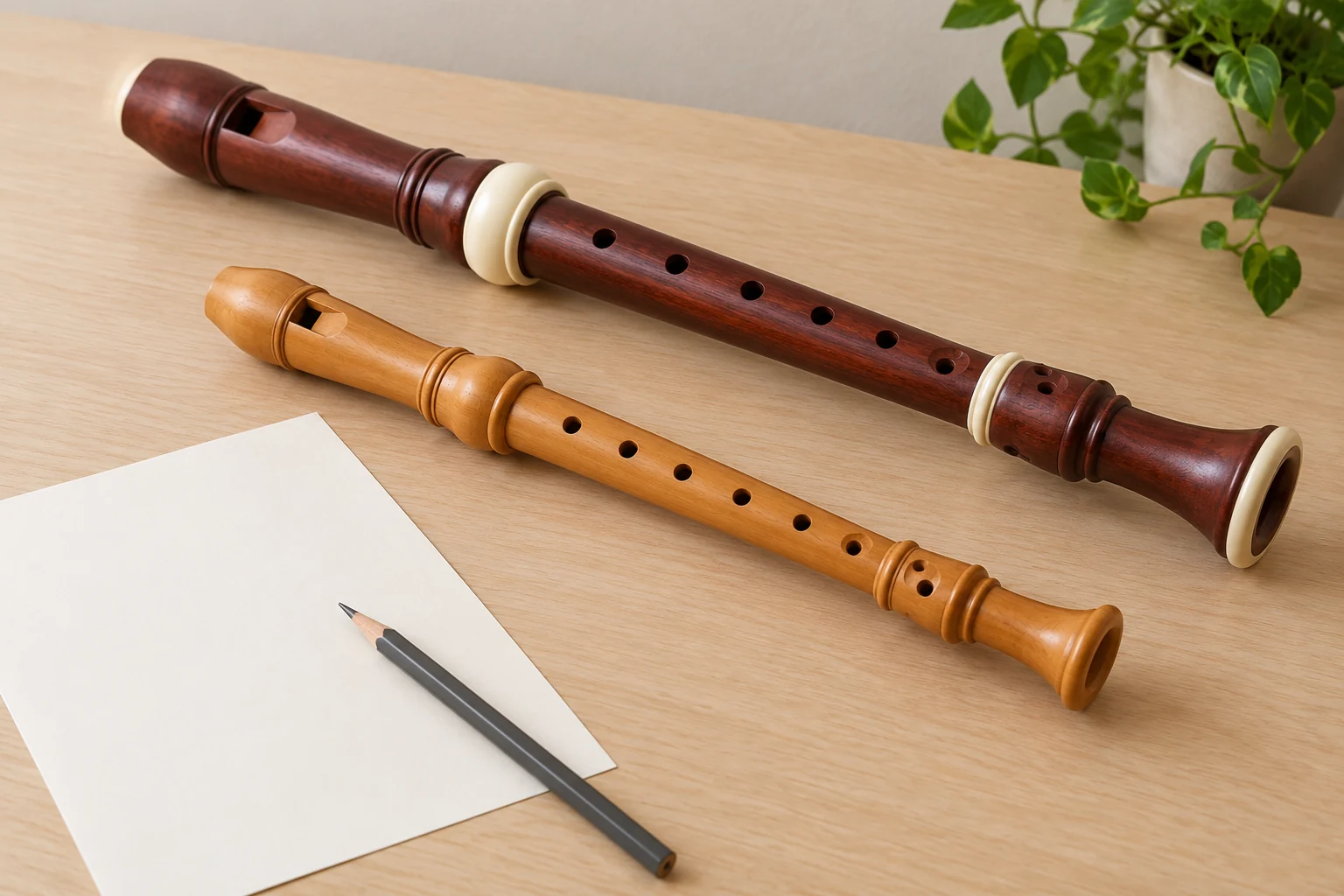
A recorder replacement joint enquiry needs to identify the particular instrument, even when you already have its order reference. One purchased offer can describe more than one recorder. Asking about a part for that order leaves the intended instrument unspecified. Keep the shared purchase reference, then distinguish the member of that purchase and the component you actually mean.
The Berkeley recorder offer describes an F alto Baroque recorder with a C solid-maple soprano recorder. Its gallery includes two different-looking instruments, cases and views of separate components. The description identifies instruments within one offer, without establishing a replacement joint reference, interchangeability or a complete accessory inventory. Do not turn their shared appearance in the gallery into a part-matching claim.
The Westco WEPRE9201BN soprano recorder offer describes a set of six EA instruments. Its two gallery images show one recorder with a rod and six repeated recorders with rods. That arrangement differs from an offer naming alto and soprano instruments. The native description supplies no replacement-joint specification, key or fingering system to transfer into this enquiry.
Keep the order and instrument references distinct
Begin with the record you actually have. An order confirmation can identify a purchase, while a product page identifies the offer discussed there. Neither automatically gives every supplied instrument its own individual identifier. Retain the original reference as the route back to the purchase, and describe which instrument within it the replacement question concerns.
If you own the instruments, use their available identification and documentation. If you are only investigating an offer, state that. The supplier needs to know whether you are identifying an actual delivered item or asking what a future order would provide. Keep that distinction visible before discussing a candidate component. A shopping photograph and your own instrument are different starting points.
Do not invent a manufacturer serial number to make your record look complete. You can give an instrument a local reference for the enquiry, provided you identify it as your own label. A local label helps people discuss the same object. It does not establish a model, revision or supplier-approved part specification that the instrument itself has not supplied.
Identify the member of a mixed instrument offer
The Berkeley description names both F alto and C soprano instruments. Preserve those terms when asking which supplied member the answer concerns. The larger and smaller examples in a photograph can help you point to an object, but this guide does not use their relative size to verify pitch, material or a joint specification. The source wording and an actual item’s identification remain separate evidence.
If an enquiry begins from the online offer, explain which of the named instruments you mean. If it begins from your own unit, include the information available on that unit and ask the supplier to establish its relationship to the offer. A remembered purchase description can help locate a record without proving that every later item in the room came from it.
Keep the component question attached to that member. A request about a joint for one instrument should not silently become a request about the other instrument simply because both appear under the same offer. You do not need to claim that they fit or fail to fit each other. The immediate task is to make the intended object unambiguous.
Distinguish a repeated unit from the whole pack
The Westco offer’s six-EA wording concerns the supplied set. It does not identify which individual unit a later enquiry concerns. If several delivered instruments have become separated among players, retain the particular unit’s available identification and its connection to the purchase. Do not assume the position of an instrument in a staged six-item image gives it a permanent individual number.
A local reference can help in a group setting. For example, a coordinator might call an actual unit lesson-room instrument R in their own records. Make clear that R is a local reference rather than a model suffix. If the same label is later assigned to another unit, the earlier enquiry should not automatically be treated as an answer about that replacement object.
A common model reference and an individual observation also answer different questions. The model may identify the product family being discussed; the observation concerns the particular item presented. Keep both if a supplier needs them. This article does not infer a manufacturing variation, defect or approved replacement range from the fact that a pack contains repeated instruments.
Trace a fictional request to one instrument
Imagine that Nia and Orin keep two fictional recorders under one purchase record. They use local labels R and S for their own discussion. Orin writes joint for the recorder order on a note. Nia cannot tell which instrument he means. The order reference is present, but the intended member is missing. This example supplies no real part number or fitting result.
Nia asks Orin to identify the instrument concerned. He selects R, and they retain that selection with the shared purchase reference. They do not erase S from the purchase record or relabel the whole order as R. The record now distinguishes a purchase containing two instruments from a replacement question concerning one of them. That distinction survives even if the two instruments are later stored elsewhere.
Next they clarify what Orin means by joint. They keep his original wording while asking which component it identifies. If they cannot establish an applicable component name, they leave it unnamed and ask what information the responsible supplier needs. They do not borrow a name from another instrument or remove pieces solely to make the question appear more technical.
Suppose Nia later finds a photograph showing S beside the order paperwork. That photograph does not change Orin’s selection of R. She keeps the image with its actual meaning instead of attaching it as though it depicted the instrument in question. A correct order reference can accompany an irrelevant instrument image. Check the member association before sending the enquiry.
The fictional request can now state the shared purchase reference, the intended member R and the component question that remains open. It has become more precise without obtaining a replacement or proving compatibility. The useful change is that another person can distinguish the object Orin means from the other instrument supplied in their invented purchase.
Keep the answer at the level it establishes
When a supplier identifies the offer, check whether the answer also identifies the intended member. An answer about what the whole package supplies can be useful while leaving a particular component unidentified. Keep that result at its actual level. Do not copy the package identifier into a replacement-part field merely because it is the only reference available.
If a supplier identifies a candidate replacement, retain its exact reference and the instrument it is said to address. Ask for any applicable conditions and instructions rather than supplying them yourself. This guide establishes no availability, interchange chart, joint dimensions or approval for either linked offer. A candidate can remain under investigation while the intended instrument is already clearly identified.
Separate a physical part enquiry from a lesson question
The recorder lesson guide investigates a German-versus-Baroque instructional mismatch at F. Its lesson and method comparison supplies no replacement joint specification. If a playing question remains, keep it with the actual teacher or applicable instruction. Naming the correct instrument in a parts enquiry does not establish why a note sounds different or what a learner should change.
The guitar string compatibility guide distinguishes cores, windings, gauges and end fittings for its own products. Those string properties do not become recorder-joint measurements. A musical accessory discussion can be useful without carrying specifications across instruments. Keep each physical pairing with its own applicable evidence rather than treating the word musical as a compatibility standard.
Likewise, the appearance of a case or rod beside a recorder does not provide a method for changing a joint. This article contains no disassembly, lubrication, cleaning, modification or playing procedure. Obtain the applicable guidance for the actual equipment before any physical work. Identifying which member a question concerns can be completed without claiming the requested work is ready to perform.
Send a request that preserves the member association
Read the enquiry as someone who has not seen your instruments. Can they distinguish the original offer, the intended member and the part still needing identification? If a photograph is included, make clear which object it depicts. If the photograph shows several objects, identify the intended one without presenting the others as candidate replacements or supported combinations.
Retain the references you sent with the actual response. When a member identifier is corrected, preserve the earlier wording and ask whether the answer applies to the corrected instrument. This is a changed identification, rather than proof that an earlier answer was about both objects. Keeping the association visible prevents a useful reply from gradually acquiring a broader meaning.
A recorder replacement joint enquiry can end with an identified member and an unresolved part question. That is an honest result. The purchase record still describes the offer as a whole, while the enquiry identifies one instrument within it. Keep those records together so the next answer addresses the intended object, without inventing a replacement’s availability or fit.
Keep crypto payment with the identified purchase
If you consider cryptocurrency for a recorder purchase, begin with the exact offer your enquiry concerns. The captured republeq.com product page names USDT, USDC and BTC in its checkout message. That message does not identify a replacement joint or approve one for a particular instrument within a package. Keep the component question open until the relevant answer concerns the intended member. Willingness to pay cannot turn an order reference into an individual instrument specification. Likewise, identifying one instrument does not establish that another purchase has occurred. If someone proposes a different offer, retain that changed reference before deciding what it would supply. A similar photograph cannot carry an earlier component answer into another basket. Give the person responsible for ordering the selected reference and the precise unresolved question. Ask them to return a changed proposal for consideration instead of silently treating another instrument as the same member. Read the instructions and terms presented for the actual transaction. This guide provides no wallet address, transfer instructions, network selection, exchange rate or fee estimate. Obtain clarification about a missing payment detail from the responsible provider or transaction interface. Do not fill that gap from an instrument photograph or a previous shopping session. You can leave a purchase undecided while either its product information or its payment information remains incomplete. After an authorized order, retain its confirmation and any payment record supplied for that transaction. Keep those records with the exact offer purchased. They cannot prove replacement availability, joint fit, playing performance or an assembly method. If delivered contents differ from the discussed proposal, preserve the difference when contacting the supplier. A transaction record describes the purchase under its own terms. The component enquiry concerns one identified instrument and its unanswered question. Each record remains useful with that meaning intact. Retain both references.
A recorder replacement joint enquiry keeps two complete generic recorders apart beside a blank enquiry sheet while the intended instrument within a shared purchase is identified.