Troubleshooting & Repairs
Recorder lesson stalls at F: check the method system
Investigate a recorder lesson disagreement at F by identifying the actual instrument system and method version before choosing applicable instruction.
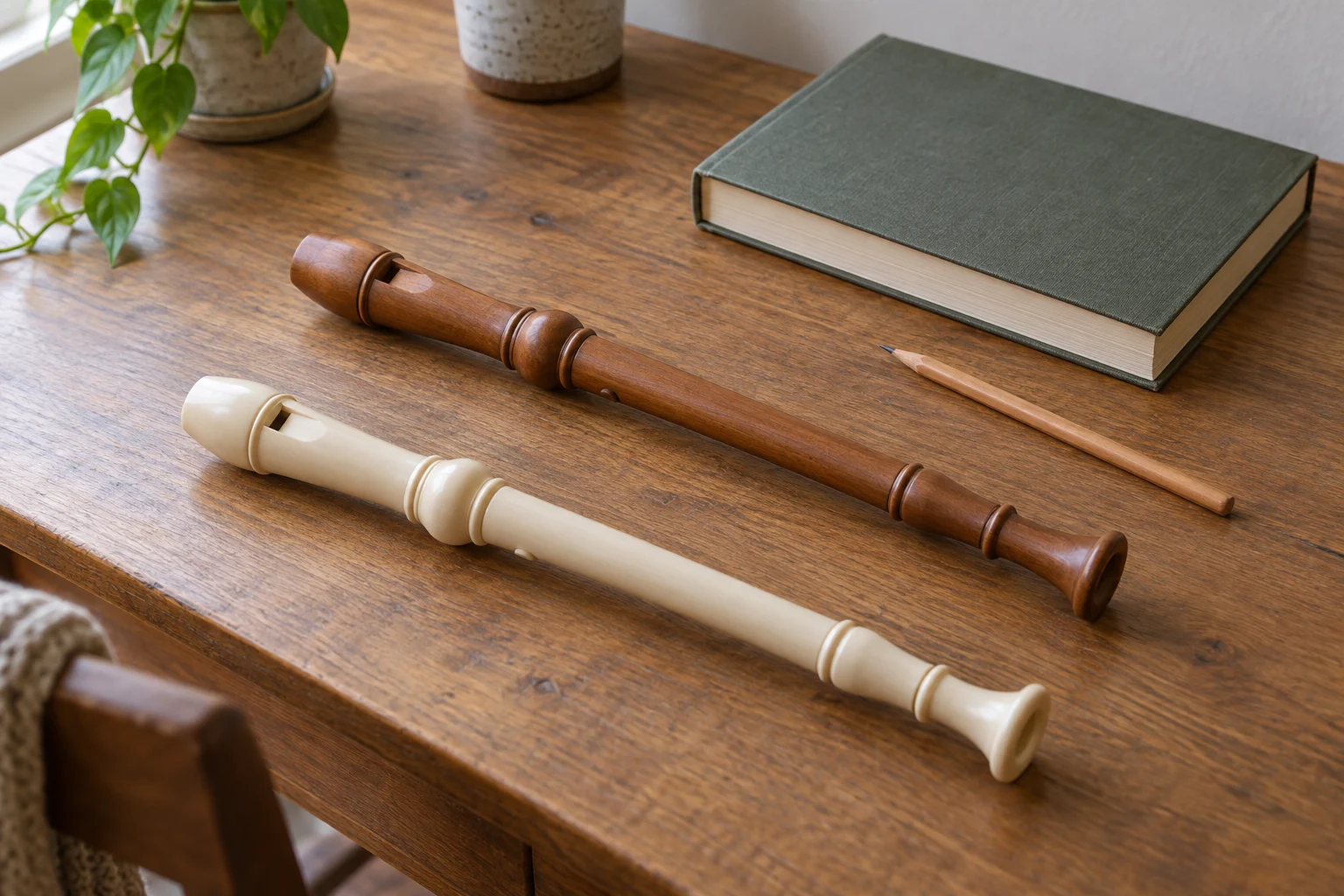
If a recorder lesson stalls at F after earlier material seemed to agree, check the method and instrument before deciding what needs correcting. German and Baroque fingering systems can require different instructions at that point. An earlier successful passage does not, by itself, establish that the complete method matches the recorder.
This guide investigates a hypothetical lesson mismatch. It does not report a playing trial or give finger positions, tuning adjustments or repairs. The useful result is a specific finding about the instruction being followed, with the remaining musical problem described accurately if that finding does not resolve it.
Preserve the exact point where the lesson changes
Start with the page, exercise and note where the difficulty appears. Retain the method's title and version beside that location. If the problem concerns F, write F rather than replacing it with a general description such as the next note. The person helping needs to know which instruction and musical target you mean.
Describe what actually happened without supplying its cause. Perhaps the learner says the demonstrated instruction differs from the printed chart. Perhaps the chart is unclear. Those are different observations, and neither establishes a defective instrument. Write the observation in the person's own ordinary words before choosing the next question.
Keep the material that was being followed available for comparison. A screenshot separated from its title can lose the information that identifies the method. A loose chart may omit the cover or heading that names its fingering system. Ask for the complete applicable reference when the fragment does not identify itself.
Also preserve what earlier agreement means. Following a few familiar instructions is a narrower observation than completing the whole method successfully. State which earlier material was checked. That helps the next person understand why the mismatch was not noticed before the disputed point, without treating initial agreement as complete verification.
Recorder fingering system check for the actual offer
The Unbranded 15009042 recorder offer explicitly describes a German-style descant recorder. Its description says an instruction manual is included. The Kingsley Kolor Baroque soprano recorder offer has Macie Publishing Company as its listed brand and explicitly names Baroque fingering. Preserve those different identities when asking about the applicable instructions.
For a recorder fingering system check, identify the instrument actually being used rather than the one someone remembers ordering. Keep its available model or package information with the inquiry. The selected descriptions establish their stated systems, but a different unit needs its own identification. A familiar color is insufficient to settle that question.
Keep the system question separate from any missing key or register information. Do not supply those details merely because a recorder looks familiar or its title uses a common instrument name. If the lesson requires a particular key or register, confirm that requirement and the actual instrument separately through their applicable documentation.
The included-manual statement also needs a practical follow-through: inspect the actual supplied manual. The offer does not reproduce its complete contents here. Confirm that the manual identifies the instrument and instruction needed for the disputed lesson. Possessing a booklet does not establish that a loose chart from elsewhere belongs to it.
German and Baroque method books can diverge later
Macie Publishing Company's Baroque vs. German article explains that F fingering differs between the two systems. The author describes his father's German and Baroque recorder methods as having identical first twenty pages, then introducing F at different points. That is a specific account of those methods, not a claim that every publisher's books share the same opening.
For German and Baroque method books, that account explains why an early portion can fail to expose a mismatch. A person might follow shared material before reaching a system-specific instruction. It gives a reason to investigate the method version at F. It does not prove which book a particular learner has or diagnose their playing from a page number alone.
Read the actual method's stated system. Keep the wording with its title or edition so another person can identify the same material. If the system is missing from the part available to you, ask the publisher or teacher to identify it. Do not choose a system from the position of an exercise in the book.
The harmonica call-and-response session attaches its specific playing lesson to a confirmed ten-hole C diatonic instrument. Its hole numbers belong to that harmonica lesson. The relationship here is matching an instruction to its actual instrument; the harmonica sequence supplies no recorder fingering or remedy for the present problem.
Check whether the disputed reference belongs to the same copy of the method as the surrounding lesson. A forwarded page from a friend can carry different identifying information from the book in front of the learner. Compare the actual headings and publication details available on both. If their relationship is unclear, retain both references for the person who can identify them.
Work through a definite mismatch case
Imagine a learner using the identified German-style unit while following a method confirmed as Baroque. Earlier material seemed to fit, but the learner now reaches the disputed F instruction. This is an invented case illustrating the investigation. Its starting point is the verified disagreement between the named systems, without an invented account of the sound produced.
Write the two facts together: the actual instrument is documented as German-style, and the actual method is documented as Baroque. Then identify the page and exercise being questioned. That establishes a system mismatch in the learning materials. The next action concerns obtaining applicable instruction, rather than changing the instrument to resemble an unrelated chart.
Ask the teacher or method provider which matching material applies to the learner's confirmed instrument and intended course. A class may have a chosen method that the teacher needs to preserve. Keep that course decision with the person responsible for it. This article does not instruct a learner to substitute a different fingering sequence or change the course independently.
Once the applicable material is identified, compare the earlier disputed location with that material's own instructions. Follow the supported lesson through the teacher or publisher's guidance. Record whether the original disagreement between chart and instrument has been resolved. A corrected material match is a definite result even before anyone claims an improved playing outcome.
A concise request can give the instrument's documented system, the method's documented system and the exact exercise, then ask which instruction applies. Keep any missing item explicit. If the instrument system is unknown, ask how to identify that exact unit; if the book version is unknown, ask about that exact publication. Those are separate gaps that a general request for help at F would conceal.
Do not turn a label check into an invented repair
A documented system mismatch does not authorize altering the instrument. The task here is to identify applicable instruction. No hole modification, disassembly, cleaning treatment or adjustment follows from this article. Keep any separate equipment concern with the instructions and support source for the exact unit.
Likewise, do not replace a specific question about F with a claim that one system is universally better. The primary article discusses choices in a teaching context. This investigation needs to establish whether the current method and instrument agree. A general preference would leave the actual lesson mismatch unexamined.
Keep any proposed purchase separate until the instruction question is clear. A replacement selected only by color or familiar appearance may leave the same system question unanswered. First identify what the course requires and what the learner actually has. If a different item is proposed, verify its actual system against that requirement before deciding on it.
The bike-pump gauge mismatch guide preserves the actual display unit and stated range before treating two readings as a comparison. Its pressure discussion supplies no musical test. Here, retain the actual instrument system and method version before interpreting an apparent disagreement as evidence that the recorder needs intervention.
Keep a matching-system case open when the problem remains
Now consider a different invented finding: both the actual instrument and the actual method are confirmed as Baroque. That finding rules out the particular German-versus-Baroque mismatch described above. It does not establish why the lesson is difficult. Keep the original observation available instead of declaring the whole problem resolved from the matching labels.
Return to the exact exercise with the teacher or applicable instructional source. Describe what remains unclear and which system has already been confirmed. If the chart itself is difficult to interpret, identify the chart and ask about its own legend. This article does not infer the meaning of an unseen diagram or supply a substitute finger pattern.
A sound described as different also needs its own musical assessment. A system label alone cannot establish what note was produced, why it sounded that way or whether the instrument has a fault. Retain the learner's observation without turning it into a diagnosis. Give the person helping the actual instrument and lesson context they need to assess it.
If the answer remains uncertain, leave a precise open question. For example, state that the systems agree but the instruction at the identified F exercise is still unclear. That is more actionable than saying that the recorder does not work. It also preserves the check already completed so the next inquiry can address what remains.
When a reply identifies the appropriate reference, retain enough of its wording to explain the decision. Note which instrument and method the answer covers. A response about a different model or edition remains a separate answer, even when it discusses the same note. Compare the reply with the original question before treating the instruction mismatch as settled.
Record the instruction change and its actual result
When applicable guidance changes what material the learner follows, retain the new reference beside the earlier one. Note which system each identifies and which instruction was in dispute. This lets a later reader distinguish a changed lesson from an unchanged lesson attempted again with the same unresolved mismatch.
Describe the result at the level actually observed. The correct method may now be identified, or the disputed chart instruction may now be understood. A playing difficulty may remain. Keep those outcomes separate rather than treating the first resolved paperwork question as proof that every musical issue has disappeared.
For a shared group, identify the instrument and method for each affected learner. One confirmed pair does not establish the equipment and material used by everyone else. A coordinator can then see whether there is one mismatched copy, mixed systems in the group or a different unresolved question, without assuming that every participant needs the same intervention.
When a recorder lesson stalls at F, the useful investigation connects the exact lesson point with the documented instrument and method. Preserve a confirmed mismatch as a concrete finding and obtain applicable instruction. If the systems already agree, carry the remaining observation forward clearly so the next assessment addresses the actual unresolved difficulty.