Troubleshooting & Repairs
Bike pump gauge mismatch: record unit and range
Keep pump identity, gauge range and pressure units together while separating the published Super Prestige unit conflict from a physical fault diagnosis.
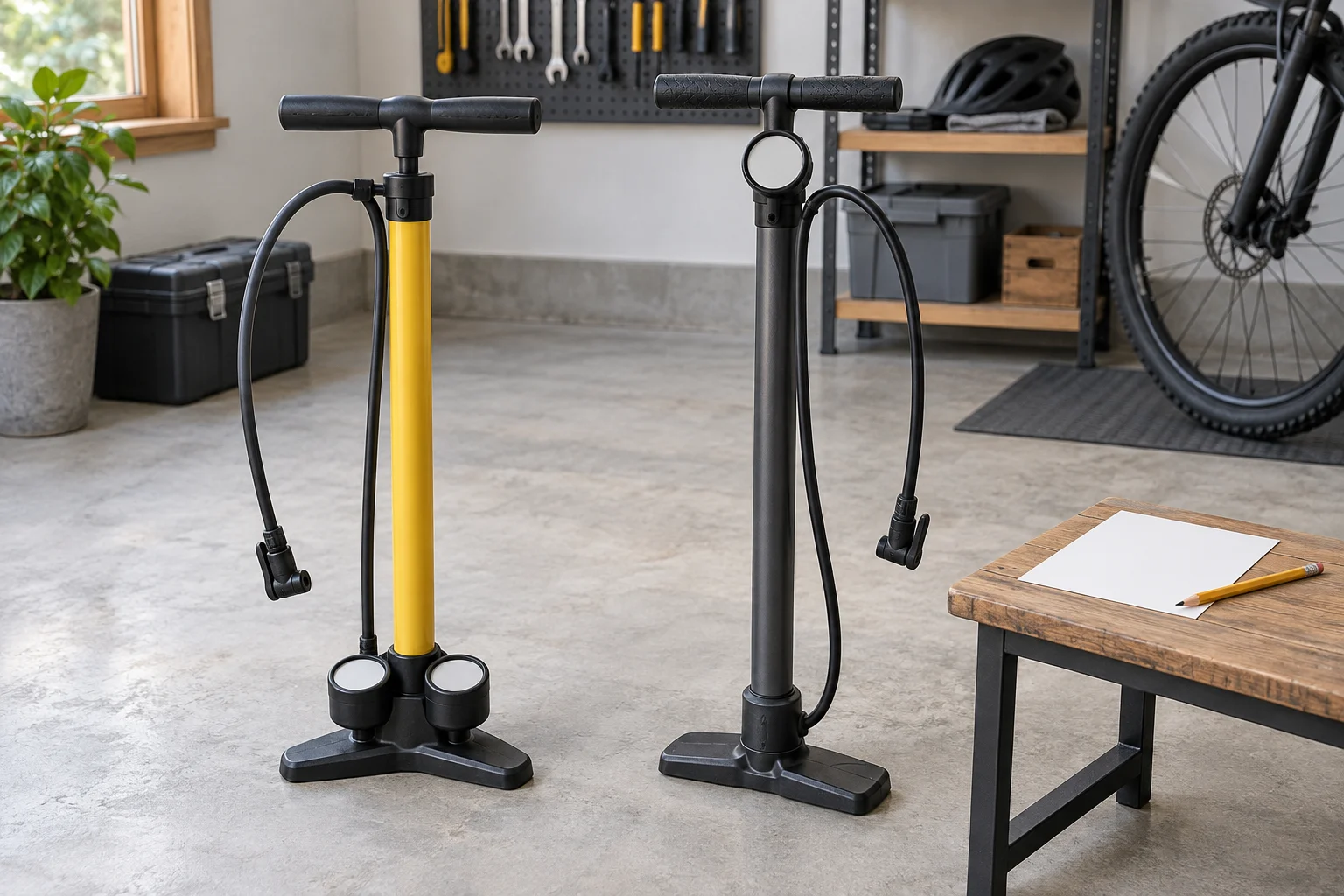
An unexpected pressure number does not immediately tell you that a bicycle pump needs repair. The number may have been read from a different unit scale, copied without its label or compared with a specification that describes something else. Begin a bike pump gauge mismatch enquiry with the actual indication and the exact pump. Keep the wheel involved identifiable, too. Name the observed discrepancy before assigning a mechanical cause. The two offers here illustrate different gauge arrangements, and one contains a published unit pair that remains inconsistent even on its manufacturer's page.
Identify the pump gauge range you are reading
The JoeBlow Dualie offer listed as Unbranded describes two gauges: 0–30 psi/2 bar and 0–75 psi/5 bar. The retail description gives model 43964, while the product name is catalogued under the Unbranded brand. Topeak's actual JoeBlow Dualie page identifies TJB-DUL and repeats the dual ranges, with the lower range intended for fat-bike tires and the higher range for MTB tires. Those descriptions explain why two different range labels appear. They provide no inspection result for a pump already in your home.
For pump gauge range, keep the beginning and endpoint with the gauge it describes. A range label tells you the span being stated, rather than the pressure presently indicated. The number 30 in a range description is not an instruction to bring an unspecified tire to 30 psi. Likewise, the presence of a 75-psi gauge does not establish a suitable tire pressure for the wheel connected to it. Resolve the actual wheel's requirements separately, using its applicable tire, rim and other equipment instructions.
Do not use the two range descriptions to invent their graduation intervals. An endpoint alone does not say how many intermediate marks are printed, how the small divisions are arranged or what error limit applies. Read the actual scale and its documentation before recording a precision the instrument does not establish. If a mark is difficult to distinguish, preserve the uncertainty in the note. Writing extra decimal places from an estimate would make the record look more precise without adding another observation.
Keep psi and bar readings labelled
For psi and bar readings, a comparison needs the unit beside each number. A bare figure copied into a message can lose the information needed to interpret it. If a dial has more than one scale, identify which one you used. Do not assume that two people looking at the same photograph chose the same scale. A clear image can preserve the printed units and the indication together, provided the markings are visible. It still records what could be seen, without establishing the gauge's calibration.
NIST's pressure conversion table gives one psi as approximately 6.894757 kilopascals and one bar as 100 kilopascals. These factors let you express a pressure in a common unit before comparing numerical statements. In particular, 160 psi is approximately 11.03 bar, while 8 bar is approximately 116 psi. These are conversions, not pressure recommendations or measurements of either offered pump. Changing the unit used to express a number does not test the physical gauge that supplied an indication.
Preserve the Super Prestige's unresolved unit pair
The Pedro's Super Prestige floor pump offer identifies model 6450510 and describes an automatic Presta/Schrader head with an integrated bleed valve, a top-mounted dial gauge and a soft-grip handle. Its stated maximum is “160PSI (8 Bar).” Pedro's own Super Prestige page, also identifying SKU 6450510, repeats that same pair. The manufacturer page therefore does not resolve the inconsistency between the two unit values. Keep the statement as published when asking for clarification.
The conversion above establishes a difference in the numerical statement. It does not establish why that statement was published, which rating should control an actual unit or whether a physical gauge is faulty. Calling it a typo would assign a cause that the pages do not supply. Replacing the bar figure silently would also make the offer appear to answer a question that remains open. Request the applicable specification for the actual model and retain the reply with its scope. No revision history, corrected rating or calibration result is assumed here.
A prospective purchase and an existing pump create different questions at this point. Before buying, you need the supplied model's confirmed specification and suitability for your equipment. If you already own the pump, the manufacturer's answer should identify how its guidance applies to the item you have. A page about a different version may be useful background while leaving that connection unverified. Keep the model marking and purchase reference available instead of relying only on the words floor pump in a general support conversation.
Record the indication without naming a fault prematurely
Describe what made the reading unexpected. Perhaps a number differed from a previous note, a second instrument gave another indication or the printed units were unclear. Keep those accounts distinct. If you did not record the earlier unit or the equipment involved, say so rather than reconstructing an exact comparison from memory. A present observation can still be useful when the earlier record is incomplete. It simply supports a narrower statement than a fully documented before-and-after comparison would support.
Write down which gauge and unit you observed, the pump identity and the wheel involved. If another reading is part of the question, identify its instrument and when it was taken. Record any known change between the observations without assuming that it caused the difference. For example, a note made on another wheel is a different comparison from one associated with the same wheel. Do not create further inflation or release steps merely to fill gaps in the record. The next operating action needs instructions that actually apply.
A photograph should make the scale readable and keep its association with the correct pump clear. A tightly cropped dial without a model reference can lose that association when the image is forwarded. Keep the original image with the support enquiry and explain any markings that could not be read confidently. A product photograph from a shop is a reference for an offered item, rather than a record of your own pump's indication. Make that distinction explicit if both kinds of image appear in the same discussion.
Two instruments need more than agreement to establish accuracy
If two instruments give different indications, the disagreement alone does not identify which is closer to a supported reference value. Choosing the larger dial or the easier-to-read display would not supply that missing comparison. Conversely, matching indications are not automatically a calibration certificate. Keep the actual readings as observations while asking what comparison the manufacturer or an appropriate service recommends. No reference instrument, test pressure or adjustment procedure for these pumps is supplied by the product descriptions.
The published caliper zero-check explanation examines the limited conclusion available from one reference indication. Its actual caliper examples and metrology source do not provide a pump-testing method. The useful distinction is between an observation at a stated point and a wider performance claim. For a pressure-gauge enquiry, keep the evidence for the claimed conclusion visible rather than treating a readable face or one agreeable number as a complete account of the instrument.
Confirm the actual head before seeking connection advice
The Dualie description names a TwinHead with an air-release button. The Super Prestige description names an automatic Presta/Schrader head with a bleed valve. These are documented features, without a shared connection or release sequence in this guide. A control name does not tell you its permitted use on an unidentified assembly. Establish the actual head and valve involved before adopting instructions, especially if a pump's hose or head has been replaced since purchase.
The earlier bicycle pump valve-compatibility guide keeps its Lezyne and JoeBlow Sport III arrangements attached to their named interfaces. Sport III's TwinHead DX account does not become a Dualie operating instruction through a shared brand or a similar head name. For the pump you have, keep the supplied configuration and actual valve requirement together. Confirmation that a valve family is supported also leaves any access or separately supplied component question needing its own answer.
Keep a pressure specification separate from a repair decision
For a documentation question, keep a copy of the wording you are querying with the page address and the date you read it. This is particularly useful when a supplier can see a newer version of a page than the one behind your question. Include the complete paired units rather than quoting only the value you think should be corrected. The original statement then remains understandable if a later page update changes it. A saved product statement is evidence of the wording you read, rather than a record of pressure measured in your own equipment.
If another person takes over the enquiry, share both the unresolved question and any reply already received. Indicate whether that reply concerns the published specification, the supplied head or the physical indication you reported. This avoids restarting with a broad claim that the whole pump is broken when the only established discrepancy is between two printed unit values. Keep an unanswered equipment question open even if the seller has resolved the separate wording question.
Neither the Dualie's listed ranges nor the Super Prestige's unresolved maximum statement identifies a target for every tire. A troubleshooting enquiry should not turn into a plan to approach a pump's stated maximum to see what happens. Use the limits and instructions for the actual equipment combination. If a required specification or control instruction remains unclear, obtain that information before another operating step. The product pages do not authorize a calibration adjustment, internal inspection or an improvised method for clearing a valve or hose.
Ask support a question tied to the unresolved point. A request to clarify the Super Prestige's published units is different from a report that a particular needle failed to move. An answer correcting documentation would address the former; it would not automatically explain the latter. Likewise, an answer identifying a compatible head can settle an interface question while leaving gauge performance untested. Keep each reply beside the observation or specification it actually addresses, including the exact model and any conditions attached.
Retain the original note when new information arrives. Add the applicable instruction reference and the result of any step you later carry out under that guidance. If the explanation only resolves the unit label, describe that limited result. If a physical indication remains unexplained, keep it in the support request with the next model-specific question. The useful record contains the actual pump, the identified scale, what was observed and which part of the mismatch has been explained. It does not require an unsupported diagnosis to make the enquiry more specific.