Writing & Documents
Recipe headnote with two opening choices
Compose a short original recipe headnote, compare its opening order and revise the transition to the separate recipe.
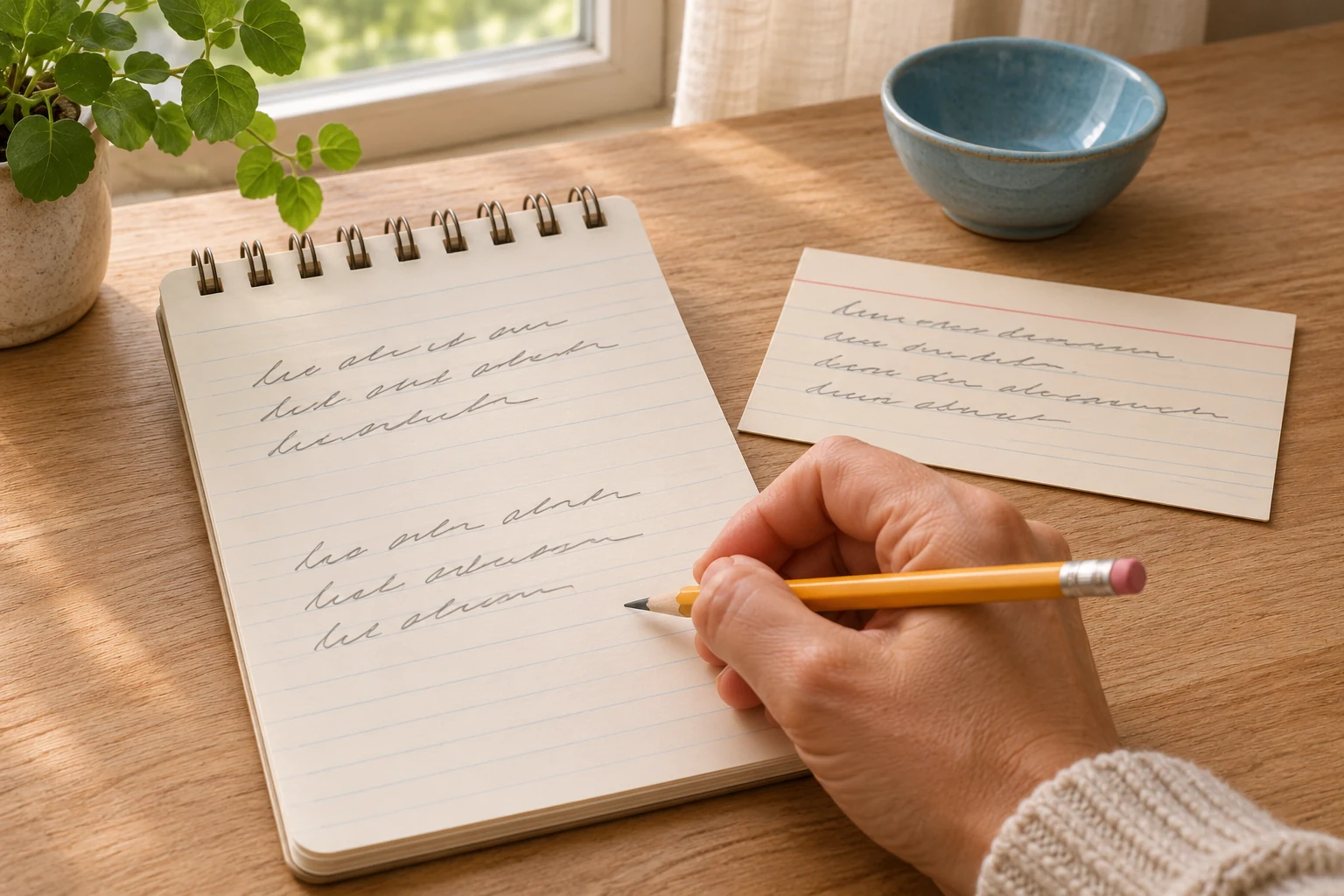
A Recipe headnote gives a recipe a short introduction before its ingredients and instructions begin. You can use that space for a particular occasion, a personal association or the reason you chose to put this recipe on the page. The writing exercise here compares two arrangements of one expressly fictional introduction. Keep your own recipe separate while you draft. The task is to choose the paragraph you want beside it, with an opening that earns its place and an ending that lets the recipe begin.
Give the paragraph one job
Choose the small piece of context you want to offer the next reader. Perhaps you want them to picture the table where you serve the dish, or understand the occasion on which you return to it. Write that purpose beside your draft in ordinary language. A sentence such as “I want to introduce the quiet wait before a friend arrives” is enough to guide this version without turning it into a complete family history.
Keep the recipe's title where the reader can see it. Notice what the title already supplies before drafting another sentence about the same information. A headnote can repeat the title when the name has a useful role in the paragraph, but repetition should be a choice you can explain. You may prefer an opening that puts a person or an occasion first because the heading has already named the dish.
For our original example, invent a speaker called Rowan, a friend called Inez and a dish with the fictional title Late-light soup. Inez's chair is nearest the window, and Rowan is waiting for her to arrive. These are writing parameters for the sample paragraph. We supply no ingredients or cooking method. The exercise concerns the arrangement of Rowan's introductory words, without inventing a historical origin for an actual recipe.
Draft an opening that starts with the scene
A scene-first opening can begin with the detail you want the reader to encounter before the dish name. For this draft, start with the empty chair. Keep the detail specific enough to picture without explaining every object in the room. You can leave the chair's color, the window's shape and the rest of the menu undecided. They have no assigned job in this particular introduction.
Rowan's first fictional draft could read, “Inez's chair by the window is still empty when I open this page. I call this Late-light soup time, the pause before she comes in. The recipe begins below.” The first sentence places attention on the waiting scene. The second brings in the dish name through Rowan's own phrasing. The last sentence is a plain transition we will revisit after comparing another opening.
Read the paragraph without adding an explanation aloud. Ask which detail you would want to keep if you shortened it. Rowan might choose the empty chair because it is the scene's particular image. Another writer might prefer the phrase about the pause. Either choice belongs to the paragraph you are composing. This example offers no measured claim about how every reader responds to a scene opening.
You can mark the preferred detail in a private draft without making the mark part of the finished headnote. Leave the other version intact while you try the next arrangement. Keeping both drafts makes the actual wording available for comparison. A remembered impression of an earlier paragraph can blur which sentence you changed, especially after you have adjusted its opening more than once.
Try the title as the first subject
Now begin a second draft with the fictional dish name. Keep the same speaker, expected guest and chair detail. Changing the opening order is enough for this comparison. You do not need to invent a new event to make the second draft feel different. The question is which arrangement you want to introduce the recipe, with the material already chosen for this version.
The second fictional paragraph could read, “Late-light soup belongs to the pause before Inez comes in. Her chair by the window is still empty when I open this page. The recipe begins below.” This draft announces the dish immediately and places the chair afterward. Rowan can compare it with the first draft on the page. Both remain invented prose, without an actual food preparation or a reported gathering behind them.
Look at the two first sentences side by side. One names Inez's chair first; the other names Late-light soup. Decide which subject you want to lead this headnote. You might keep the scene opening because the dish title already appears directly above it. You might choose the title opening because you like Rowan's sentence about the pause. Give your preference a reason tied to these words.
Keep that reason modest. “I want the chair to appear before the dish name” states an editorial choice. You have no need to turn it into a rule that all headnotes should begin with scenery. A different recipe page may call for a direct statement about its occasion. Finish this comparison on its own terms before carrying a preferred pattern into another piece of writing.
Remove a sentence that repeats the heading
Your recipe introduction may accumulate sentences while you work out what belongs in it. Imagine adding, “This is an introduction to my Late-light soup recipe,” before either sample paragraph. The line tells the reader what the page arrangement already shows. Try reading the draft without it. If you miss a particular piece of meaning, name that missing piece before deciding whether to restore the sentence.
You can perform the same edit on a string of broad adjectives. Suppose Rowan adds, “This is a wonderful, delightful and very special soup.” For this sample, the line supplies Rowan's approval without developing the empty-chair scene. Rowan may prefer to keep that approval, but can also remove it and let the existing image carry the introduction. The exercise is a choice about this draft's emphasis, without a claim about the dish's quality.
Check whether a new detail has quietly taken over the paragraph. A description of the entire room could make the headnote longer while leaving Inez's arrival further away. Select the detail that serves your stated purpose. Save an attractive unused sentence elsewhere if you want to return to it. Keeping a sentence in your notes leaves you free to omit it from the introduction you are finishing.
Choose where the headnote ends
Return to “The recipe begins below.” That ending is deliberately plain. Rowan can keep it, or stop after the preceding sentence if the page layout already makes the transition clear. Read both versions with the recipe title visible. The decision concerns where your prefatory paragraph finishes. You can make that choice without changing a word in the recipe itself.
Watch for an ending that drifts into an instruction. If you find yourself adding an ingredient amount or a preparation step, keep that material with the recipe's own appropriate review. A headnote's closing sentence should not quietly change the method a reader will follow next. For this exercise, choose an ending from the introductory context you have already established and let the separate recipe retain its own sequence.
Read the selected headnote once as a complete paragraph. Does its opening, chosen detail and final sentence form the introduction you wanted to write? You may discover that an edit to the first sentence makes the last one unnecessary. You can also restore a plain transition after an earlier cut. Preserve the version you actually choose, including its final wording, instead of leaving the decision scattered across competing drafts.
When working from a real personal occasion, use details you can responsibly put in your own voice. Ask the people concerned before including a private recollection in a copy you plan to share. Keep an uncertain recipe origin outside an invented confident statement. Those boundaries give the paragraph a truthful context while leaving the composition decision with you. Our Rowan example stays explicitly fictional throughout its two arrangements.
Keep the notebook references within their limits
The Tmboryuu small memo pads show eight ruled pads with bound tops. Their catalog toy and small-parts warning remains unresolved, without establishing supplied marbles. The Ampad topbound memo notebooks show wire binding and printed 50 Sheets and 20-005. Native model is unspecified. The title's five-per-bundle, ten-bundle wording and count field remain ambiguous order information. Neither gallery verifies received inventory or tested writing quality.
These paper-book references provide a limited drafting context for the exercise. You can compare the opening paragraphs in a writing space you already use. The listings supply no headnote method or evidence of a particular reader's response. Their maker labels, dimensions, paper and package statements should remain with the exact offer if you investigate it, with unresolved fields kept visible. An attractive notebook photograph cannot choose Rowan's opening sentence.
Keep neighboring writing tasks separate
The holiday recipe card exchange guide addresses organizing a group exchange, including memory cards, copying choices and the context participants want to share. That social activity is a separate project. A headnote you compose could accompany a card, but the paragraph-revision exercise here supplies no invitation, distribution plan or group recipe collection.
The family recipe transcription guide addresses copying a particular source with another reader and preserving unresolved wording. That accuracy task belongs with the source you are transcribing. Composing a new headnote should leave those copied instructions distinguishable from your own introductory paragraph. The two opening drafts here revise expressly invented prose, without resolving anyone's unclear handwriting.
After choosing a headnote, keep it beside the recipe it actually introduces. Give the reader a clear visual boundary between your paragraph and the instructions that follow. If you later revise the introduction, read it with that recipe again. A headnote saved on its own can be useful working prose, while its final placement remains part of the page you intend to share.
Keep a possible purchase with its own order
If you later investigate a notebook order on republeq.com, identify the exact offer and intended package before choosing a payment method. The fictional recipe headnote gives no information about a checkout's cryptocurrency options. Before using USDT, check whether the actual transaction presents it and read the instructions for that transaction. Confirm the amount and denomination requested, the displayed receiving destination and any network requirement. Leave an unanswered payment question pending while the merchant or payment provider clarifies it. A familiar token name cannot identify the correct destination for a new order. Retain the selected goods and any package clarification with the purchase record. The pictured pads and books do not settle how a nested bundle will be invoiced or what will arrive. Review the delivery, cancellation, return and refund information that applies to the actual order, including conditions attached to the chosen payment method. This guide supplies no wallet address, transfer sequence, exchange rate, fee estimate or assurance that a transfer can be reversed. If another person places the order, agree who will check its status and retain its references. Reconcile an uncertain existing order or payment attempt before starting another. Check the merchant's recorded order status alongside any payment confirmation, distinguishing a pending result from an accepted order. Save the current instructions and confirmation you actually receive so a later enquiry identifies the right transaction. A successful payment would not establish the number of notebooks delivered, resolve the catalog warning or prove that a paper surface suits your writing tool. Keep those product questions separate from the headnote draft and its fictional recipe context.
Return to the paragraph you selected. Keep the opening subject you prefer, the detail that earns its place and the ending that leaves the recipe ready to begin. Rowan's two drafts remain available as examples of a choice you can make on the page. Your own headnote can be brief, particular and complete without telling a whole life story or repeating the recipe that follows it.