Cleaning & Vacuums
When a push broom leaves debris: bristles and collection
Examine the unfinished part of an ordinary sweep, then use actual bristle, care and floor guidance to choose the next action.
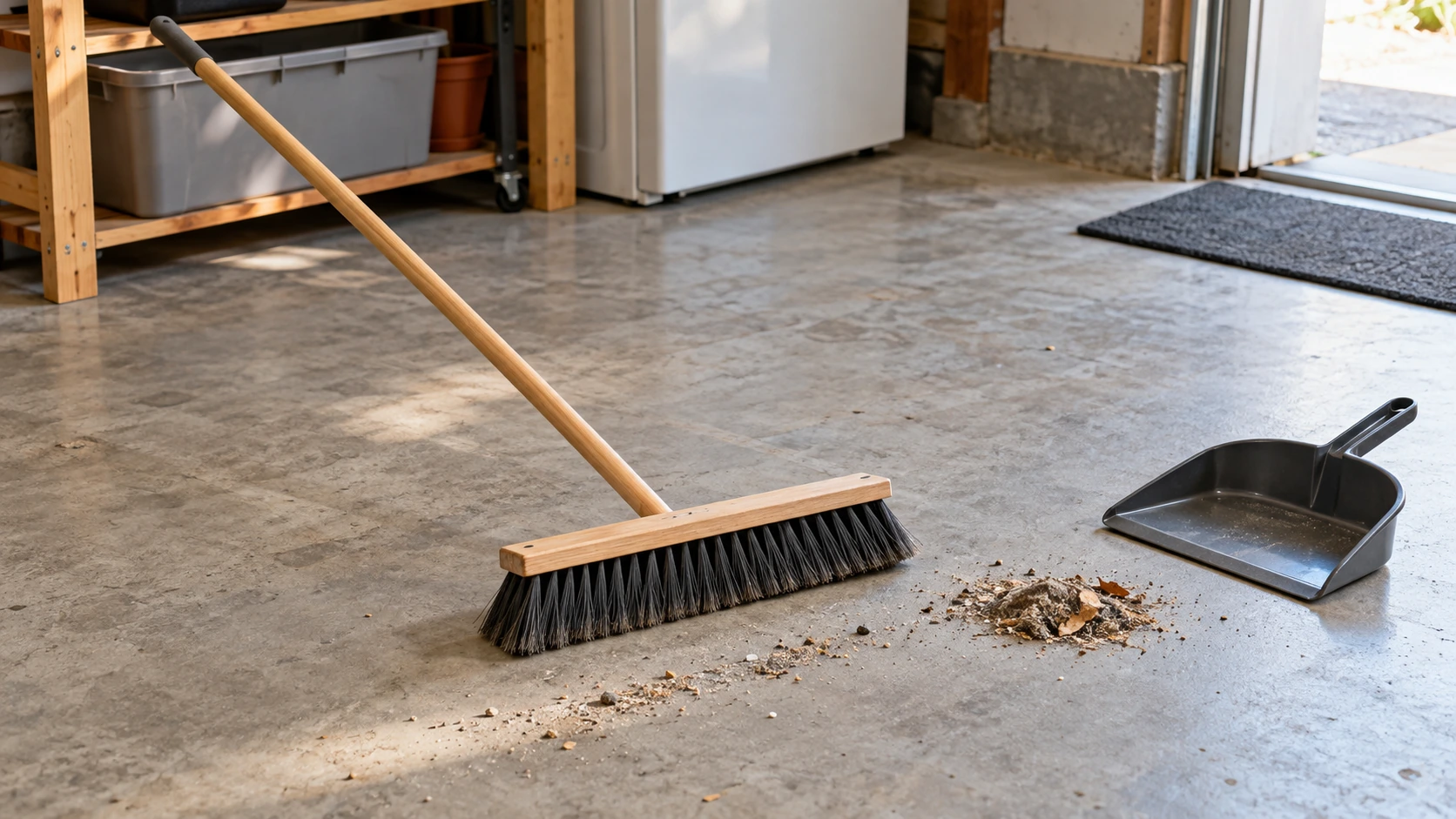
The large crumbs have moved, but a thin trail remains behind the head. Before replacing the broom, separate that unfinished sweep from the later job of lifting a pile into a dustpan. When a push broom leaves debris, the useful question is where the collection stopped. A tool can have an unobstructed route across the floor while its stated purpose still differs from the work you expected it to do.
This guide concerns familiar, dry household dirt on a surface whose care directions allow sweeping. It examines bristle descriptions, the condition of the existing tool and collection at the end of the sweep. It supplies no cleanup method for sharp fragments, wet spills or unknown powders. There is no test result for either linked broom, and the separate manufacturer examples below retain their own product identities.
Find the point where dirt stops moving
Look at the remaining material before changing equipment. Is it spread along the path the head just crossed, gathered beside the pile, or sitting immediately in front of the dustpan? Those observations describe different unfinished tasks. Tell the person helping you which one you mean. Saying that the broom is useless combines them into a verdict before you have identified the part of the job that needs attention.
For this check, consider only a place the working head actually reached. A strip hidden behind an obstruction belongs to an access problem. Here, the question begins after contact with an accessible floor area. Keep the same floor and ordinary debris in view while comparing the tool's documented use with your expectation. That comparison can guide your next choice without becoming a claim that a hidden defect has been diagnosed.
Match broom bristles and surface before changing tools
The Rubbermaid 2186280 Maximizer broom offer identifies a 24-inch product sold as one each. The maker's matching page calls it a Medium Push-to-Center broom with unflagged polypropylene bristles. It describes use on smooth and rough surfaces and angled sides intended to gather material toward a central pile. Those are the identified model's design descriptions, rather than a pickup measurement made here. Its medium designation should stay visible when you compare it with a separately named fine broom.
The Freudenberg 124958 rough-surface push broom is described in its current listing as an O'Cedar Maxi Lok broom, 24 inches wide and one each. Freudenberg is the recorded brand. Its photograph shows a dark head with red bristles and a collar at the handle connection. The rough-surface wording is relevant to the planned job; the red colour alone supplies no specification for fine-dust collection or permission to use it on every finished floor.
Read broom bristles and surface as a paired question. What does the identified broom say it is for, and what does the actual floor permit? The two selected products illustrate why width alone is an incomplete description. Retain the maker and model alongside the intended surface wording when asking about a replacement. An offer that answers the size question may still leave the work you want it to perform poorly described.
A fine broom is a separately identified product
Rubbermaid's separate Maximizer Fine page identifies model 2018729 as an 18-inch broom with PVC fill. It describes removing fine dirt and debris from smooth, polished surfaces. Read that application with its actual model reference. Sharing a range name does not make every fill equivalent or establish suitability for every floor finish. The fine designation also supplies no result from a side-by-side pickup trial against the two selected offers.
This distinction gives a buyer a more useful enquiry than asking for whichever head is widest. If fine material remains after an allowed sweep, ask which exact broom the maker specifies for that material and floor. Include the existing model so the answer concerns an actual alternative. Keep an answer about another model attached to that model instead of treating a range name as a complete specification.
For example, the fine model's stated smooth-surface application is the feature to investigate when that is the actual task. Ask the seller to identify the handle and connection required by the exact broom you are considering, keeping that answer with its model reference. Compare the documented application first, then confirm its suitability for your finish. Pressing harder with a different head does not establish that you have obtained the fine model's stated design.
What flagged fibres mean in a maker's example
Libman's Canadian Smooth Sweep product page provides another specific example. It identifies product 5048 for smooth surfaces and describes seven rows of flagged fibres intended to collect fine dirt and dust. It names smaller household spaces, including kitchens and bathrooms. These statements concern that Libman product; they do not identify the fibres in either selected offer. They show that a broom description can explain its proposed collection task more precisely than a handle length or a photograph.
Use such wording to ask a concrete question about the broom you are considering. Ask which bristle designation and intended surface the seller lists for the exact offer, and keep any unanswered part of that question visible. A manufacturer's stated application can inform the choice while the actual floor's care directions continue to govern use.
A mixed-bristle head is another documented arrangement
Vikan's separate 31945 product is described as a 24-inch soft/stiff broom. The maker assigns different jobs to the rows: firmer front bristles loosen stubborn dirt and heavier debris, while softer rear bristles gather finer particles. Its product information identifies a Euro-threaded connection and compatibility with Vikan Euro-threaded handles. This is a distinct commercial example, not a component specification for either linked broom. It shows why reading the actual arrangement is more useful than assuming that every head contains one uniform bristle type. Its food-industry positioning supplies no household hygiene guarantee here, and its handle compatibility does not establish an interchangeable replacement for the selected products.
Check the existing broom before treating replacement as the answer
Fuller Brush's broom-selection guide discusses visible wear, including bristles that remain splayed or bent, and distinguishes the broom from the dustpan used to collect the pile. For a household check, look at the existing head's condition and the point where dirt remains. The guide's general lifespan estimate is not adopted here. A birthday for the broom is less informative than a description of what you can actually see on the tool you own.
Keep that observation separate from an improvised repair. This article gives no bristle-cutting, reshaping, handle-tightening or hot-water treatment. If a connection is loose or the head is visibly damaged, use the identified tool's applicable service or replacement information. Do not turn a visible change into a promise that one particular home treatment will restore the original sweeping behaviour.
Care directions stay with the broom they name
Fuller Brush's separate cleaning-tool care article gives washing and drying directions for its own Slender Broom and Red Kitchen Broom. It also recommends hanging those brooms to help keep their bristles straight. That is a useful example of care information naming the tools it covers. It does not supply a washing recipe for the Rubbermaid or Freudenberg offers, and this guide does not apply its detergent instructions to them.
Find the care information for the actual broom before cleaning or storing it differently. If the only available text describes another model, ask the maker for the appropriate version. Keep any replacement-head reference with the complete broom model. A familiar-looking connector or a head offered in the same colour is insufficient information for this article to establish an interchangeable part.
Let the floor's care directions limit the method
Bruce's hardwood-care guidance includes routine use of a broom, dust mop or vacuum. Its vacuum advice calls for a bare-floor setting or disengaged beater bar and an appropriate head. It separately advises against water mopping and lists unsuitable cleaning products for its hardwood-care context. Those directions are not approval for every broom on every wood finish. They demonstrate why changing from sweeping to another method requires the floor's own care information.
For your floor, identify the permitted next method before adding moisture or a different appliance to the task. A broom leaving visible dirt does not supply permission to wet the head, scrub the finish or use a powered brush. If the finish or care record is unclear, resolve that question with the responsible flooring supplier. Keep the proposed cleaning change within the instructions that actually cover the surface.
Moving dirt and removing it are different stages
Bona's wood-floor dusting article discusses brooms, vacuums and microfiber dusting tools as different options. It points out that pushing debris around does not, by itself, provide a way to remove it. It also describes planning work in sections and treating the floor after higher surfaces have been dusted. Its discussion concerns wood-floor care; this guide adopts no health, filter-replacement or universal cleaning-frequency claim from it.
Apply the distinction to the result you can see. If the broom gathers the familiar loose material into a pile but a line remains at collection, describe that location. If dirt remains across the swept path before the pan is introduced, describe that instead. Choose the next enquiry from that observation. Changing the broom and the collection arrangement simultaneously would make it harder to say which change addressed the original difficulty.
Use related guides for their own questions
The cabinet-edge broom access guide concerns a working head that may be blocked from reaching a missed strip. It separates that problem from dirt left after contact. Return to its access question when the head never reached the area; its fictional room example and Libman dimensions do not establish pickup by the two products here.
The Dyson and Miele floor-route comparison asks buyers to match actual floorheads and supplied tools to their rooms. That guide is relevant if you are considering a separately permitted vacuum method. Its appliance controls, component inventories and care requirements belong to those machines, rather than providing broom-care instructions.
Choose the next action from the unfinished task
Leave the check with a specific next action. A clear mismatch between the stated application and your intended job calls for a model-specific suitability enquiry. Visible wear calls for the applicable care or replacement information. A pile that has already been gathered calls for attention to its collection. These choices respond to different observations; they do not need an invented failure inside the head to become useful.
Before placing an order, ask the seller to identify the exact broom and supplied parts that answer your enquiry. Retain the reply with that offer. Check the delivered identity against it before use, particularly if a substitution is proposed. When a push broom leaves debris, an identifiable tool, a permitted method and a clear account of the remaining work are more useful than a purchase justified only by a larger head.
Keep a replacement order tied to the unresolved sweeping question
If the next action is to consider a replacement broom, carry the unfinished task into the purchase enquiry. Write down where the familiar debris remained, which broom you used and which floor care directions apply. Ask the seller to identify the exact alternative and the supplied parts that answer that enquiry. Keep the reply beside the proposed offer so that a general recommendation does not become a specification for a different model. If you consider republeq.com and wish to pay with crypto such as USDT, first request the instructions for the particular order you intend to place. Ask which asset and network the instructions require, which destination details apply and how the payment should be associated with your order reference. This guide supplies no answer to those transaction questions. Resolve them directly before deciding whether to transfer anything. Save the written instructions with the order reference and the product identity you asked about. Also ask whom to contact if the order record and payment record appear inconsistent, and retain the answer with those records. If a requested detail remains unclear, pause the purchase enquiry and ask about that specific detail. The same discipline applies to the broom question: a payment instruction does not establish that a proposed head is suitable for your floor or that it will remove the material you observed. Keep the suitability reply, the order confirmation and your troubleshooting note as separate records. After any purchase, compare the delivered identity with the order before deciding what further question to ask about its use. These are conditional steps for organizing a replacement enquiry and its records. They establish no available payment method, checkout policy, cleaning result or successful transfer.