Crypto Commerce
PTZOptics PT20X-SE vs Hanwha outdoor dome
A venue choosing between PTZOptics PT20X-SE and the Hanwha XNV-9083RZ should first decide what the camera must show during an event. The PTZOptics description supports a presenter-focused production role, with auto-tracking, position presets and several video outputs. The Hanwha description supports investigating outdoor dome coverage, with a motorized varifocal lens and object analytics. Those are different reasons to buy a camera, even when both purchases serve the same building.
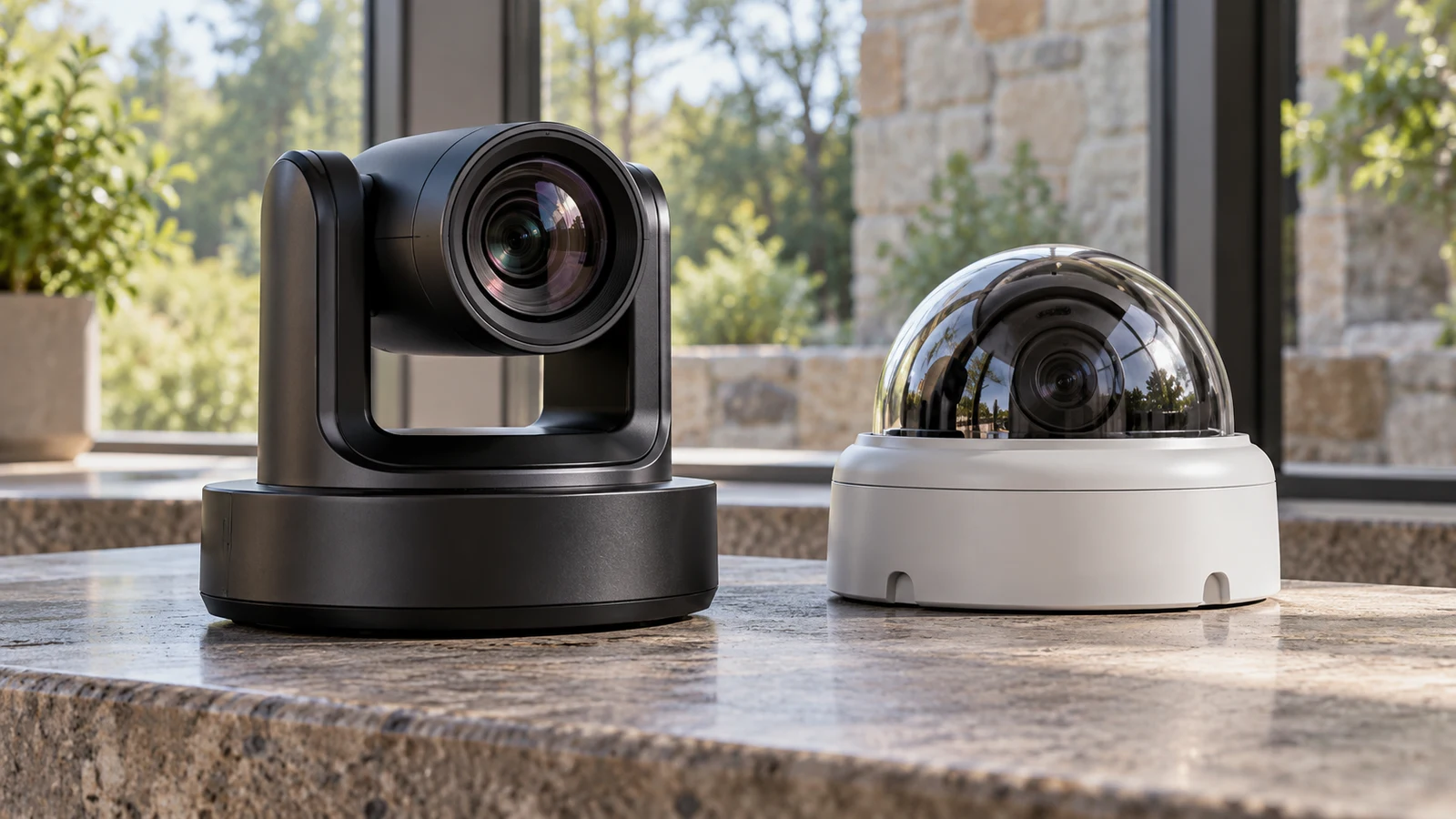
A venue choosing between PTZOptics PT20X-SE and the Hanwha XNV-9083RZ should first decide what the camera must show during an event. The PTZOptics description supports a presenter-focused production role, with auto-tracking, position presets and several video outputs. The Hanwha description supports investigating outdoor dome coverage, with a motorized varifocal lens and object analytics. Those are different reasons to buy a camera, even when both purchases serve the same building.
For a classroom or worship service, the immediate question may be how a remote audience will follow someone moving while speaking. For an exterior observation point, the question may be what activity should remain visible within a chosen scene. Start with that distinction, then check the proposed mounting position and receiving equipment. Neither description alone establishes that the camera will work with your existing system or meet the conditions at your installation point.
This comparison uses the stated configurations as a starting point. It does not establish measured tracking accuracy, identification distance or weather resistance. The most useful buying outcome is a short specification you can take to the seller: the scene you need, how its framing should change and where the video must go.
Hanwha Techwin Camera Alternative: Presenter Framing Or Outdoor Observation?
Imagine specifying video for a teaching venue. During a lesson, viewers may need to see the instructor clearly as that person moves between speaking positions. After the lesson, the venue may separately want to observe activity outside. Writing those as separate camera assignments prevents a single appealing specification, such as resolution, from deciding two different jobs.
The PTZOptics PT20X-SE listing describes a white Move SE PTZ camera intended for classrooms, houses of worship and conference rooms. It states that built-in auto-tracking follows a moving presenter without a camera operator. That makes presenter movement a relevant reason to investigate this model. Ask how tracking is configured and how a user resumes control if the automatic framing is unsuitable.
Position presets offer another stated capability to evaluate. The description lists 255 presets, but the purchasing question is how your team would use a few chosen views during an actual session. Describe the speaking positions that matter and ask for a demonstration of moving between them. Do not assume transition speed, movement smoothness or tracking behavior from the preset count.
For the exterior assignment, the Hanwha Techwin camera alternative is the XNV-9083RZ, described as an outdoor 8 Megapixel 4K color dome camera. Its listing specifies a motorized 4.4~9.3mm varifocal lens and remote PTRZ adjustment. Those details support asking how the installer would establish the desired scene. They do not establish that this camera follows a presenter or performs the same production movements as the PTZOptics.
Keep remote adjustment and live presentation control separate in your specification. If an installer needs to aim and frame an observation area, ask how the Hanwha adjustment process works. If a session operator needs to change the audience's view repeatedly while someone speaks, describe that requirement explicitly. Similar control terminology should not stand in for confirmation of the intended operation.
Consider what must stay visible when attention shifts elsewhere. In the teaching example, following the instructor may be the desired result. In an exterior observation scene, you might require a doorway to remain within the frame throughout the observation period. Give the seller that requirement without assuming either camera can satisfy every viewing task at once.
Hanwha Techwin Camera Alternative: Read The Stated Video Configurations
The PTZOptics description states capture up to 1080p60, while the Hanwha description states 4K at a maximum of 30 fps. This is a comparison of different stated resolution and frame-rate configurations, not a tested image-quality ranking. Ask which configuration your receiving equipment can use and what the intended viewer needs to discern. Avoid selecting solely from the largest number on either product page.
For a presenter feed, prepare an example of the material viewers need to see. It might be the speaker's face or a physical demonstration. For outdoor observation, describe the area and the detail needed within it. Ask for representative footage under comparable conditions if available. Neither the resolution labels nor this comparison establishes whether your particular detail will be legible.
Product identity also needs attention before you settle the order. The PTZOptics description identifies model PT20X‑SE‑GY‑G3 and describes a package containing a camera with 30x optical zoom. Preserve both details when asking the seller to confirm the exact item. Do not silently derive a different zoom specification from the model name or assume the naming resolves the configuration.
The Hanwha description gives its lens range as 4.4~9.3mm and its zoom ratio as 2.1x. Use those stated details to ask whether the proposed mounting position can provide the required framing. This article does not establish a field of view or usable subject distance for either camera. A photo of the proposed scene, accompanied by measurements, gives the seller a more concrete question to answer.
Low-light claims require the same restraint. PTZOptics lists low-light capability without a numerical threshold in the supplied description. Hanwha lists 0.04 Lux in color mode under specified conditions and 0 Lux with its IR LED activated. Its stated IR viewable length is scene-dependent, from 15m to 30m. These descriptions do not provide a controlled comparison between the cameras.
For Hanwha, the description also names Day & Night operation and extremeWDR at 120 dB. If your intended scene includes strong differences in brightness, ask for an example that resembles it. The feature names provide questions for evaluation; they do not promise a readable face or plate in every lighting situation.
Hanwha's stated analytics include person, face and vehicle object detection, along with license plate recognition. Its description also names WiseNR noise reduction and WiseStream III compression optimization. Before treating any analytic feature as essential to the purchase, ask how its results are accessed and what setup it requires. No detection accuracy or successful integration with your software is established here.
Hanwha Techwin Camera Alternative: Verify The Installation Before Ordering
Once the viewing assignment is clear, trace the connection from the camera to the person using its video. The PTZOptics description lists IP, HDMI, USB-C and 3G-SDI outputs. It also names RS-232, RS-485 and IP control. Choose the intended video path and control method on paper, then confirm support at both ends. The presence of a connector does not settle every compatibility question.
The description names Skype, Microsoft Teams and Zoom among its meeting uses. Ask what connection and configuration your particular computer and application require. If networked production is part of the plan, note that NDI|HX is described as an optional upgrade. Confirm what must be obtained or enabled before budgeting it as part of the installation.
For the Hanwha, the supplied description does not establish the required receiving platform, recording arrangement or power specification. Ask about those directly. Its stated H.265/H.264 compression support does not, by itself, prove that a chosen recorder or software package will accept the camera or expose its analytics. Keep those checks tied to the exact equipment you intend to use.
Recording is a separate decision for both products. Decide whether the project requires live viewing only or saved video, then ask where that recording would happen. Do not assume storage is included with either camera. If saved footage matters, obtain confirmation of the recording method and the additional equipment or services needed before treating the proposed system as complete.
Mounting deserves its own conversation. Show the installer the proposed surface and the direction the camera must face. Ask which mounting hardware fits the exact model and whether the location leaves suitable access for connections and maintenance. Neither supplied description establishes the complete mounting arrangement for your venue, so avoid treating a product photograph as an installation specification.
The word outdoor in the Hanwha description does not identify an exact environmental rating. Confirm the documented rating and operating limits against the conditions at the proposed location. Its hard-coated dome bubble is a stated protective feature, but it does not establish every form of environmental resistance. The supplied PTZOptics description likewise does not establish suitability for an exposed outdoor position.
Use Camera Battery Planning For Time Away From Charging: Check Whether It Applies
The PTZOptics description explicitly supports DC or PoE power. It does not establish an internal rechargeable battery, and the Hanwha description supplied here does not specify its power arrangement. Ask for the exact electrical requirements and compatible supply equipment. Do not infer a portable operating mode because a camera might be moved between venues.
If your wider project also includes separate battery-powered equipment, Use camera battery planning for time away from charging addresses that separate planning need. Keep it distinct from the power specification for these two products. Neither description provides a supported battery runtime to use when planning a session away from a suitable power source.
Before ordering, reconcile the accessory list with the installation you have described. The PTZOptics package description names one camera, a 6th Ave Electronics lens cleaning kit, an HDMI cable, an Ethernet cable and color wire ties. Confirm that the current offer still matches that description. Cable lengths, mounting hardware and the supply equipment needed for your chosen power method remain questions to resolve.
The Hanwha description does not provide a complete package inventory. Ask which accessories accompany the camera and which must be purchased separately for the proposed mount and connection method. Keep the itemized response with the order details so that the person installing the camera can see what was actually specified.
Return conditions should be checked before installation begins. Ask whether opening the package, mounting the camera or activating an optional upgrade affects eligibility under the applicable terms. Confirm how a configuration mismatch would be handled. This comparison does not establish a return window, reimbursement timing or permission to install a camera for a trial and then return it.
Choose PTZOptics PT20X-SE for further evaluation when your written assignment calls for a presenter feed using its stated tracking, presets and output options. Investigate the Hanwha when the assignment calls for outdoor dome observation and its stated lens adjustment or analytics are relevant. Before placing either order, send the seller your scene description, intended receiving equipment and proposed mount, then resolve the remaining model-specific questions against the exact item being sold.