Outdoors & Mobility
post-trip packing cube reset: A simple homecoming routine
Unpack one organizer at a time, handle urgent contents, return belongings to their usual places, and store empty travel bags.
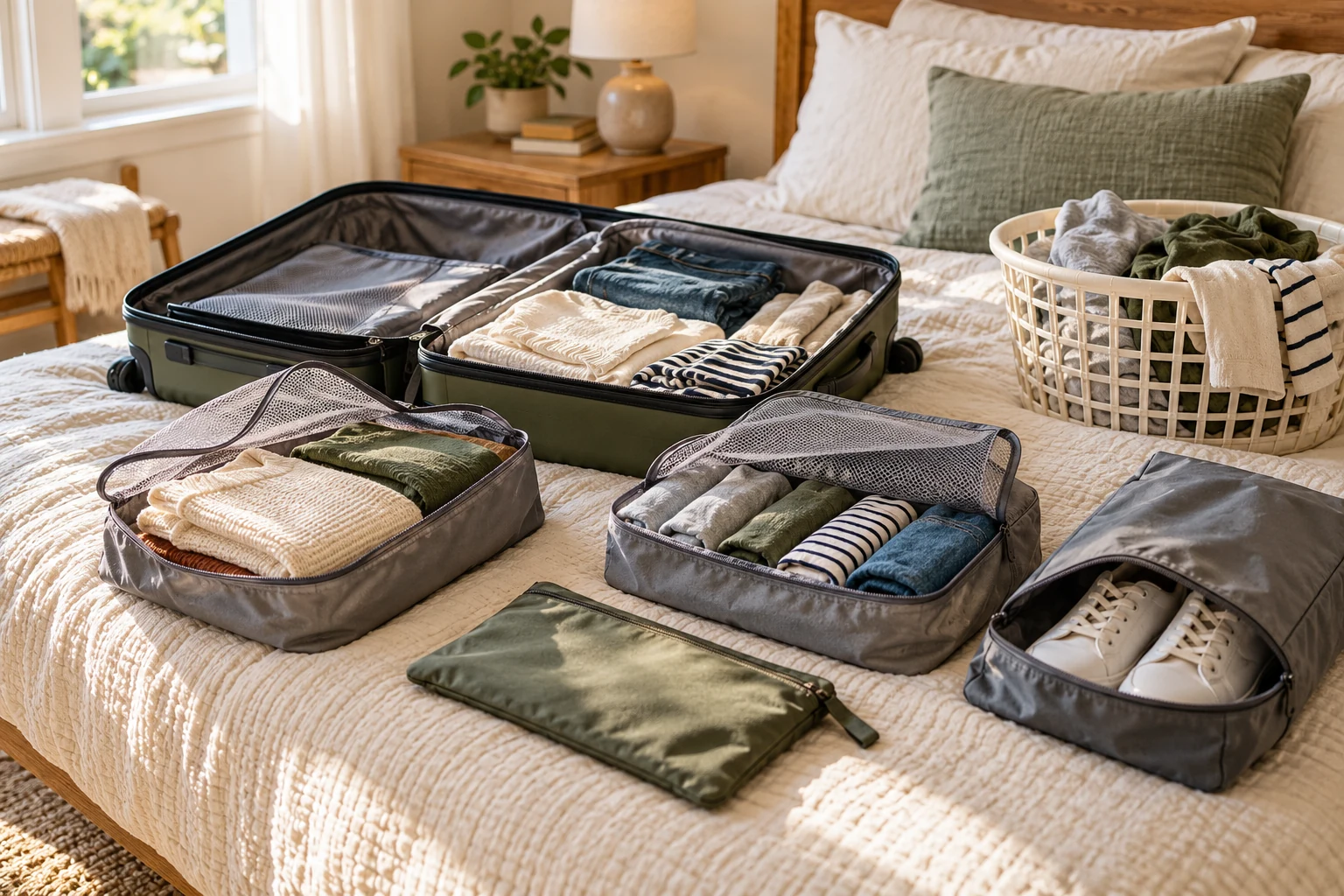
A post-trip packing cube reset can turn an open suitcase into a short, repeatable homecoming routine. The first job is to remove what needs attention now: worn clothes, toiletries, shoes, and anything borrowed for the trip. The second is to return clean belongings to their normal places. Only then do the empty organizers get put away. Doing these jobs in that order keeps a cube full of mixed items from sitting in a corner for a week. The aim is a calmer transition home, not a perfect display of travel gear.
Give yourself one clear surface and two destinations before opening the case: a laundry basket for items ready for washing, and a return area for things that belong elsewhere. If an item needs another decision, place it in a small separate group rather than sending it back into the suitcase. An organizer is helpful because it carries a group together, but its zipped shape can also hide unfinished unpacking. Open each piece once, empty it by role, and avoid using the empty bag as a temporary holding place for unrelated clutter.
Start with what cannot wait
Take out anything that should not stay in a closed case. Move worn clothing to the laundry basket, check damp items and shoes according to their actual care needs, and return toiletries to the place where they will be used or stored. Empty food containers and other perishable items promptly. The point is not to race through every possession. It is to keep the urgent groups from becoming harder to handle while you decide where the rest belongs.
Open one organizer at a time. A cube of clean shirts can be returned to a drawer, while a cube of worn clothing can be emptied into laundry. If the same cube contains both, separate those groups before putting the fabric bag aside. Check corners and mesh panels for a small item that might be missed. This simple one-bag-at-a-time rhythm prevents the contents of several organizers from spreading across the room and makes it easier to see when each bag is actually empty.
Keep a small “return later today” group for things whose usual place is elsewhere in the home. Chargers, books, and keys may have traveled in convenient pouches but do not belong in the travel storage box. Name their destinations before moving on. If the return group grows too large, pause and put away a few things. The suitcase should not become a second household storage area just because all its contents arrived together.
If you share luggage, agree on a simple handoff. Each traveler can take the organizers holding their own items while one person handles shared gear. Put mixed items in sight rather than guessing ownership. A short question now is easier than discovering a missing item when the next trip begins. The routine works best when it reflects how the case was packed, but it need not preserve that arrangement once everything is home.
Empty each bag by its travel role
Mixed sets make this step easier when each piece kept a clear role. One current BHAHB seven-piece set lists three packing cubes, three flat bags, and a shoe bag. Those are different containers, so check each according to what it held. Clothing cubes go to the clothing decision, flat bags may conceal small accessories, and the shoe bag needs its own look before storage. The listed piece types illustrate the unpacking sequence; they do not establish a particular care method for your actual bags.
A current AGUA AGANKKUA six-piece set includes compression cubes, a shoe bag, and a hanging toiletry bag. Open a filled cube fully rather than leaving a garment folded against the zipper, and inspect the toiletry compartments for small containers. A hanging organizer may still be at the destination bathroom in your mental map even after it returns inside the case. Check the whole piece before folding it for storage. The printed package count does not tell you how many compartments you actually used.
After emptying a piece, set it in a separate “empty organizers” area. This matters because an empty cube placed back among full ones can make the process feel unfinished. Do not fold the organizers yet if you still need to inspect them. A quick visual check for remaining objects, obvious spills, or trapped fabric is enough to identify the next action. Follow the actual manufacturer's care guidance for cleaning rather than assuming that every bag in a mixed set should be treated alike.
If a bag served no purpose on this trip, note that without judging the packing decision. The load may have changed at the last moment, or the item may be useful on a different journey. Keep the observation for next time: “shoe bag unused” or “flat pouch held spare socks.” A brief note is more practical than leaving the organizer in the suitcase as a reminder. Empty pieces should leave the case once their role has been reviewed.
Return useful items to their normal places
Work through the return area by destination rather than by the order in which items came out of the suitcase. Carry bathroom items back together, then desk items, then clothing or accessories. This cuts down on wandering between rooms with one object at a time. If a piece of travel gear has a dedicated home, put it there now. If it does not, choose a stable place that you can remember before the next departure. The goal is to make ordinary life usable again while the trip is still fresh in mind.
The neighboring packing cube bag type compatibility guide helps select a cube, flat pouch, shoe bag, or toiletry organizer for a particular load before travel. This article starts after the load comes home. The same piece can return to storage only after its contents are removed and its condition is checked. If a type of bag repeatedly made unpacking awkward, make a note for the next packing decision instead of rearranging all your organizers today.
Keep a small travel-only kit only when its contents are meant to stay together. An adapter or empty toiletry container may reasonably live with other travel supplies; a daily charger probably should return to daily use. Do not use the word “travel” as a reason to leave useful household items buried in a pouch. Ask whether you would look for the item in that pouch on an ordinary day. If the answer is no, return it to its normal location and let the empty pouch join the organizers.
Take a moment to check the luggage itself after the contents are out. Look in interior pockets and under the lining area that normally holds small items. Remove anything left behind, and handle any visible dirt according to the case's care instructions. You do not need a complex maintenance session after every trip. A quick empty-case look prevents an important small item from being discovered only when the suitcase is packed again.
Make the next trip easier without packing it now
Write down one or two observations while the trip is still clear. Perhaps the shoe bag was too awkward to open, a cube stayed unused, or a flat pouch made it easy to find socks. These notes are for a future decision, not a requirement to reorganize the entire collection tonight. You can keep them with the travel supplies or in a simple packing list. A practical record should be short enough that you will actually read it the next time you prepare to leave.
Consider the rest items separately. The travel rest kit packing routine gives a pillow or small comfort kit a reachable place during the journey and a path back afterward. When unpacking, return those pieces to their own storage or daily-use locations. Do not push them into a clothing cube simply because both came from the same suitcase. Their travel access role and home storage role may be different.
Keep empty organizers together in a place that suits your home. Some people stack flat pieces inside a larger cube; others keep the set beside the suitcase. Either is workable if the bags are empty, ready for storage, and easy to find. Avoid packing a damp or visibly dirty piece into another bag. Use the product's actual care directions when cleaning is needed, and let the piece reach an appropriate condition before closing it away.
If a piece was useful but awkward, do not immediately buy a replacement. First ask what made it difficult. Was it the wrong load, an inconvenient position in the suitcase, or a zipper that was hard to reach when packed? The answer may call for a different packing role rather than a new accessory. Keep the note with your travel plan. This post-trip review is a gentle way to improve a routine over time, not an invitation to turn homecoming into another shopping task.
Finish with an empty case and a clear stopping point
A useful stopping point is visible: laundry is in its destination, daily items have returned, organizers are empty and checked, and the suitcase no longer hides belongings. You may still have washing or other tasks to complete later. Those tasks can stand on their own instead of staying inside a half-unpacked case. Close the luggage only when a final look shows no item that needs to be returned somewhere else. The routine is complete because the case has stopped serving as a temporary closet.
On a busy return day, divide the work into a first pass and a second pass. The first pass handles time-sensitive contents and takes all organizers out of the case. The second returns ordinary items and stores the bags. Keep the unfinished group in a visible, named place rather than zipping it back into the suitcase. This makes the pause honest and easy to resume. A short routine that survives a tiring day is more valuable than an elaborate plan that works only when you have a free afternoon.
After a few trips, the process becomes familiar. You may learn that one cube usually goes straight to laundry, one flat bag holds items that return to the desk, and the shoe bag needs a separate check. That pattern can guide the next packing session without fixing every future load in advance. Different trips will still need different bags. The homecoming routine gives each used piece a clear end point, and that makes the next departure less likely to begin with missing gear.
A post-trip packing cube reset is complete when the contents have moved to their right places and the empty organizers are ready for future use. Open each bag by its role, handle immediate needs first, and keep a brief record of what worked. The cited mixed sets show why cubes, flat pouches, shoe bags, and toiletry organizers deserve separate checks after travel. A calm return routine turns the packing system back into available household space rather than leaving the last trip waiting inside a closed suitcase.