Crypto Commerce
Polk MXT35 slim center speaker versus Emerson soundbar
The Polk MXT35 slim center speaker is the more relevant starting point if you already have a compatible receiver and want a center-channel speaker beneath your TV. The Emerson EHS-2004 addresses a different setup: a listed 42-inch, 2.1-channel soundbar with an integrated subwoofer and several audio inputs. Your choice should follow the equipment you intend to keep and the connection you can actually use. Neither product description establishes which will make dialogue easier to hear in your room.
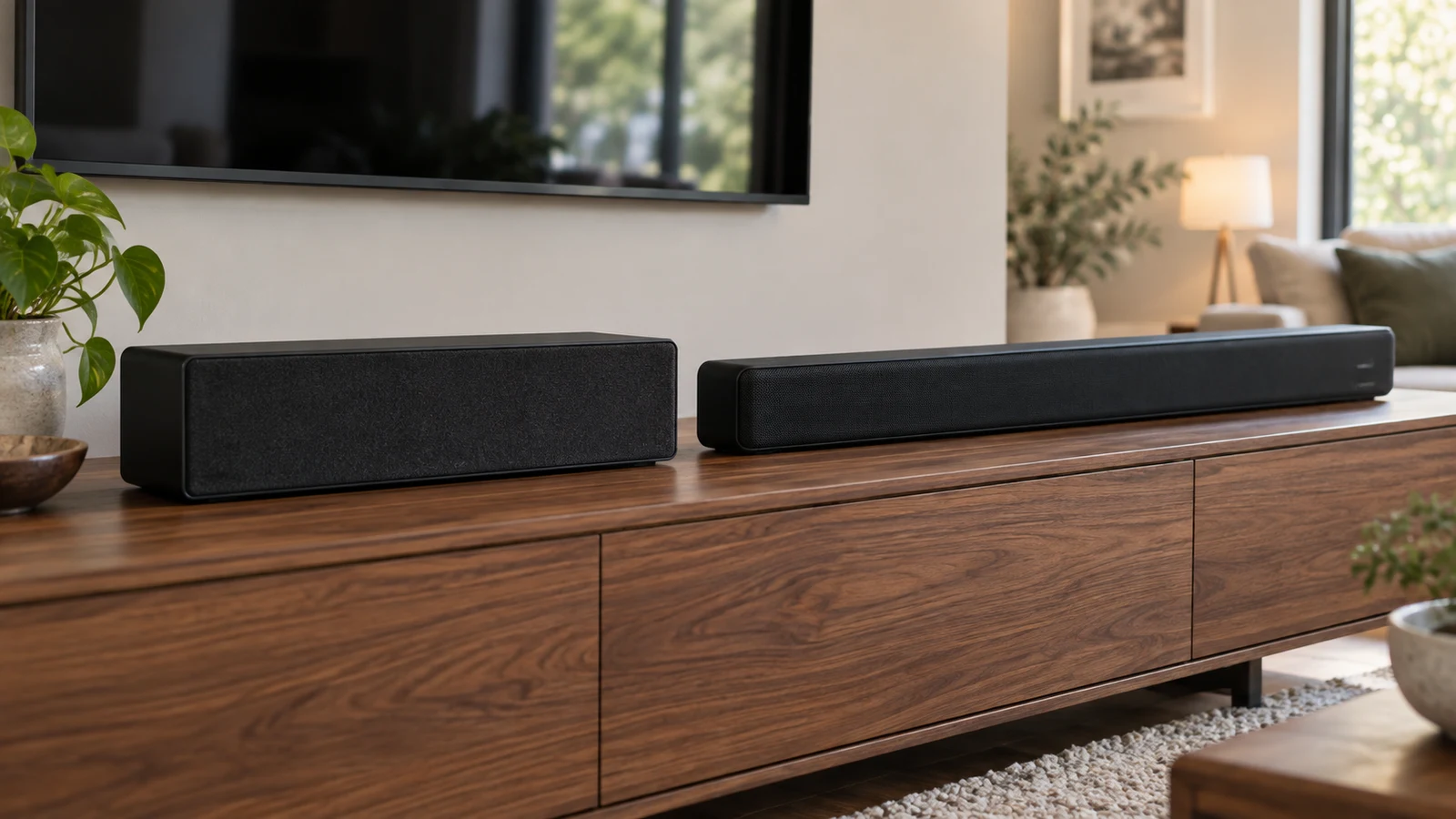
The Polk MXT35 slim center speaker is the more relevant starting point if you already have a compatible receiver and want a center-channel speaker beneath your TV. The Emerson EHS-2004 addresses a different setup: a listed 42-inch, 2.1-channel soundbar with an integrated subwoofer and several audio inputs. Your choice should follow the equipment you intend to keep and the connection you can actually use. Neither product description establishes which will make dialogue easier to hear in your room.
The distinction matters even when both products appear to suit the same space. A passive center speaker belongs within an amplified speaker system. A soundbar brings a different connection and control arrangement to the TV. Before comparing their shapes, decide whether you are adding a channel to an existing receiver setup or choosing a soundbar-based arrangement. That decision determines which compatibility questions deserve your attention.
Republeq lists the Polk Monitor XT35 as a slim speaker intended for placement beneath flat-panel TVs, with wall mounting and left- or right-channel use also described. The Emerson listing emphasizes its integrated subwoofer, Bluetooth streaming and wired inputs. These descriptions support a comparison of intended roles and installation questions. They do not provide a listening comparison, complete installation instructions or evidence that either model will work with every television.
Emerson Speaker Alternative: Where It Differs From A Receiver Center Channel
For a receiver-based system, consider what the center position needs. You may already have front speakers and want a cabinet that fits beneath the screen, or you may be replacing an existing center speaker. In either case, the receiver remains part of the proposed arrangement. The Polk MXT35 slim center speaker listing is relevant to that purchase, provided you establish electrical compatibility and the practical requirements of the installation.
Start with the receiver's exact model and documentation. Confirm that it provides an appropriate amplified center-channel connection, then compare its supported speaker requirements with the XT35's specifications. The supplied catalog description does not establish impedance or recommended amplifier power, so it cannot settle that match. Avoid treating a familiar brand name or a spare terminal as sufficient evidence. If the receiver is already in use, also identify what is currently connected to its center output.
The Emerson speaker alternative is worth examining when you want to connect a soundbar to the TV. Its listing names HDMI ARC, Optical, AUX and USB inputs. Those labels give you specific connections to compare with your television and sources. They do not establish that the soundbar can take the place of a passive speaker on a receiver's amplified center output. Do not plan that substitution without explicit manufacturer instructions supporting it.
Consider a household that already uses a receiver for its TV sources and front speakers. Choosing the Polk could preserve that arrangement while changing the center speaker, subject to compatibility checks. Choosing the Emerson would require a separate decision about how TV sound reaches the soundbar and which existing equipment remains in use. For that household, buying the soundbar would change more than the cabinet beneath the screen. The connection plan should explain those changes before purchase.
A household starting with the TV alone faces a different comparison. The passive Polk listing does not describe a complete TV audio system by itself. Any required amplification and other equipment belong in the purchase plan. The Emerson description is more directly relevant to someone considering a soundbar with listed TV inputs. That makes it a sensible candidate to investigate, though the TV's connections and supported audio settings still need to agree with the soundbar's requirements.
Dialogue claims deserve a separate reading. Polk's description emphasizes clear dialogue for movies, TV and gaming. Emerson's description also refers to clearer dialogue and balanced sound. These are catalog claims, not results from the same room, programme or listening position. They cannot establish a winner. If you have an opportunity to listen, use familiar speech at a comfortable level and pay attention to whether words remain understandable when music or effects enter the scene.
For an existing receiver system, ask which dialogue-related adjustments the receiver provides and how you would use them with the new center speaker. For the soundbar, examine the documented controls before assuming that it has a particular dialogue mode or adjustment. The Emerson listing confirms a remote and digital LED display but does not explain their complete functions. A control you depend on should be documented for the exact model, even if another soundbar you have used offered it.
Emerson Speaker Alternative: Cabinet Fit, Wiring And Daily Controls
Measure the available space with the TV in its actual viewing position. Record the usable width, the height below the picture and the depth available for the cabinet and connections. Look at the stand feet and the location of any TV sensor you need to keep accessible. The useful measurement is the unobstructed space where the speaker will sit. A wide shelf can still leave little room between the television's supports.
The Polk listing calls the XT35 slim and intended to fit beneath flat-panel TVs. That makes low placement part of its stated purpose, but it does not establish a fit beneath your particular display. The catalog title also includes “200 mm” without supplying a complete dimension drawing. Do not interpret that isolated measurement as the required shelf depth or clearance. Obtain the full cabinet dimensions before deciding whether it fits between supports or below the screen.
Emerson's listed 42-inch size gives a useful starting point for width planning. You still need its full dimensions and the position of its connections to assess a shelf or cabinet opening. Leave room to make the intended connections without forcing cables against surrounding furniture. If a cabinet door or drawer shares that space, include its movement in your assessment. These are installation questions to resolve for your furniture, not confirmed clearance specifications for either product.
Both descriptions mention wall mounting. Neither supplied description establishes the complete mounting hardware, fasteners or installation method. Check the exact model's instructions and package contents before buying accessories. A wall-mounted arrangement also needs an accessible cable route and a plan for reaching the connections later. If mounting changes the position of the television or existing equipment, evaluate that whole arrangement before treating wall placement as the easier option.
Daily operation can influence the choice as much as physical fit. With a receiver-based arrangement, determine how volume and source selection would work through your existing equipment. Emerson lists HDMI ARC for TV control and includes a remote, but the supplied description does not guarantee every control function with your TV. Establish which remote would handle ordinary viewing and how you would change inputs when using another source. Also check the care instructions for the chosen cabinet and grille; the listings do not specify cleaning products or maintenance procedures.
Understand Bluetooth Audio Direction Before Pairing Devices: Keep The Comparison Focused On TV Use
Emerson lists Bluetooth streaming from phones, tablets or laptops. That is a useful feature if you also want to play audio from those devices, but it does not resolve the TV connection on its own. Keep mobile listening and television listening as separate requirements while comparing the products. A feature that serves one source may not answer how another source connects, and the supplied Polk description does not establish a Bluetooth function.
If wireless playback is part of your decision, Understand Bluetooth audio direction before pairing devices before relying on a proposed pairing. For this comparison, the immediate question is whether your intended source and chosen audio device support the connection you plan to use. The Emerson description names mobile devices as streaming sources. It does not confirm a particular television pairing, wireless headphone arrangement or wireless connection to an existing receiver.
For TV viewing, choose one documented connection path to investigate first. If you intend to use the Emerson's listed HDMI ARC input, compare that requirement with the television's documentation. If you plan to use Optical or AUX, check the corresponding output and any required settings. USB also appears in the listing, but its presence alone does not explain which devices or audio files it accepts. Avoid building a purchase decision around an unspecified USB function.
The Polk's format language requires similar care. Its catalog description states Hi-Res Audio and Dolby Atmos certification, DTS:X support and a one-inch Terylene tweeter extending up to 40 kHz. Those are listing statements about the product. They do not show that one center speaker will produce a complete immersive system, decode a source format independently or make every recording sound clearer. Assess the receiver, source and full speaker arrangement when a particular format matters to you.
Emerson's integrated subwoofer is described as providing deeper bass. The supplied information contains no comparable measurements that would let you rank the two proposed systems for bass output, maximum listening level or room coverage. The Polk would be evaluated as part of the receiver system you assemble or already own. The Emerson would be evaluated in its intended soundbar arrangement. Comparing a single component with that arrangement requires you to account for the rest of the receiver system.
If you can audition the options, keep the purchase question specific. Listen from the seats you use and at the volume you expect for ordinary viewing. Notice whether speech remains comfortable to follow and whether you would need frequent adjustments. A demonstration may help you choose, but it should resemble your intended use closely enough to be informative. Without that opportunity, treat the catalog descriptions as feature information and leave performance rankings unresolved.
Understand Bluetooth Audio Direction Before Pairing Devices: Resolve The Purchase Around Your Main Source
Choose the receiver path when your aim is to retain a compatible amplified system and fill or replace its center-speaker position. The Polk MXT35 slim center speaker then deserves consideration for its listed role and low-profile placement. Confirm the dimensions and electrical match before committing. Its listed ability to serve left or right duty is another possible use, but it does not establish how many speakers are included or supply the other channels your arrangement may require.
Choose to investigate the Emerson when your main requirement is a soundbar with the listed TV inputs, an integrated subwoofer and optional mobile Bluetooth streaming. Confirm the connection you will actually use and the controls available with your television. If you already own a receiver, decide explicitly whether it remains part of the listening setup. Avoid buying first and leaving the relationship between the two audio arrangements unresolved.
Before ordering, match the selected item to Polk MXT35BLK or Emerson EHS-2004, as appropriate, and review the current variant, availability and price. Include any documented accessory or equipment needs when judging the total cost. Check support arrangements and applicable purchase terms rather than assuming that a speaker purchase includes installation help, particular cables or an unrestricted return option. Those details are not established by the product descriptions used here.
Open the listing for the arrangement that suits your TV and existing equipment, then resolve the remaining model-specific questions before checkout. For the Polk, that means a suitable receiver connection and a confirmed physical fit. For the Emerson, it means a supported TV connection and workable daily controls. If paying with cryptocurrency, read the payment details presented for the actual order; the product comparison does not establish the networks, fees or timing that checkout will offer.