Crypto Commerce
Plan wine refrigerator alarm checks before choosing
Suppose someone is near a refrigerator during the day, but the room is empty later. An alarm listed on a product page raises two separate questions: what condition can the appliance report, and who could notice its signal during that routine? The Equator Advanced Appliances WR 09 R description names a temperature alarm and a door alarm. It does not, on its own, tell you where their signals can be received. A different compact refrigerator may list temperature controls without specifying any alarm at all. Use the descriptions to identify what is advertised, then leave the missing notification details open until you can check the exact model's instructions.
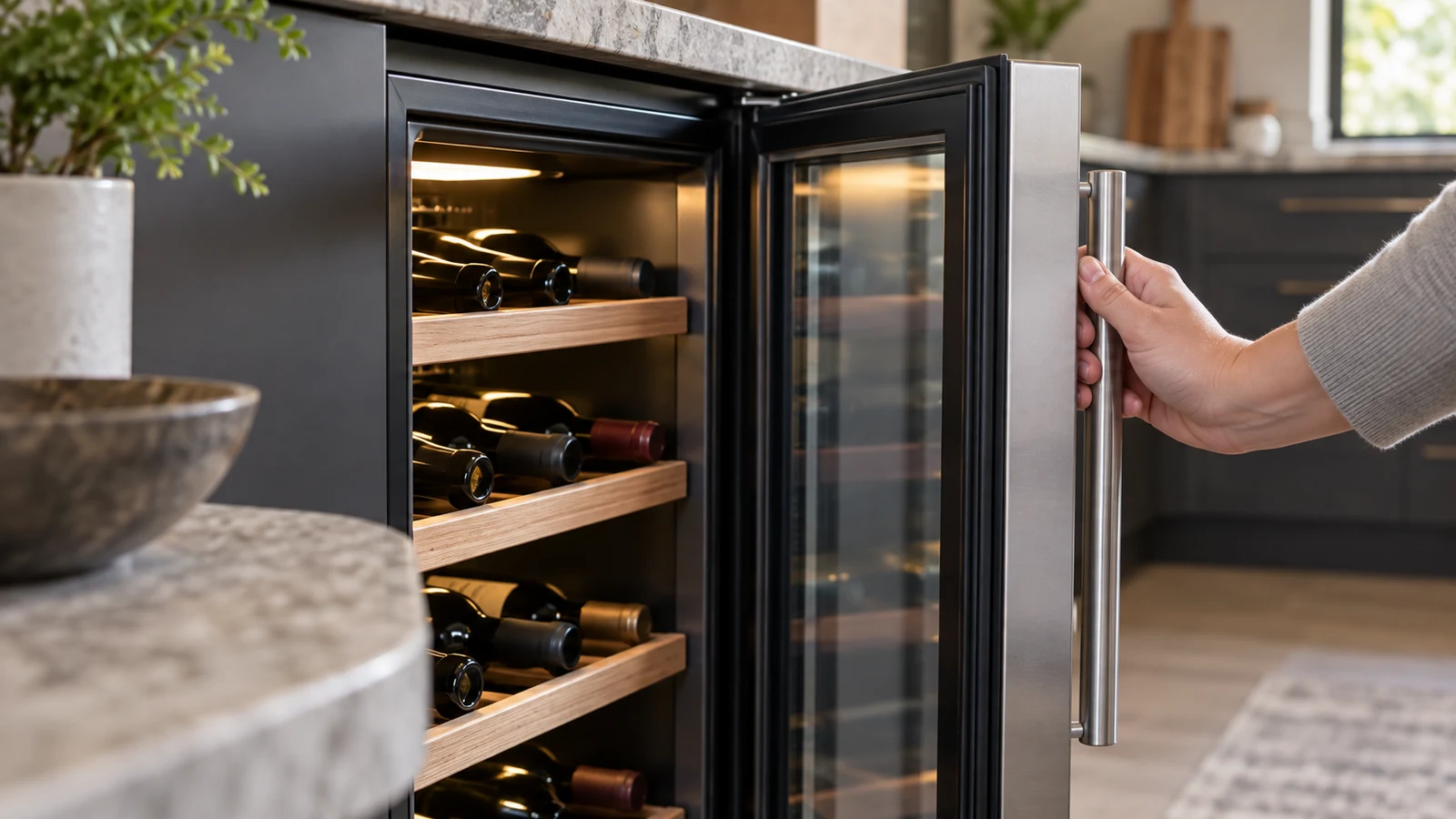
Suppose someone is near a refrigerator during the day, but the room is empty later. An alarm listed on a product page raises two separate questions: what condition can the appliance report, and who could notice its signal during that routine? The Equator Advanced Appliances WR 09 R description names a temperature alarm and a door alarm. It does not, on its own, tell you where their signals can be received. A different compact refrigerator may list temperature controls without specifying any alarm at all. Use the descriptions to identify what is advertised, then leave the missing notification details open until you can check the exact model's instructions.
Before comparing features, put your own need into a sentence. For example: “I want the person in the room to notice a door warning while they are nearby; I also need to know whether any notice is available when the room is empty.” That second requirement changes the inquiry. A signal at the appliance may be useful to someone present and unhelpful to someone away. Nothing in the supplied descriptions establishes that either model contacts a person remotely, so do not count an unattended-period notification as covered.
Compact Refrigerator Alert Checks Start With The Person Who Must Notice
For the Equator WR 09 R, start with the two conditions the description actually names. Its temperature alarm warns of sudden changes. Its door alarm signals when the door is not fully closed. Those are different advertised events, and you may care about them for different reasons. A door warning is relevant if an incompletely closed door could otherwise go unnoticed by somebody in the room. A temperature warning raises a separate question about what the appliance treats as a sudden change. The listing does not define the conditions more precisely, so the product description alone cannot tell you whether a particular situation would trigger either warning.
When planning wine refrigerator alarm checks, distinguish a claimed event from its trigger details. For the temperature alarm, ask what the manufacturer's instructions mean by “sudden changes,” whether the alarm refers to a displayed reading or another condition, and what the user is told to do upon receiving a signal. For the door alarm, ask how the exact model determines that the door is not fully closed and whether the instructions specify any delay before signaling. These are questions for documentation, not values to infer from the word “alarm.” A description that names the event leaves its operating conditions unresolved.
The next question is what a person would perceive. Is the indication a sound, a visual cue on the appliance, or something else? Could somebody notice it from the place where they normally spend time, or would they need to be looking at the refrigerator? How long does an indication remain available, and what do the instructions say happens when the underlying condition changes? The provided description does not answer these questions. It mentions an LED display and colored interior lighting, but neither statement identifies either feature as an alarm signal. Keep those features separate until the exact-model instructions connect them.
Picture the nearby person working elsewhere in the same room. If the instructions establish an audible indication, that person can then judge whether its described form is relevant to their routine. If the indication is visual only, the person might need to look at the appliance to notice it. Neither possibility is established by the listing. Avoid turning an imagined scenario into a feature claim: a useful question is “Where would I have to be to notice this?” rather than “Will I hear it from across the room?” The latter assumes a sound that has not been documented here.
Use the wine refrigerator alarm checks product listing to keep the model identity and the two advertised alarm claims together when you consult its manual or request exact-model information. A similarly named refrigerator, another finish, or a general explanation of appliance alarms may describe different behavior. Look for instructions that identify the WR 09 R and describe each warning in ordinary operating terms. If you cannot find those details, record the unanswered question instead of borrowing an answer from another product.
An alarm also needs a recipient who can respond. The description says that the appliance warns or signals; it does not say that it corrects the condition, records a continuous history, or ensures that somebody has received the warning. If a person is usually nearby, the signal's form and location may be the most practical details to settle. If the refrigerator is often unattended, ask explicitly whether the exact-model documentation describes any way to receive a notice away from the appliance. Until it does, treat that part of your requirement as unconfirmed, even though the two alarm functions are advertised.
There is no need to create a problem to investigate the feature. Do not leave the door ajar, change the contents' conditions, interrupt power, or defeat a control just to see whether an alarm appears. The pre-purchase question can be answered, or left unresolved, by reading the manufacturer's instructions and asking for clarification about the exact model. A demonstration offered by a seller is only useful if you can identify which model was demonstrated and what it actually shows. A described warning is a starting point for questions, not an invitation to induce a fault yourself.
Mini Fridge Thermostat Numbers Answer A Different Question
A setting tells you what control a user can select. It does not by itself specify when an alarm activates or how a person would learn about it. The Equator description mentions touchpad controls and a selectable temperature range as well as its two alarms; those facts belong to different parts of the decision. You may want to understand a selected setting, but a setting alone cannot tell you whether a change meets the alarm's trigger condition. Nor does the presence of a display establish that it shows an alarm indication. For this article, keep the focus on the path from a condition to an observable signal.
The separate guide to mini fridge thermostat numbers deals with comparing numbered controls. Read it if you need that comparison, then return to the alarm question with a different request: what event does this exact appliance signal, and how? For example, learning which way a numbered dial changes cooling would not reveal whether the model has a door warning. Conversely, learning that a wine refrigerator advertises a temperature alarm would not tell you what number to select on another refrigerator's dial. One kind of information cannot stand in for the other.
This distinction matters most when a description is short. A shopper can see the word “temperature” in a control specification and mentally supply an imagined warning, especially while comparing it with a product that explicitly advertises one. Understanding mini fridge thermostat numbers does not establish a warning. In your notes, give settings and alerts separate entries. Under settings, record only what the description or manual says about a selectable control. Under alerts, record the named event and the documented signal, or write “not established” if the material does not supply either. This makes the missing evidence visible without treating silence as proof that a feature is absent.
Compact Refrigerator Alert Checks For The Krib Alternative
The Krib Bling FL-2-80 Silver description lists seven temperature settings and interior LED lighting. It does not specify an alarm. Those compact refrigerator alert checks therefore start with a narrow statement about the supplied description, not a conclusion that the refrigerator has no alert. Its lighting describes illumination of the interior; its numbered settings describe a control. Neither statement establishes a door warning, a temperature warning, or any means of notifying a person. If an alert is essential to your choice, ask for the exact FL-2-80 manual or an answer that identifies this model and its documented alert behavior.
Approach compact refrigerator alert checks as an open question about that specific alternative. Ask first whether the model documents an alert for either event you care about. If it does, follow up on what triggers each indication, what form it takes, where it can be noticed, and what the instructions tell the user to do. If the documentation does not establish an alert, mark the requirement unresolved for comparison purposes. Do not fill in an absent specification from the presence of a thermostat, a light, or an alert described for another refrigerator.
The two products therefore enter your comparison on different footing. The Equator WR 09 R description explicitly names temperature and door alarms, while their delivery details remain unanswered here. The Krib FL-2-80 description supplies settings and lighting, while even the existence of a relevant alert remains unanswered here. Those are useful distinctions. They let you ask a focused follow-up for each product instead of assigning both a single “has alarms” or “no alarms” label. You can compare a verified event with another verified event later if exact-model information supports that comparison.
Return to the daytime-and-later routine you wrote down at the start. During the occupied period, decide whether an on-appliance indication would meet your needs if the manufacturer's instructions establish one. For the empty-room period, specify who must receive notice and by what kind of documented route. A nearby sound or visible indication would not, by itself, establish notice to someone elsewhere. Ask about that requirement separately for each model. Do not assume that a feature called an alarm includes a phone alert, a message, or any other off-appliance delivery.
Keep a short requirements note you can actually use when information arrives: “Equator temperature event: advertised; exact trigger and signal: to confirm. Equator incompletely closed door event: advertised; exact trigger and signal: to confirm. Krib relevant event and signal: not specified in supplied description; request exact-model documentation. Notice while away: unconfirmed for both.” This is a record of what you know and what you still need, rather than a scorecard. Revise only the entries supported by the material you receive, and identify the model named in that material before relying on it.
If a reply describes an alarm without explaining its signal, ask one narrower question: “What would the user see or hear, where, and for how long?” If it describes a signal without saying which condition activates it, ask which event it represents. If it offers a general feature sheet, check that the specific model appears on it. These requests keep the discussion on the notification path. They also prevent a vague assurance that an appliance “has an alarm” from being mistaken for evidence that it meets your routine when nobody is there.
Before choosing, separate your nonnegotiable requirement from a nice-to-have. If nearby notice is sufficient, you still need to establish a signal that the intended person could perceive in the relevant circumstances. If notice while away is essential, leave the decision open until exact-model information documents a way to deliver that notice. For this purpose, wine refrigerator alarm checks should establish who could receive each warning as well as which events are advertised. The Equator listing gives you two named events to investigate; the Krib listing leaves the alert question itself open. Neither description establishes who will receive a warning during an unattended period, so that requirement deserves its own answer before checkout.