Home & Living
Picture mat size compatibility: match print, opening, and frame
Match a pre-cut picture mat to the actual print, visible crop, and inside frame space before ordering multiples.
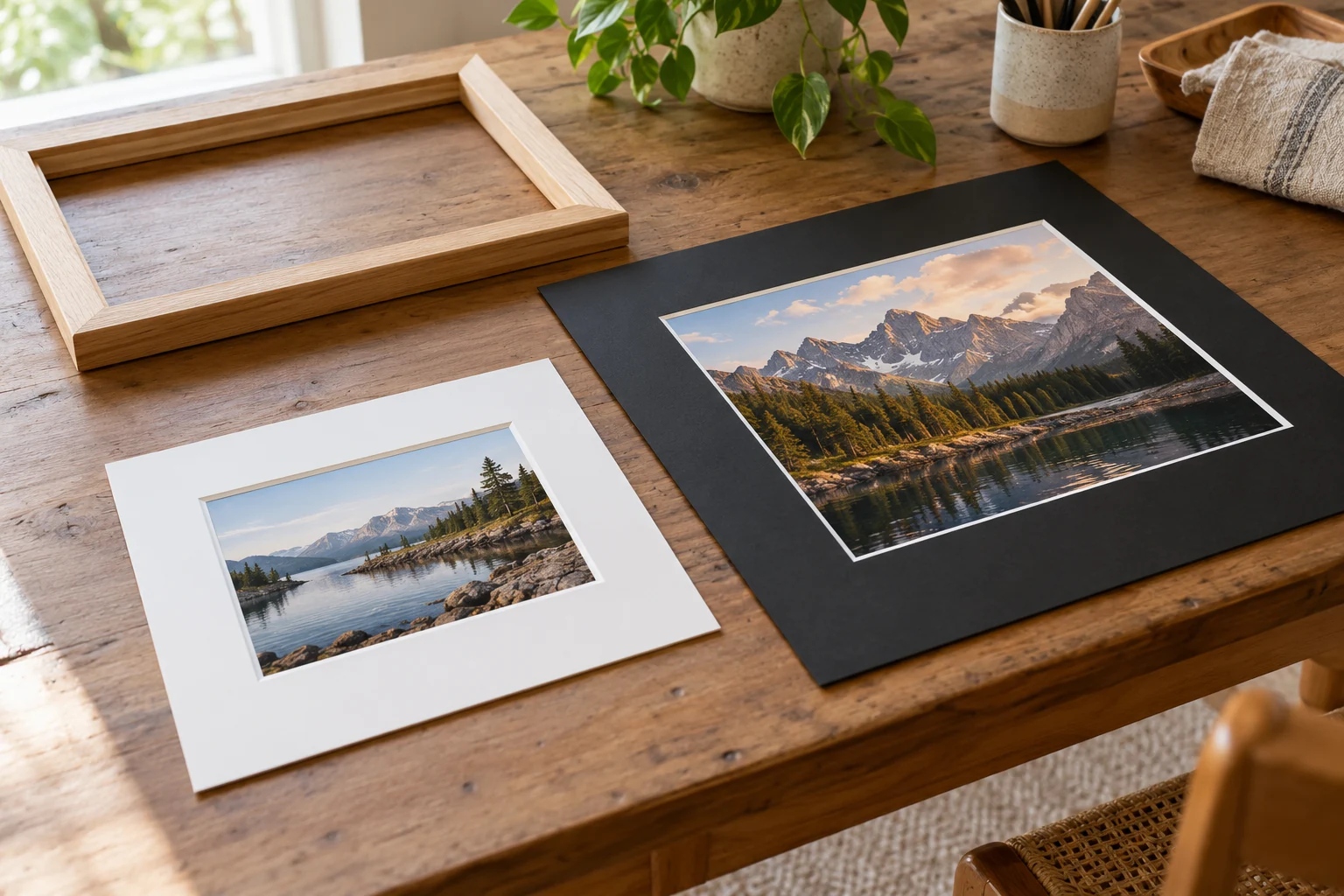
Picture mat size compatibility begins with four separate measurements: the artwork, the visible opening, the outside edge of the mat, and the inside space of the frame. A mat sold for an 8×10 photo can have a cut opening smaller than 8×10. That smaller opening can hold the edges of a print, but it can also hide a signature or part of a subject near the border. Check the particular print before treating a nominal size label as a fit guarantee.
This guide uses two complete pre-cut mat listings as examples of different size paths. One presents an 11×14 outside mat with an opening intended for an 8×10 picture. The other presents a 16×20 outside mat for an 11×14 picture. Neither listing proves that a mat fits a frame already in your home or that its opening shows the part of your image you want to keep visible. The useful decision is which outside size and opening work together for your actual frame and print.
Start with the print you intend to show
Take the print, drawing, or photograph out of its sleeve and measure its actual paper edges. Write down width and height in one orientation, then mark the area that must remain visible. An 8×10 print can have important information close to a short edge. A crop that works for a landscape portrait may cut off a date written at the bottom of a vertical print. The nominal paper size alone cannot answer the visibility question.
Mark a safe visual margin on a temporary overlay or a separate piece of paper. Do not draw on the artwork itself. If the print is irreplaceable or fragile, handle it according to appropriate preservation advice and make the check using a same-size paper template instead. The goal here is a purchase fit check, not a conservation treatment. For an ordinary replaceable print, you can lay clean paper strips over the edges to preview the mat opening.
Write “must show” next to anything you cannot afford to hide: a signature, a caption printed on the image, a face close to the edge, or the complete border of an illustration. A mat window often overlaps the paper edge to keep the work seated. The question is whether its particular overlap conceals content you care about. Leave yourself a clear measurement before comparing listings.
Read outer size and opening as different claims
The white pre-cut 11×14 picture mat is described for an 8×10 photograph. Its native description gives an outside mat size of 11×14 inches and an opening of 7.8×9.8 inches. That opening is slightly smaller than the nominal print, so it can cover a narrow strip at each edge when centered. Check the actual cut and your image before assuming that hidden strip is acceptable.
The black pre-cut 16×20 picture mat is presented for an 11×14 photograph. Its page and first gallery show a 16×20 outside size and a 10.5×13.5-inch opening. That is a different frame and print path from the white mat. A 16×20 outer mat does not go into an 11×14 frame simply because the picture behind its opening is called 11×14.
Both pages describe beveled pre-cut mats. The first listing says it includes backing and clear bags, but its first gallery uses a pack-count label not established by the title. The second listing presents a ten-pack of mats. This guide uses the dimensions and opening claims for fit screening and makes no recommendation based on the first pack quantity. Confirm current package contents with the seller if quantity determines your order.
Check the frame before counting a match
Open the frame you plan to use, if that can be done safely, and measure the space available for the mat at the back. The frame's advertised display size, its glazing, and the inside ledge that holds the contents may be described differently by different sellers. A label on the outer frame is not a substitute for the actual space that will accept a pre-cut mat. If a frame cannot be opened or its fit is unclear, pause the match and look for the frame maker's specifications.
For the white mat, the outer 11×14 dimension calls for a frame that accepts an 11×14 mat. For the black mat, the outer 16×20 dimension calls for a frame that accepts a 16×20 mat. Do not reverse those sizes with the print sizes named in the titles. The number nearest “photo” tells you the intended print; the number describing “outer” tells you which frame opening to investigate.
Check depth as well as width and height. A mat, print, backing, and glazing form a stack, and a frame that fits their outer footprint may still be too shallow to close correctly. The white listing describes backing as included; the black listing should not be assumed to include the same materials. Lay out what you will actually place behind the glazing and compare it with the frame's instructions. Neither product page proves that the assembled stack fits a particular frame.
Keep a note of orientation. An 11×14 mat may be turned with its longer side upright or sideways, but a print or frame hanger may force one arrangement. A centered rectangular cut can work in both orientations if the print and frame permit it. Check how the actual piece will hang or stand before ordering several mats of one size.
Preview the visible crop
Make a paper window with the listed opening dimensions, or use a ruler to outline the opening on a transparent sheet. Place it over a copy or a same-size template of your image. For the 11×14 outer mat, preview a 7.8×9.8-inch window over the intended 8×10 paper. For the 16×20 outer mat, preview a 10.5×13.5-inch window over the intended 11×14 paper. Check all four edges rather than just the center.
If the image includes a printed white border, decide whether you want that border visible. You may accept a smaller opening when it hides uneven paper edges. You may need another opening when a handwritten note or artwork reaches the edge. These are choices about the image, not defects that can be settled from the mat's title. A pre-cut opening is fixed; it cannot reveal more of a print without using a different mat or altering the mat.
Look at the shape as well as the measured width and height. A square subject printed on rectangular paper can look off-center inside a rectangular window. A portrait close to the top of the image may appear crowded if the window removes more of the upper border than you expected. A quick paper preview gives you a chance to reject an opening before buying a pack.
Do not confuse the gallery photograph's sample image with a guarantee about your image. The product photos show how a print might sit behind each mat. Your crop depends on the exact print, its placement, and the cut delivered. If a small difference matters, ask for the current opening tolerance or buy a mat whose actual opening you can inspect before committing to a larger project.
Keep the mat decision separate from the display plan
A mat solves an inside-the-frame relationship: paper behind a cut window, with the mat's outside edge fitting a frame. It does not tell you whether one frame or several frames make sense for a room. The 8×10 picture frame cost guide owns the decision between a single decorative frame and a four-frame set. Use that buying plan after you know which prints are ready; use this guide to verify the mat opening and outside size for each print and frame.
Likewise, the wall photo display compatibility guide compares a framed picture on a ledge with loose prints on a clip display. That is a wall support and placement choice. A mat is relevant only if your selected display includes a frame that can accept it. Buying a pack of mats will not settle where the finished frames can go or how a wall display is supported.
When you plan a set of photos, make a row for each one. Record print dimensions, required visible area, proposed opening, mat outside size, and intended frame. One mat size may serve several photos if their dimensions and crops permit it. A mixed set may need more than one mat size. Resist turning “ten mats” into “ten compatible frames” without checking every frame and print pair.
Account for backing and package contents
The white mat listing describes mats, backings, and clear bags. Those are separate pieces with separate uses. Verify current package contents and whether the backing is suitable for your frame and print. A backing board can support a display, but it does not change the mat's outside size or the visibility of the cut opening. A bag may be useful for handling or storage, but it is not part of an installed frame unless the product instructions say so.
The black mat listing presents a pack of pre-cut mats; do not assume it supplies a backing or a frame. Read the current item details and the first gallery as descriptions of that listing, then ask the seller about anything you need to complete the frame stack. The number of mats in a package and the number of finished frames you can make are separate counts when other components are missing.
Set out the components before you buy multiples. You may already have a frame and a backing, and need only a mat with the correct opening. Another project may need a full set of parts. A pack of ten identical mats can be suitable when ten prints and frames share the same measurements. For one uncertain frame, quantity adds little until the first fit is proven.
The first listing's title does not specify a pack count, while its gallery image prints “25 pack.” Treat that as a detail to confirm, not as a count to build your project around. The dimensions can still help you decide whether this type of mat fits; package quantity requires its own current verification if it affects your order.
Use a four-column fit record
Draw four columns labeled print, visible opening, outer mat, and frame space. Put the measured print dimensions in the first column and the content you must show beside them. Put the candidate cut opening in the second. Put the mat's outer dimensions in the third. Put the actual inside frame dimensions and available stack depth in the fourth. The row passes only when the relationships work together.
For example, an actual 8×10 print with no vital detail at its outer edges may work behind the listed 7.8×9.8 opening, inside an 11×14 outer mat, in a frame that accepts an 11×14 mat. This is a conditional example, not a promise that every 8×10 image can lose that edge. If the print has a signature close to the paper boundary, the same window may fail your visible-area test even though the outside mat fits.
An 11×14 print can be evaluated against the 10.5×13.5 opening of the black mat and the 16×20 outer dimension. A frame that accepts only an 11×14 mat does not become suitable because the print is 11×14. If the 16×20 frame has enough interior space and the crop is acceptable, the row can move to a physical trial. If either measurement is unknown, leave the row open rather than forcing a check mark.
The trial should use clean hands and a safe surface for ordinary prints. Place the print behind the mat without attaching it permanently, set the stack into the frame, and inspect it upright. Check whether it shifts, whether the opening hides important content, and whether the frame closes without pressure. For valuable or delicate work, ask a qualified framer or conservator before choosing contact materials or mounting methods.
Make the purchase decision from the row
Choose the 11×14 outer white mat when your actual 8×10 print tolerates its measured opening, your frame accepts the outer size and stack, and the package contains what you need. Choose the 16×20 outer black mat when the actual 11×14 print tolerates the 10.5×13.5 opening and the larger frame accepts it. The listings are examples of different size paths; color and material preferences come after the fit questions.
If the print, opening, and frame do not all agree, find a different mat size or opening. If you have no frame yet, decide the visible crop first and then seek a frame for the mat's outside size. If you have a frame already, measure its available space before treating any nominal product title as a match. The measured print, visible image area, mat, and frame must all pass the same fit check.
Before checkout, revisit the live listing for dimensions, package contents, and availability. The saved product pages establish the size claims discussed here, but they do not freeze future stock or seller edits. Keep your four-column record with the order so that a delivered mat can be checked against the same print and frame. If a current listing differs from your recorded measurements, pause and resolve the difference before buying.