Tools & DIY
Picture hanging wire labels: coil count, length and load
Read coil count, roll length, coating and seller load labels on picture hanging wire before choosing a frame-side supply.
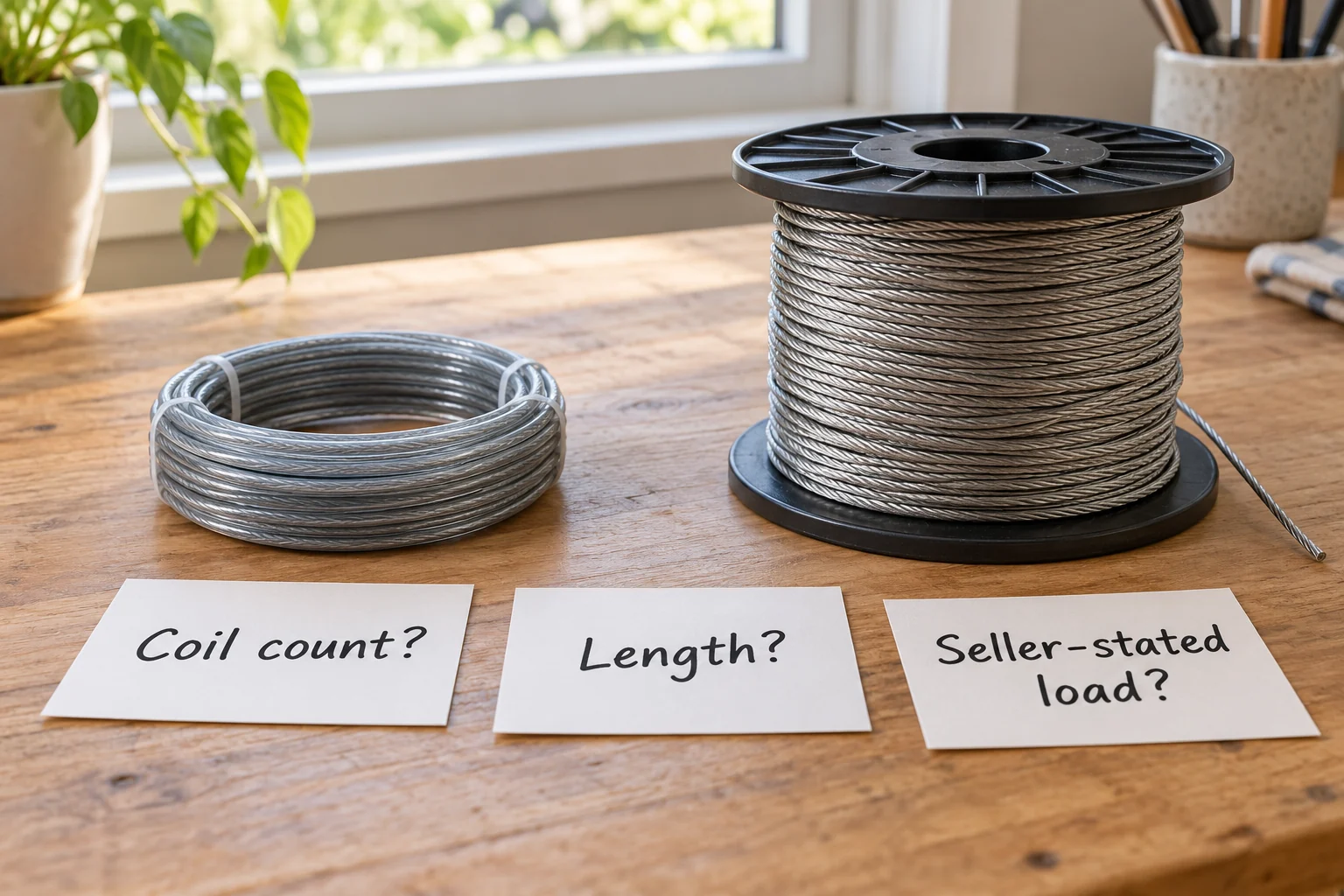
Picture hanging wire listings put several numbers on one package: feet of wire, number of coils, and a weight figure. They answer different questions. A long roll may serve many frames but does not make an unsuitable attachment safe. A short coil may be enough for one frame but still needs the right frame fittings and wall hardware. Read the wire offer for what it supplies, then check the rest of the hanging system separately.
Begin with the frame, not the wire label
Turn the frame around before deciding how much wire to buy. Look for the fitted points where a wire would attach. Some frames already have a wire; others have D-rings, screw eyes, a sawtooth hanger, a keyhole, or no suitable attachment. A wire roll supplies wire. It does not automatically supply the frame-side fittings, wall hook, fastener, or instructions needed for a particular frame. Record what is actually on the back before using a wire rating to make a shopping decision.
Notice the frame's size, orientation, backing, and condition. A loose rear fitting or damaged frame should be addressed before hanging anything from it. If the maker calls for two separate wall support points, adding wire may change the planned method. Keep the maker's instructions in view. The picture hanging hook compatibility guide addresses the wall-side hook, frame connection, and surface as a separate decision; this article stays with the information printed on two wire offers.
Write a short inventory: frame attachment present, planned wall support method, and whether a wire is actually permitted. That note prevents a common purchasing error. A product called “picture wire” can look like the missing part, but a wall hook cannot receive it unless the frame is prepared to hold the other end. If you cannot establish the frame's intended hanging method, obtain its instructions or ask a qualified installer before cutting wire or making holes.
Separate count from usable length
One current OOK coated picture hanging wire offer names a 24-pack of nine-foot coils. A current CountryArtHouse bulk picture wire offer names an 825-foot full roll. The first gallery image shows a loose coil; the second shows a spool. These details identify the offers, but the photographs cannot measure delivered length or prove fit for a frame.
A count of pieces and the length of each piece answer different questions. Multiplying them can estimate total material only after the delivered package confirms both numbers. Even then, the total does not tell you how many frames you can hang. Estimate the length for each approved path behind its frame, including any allowance the maker requires for the ends. Do not derive that allowance from a thumbnail or a general rule of thumb. Keep the frame maker’s instructions beside your measurements.
Compare a continuous supply with individually cut pieces in terms of the actual work. A larger supply needs a way to track what remains and keep it identified. A precut piece can be too short for an approved path. Neither format changes the frame’s permitted wire or attachment method. Do not join offcuts or substitute another connection just to make a short piece reach. If the prescribed continuous length is unavailable, obtain material that fits the instructions before starting the installation.
Keep package count, length per piece, and total roll length on three lines when comparing offers. If a listing gives only one of those figures, mark the others unknown. Read the exact current offer and selected variant rather than inferring size from a URL or picture. When the package arrives, check the label and contents before cutting. A different count or size is a product-identity issue to resolve, not an invitation to adapt a hanging plan around unexpected material.
Read coating and wire construction as descriptions
The OOK page describes plastic-coated wire. The CountryArtHouse page describes cable-type braiding without coating. These are seller descriptions of supplied wire, not tests of a complete hanging system. Their gallery images show a coil and spool. Neither image establishes coating thickness, long-term appearance, or behavior against a particular frame and wall finish.
A coating can matter where wire contacts a frame or wall, but the effect depends on the actual contact points and installation. Check the frame maker's instructions for permitted wire type and any protection needed at the back of the frame. Do not infer that a coated wire eliminates abrasion or that an uncoated wire will damage every surface. Product copy can identify a feature to investigate; it cannot settle the fit and finish question in a room it has never seen.
Inspect the delivered wire before use. Kinks, fraying, damaged coating, or damage to its storage form are reasons to pause and consult the seller or maker’s guidance. A catalog photograph cannot show the condition of your particular package. Keep the label or note the model so a later replacement can be matched to an identified material instead of an unmarked length left in a drawer. If the condition or identity remains uncertain, resolve it before making a cut.
Keep the weight numbers in their own boxes
The OOK title uses 50 pounds and its description says “holds up to 50 lb.” The CountryArtHouse title uses 30 pounds, while its description says “minimum breaking strength 85 lb.” Those are different seller phrases, not a shared system rating. Breaking strength alone does not establish what a finished frame-and-wall installation can safely hold.
For a hanging frame, the load path includes the frame, frame-side attachments, wire and its end connection, wall hook or other support, its fastener, and the wall material. The lowest suitable capacity or a weak installation point can control the outcome. The seller's wire figure cannot fill in missing information about those other parts. Check the frame and hardware makers' instructions for the exact combination; avoid transferring a number from one wire listing to a hook or wall that was never tested with it.
A heavier frame deserves particular care because the consequence of a failed connection is greater. If you cannot verify the attachment method, substrate, or load guidance, stop the installation and get appropriate help. Avoid placing an uncertain hanging above a bed, seat, walkway, or valuable object while you investigate. This is a limit of what product-page numbers can establish, not a promise that either listed wire will perform safely under a particular load.
When two numbers appear on one offer, record the exact label beside each before comparing them. A load description, a breaking-strength statement, and a recommended working limit can mean different things. Do not select the largest number because it is printed nearby. Ask the maker which rating applies to the intended installation, how it was measured, and what conditions it assumes. If those answers are unavailable, leave the load question unresolved and use a method whose full hardware and wall requirements can be verified.
Keep the frame's own weight separate from the weight of any glass, mat, backing, or displayed object if they are not already assembled. The relevant object is the finished frame that will hang. An estimated number from a bare frame package can be misleading once other parts are added. If weighing the complete object is impractical or its attachment condition is uncertain, do not substitute the picture-wire label as a measurement. Have the system assessed with the actual object and wall in mind.
Plan the wire purchase around the actual job
Decide whether you are replacing one missing length, preparing several similar frames, or keeping a supply for later work. A single known frame may favor a small amount of wire if the maker specifies the right type and length. Repeated work may justify a larger roll, but only if the same wire is appropriate across the frames involved. Do not count frames and assume they all use identical rear fittings. Inspect each one before estimating how much material you need.
Keep an allowance for the maker's approved attachment method, but do not take a cut length from a generic online photo. The distance between attachment points, how the wire is fastened, and the desired position behind the frame all affect the piece required. A short paper sketch can help record those dimensions without committing to a cut. If the maker's instructions call for a knot, crimp, or another specified connection, follow those instructions or seek help; the two wire listings do not establish a universal method.
Wire length is also separate from the size of the artwork and the frame's wall footprint. The picture frame size guide explains artwork, mat opening, and assembled frame measurements. Use that decision when planning the wall arrangement. Here, the relevant measurement is the approved path and connection behind a frame already chosen. Keeping the two notes separate avoids buying a long spool because a frame has a large outside dimension when its actual wire path has not been checked.
Check the offer again when it arrives
Before cutting, compare the delivered label with the current offer you chose. Confirm the stated count or roll length, wire type, coating description, and any instructions supplied. Keep the label until the hanging work is complete. If the seller has supplied a different variant, resolve that discrepancy before using it. A change in package quantity may be a convenience issue; a change in wire construction or maker guidance can affect whether the planned method is still appropriate.
Make a short job note before using the wire: the exact offer, the package label, the frame's rear fitting, and the wall support method you verified. Add the date and any maker instruction sheet you consulted. This is useful when the picture is moved later. Someone taking it down can see whether the wire was selected for that frame or was simply available in a workshop. If an attachment becomes loose, the note helps separate a changed frame part from a question about the remaining wire. It does not replace a current inspection of the hardware.
Store unused material so that it stays identified and does not tangle with other hardware. A short coil can remain with its original label; a bulk spool can keep its product card attached. Do not save unmarked scraps as though they retain a known rating or type. The next person using the cabinet or work area should be able to tell which wire remains, where it came from, and what maker instructions belong to it.
The comparison should end with the job, not the largest package or weight figure. Identify the wire type and length the frame maker permits, the attachment method, and the wall support that completes the path. Then compare the current offers and verify the delivered label before using any material. A product listing can identify a possible supply; it cannot certify the finished hanging. Keep an uncertain frame or wall out of service until its installation requirements have been resolved.