Home & Living
paper towel bulk pack: check sheets, holder fit and storage
Check sheets per roll, actual holder fit and dry storage before choosing an eight- or twelve-roll paper towel supply.
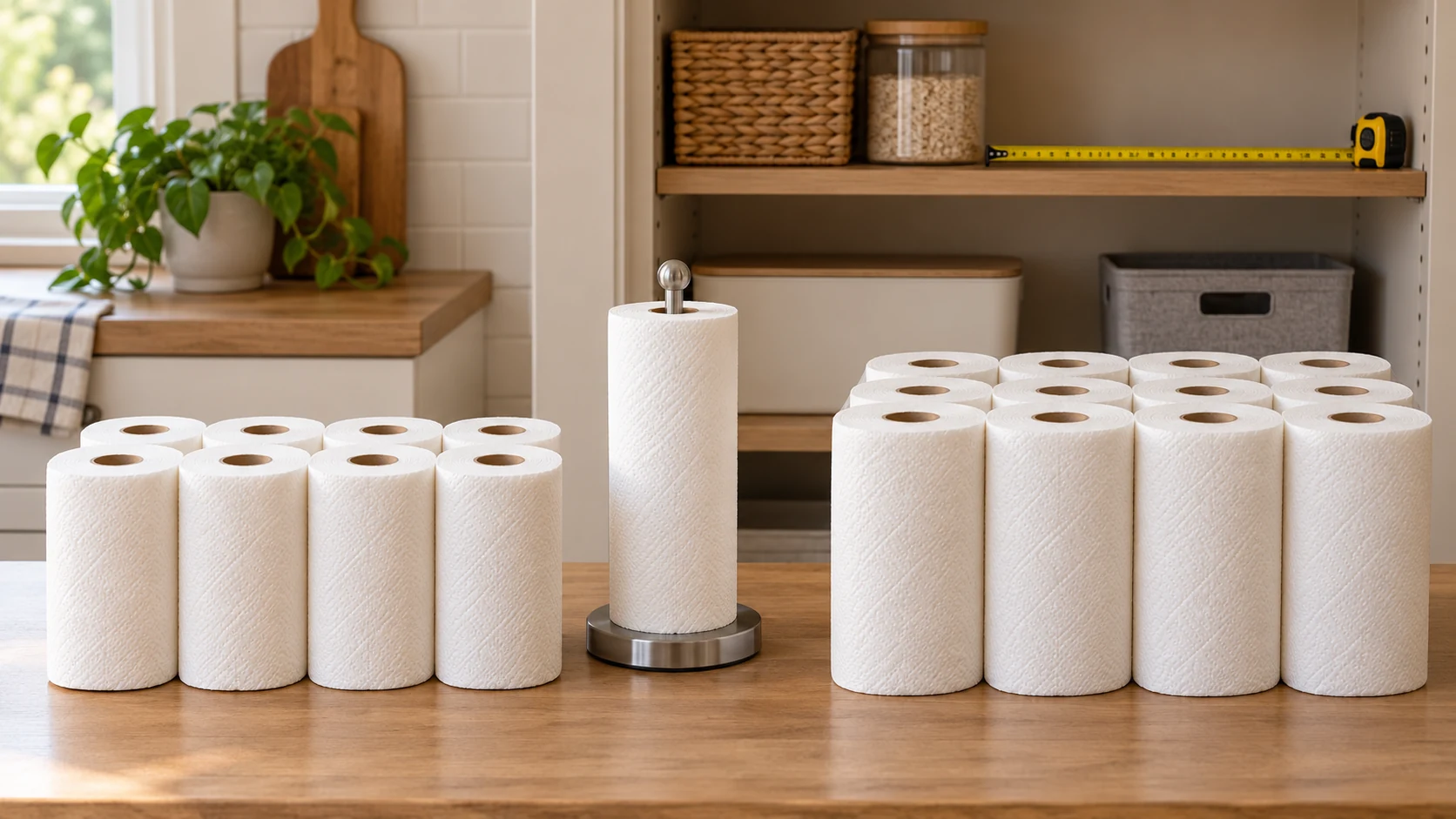
A paper towel bulk pack can clear a shopping task for weeks, or occupy a cabinet long after the kitchen has changed. The useful comparison begins with how many sheets your household actually uses and where the unopened rolls will go. A printed roll count alone cannot answer either question. Before buying a paper towel bulk pack, check the exact sheet count, the holder you use and the dry space you can spare.
Two native listings show why that small check matters. An eight-roll tree-free paper towel listing has a gallery package marked 75 sheets per roll, although the listing description does not state that count. A twelve-roll bamboo paper towel listing states 1,800 sheets total and 150 per roll. These figures describe the captured pages and package art, not a guarantee about a later delivered variant. The gallery branding also differs from the names on the native listings, so confirm the actual package before relying on either set of labels.
Count sheets before comparing rolls
Start with the supply unit your household uses: sheets, not rolls. A large roll and a small roll can look alike in a product thumbnail. If the count is certain, multiply sheets per roll by rolls per pack. The twelve-roll listing's stated 150 sheets per roll yields its stated 1,800 sheets. The eight-roll gallery says 75 sheets per roll, which would yield 600 sheets if that is the delivered pack. The eight-roll native description leaves the sheet count unstated, so treat 600 as a calculation from the pictured package, pending confirmation.
Do not turn those figures into an automatic verdict. The sheets may differ in size, perforation or thickness, and the captured pages do not establish how many sheets your household would use for the same task. A jumbo-looking roll can be awkward in a holder. A long supply can be inconvenient if several rolls must sit near damp cleaning supplies. First establish which item you are buying, then compare its confirmed count with the space and routine you have.
Make a brief note before checkout: listing URL, selected option, roll count, stated sheets per roll, and any count that appears only on a photograph. If the page and package disagree, ask the seller to confirm the chosen option instead of selecting whichever number makes the purchase look better. After delivery, check the outer wrap and a roll before storing the rest. Keep the record with the household shopping list so next month's decision uses what arrived, not what an old thumbnail appeared to show.
A published guide on bulk trash-bag count covers the separate problem of bag count and bag size. The same discipline of checking the actual unit applies here, but the useful unit for these towel listings is a sheet on a roll that fits a holder. This article does not carry over any bag-size rule or claim a towel pack has a lower cost.
Check the roll holder and reach
Measure the place where a new roll goes. A countertop holder has a spindle and room around it; an under-cabinet or wall-mounted holder may have a tighter opening. Set a current roll beside the holder and note its outer diameter and width. If a candidate pack gives exact dimensions, compare those with the space available while the roll turns. If dimensions are absent or unclear, do not assume the words “family size” or “jumbo” establish fit.
Think about how the roll is loaded too. A holder close to a wall can accept a roll on its spindle yet leave too little room to pull sheets easily. A paper towel roll stored in a cupboard may be easy to carry to the kitchen, while a very bulky roll might force the holder into an inconvenient position. Look at your actual counter and drawer arrangement, then choose the supply that will remain usable. There is no benefit in filling a cabinet with rolls that require an awkward substitute holder.
The public guide on paper towel dispenser refills owns the choice between roll and folded formats. These two products are roll packs. If your home or workplace uses a folded-paper dispenser, decide that format question first. This comparison assumes a roll holder that you intend to keep; it does not recommend changing dispenser hardware to make a particular bulk pack work.
Count the storage spots as well as the active holder. The roll in use is only one part of an eight- or twelve-roll purchase. Open a cupboard or shelf and estimate how many unopened rolls can sit there without being crushed, wet or in the way of supplies you reach daily. If you would need to stack them beside a sink or in a damp utility area, consider a smaller replenishment plan. The package photograph does not tell you whether its wrapped bundle will fit through your cabinet opening.
Use your own pace to size the supply
For one ordinary month, record when you put up a fresh roll. A household that replaces a roll every few days has a different reason to keep spare rolls than one that uses a roll for weeks. Count a typical stretch, including everyday spills and cleaning, before using a holiday or party week as the baseline. If usage varies sharply, write down that variation rather than forcing a single average to explain it.
Then estimate how long each confirmed pack would last. Divide its confirmed sheets by the sheets you normally use in the same period, or use your actual roll-change pace if the rolls are alike. Keep the estimate rough. People tear different amounts for different jobs, and the products here have no independent absorbency comparison. The estimate is meant to prevent buying more than you can store or use comfortably, not to promise a precise number of weeks.
Bulk supply can reduce the number of times you need to remember a purchase. It can also hide a bad count if a household changes brands or switches to reusable cloths for some tasks. Consider which jobs truly need disposable towels and which are already handled another way. That observation may lower the number of spare rolls you need. Do not turn a manufacturer's tree-free or bamboo language into a household environmental savings figure; the captured listings do not supply the evidence for that conclusion.
Leave a small buffer for ordinary variation rather than filling every available shelf. If your chosen pack would last far longer than your normal replenishment interval, identify where the extra rolls will stay and whether other household members can find them. If the answer is an overflowing closet, a smaller pack may be the easier purchase even if its roll count looks less impressive. The useful supply is the one you can keep dry, retrieve and finish.
Read each captured package cautiously
The eight-roll native page calls the product tree-free, two-ply paper towels. Its sole gallery image shows a Caboo-labeled family-size eight-roll wrap with “75 sheets per roll” printed near the bottom. The native title does not name Caboo, and its description does not repeat the sheet count. This is a reason to verify the delivered package, not a reason to silently promote the gallery label into a confirmed listing specification. Avoid relying on the image's environmental and material claims without independent evidence.
The twelve-roll native page calls its product NOBRAND bamboo paper towels and states 12 rolls, 1,800 sheets total and 150 sheets per roll. The sole gallery image shows a twelve-pack of jumbo rolls with a “save trees” design. It does not prove the delivered item's brand or certify the listing's performance and material claims. If the pack count or sheet count matters to your decision, confirm the selected option and check the label on arrival.
The two package sizes may make the comparison seem simple: eight versus twelve. The captured eight-roll photograph's 75-sheet figure and the twelve-roll description's 150-sheet figure suggest different quantities per roll, but they come from different evidence surfaces. A decision based on total sheets should wait until both exact variants are confirmed. It is reasonable to choose the smaller pack for storage reasons even if the other appears to contain more sheets. It is also reasonable to choose the larger supply when confirmed count and space match an established use rate. Neither choice demonstrates price savings without current comparable prices, which this guide does not claim.
A short comparison card can make the remaining uncertainty visible. Give each listing a line for roll count, sheets per roll, total sheets, roll width, package width and the place where you found each number. Mark an image-only count as image-only. Leave a blank for anything the native description omits. If the page offers several options, write down the option you actually select. This keeps an appealing package photograph from quietly supplying facts about a different variant, and it gives you a precise question to ask the seller before checkout.
Think about who replaces the roll in your home. A tall cabinet shelf may hold twelve rolls neatly but make the next roll hard for a shorter household member to retrieve. A basement shelf may be dry yet inconvenient when the kitchen roll runs out mid-cleanup. Choose one accessible reserve location and decide how many rolls belong there. Store the balance only where they will remain clean and easy to count. This practical layout matters more to repeat purchasing than a vague impression that a bigger bundle is always efficient.
Make the next purchase easier
When the order arrives, inspect the outside of the pack before opening all the rolls. Check the number of rolls, the printed sheet count, the roll's width and how the first one sits in the holder. Note any difference from the native listing or gallery. If the delivered pack is not the one you expected, resolve that with the seller before making it the standard item on your shopping list. A photo used for one listing can be older than the exact package shipped today.
Keep the remaining rolls in their original wrap or another dry, clean location appropriate for household paper products. Put the active roll where it can turn and tear without rubbing a wall or knocking into other items. Do not squeeze a roll into a holder just to make a bulk purchase work. If the holder fit is poor, update the future buying note with that observation; actual use is better evidence than the broad size word on a page.
After a few roll changes, revisit the estimate. Did the pack last about as long as expected? Did the spare rolls have a place, or did they drift into a walkway or another crowded cabinet? Did the delivered sheet count match the record? Those answers turn the next purchase into a quick check rather than a fresh guess. They also reveal whether the larger pack offered useful convenience for this home.
Choose a paper towel bulk pack when its delivered roll and sheet counts are clear, a roll fits the holder, and the rest can be stored dry within your normal use pattern. If one of those facts remains uncertain, buy only after confirming it or use the known supply already working in your kitchen. Roll count is a starting label; the household's actual fit and pace decide the order.