Product Compatibility & Accessories
Paper towel dispenser refills: match roll or folded paper
Identify roll or folded paper first, then check the dispenser model and core. Compare Sanitouch and 09905 descriptions without assuming universal fit.
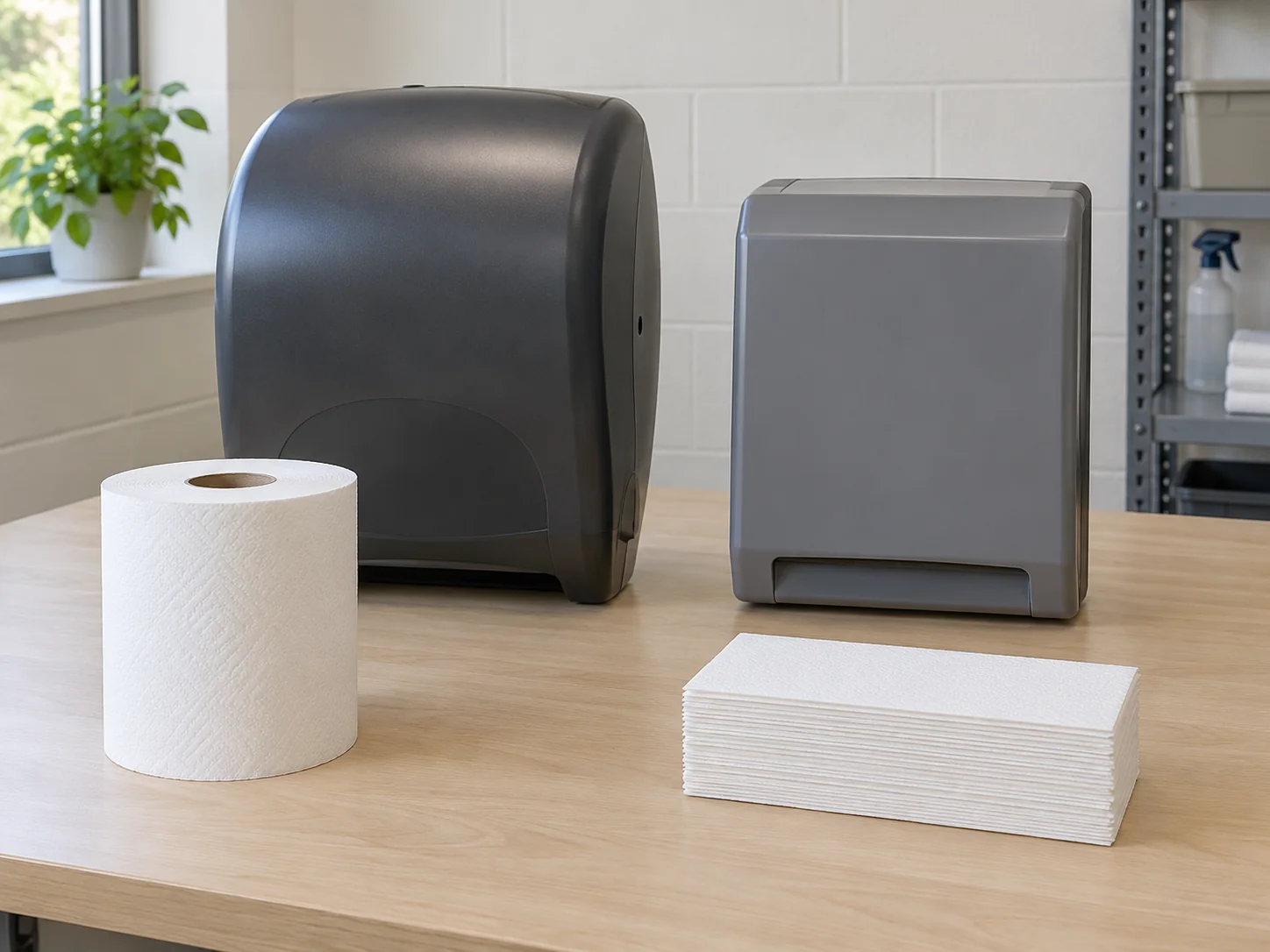
Paper towel dispenser refills need to match the hardware you are stocking. A hard roll and a stack of folded sheets are different supply formats. Even within a roll system, the dispenser's exact model can determine which core it accepts. A shared brand name or similar hardware dimensions cannot settle every refill question.
The two Kimberly-Clark offers here illustrate those separate checks. One describes a Sanitouch hard-roll arrangement with a stated core requirement. The other identifies model 09905 for multifold and C-fold paper towels. Start with the actual dispenser you own or intend to buy, then establish the refill specification before choosing a bulk quantity.
Identify the dispenser before sorting the paper
Retain the full equipment identification from the actual dispenser or its matching purchase record. A cupboard label saying bathroom towels does not establish which wall unit the supplies serve. If several dispensers are used in one building, keep their individual identities with the rooms or stations they belong to.
Check whether the recorded unit uses a roll or folded sheets before comparing a paper package. That format question comes before brand or pack count. A package can contain a generous quantity of paper while still describing the wrong supply form for the equipment you are trying to stock.
Use an existing equipment record or an accessible identification label according to the applicable instructions. This article gives no housing-opening, loading or wall-installation procedure. If the installed equipment cannot be identified from its available information, ask the responsible supplier to establish the model before ordering against a remembered appearance.
Confirm the hard roll towel core for the actual model
The Kimberly-Clark Sanitouch hard-roll dispenser offer is described for use only with Kleenex and Scott hard-roll towels with a 1.7-inch core. Its title lists dimensions of 12.63 by 10.2 by 16.13 inches and a Smoke finish. The description does not identify an exact 0999x manufacturer model number.
Keep the stated hard roll towel core requirement with that exact offer. This guide has not measured it or fitted a refill. It does not round the listed 1.7 inches to another maker specification, identify an interchangeable roll or assign a current manufacturer model from the housing dimensions alone.
Kimberly-Clark's current pages separately identify Sanitouch 09990 for 1.5-inch-core rolls and 09996 for 1.75-inch-core rolls. Both pages give the same stated unit size of 12.63 by 16.13 by 10.2 inches. They are separately identified current maker examples, and neither has been confirmed as the exact Sanitouch offer linked above.
Those examples show why the model matters after identifying the roll format. Similar housings can belong to different stated core arrangements. Obtain the exact supplied model and applicable refill specification for the selected offer before buying paper for it. A reply naming only the Sanitouch range would leave the model-specific question open.
Check folded paper towel fit as a separate supply format
The Kimberly-Clark 09905 folded-towel offer is described as a Gray manual dispenser for multifold and C-fold paper towels. Its product identity includes SKU 17259158635 and UPC 363090071351. Keep that reference with any enquiry about the item actually being supplied.
For folded paper towel fit, retain the stated fold format as well as the paper's own dimensions. An unfolded sheet size describes the sheet when open. It does not by itself identify the folded presentation or establish the stack that the actual dispenser accepts. Ask for the applicable refill details when the package leaves those questions unresolved.
The 09905 offer lists dispenser dimensions of 13.3 by 5.9 by 18.9 inches. Those are stated dimensions of the offered hardware. They are not given here as the maximum folded-sheet size or a measured interior capacity. Copying them onto a paper order as refill dimensions would change what the figures describe.
The description names both multifold and C-fold formats. It does not turn the unit into a hard-roll dispenser, and a roll's core diameter supplies no missing specification for folded sheets. Compare a proposed paper package with the actual equipment's requirements for that format, rather than treating all paper sold for washrooms as interchangeable.
Separate hardware dimensions from the refill requirement
A dispenser's size can help with the equipment-location question, subject to its actual installation requirements. The refill requirement answers a different question about the paper it serves. A larger housing has not automatically acquired permission for every larger roll, different core or differently folded stack.
The laminator width and pouch-thickness guide distinguishes quantities that describe different properties. Here, label the dispenser's stated size separately from the proposed refill's dimensions and designation. Its pouch values and laminating instructions remain specific to that equipment.
When asking about a roll, identify the dispenser and the paper package together. Ask the supplier to confirm the required core and the other applicable roll specifications. When asking about folded sheets, include the fold designation and package information. An answer about a nearby product with a similar name should stay attached to that different product.
A photograph can help identify what someone is discussing, but a front view may leave the actual model unresolved. Retain any readable identifying information with the whole equipment reference. Avoid reducing an enquiry to a picture of gray plastic when the important question concerns which refill system sits inside that particular unit.
An invented cupboard check keeps three paper formats apart
Imagine Morgan is reviewing supplies for a small workplace. There is an installed roll dispenser in one room and a folded-sheet dispenser in another. The cupboard contains identifiable hard-roll packs, C-fold packs and multifold packs. This is a fictional records exercise, not a fitting trial or a report about the two selected products.
Morgan begins with the equipment records and associates each room with its actual dispenser identity. The roll packs remain with the roll enquiry. The folded packs remain identifiable by their own fold wording. No package is counted as available for a particular room until its required compatibility has been established.
Suppose the roll dispenser's record names only its product range and omits the full model. Morgan keeps that question open and asks for the missing identity. The fact that the cupboard already contains a roll with a familiar core label does not establish that the installed unit accepts it. Existing stock can be the wrong stock for the intended equipment.
For the folded unit, Morgan retains the exact model and asks about the proposed package's fold and dimensions. If a reply confirms one package, the answer stays with that package. Another folded product has not acquired approval merely because both bundles are white or contain the same number of sheets.
Once the association is confirmed, Morgan records where the suitable stock is kept. The next person replenishing the room can consult that record. The exercise has established which supplies belong to which equipment; it has not measured dispensing performance, tested hand hygiene or certified the installation.
Choose the refill quantity after confirming compatibility
The Miele GN and KK supply-fit guide establishes the owned cleaner's required bag type before comparing pack quantities. Here, establish the paper format and actual dispenser requirement before choosing how much to order. Its vacuum bag designations and filter claims provide no compatibility information for towel paper.
A carton count, sheet count and roll count describe different supply units. Read the package's actual wording before entering a quantity in a purchasing record. The dispenser itself is another object. Neither selected hardware offer establishes how many compatible paper refills a separate order contains.
Count only identified suitable supplies when planning replenishment for a particular dispenser. Keep stock whose identity or fit remains unresolved separate from that available count. Otherwise the room can appear supplied on paper while its usable refill requirement is still unanswered.
If someone else places the order, give them the actual dispenser identity, the approved paper reference and the intended order unit together. A message asking for more towels can leave them to choose the format and quantity independently. Retain the confirmation that explains why the selected refill belongs to that equipment.
Keep a model clarification with the exact offer
For the selected Sanitouch offer, ask which exact dispenser model would be supplied and how its stated 1.7-inch core wording corresponds to the applicable refill specification. Do not rewrite the figure in your own notes before receiving an answer. The current maker examples demonstrate a model distinction without resolving that retail offer's identity.
For the selected 09905 offer, retain its model, Gray description and listed product reference when asking about a folded-paper package. This guide adopts the actual retail description for that offer. It supplies no mounting height, accessibility certification, adapter procedure or tested refill inventory.
A supplier's answer should identify both sides of the proposed combination. If it supplies a paper reference without identifying the dispenser, ask how the match was established. If it identifies a dispenser but leaves the exact paper unclear, retain that remaining question before ordering a large pack.
Update the supply association if the equipment in a room changes. A cupboard label can remain after the dispenser it once described has been replaced. Keep the old paper's identity visible while establishing whether it serves any equipment still in use. Moving it beside a new room label would not establish compatibility.
For a workplace with several purchasing contacts, keep one current equipment-to-paper reference available to them. Include the date and the actual clarification behind any changed association. This makes a later change understandable without treating an old order as permanent evidence for new hardware. Someone reading the record should be able to distinguish a confirmed match from a proposed substitute that is still awaiting an answer.
If a paper package changes its identifying wording, ask whether the confirmed reference still covers it before treating the new package as equivalent. Retain the supplier's answer with the order it identifies.
Check the delivered identities before distributing supplies
On arrival, compare the actual equipment or paper packaging with the confirmed order. Keep any contradictory labeling visible and ask for clarification before loading an unresolved combination. Compare the paper format, core and model as well as the quantity on the invoice.
Use the actual equipment's applicable instructions for loading and service. This article has not tested either dispenser and gives no conversion between roll and folded systems. An improvised insert, altered roll or modified stack would introduce a different arrangement from the one the purchase enquiry established.
Finish the choice of paper towel dispenser refills with a record that names the dispenser, identifies the paper and retains the answer connecting them. Keep hardware dimensions with the equipment and refill specifications with the paper. The next person ordering supplies should be able to find that association without guessing from the housing's colour.