Educational & Explainer Articles
Laminator width and pouch thickness: size, speed and time explained
Understand laminator document width, mil thickness, feed rate and warm-up claims through the actual Inspire1701857 and 13-inch A3 offers.
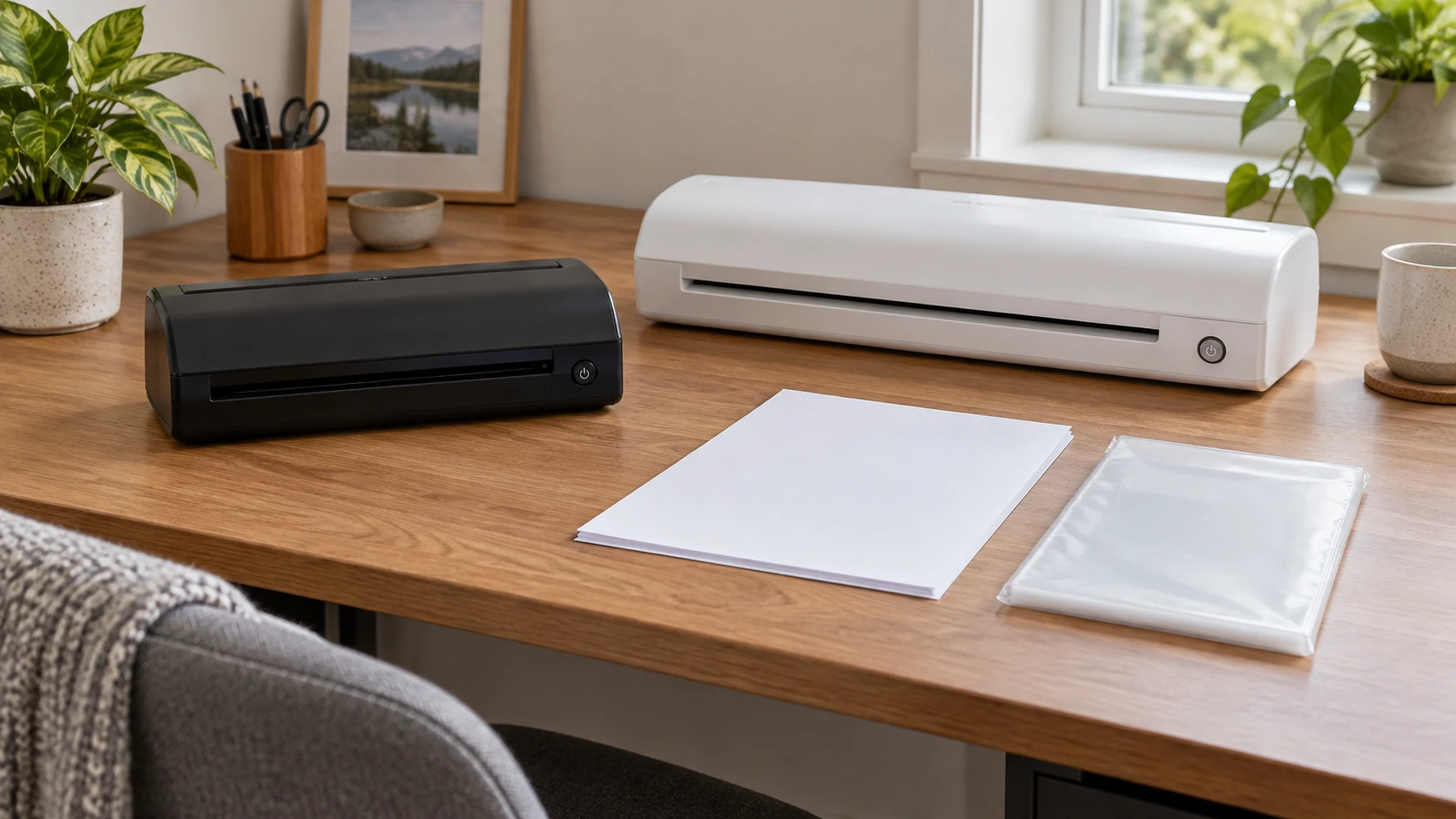
Laminator width and pouch thickness describe different parts of a document-finishing choice. Width concerns the document size the machine is described as accepting. A mil label concerns laminate thickness. Feed speed describes movement over time, while warm-up time concerns the period before the machine is ready. Read the property beside each number before choosing which specification matters to the project.
The distinction is especially clear in the Inspire 1701857 offer, which uses nine inches for document width and nine inches per minute for lamination speed. Both figures use inches. The added words per minute change what is being measured. A second 13-inch/A3 offer gives another width label, a different speed unit and a hot/cold feature description to examine.
Document width describes a physical size condition
The Inspire 1701857 thermal laminator offer has a NOBRAND brand field and appears under Shop All Office Supplies. Its description states a nine-inch document width. Keep that dimension with the document or project you intend to investigate. The overall machine footprint, space around it and finished item require their own applicable information.
For example, a hypothetical document with an eight-inch short side and an eleven-inch long side has two different dimensions. An eight-inch measurement is less than nine inches. That simple comparison does not establish which orientation, pouch size or complete arrangement the actual machine permits. It identifies a width question to resolve using the product's instructions and compatible materials.
A paper-size name is another way of describing a format, but its exact dimensions still matter. The second offer names A3 and thirteen inches in its title. Keep the format label and the stated size together rather than substituting a remembered dimension from another laminator. Width information is useful when it matches the actual document, required pouch and applicable machine specification.
Reading laminating pouch mil labels
For reading laminating pouch mil labels, begin with the unit. Nobelus's manufacturer explanation, Selecting a Thermal Laminate Thickness, defines one mil as one thousandth of an inch, or 0.001 inch. Three mil therefore expresses 0.003 inch of thickness. Five mil expresses 0.005 inch. These are thickness measurements; the word mil does not mean a minute of processing time.
The Inspire description states compatibility with three- and five-mil laminating pouches. Retain those actual values when checking a proposed pouch package. Its statement is more specific than a general claim that a machine handles plastic film. The chosen consumable needs its own applicable identity, thickness label, dimensions and instructions.
Read what the pouch maker says its thickness number measures. Nobelus's explanation concerns thermal laminate and includes the adhesive layer in its described measurement. It does not establish how every pouch seller labels each face or the complete finished document. The selected laminator descriptions here do not resolve that packaging convention, so this article supplies no universal per-side doubling rule.
A finished item also contains the original document. A laminate thickness label alone does not describe that paper's thickness, coating or suitability for the process. Keep the original material and the compatible pouch as separate parts of the project. A successful dimensional comparison is one piece of the selection, with material permissions established through the actual instructions.
Feed speed measures distance over time
Inspire states a laminating speed of nine inches per minute. The description separately names smooth rollers and claims wrinkle-free results. The speed is a stated rate, while the result wording is a product claim. Neither provides a measured completion time for every household project.
To understand the rate itself, consider a hypothetical transport moving continuously at nine inches per minute. Nine inches of movement would take one minute under that constant-rate assumption. The arithmetic describes movement. A full job can also include preparation, readiness checks and other steps required by its instructions, so it would be misleading to present that one minute as the total time to finish a selected item.
The NOBRAND 13-inch A3 desktop laminator offer states a speed of 250 millimetres per minute. Its thirteen-inch label and millimetres-per-minute rate answer separate questions. Write width beside the thirteen-inch figure and feed rate beside 250 millimetres per minute. The two offers provide no matched test using the same document and pouch.
Use the rate to ask how the machine fits your workload. Someone finishing one occasional page may care more about compatible materials and convenient storage. Someone considering repeated projects may want to establish the complete process time using applicable instructions. An advertised feed rate remains one input to that decision rather than a forecast for every session.
Laminator warm-up time and feed speed describe separate stages
Read laminator warm-up time and feed speed as separate entries when planning a session. The Inspire description says it warms up in as little as four minutes and names a ready indicator. The other offer gives a three-minute warm-up claim. These statements concern readiness. The feed rates concern movement during processing. Keep the as-little-as qualification with Inspire instead of turning the claim into a guaranteed deadline.
A hypothetical planning note could therefore have separate entries for preparation, the source's stated warm-up account and the actual document-processing task. You cannot obtain the complete project time merely by adding the smallest advertised warm-up figure to a guessed travel time. The source statements do not supply all the required conditions or a finished-job trial.
The ready indicator is also a control feature with its own model instructions. Its presence does not establish a common light meaning across both offers. If a project depends on a particular ready state, locate that state in the actual machine's documentation. This educational guide describes the quantities and labels, without giving a start-up or feeding sequence.
Hot, cold and jam-release labels describe functions
The 13-inch offer describes a dual-roller heating system supporting thermal and cold lamination. Those are named functions to match with the actual consumables and document requirements. The short account does not establish a compatible cold pouch, its adhesive specification or a complete mode-selection procedure. Obtain those details for the intended project rather than transferring the Inspire pouch statement.
Inspire describes a single power setting and a jam-release lever. The 13-inch offer describes an ABS jam-release button, while its title also uses never-jam wording. A release control is a feature for an event the description anticipates; the title supplies no independent guarantee that every material will pass without a problem. This article provides no release, extraction or refeeding method.
The selected titles also name supplied pouches: five standard pouches for Inspire and forty pouches for the 13-inch offer, whose title additionally names a paper trimmer and corner rounder. Confirm the actual order contents. A quantity of pouches does not identify their dimensions, thickness or suitability for every proposed document, and an accessory name supplies no trimming procedure.
Let the intended document choose the first question
Consider a hypothetical project whose relevant width is ten inches. That exceeds the first offer's stated nine-inch document width. The thirteen-inch offer becomes a candidate to investigate, with its complete material and size requirements still to establish. Feed speed cannot resolve that width mismatch.
For a smaller project, the choice can be different. A width comfortably below a published limit may leave pouch compatibility or the intended material as the decisive question. List the actual document, its dimensions and the required finishing task before comparing features. This keeps the purchase tied to the work you have, rather than treating every larger size or quicker time as an automatic improvement.
Related paper equipment keeps its own material rules
The actual year-end photo-caption guide separates Dahle's sheet-count statement from WESTCOTT's paper-weight-qualified capacity and conflicting size-field wording. It leaves the proposed caption material to its own suitability check. The same discipline applies when a laminator listing also includes a trimmer: a count of ordinary paper sheets cannot establish a permitted laminate thickness or cutting capacity for a finished item.
The actual Epson DS-530 II and CZUR ET MAX document guide distinguishes loose-sheet feeding from overhead book capture and preserves CZUR's glossy-material warning. That is useful when planning several document tasks. Capturing a page and laminating it are different processes, each with its own material requirements. Neither scanner description establishes permission to laminate a valued original or feed a laminated item through a scanner.
Decide what needs to happen to the original before buying finishing equipment. A page can be copied, read or shared without being laminated. If the item is important or irreplaceable, establish the appropriate treatment for that material rather than assuming a protective-looking finish is suitable. The product descriptions here provide no conservation assessment.
Keep the measurement decision clear through checkout
If you consider a laminator purchase through republeq.com and prefer USDT, first establish the exact machine and compatible material information you need. Check whether that payment choice is actually offered in the checkout for the selected transaction. A general reference to cryptocurrency does not establish which assets or methods are available for every order. Keep the Inspire 1701857 identity with its own nine-inch width and three- or five-mil pouch statement. Keep the second offer's thirteen-inch and A3 labels, supplied-accessory wording and thermal/cold feature account with that item. A payment preference cannot extend a width limit, fill a missing thickness specification or confirm that a particular original is suitable. Review the current package contents, delivery information and return conditions before selecting an order. This article promises no discount for crypto, arrival before a planned session or particular refund arrangement. Existing paper work can remain separate from an undecided equipment purchase. Someone sharing the purchase decision needs the actual offer, not only a photograph of a similar desktop machine. Comparable appearances do not establish the same roller system, release control or permitted materials. Retain the order confirmation if a purchase is made and compare the supplied item and documentation with that selection. Paying with USDT does not test the laminator, establish the meaning of a control or validate a project's material choice. Those answers must come from the actual product information. This discussion supplies no wallet procedure, asset-transfer method or network selection. Consider an available checkout option on the terms actually presented for the transaction, after the equipment questions important to the project have been resolved.
Read each number as an answer to a particular question
When comparing laminator width and pouch thickness, write the property beside the figure. Nine inches can describe a document width; nine inches per minute describes a rate. Three or five mil describes stated pouch compatibility, while a warm-up claim concerns readiness. These entries can coexist on one product without substituting for one another.
Use the actual document and intended process to choose which question matters first. Then obtain the corresponding specification and applicable instructions for the selected machine and materials. Choose from the specifications that address your document and the finishing task you need.