Lifestyle & Inspiration
A paper fortune teller conversation for an evening together
Fold a paper fortune teller, write eight original conversation prompts and enjoy a shared evening, with actual letter-paper package details.
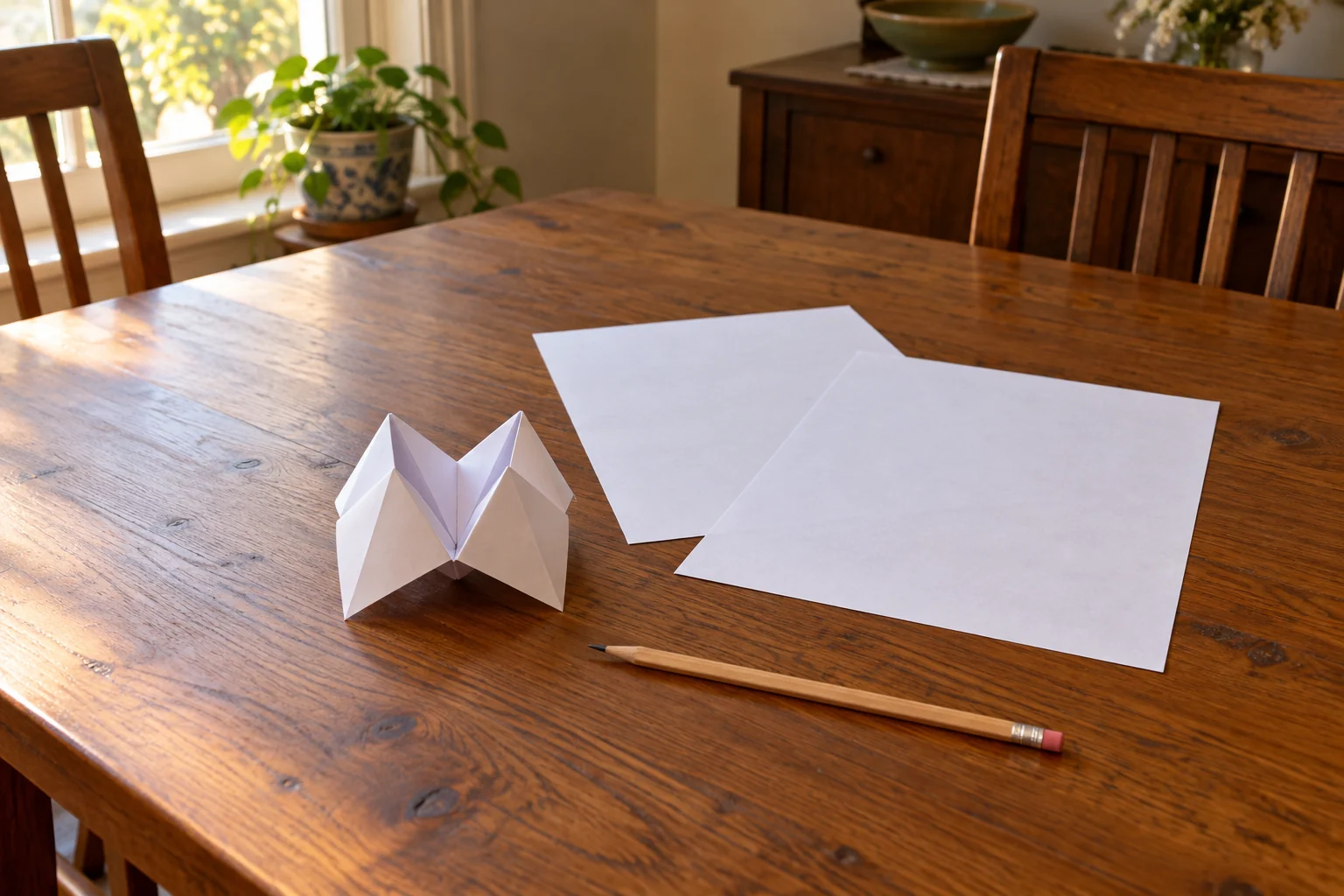
A paper fortune teller conversation gives an evening together a handmade beginning. Fold the toy, add your own questions and play. Each person chooses what to share. Let a flap choose the next question.
Choose this activity because you would enjoy making and using the object. You might be spending an evening with a partner, welcoming a friend for an unhurried visit or sitting down with a few adults after dinner. One finished toy can serve the group. There is no need to prepare a separate stack for every person.
Choose the conversation you would enjoy having
Start with the people who will actually be there. Friends who know each other's everyday routines may enjoy questions about recent small discoveries. People meeting for the first time may prefer questions that someone can answer without explaining a long personal history. Pick a tone that lets everyone decide how much they want to say.
For a quiet evening, choose questions about ordinary pleasures: a favourite place to sit, something interesting seen on a familiar walk or a meal someone would like to make again. Write the questions in words you would use together. An invitation can be specific enough to answer while still leaving the speaker room to take it somewhere unexpected.
Agree that a person can pass on a question or choose another flap. That can simply be part of your version of the game. You can also agree that the person answering decides when their answer is finished. A short reply and a longer story can both have a place in the same evening.
Set out a sheet and your writing tool
Use an available sheet if it suits the folding activity, with a pen or pencil for the labels and questions. Letter paper begins as a rectangle, so the square preparation below needs scissors as a separate tool. Set the instructions beside the sheet, where you can refer to them while keeping the folding space available.
Take out one sheet to begin. Leave the remaining supply together until you know whether you want another toy. If two people want to fold, each can work on their own sheet and later decide which questions to use. A person who prefers writing the prompts can join that part after someone else has made the object.
The two actual copy-paper offers below describe white letter-size stock in large packages. Their retail information identifies the paper and the package quantities. It does not establish a folding-performance comparison. Make any purchase decision from the supplies you need beyond this one evening as well as what you already have.
Making a square from letter paper comes before the toy
For making a square from letter paper, DLTK's linked basic-origami reference folds a top corner across, cuts off the surplus rectangle and unfolds the square. Consult its illustrations.
DLTK's fortune-teller guide makes diagonal creases and brings four corners to their intersection. Flip, fold the four corners inward again, then fold and reopen across both pairs of edges. Gather the corners and put four fingers in the pockets.
It uses four outer labels, eight inner numbers and eight hidden messages. Spell a colour, then count a chosen number, alternating openings; lift a selected flap. Our adult questions replace its example fortunes.
Finish the fold before deciding how much wording will fit beneath a flap. Open the actual section you intend to write on and look at the space available. A question you can comfortably read back is more useful for the game than a long sentence squeezed into the last corner.
Conversation prompts under the flaps can stay ordinary
For conversation prompts under the flaps, write a few possibilities on spare draft space first. Try, “What small thing caught your attention this week?” or “Which familiar place would you like to visit again?” Each invites a personal answer without requiring the speaker to have attended an unusual event.
You could add, “What would you enjoy cooking together?” and “Which book, song or film would you like to tell us about?” These questions may lead towards a future plan or a recommendation. Leave room for someone to answer that they have no particular choice yet and move to another question.
Other possible prompts are, “What ordinary object brings back a memory?” and “What would you like a visitor to notice about your neighbourhood?” A speaker can describe an object without fetching it or describe a place without turning the answer into a set of directions. Follow the account they choose to share.
For the remaining spaces, consider, “What have you enjoyed doing slowly?” and “What would make a pleasant afternoon next month?” These complete one possible set of eight original questions. Change any wording that sounds unlike the group. You may want questions about shared memories instead, or eight questions around a hobby everyone already enjoys discussing.
Read your draft questions aloud before copying them onto the toy. If one takes several breaths to explain, shorten it to the part you most want to ask. A question about an entire holiday could become a question about one meal from it. Keep any helpful detail that makes the invitation understandable.
Label the openings before the first turn
Write colour names outside, numbers inside and the questions beneath their flaps. Look over the finished toy together before playing.
Decide who will operate the toy first and who will choose. One person can do the finger movements while another selects labels, or people can take turns holding it. Agree on the roles together. If someone would rather read the questions than operate the paper, let them take that part.
Let one selected question become a conversation
Imagine a fictional evening with Leila and Tom. Leila operates the toy. Tom chooses blue, then three: she alternates four times for the word and three for the number. His final selection reveals the question about an object with a memory.
Tom talks about a chipped mug from a former flat. Leila remembers the kitchen and asks what else was on the shelf beside it. In this invented example, they leave the toy on the table while the memory becomes a conversation. Begin another turn when both want a new question.
When both are ready, they can swap roles or select another question. A question that appears twice can receive a different answer, or the chooser can ask for another flap. Choose the version that suits the people present. The toy can stay available through the evening without setting the pace of every exchange.
Give everyone a way into a shared answer
With several adults, the selected question can go first to the chooser and then to anyone else who wants to add something. Someone may recognise a place in the first answer or remember a different detail from the same occasion. Ask whether they would like to contribute, and let the original speaker finish before moving around the table.
A question about a future afternoon can become a small shared choice. One person might want a walk, another a quiet lunch and another time to look through old photographs. Listen to the ideas before deciding whether you actually want to arrange anything. You can enjoy imagining the afternoon without leaving the conversation with an obligation to organise it.
If a question produces only a brief answer, try a modest follow-up that fits what was said. After someone names a favourite meal, you could ask who first made it for them. Let their answer guide the next sentence. The hidden prompt starts the exchange; you can continue talking in the same way you normally would together.
You can also make a second version around one chosen theme. A group that enjoys books might write questions about a remembered character, a place described in a novel or a title someone wants to revisit. Draft the new questions together before copying them. Let each person suggest an invitation they would enjoy answering, then choose the eight that fit this particular group.
If you want to keep some questions for another evening, ask which ones people would enjoy revisiting. A remembered place can bring a different story next time. You might also keep a blank draft area for suggestions that arise while talking, then choose later whether to include them in a new toy.
Someone may want to finish their answer after a pause. Leave that possibility open when deciding whether to begin a new turn. A visit can include time to make tea, look at an object someone mentioned or sit quietly together. Return to the toy when another question would be welcome.
For an evening with a particular shared interest, choose that subject together before preparing the paper. Questions about a garden could concern a favourite season or a plant someone remembers from childhood. Questions about music might invite the story of a first concert. Keep the invitation within what each person wants to share.
Read the actual Hammermill and Universal package descriptions
The Hammermill Copy Plus 105190VS paper offer identifies white 8.5-by-11-inch smooth multipurpose paper, brightness 92, acid-free wording and an FSC Certified claim. It states 20 lbs. and also gives 50.8 lb. Text. Keep those conflicting weight descriptions visible rather than choosing one as a confirmed equivalent.
The same Hammermill description lists 500 sheets per ream, 16 reams and 8,000 sheets per carton. Keep those carton quantities with the supply decision. A carton may relate to a broader household or office requirement. One conversation toy does not create a reason to use or buy thousands of sheets.
The Universal UNV20030 copy paper offer describes white 30% recycled stock, brightness 92, 20 lb bond weight and 8.5-by-11-inch sheets. It lists 500 sheets per ream and ten reams per carton. Its acid-free and smooth, reliable copier-performance wording remains a retail description, with no craft-result comparison established here.
Keep another paper activity available for a different evening
The actual origami practice-cup guide follows a separate traditional folding reference and describes two Pacon square-paper offers. Its pinch, crossing corners and separate top flaps belong to that model. Choose it when you want another folding sequence to follow, keeping its empty practice-model purpose with it.
The actual postcard-writing afternoon guide begins with one reader and an ordinary detail you want to share. Its Compulabel and Avery printing-media descriptions belong to a personal-message project. A subject from tonight's conversation might suggest someone you would like to write to later, using your own recollection and words.
At the end of your paper fortune teller conversation, decide whether to keep the toy with its questions or make a different set another time. Leave it where the people who made it can find it if you want to return to the activity. The next evening can begin with the question someone still wants to answer.
Conceptual paper fortune teller conversation scene with a whole generic folded paper toy and plain sheets; no exact retail paper, legible questions or instructional folding diagram is shown.