Seasonal & Holiday Content
Outdoor faucet covers: prepare fixtures before the first freeze
Prepare outdoor faucets for winter by identifying the supply shutoff and drainage instructions before fitting a protective cover.
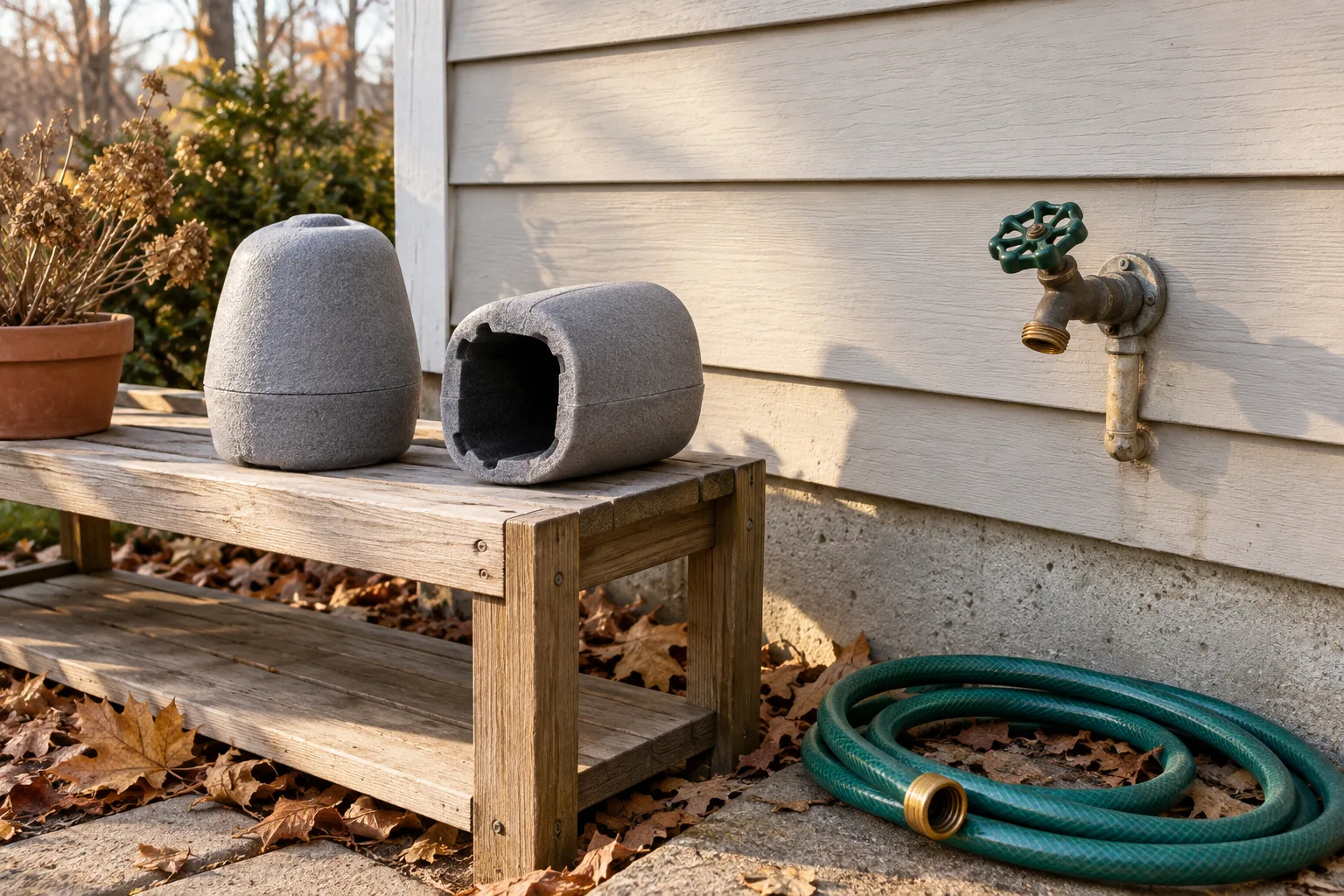
Outdoor faucet winter preparation starts before freezing weather
For outdoor faucet winter preparation, choose outdoor faucet covers while you can still identify the fixtures and arrange the winter work they need. Portland Water Bureau recommends preparing plumbing before temperatures fall below freezing. Its advice includes removing outdoor hoses, insulating hose bibs and learning how to shut off the water during a break. Begin with the actual water outlets around your property. A cover belongs within that preparation, alongside the drainage and shutoff decisions for the installation.
Water expands as it freezes, and the American Red Cross explains that the resulting pressure can break metal or plastic pipes. Outdoor hose bibs and sprinkler supply lines are among its examples of vulnerable plumbing. A retail description cannot tell you whether a particular line has drained or how it behaves during a prolonged cold spell. Read the applicable equipment instructions and local winter guidance before relying on insulation around an unidentified fixture.
Give the faucet and the backflow assembly separate attention
If a separate valve supplies your outdoor faucets, Portland advises shutting off that supply and opening the outdoor spigots to drain remaining water. It also calls for sprinkler systems to be turned off and drained according to their manufacturer's instructions. Compressed-air blowout can cause severe injury and belongs with a qualified, licensed contractor. Arrange that work before the cold arrives if it is required for your system. This guide provides no blowout procedure.
Mountain Regional Water separates irrigation preparation into insulation, draining the pipes, and protecting exposed valves and backflow preventers. Its insulation advice includes the main shutoff valve and aboveground piping. That distinction helps when you look around the yard: covering a wall faucet leaves any separate irrigation assembly with its own winter work. Identify who maintains that equipment and obtain its instructions. A shopping choice for the hose bib does not settle how the irrigation system should be drained.
Read the FC1 foam faucet protector as a specific offer
The FC1 outdoor faucet protector offer identifies Thermwell in its brand field and Frost King in its description. It describes gray foam, a thickness of .625 inch, a fit statement for pipes up to four inches, and a quantity of 24. Keep that quantity in the purchase enquiry. It is a package statement, without confirming how many of your differently arranged fixtures this order would suit. If you need protection for one tap, confirm that you intend to order the stated multi-item quantity before putting this offer in your basket.
Frost King's own product page identifies FC1 as an oval foam cover for an outside faucet. Its UPC differs from the one in the selected retail record, so the manufacturer page does not independently establish that retail case pack. Ask the seller to confirm the supplied FC1 package and matching instructions. The retailer's pipe-fit statement also leaves the cover's usable clearance around your complete faucet unresolved. Obtain the relevant dimensions before treating that statement as a fit confirmation.
The manufacturer's page describes the foam protector as insulation for outdoor faucets during winter. Its advice distinguishes foam from a hard plastic cover when knocks or animals are a concern. That is a reason to consider the actual location: a tap beside a busy path faces different contact from one behind a quiet planting bed. The page supplies no tested protection temperature for this selected offer here. Keep any question about your expected conditions with the identified product.
Check backflow preventer cover fit against the whole assembly
The separate RANMEI winter faucet and backflow cover has a different description. Its listing gives 17 inches of width and five inches of height, with suitability for installations up to 14 inches wide. It names aluminum foil, PP cotton and waterproof 600D Oxford cloth. For backflow preventer cover fit, ask what the measurements describe and what usable space remains inside the closed cover. Those numbers alone do not establish clearance around the valves and pipes you have.
The RANMEI description also names a wide closure and two steel grommets through which a lock can be added. It does not say that a lock is included. Its short product title includes Other and Unisex wording; retain the exact offer reference when asking the seller about the protective cover described below it. Obtain the applicable installation instructions and confirm the order contents. This article has not fitted the cover to an assembly or measured its performance. Waterproof cloth is the retailer's material claim; it supplies no minimum protection temperature or measured result for a closed bag around your fixture.
Panama City's winter backflow guidance recommends measuring the valve assembly and surrounding pipes before choosing insulation. It distinguishes bags and boxes from materials wrapped around individual pipes. If you are considering a bag, describe the whole arrangement that would sit inside it, including the surrounding pipework. Follow the bag manufacturer's instructions for securing it. The city's general account of insulation options does not certify the RANMEI dimensions or identify a suitable fastening arrangement for your installation.
Disconnect the hose using the instructions for the installation
Frost King's seasonal faucet article begins with disconnecting hoses and storing them for winter. It then describes turning off the outdoor supply, draining the faucets and leaving their handles on through winter. Keep that sequence attached to the supply-isolation step; opening a faucet on a live supply would be a different situation. Confirm which valve serves the line before acting. If the valve or drainage arrangement is uncertain, ask the person responsible for the plumbing to identify it.
An existing hose arrangement may include fittings whose roles are unclear. The garden hose adapter compatibility guide keeps each interface separately identified, including distinctions between hose threads, pipe connections and quick connections. Use that approach when describing what is attached to the faucet. Ask about the actual part that connects the hose before assuming an unfamiliar component is removable. The linked guide supplies no instruction for taking apart a permanent water installation.
The same Frost King seasonal article places its faucet protector after the shutoff and drainage steps. That ordering gives the cover a clear place in the work. When another person has already winterized the line, ask which supply was isolated and what was drained before adding the protector. If you still need the tap for a seasonal task, discuss that need while arranging the winterization. Keep the eventual instructions for returning the line to use with the responsible person.
Leave backflow vents and drain outlets clear
Mountain Regional Water specifically warns against blocking air vents and drain outlets on backflow preventers. Identify those openings from the actual assembly's instructions before enclosing it. A cover's broad dimensions cannot locate them for you. Leave the installation question unresolved if the bag, closure or wrapping would interfere with required openings. Have the equipment's maintainer review that fit. This is a reason to check the completed arrangement against its instructions, even when an insulation bag appears to slide over it easily.
A connection description is useful when asking for help with that question. The adapter guide distinguishes confirmation of one interface from approval of a complete arrangement and its operating conditions. Keep those answers separate in your own enquiry. A supplier who confirms the hose connection has not thereby identified every other device on the line. Give the irrigation maintainer the assembly's identification and the proposed cover details so the winterization advice concerns the equipment that will remain installed.
Cold weather preparation also includes the indoor pipes
The Red Cross also identifies unheated garages, crawl spaces and pipes against poorly insulated exterior walls as vulnerable locations. Include those areas when reviewing the property before winter. Its guidance calls for removing, draining and storing outdoor hoses, and following manufacturer or installer directions for sprinkler supply lines. Do not add antifreeze to those lines unless directed. Take a question about hidden or inaccessible piping to someone who can inspect it, while keeping the outdoor cover decision specific to the exposed fixture. For time away, the Red Cross recommends keeping home heat at no lower than 55 degrees Fahrenheit. Arrange who will check the property during the absence.
Seattle Public Utilities recommends knowing where the shutoffs are before an emergency. Make sure the person staying at the property can locate the relevant water shutoff before a leak. Seattle also advises wrapping exposed or unheated pipes according to the insulation manufacturer's instructions. A cover fitted outside leaves those other locations to review. If a pipe breaks, its guidance is to close the main shutoff and call a plumber to repair the damaged section.
Seattle's severe-weather advice includes keeping heat on while away and says not to leave water running in unoccupied buildings. Use your own utility's applicable guidance when arranging care for a vacant property. If another person will check the house, explain the actual heating and water arrangements to them before leaving. Suspected frozen or damaged plumbing needs an appropriate response for that installation. This guide does not provide a thawing method, and a new cover cannot establish that an existing fault has been repaired. Its advice about foundation vents also includes reopening them in spring to prevent dry rot. Keep that seasonal follow-up with any vent work you arrange.
Inspect the cover through winter and name the next check
Panama City advises inspecting backflow insulation throughout winter to make sure it stays intact and dry. Wind and moisture can move or damage the material. Include the covered assembly in the checks made after rough weather, and arrange repair or replacement when the insulation is wet or damaged. Check the actual manufacturer's requirements for that work. A photograph taken when the cover was first placed cannot show its condition several storms later. Before fitting insulation, the city also advises clearing dirt, leaves and vegetation from around the device so they do not obstruct coverage or trap moisture.
The seasonal plant cover planning guide discusses a related household problem: someone must take responsibility for checking the next forecast and following up unresolved information. You can use that division of responsibility when arranging an outdoor winter round. Keep the plumbing instructions with the water fixtures and the plant advice with the plants. Neither a garden-cover description nor a plant's care recommendation supplies the requirements for a backflow assembly.
Agree who will make the next check if several people share the property. The plant-planning guide also points out practical access problems, such as equipment locked away while the person responsible is absent. Resolve access to the relevant instructions and contacts before the cold evening arrives. If responsibility changes, tell the next person what has been completed and what still needs an answer. Leave the fixture's condition open until someone has inspected it, and record the actual observation when they do. Check the time of the forecast you pass on; a later update may change when the household needs to review its arrangements.