Office Supplies & Stationery
Read notebook punched and perforated labels separately
A label-reading framework separates stated filing openings from a perforated separation edge, then identifies what remains unknown about removal and binder fit.
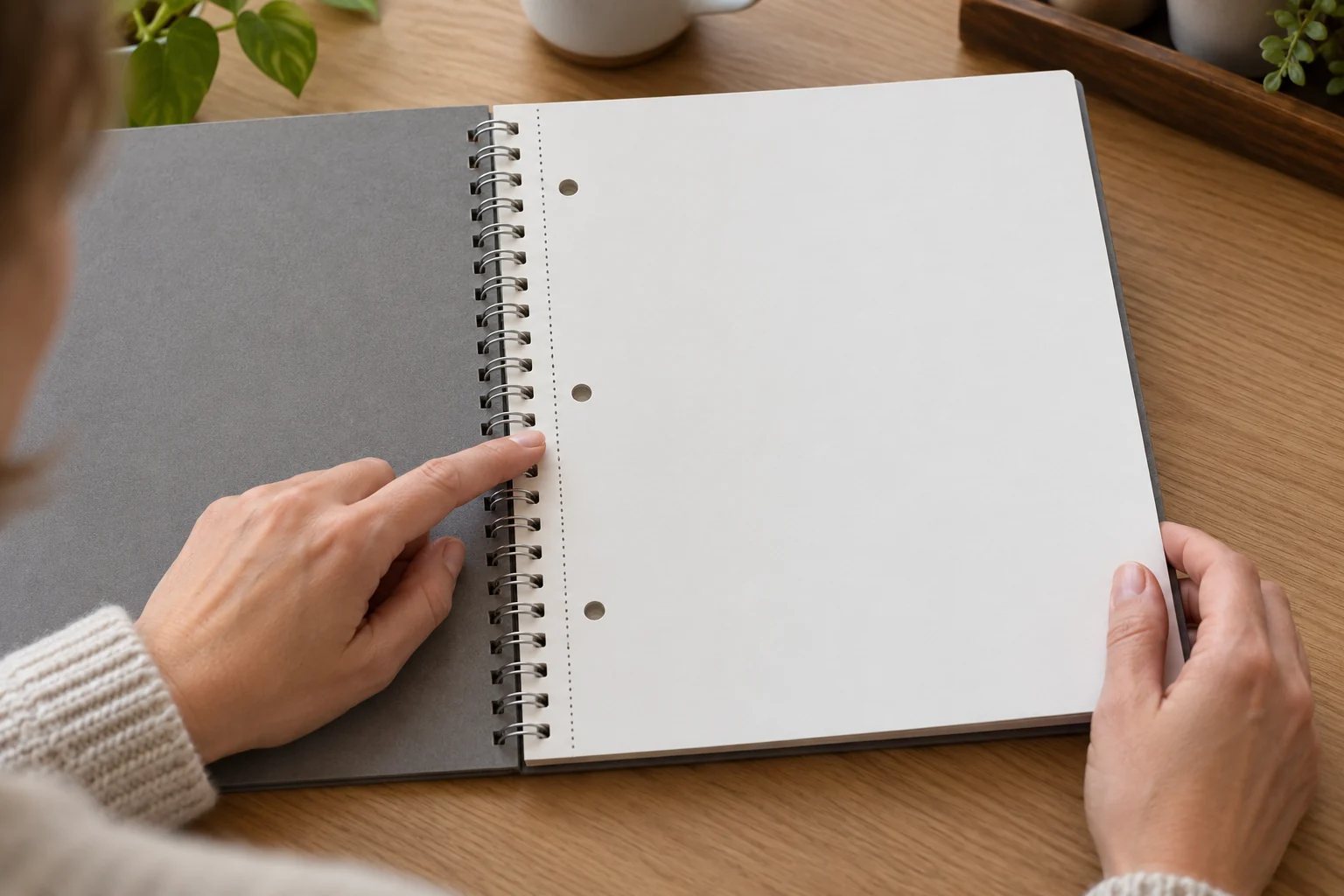
Read notebook punched and perforated labels as separate statements about the page you are considering. A note about filing openings and a note about a separation edge can leave an important question unanswered: what will the page you intend to keep actually look like? This guide uses an original page-reading framework and declared examples. It reports no removal, writing or binder-fit test of either notebook below.
Begin with the page you want to use
Describe the intended handoff before comparing feature words. You might want your notes to remain in the bound book, or you might want to give one page to another person. You might also want that page to enter an existing file. Those are different requirements. A description that addresses one can still leave the next step unresolved.
Keep the proposed page identifiable as you ask about it. “The page after removal” is more precise than “the notebook paper” when your question concerns a loose sheet. If your notes will stay in the book, say that instead. There is no need to ask a seller to certify every possible use when you have one particular use to decide.
For the working distinction in this article, ask about filing openings and about a stated separation edge independently. Then ask which features belong to the portion of the page you would retain. This is a reading method for an enquiry, without a universal hole pattern, a removal procedure or a rule that every notebook uses the same construction.
Read the actual notebook statements within their limits
The Oxford White Spiral Notebooks offer describes its sheets as three-hole punched and Letr-Trim perforated for tear-off. It names five subjects, 200 sheets and a bundle of ten. Its whole gallery shows spiral notebooks and their covers. The account supplies the two feature statements; this article has not measured their layout, removed a page or verified binder fit.
The CUITING spiral notebooks offer describes a two-piece set with quad-ruled graph paper and coil binding. Its whole gallery shows the bound notebooks. The inspected account does not establish punched filing openings or a perforated removal edge. Leave those questions open rather than treating an unreported feature as either present or absent.
Ask what remains with the retained page
Consider a deliberately invented page plan. It has a bound strip, a marked boundary for a proposed separation, and an area the imaginary user wants to keep. The plan also marks openings. These are declared features of our planning example, not measurements or hidden construction of either retail notebook. Their purpose is to make the next question visible.
Point to the area you have called the retained page. Are the marked openings within that area, or within the strip you have declared separate from it? Under the example's own labels, an opening placed only in the discarded strip is not part of the retained area. That observation concerns the drawing as defined; it establishes no removal result for a manufactured notebook.
You can put this question to a seller without adopting a special diagram convention. Ask for an image or description of the page in the state you intend to use. A view of the whole closed book may identify its cover and binding while leaving the relevant edge unseen. The missing information is the layout of that selected page, not a general judgement about the quality of the notebook.
If the answer shows the relevant openings on the retained page, a later fit question can begin from that identified page. If it shows a different arrangement, revise your proposed use accordingly. If it remains unclear, keep the question open. A second attractive cover image does not supply the missing page view merely because it concerns the same book.
Keep the binding and the filing question distinguishable
When looking at a real photograph, identify what you can actually see before naming its purpose. The image might show the binding, an opening in the cover, a portion of a page margin or several overlapping books. Ask which surface and component the view depicts. A visible opening somewhere in a product photograph is not yet an account of every page's filing edge.
The notebook's binding description belongs with the bound book. Your proposed filing arrangement belongs with the page and file you intend to use. A word such as spiral can identify part of the first question while leaving the second unanswered. Keep the two objects in the enquiry so the response concerns the actual combination you have in mind.
Three-hole wording alone is not a binder-fit verdict. This guide supplies no hole spacing, hole diameter or ring specification for either notebook. If you need to use a particular binder, identify that binder and the selected page state in your request. A response about another paper size, another notebook edition or a cover opening can leave your own question unresolved.
Follow a handoff that actually needs a loose page
Imagine Nora preparing a short list for a friend. The person and task are invented. Nora would like to write in a notebook while gathering the details, then give the friend the finished page. Her first requirement is the handoff itself. She has not asked the friend to file the page in a binder, and she has not made a trial on either retail product.
Nora can ask how the selected notebook's maker describes page removal and whether the information applies to the edition she is considering. A stated removal feature gives her a specific subject to investigate. It does not make the illustration in this guide a report of how that book's edge will look after her own use.
Now give Nora a different declared requirement: her friend asks for the page to enter an existing binder. That adds a question to the original handoff. Nora needs information about the actual retained page and the named binder. She cannot complete that new enquiry by repeating that the notebook description mentioned a removal edge.
This is a change in the fictional requirement, not evidence that the notebook developed a fault. Nora could ask for the missing page information, choose another supported arrangement or decide that the notebook will serve notes she keeps herself. The example leaves the choice to the person making the actual handoff, without turning an untested combination into a compatible one.
Before investigating a removal feature, Nora can also ask what her friend actually needs to receive. In one declared version of the task, the friend needs the information and has no preference for the original handwritten page. Nora could choose a different agreed way to share it. In another version, the original page itself matters to them. Keep the requirement they actually choose instead of allowing the available notebook feature to decide the handoff on their behalf.
That conversation does not establish anything about a notebook. It can change which product question needs answering. If a loose original remains part of the plan, Nora returns to the selected page and its maker's account. If it does not, she can leave the removal enquiry aside without claiming that it was solved.
Read a bound-notes requirement on its own terms
For another original example, Mateo wants a record that remains in the notebook while he refers back to earlier entries. He is not preparing a loose handout. A feature that interests Nora may therefore be less important to his immediate choice. That difference comes from the uses we have assigned the two fictional readers; it is not a ranking of their notebooks.
Mateo can describe the pages he expects to keep together and ask the maker what the selected book is intended to support. He need not make an unwanted removal merely to investigate a feature he does not plan to use. If he later changes his task to sharing a loose page, he can open that separate question then.
A ruled grid or the number of subjects may matter for organizing his notes, but those fields do not answer the edge question for him. Keep each actual disclosure attached to the question it addresses. The fact that an offer gives several precise-looking details should not cause an unreported feature to acquire an answer by association.
Request the missing view rather than a broad assurance
A useful message can begin: “I am considering this exact notebook and need to use a page after the maker's described removal. Please show or describe the portion of the page that remains.” This is proposed enquiry wording. It makes no claim that a removal has occurred or that a particular method is appropriate for your own book.
If filing is part of the plan, continue with the actual question: “Does that retained page carry the stated filing openings, and what information is available to compare them with my identified binder?” The seller can then see that the presence of an opening and suitability for your proposed file are separate things you want addressed.
Ask whether the image concerns the selected notebook, edition and page type. An interior divider or cover can be useful to inspect while leaving the ordinary writing page unanswered. A photograph of a different book can remain background information without becoming evidence for the one you intend to order.
Read the response against the question you asked. “Easy to use” would not locate an edge. A repeated cover photograph would not establish the retained page's layout. An answer about appearance can be retained as an appearance statement while you request the particular page information still missing. There is no need to turn that limited reply into either a complete approval or a claim that the product is defective.
Keep outcomes separate from feature wording
A feature account and an observed result answer different questions. Neither native gallery here reports a page-removal trial conducted for this article. Keep any later observation attached to the exact book and page involved. Do not transfer a result from a different notebook merely because both descriptions use the same broad feature word.
Likewise, a page that looks suitable in one view has not supplied every detail needed for another person's filing arrangement. State the requirement that matters now, then look for evidence about that combination. You can postpone a purchase, narrow the intended use or ask another question without inventing a successful tear, a tested opening pattern or a paper-quality conclusion.
Related paper questions have different jobs
The paper scoring guide separates an intended fold line from a separating cut and leaves tool operation with the applicable instructions. This article reads page features already described for a notebook. It supplies no scoring, cutting or punching procedure and does not borrow the card-making example.
The notebook pen compatibility guide distinguishes paper specifications from evidence about writing on both sides. That is a paper-and-writing question. Here, the enquiry concerns the described page edge, the portion retained and any later filing requirement, without a pen test or an opacity claim.
The label-reading exercise does not require a notebook purchase. If you separately consider an actual item on republeq.com and prefer cryptocurrency, review the choices currently presented for that particular order. Mentioning USDT here does not confirm that it is offered, which network would apply or what amount would be required. Keep the selected product, quantity and any unanswered page-feature question with the current order information. A generic illustration does not identify a delivered notebook, and a response about one offer should not silently become a response about another. Read the applicable delivery, cancellation, return and refund terms before deciding whether to proceed. If someone else helps choose the item, agree who is placing the order so that a shared product link does not produce independent duplicate purchases. A proposed substitution needs its own consideration; it does not inherit the earlier product's identity or terms. This article provides no receiving address, transfer procedure, network recommendation, fee estimate or promised financial advantage. Obtain missing transaction instructions from the responsible merchant or payment provider before authorizing a payment. Retain the actual confirmation and order reference supplied after an authorized transaction. If payment or order status remains uncertain, reconcile that status before considering another payment; uncertainty does not demonstrate that nothing occurred. A transaction record concerns the order it identifies. It does not certify a notebook's page-removal outcome, paper properties, supplied contents or binder compatibility. You can use an existing suitable book, continue the enquiry or decide against another purchase while leaving the product question unresolved. Keep that question attached to the exact offer that raised it.