Crypto Commerce
Nikon Z30 mirrorless camera kit vs Sony ZV-E10 II for solo shoots away from outlets
Compare Nikon Z30 mirrorless camera kit by lenses, power planning, screen cues, audio, autofocus, and bundled media.
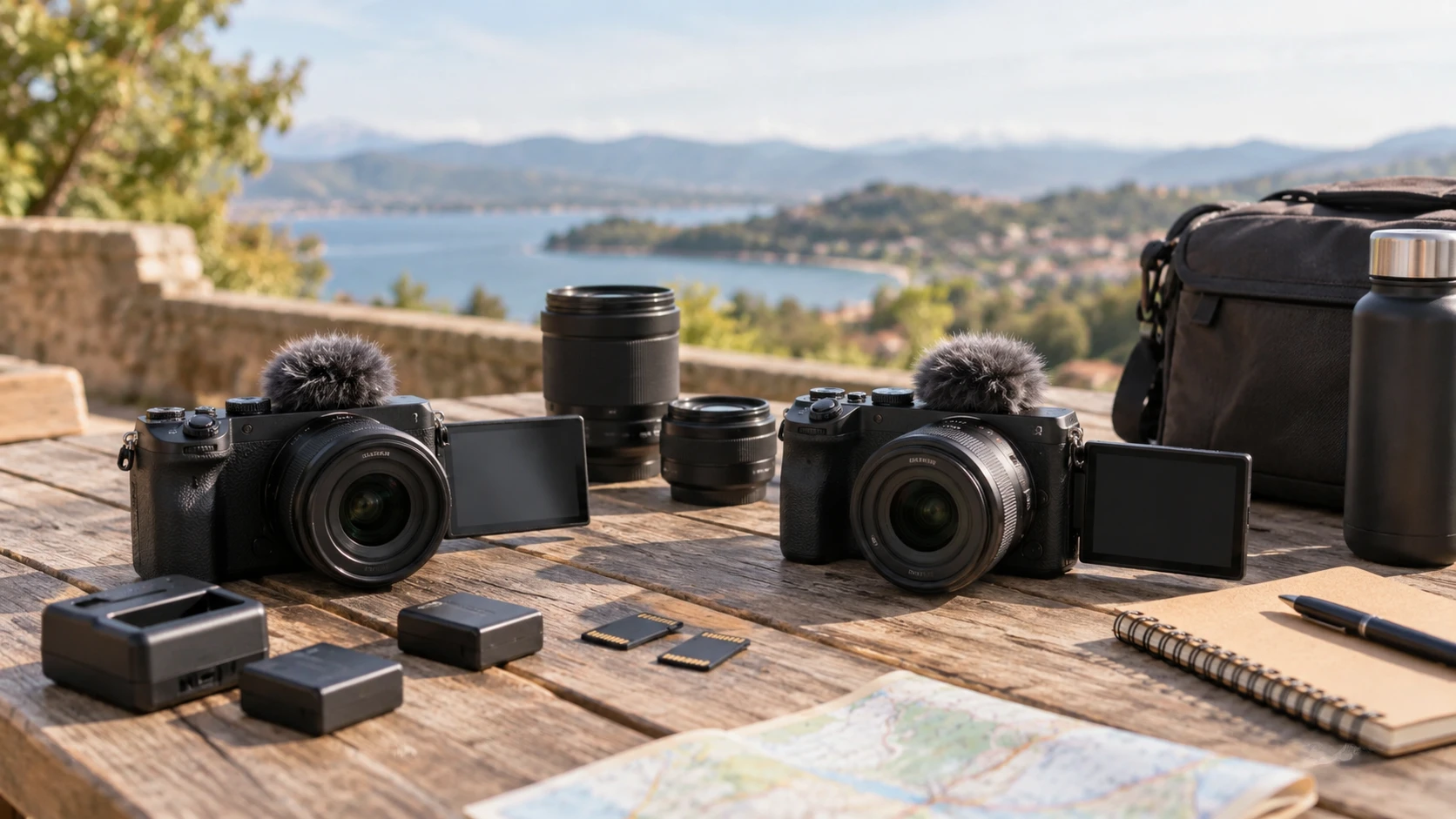
A camera that looks manageable at a desk can become awkward during a day of interviews, walking footage, and quick changes of location. You need to know what the kit contains, how it will be powered, and whether the microphone and screen support the way you work alone. The Nikon Z30 and Sony ZV-E10 II listings both speak to self-recording, but they give different levels of detail about lenses, power, audio, and recording time. Their catalog figures are useful planning inputs; they are not results from the same shoot.
The Nikon Z30 mirrorless camera kit includes a Z30 body, NIKKOR Z DX 16-50mm f/3.5-6.3 VR lens, protective case, and a 64GB memory card according to its row. Nikon's listing also names USB Type-C power, a free-angle touchscreen, a tally lamp, and a claimed continuous recording period of up to two hours and fifteen minutes. The Sony row describes a ZV-E10 II bundle with a 16-50mm power zoom, a 55-210mm lens, a 128GB card, a compatible battery, a spare replacement battery, charger, tripod, grip, windscreen, and several smaller accessories. Check the Republeq's catalog final box contents because bundles can differ even when the camera body name is the same.
Plan the shot before comparing sensor numbers — Sony ZV-E10 II mirrorless camera kit
The Z30 row lists a 20.9MP DX-format CMOS sensor. The Sony ZV-E10 II row lists a 26MP APS-C sensor. Those numbers describe image dimensions, but they do not tell you which camera will give the preferred color, noise level, or focus behavior in your room. If the job ends in a small online video, lighting and framing may have a larger visible effect than the still-photo pixel count. Look at example footage from the exact camera generation and, if possible, test with the lens and lighting you expect to use.
Nikon's saved description specifies UHD 4K at 30p and Full HD at 120p for slow motion. It also mentions live streaming in Full HD 60p or 4K 30p. The Sony bundle row does not state video frame rates or recording limits, so do not borrow a specification from another ZV-E10 II package and treat it as verified for this listing. Check the current camera manual and the actual bundle identifiers before a job needs a particular format. A production requirement such as 4K at a defined frame rate should be settled by documentation and a test file, not by an omitted catalog field.
For solo work, the first practical test is simple: set up the camera at the working distance, frame yourself, start a clip, and check whether you can tell it is recording without walking behind the lens. Nikon lists a tally lamp and a 3-inch free-angle touchscreen. Sony lists a 3-inch flip-out touchscreen, a red recording border, a tally lamp, and display rotation for vertical shooting. Those features may reduce uncertainty in front of the camera. Try them in bright and dim locations, where a small indicator or screen can be harder to read.
The included lenses shape the bag — Sony ZV-E10 II mirrorless camera kit
Nikon's 16-50mm kit lens is described as covering a 24-75mm equivalent range on a DX-format Z-mount body. Its row mentions Vibration Reduction, a stepping motor for quiet autofocus, and a programmable control ring. That is a compact range for a desk setup, interviews, and general scenes, though the wide end still has to fit the actual room. Mark the camera position and see whether a full person, tabletop, or group fits before relying on the lens for a tight space.
The Sony bundle includes two named lenses: E PZ 16-50mm f/3.5-5.6 OSS II and E 55-210mm f/4.5-6.3 OSS. The longer lens gives the kit a different reach on paper for distant details or events, but it also means changing lenses and carrying another piece of equipment. The row calls the shorter lens a power zoom; it does not describe its behavior at every speed or during audio recording. Test zoom control and motor sound with your microphone arrangement before a live take. If you rarely film distant subjects, the second lens may spend most of the day in the bag.
Neither row proves that a handheld walking shot will be smooth. Nikon states lens Vibration Reduction, and the Sony lens names include OSS. Those are lens claims, not a matched handheld video test. Walking technique, focal length, camera support, and post-production stabilization can change the result. Try a short walk over the ground you actually use, then review it on a larger screen. A clip that looks steady on the small rear display can show visible movement during editing.
Treat battery planning as a workflow — camera battery planning away from charging
The Z30 listing's “up to two hours and fifteen minutes” continuous recording claim gives a useful upper reference, but it does not say which resolution, temperature, display setting, or power setup produced that figure. Do not schedule an uninterrupted interview around that maximum alone. Nikon also lists USB Type-C power, which could change how a stationary camera is supplied, provided the source and cable meet the camera's requirements. Confirm the current manual's power specifications and run a full-length rehearsal using the same adapter or bank that will be on set.
Sony's bundle lists an NP-FZ100 compatible battery, a spare replacement battery, and a charger that can use car or home power. That gives the kit a visible battery rotation plan, though the saved row does not say how long either battery runs in your video mode. A spare of unspecified quality is not a measured backup. Charge and test both batteries before the shoot, label them, and note how much of a typical recording each one covers. Also check whether the charger and supplied batteries fit your travel power situation.
The related camera battery planning away from charging guide is a useful prompt to calculate a day in clips, idle time, and travel between outlets. Count how many minutes the camera will actually record, then add setup and review time with the screen on. Check whether you need continuous power for a fixed interview and portable power for moving work. A listed recording maximum and a bundle's spare battery answer different questions, so use a rehearsal to bring them into the same plan.
Listen before you judge the video — Sony ZV-E10 II mirrorless camera kit
The Nikon row names a built-in stereo microphone and compatibility with an external microphone. Sony's row names a built-in three-capsule directional microphone and a furry windscreen in the bundle. These details are worth checking if you film yourself outdoors or in a room with a noisy fan. They do not establish that one camera records cleaner speech. Mic placement, room reflections, wind, and the person speaking can dominate a comparison. Record the same short passage in the intended location, listen through headphones, and check whether the voice stays clear when the camera turns or the speaker moves.
If you plan an external microphone, confirm the exact input and monitoring arrangement from the current camera documentation. Nikon's row says external microphone compatibility but does not enumerate connector or monitoring details. Sony's saved row does not state an external microphone input, even though it emphasizes its built-in mic and bundle windscreen. Catalog silence is not a reliable hardware exclusion. Bring the actual microphone, cable, and mount to a test session before committing to either setup for a paid interview.
A simple audio checklist can prevent a failed solo take. Record room tone, speak at ordinary volume, then make the loudest sound expected in the scene. Review for clipping, rustling clothing, and interruptions from autofocus or zoom movement. The Sony windscreen may help with wind on its intended microphone configuration; the row does not promise that it handles strong gusts. Nikon's stereo mic can capture surrounding sound along with speech. Decide whether you want that ambience or a more isolated voice for the final edit.
Autofocus claims need the subject you film — Sony ZV-E10 II mirrorless camera kit
Nikon describes hybrid autofocus with Eye and Face Detection. Sony lists a 759-point phase-detection system. These are different kinds of catalog detail, so the larger number is not a direct measure of success with a moving presenter. Test a person entering the frame, turning sideways, holding an object close to the lens, and returning to the mark. Review the recorded file at normal size, especially if you work at a wide aperture in a dim room. Focus that looks acceptable on a three-inch display can wander in an exported video.
The Sony row mentions a Cinematic Vlog mode and creative shooting controls. Nikon's row mentions in-camera time lapse. Those options could help a particular format, yet neither is a substitute for learning the ordinary exposure and focus controls. Set a repeatable baseline before experimenting with a style mode. If two cameras are being compared, make the lighting, subject distance, and output settings as close as practical. Otherwise a lens or automatic setting may be doing much of the work attributed to the camera body.
Check the actual kit on delivery — Sony ZV-E10 II mirrorless camera kit
The Sony listing calls itself a 22-piece bundle and names many small items, including filters, lens caps, a carrying case, a 50-inch tripod, editing software, and a card reader. More pieces can help a first-time kit, but count what is required for your job and inspect the quality and fit of anything that will carry the camera. A bundle tripod is not automatically suitable for a windy outdoor interview or a heavy lens. Keep the exact Republeq's catalog order and packing list so a missing component can be resolved before the shoot.
Nikon's listing names a case and 64GB card, while Sony names a 128GB card. Neither listing specifies how long those cards will record in every mode or establishes that the bundled card meets a particular recording format's write-speed requirement. Check the camera's current media guidance, format the card in the camera after backing up anything on it, and record a long test clip. Carry enough verified media for the day and keep completed footage in at least one separate location before erasing a card.
The Sony ZV-E10 II mirrorless camera kit makes sense to examine when a second telephoto lens, named spare battery, and self-recording display cues fit the job. The Nikon Z30 kit offers a more clearly stated continuous recording reference and USB-C power in its saved row, alongside its 16-50mm lens and external-mic compatibility. Before choosing, stage the longest intended take, walk a short route, and review both picture and sound from the resulting files. Those tests reveal whether the kit solves the day's constraints rather than merely filling the bag.