Garden Care & Watering
What mushrooms in potting soil do not prove
A visible mushroom is only part of a fungus. Read the named-species limits of plant-care advice before choosing removal, replacement mix or a chemical treatment.
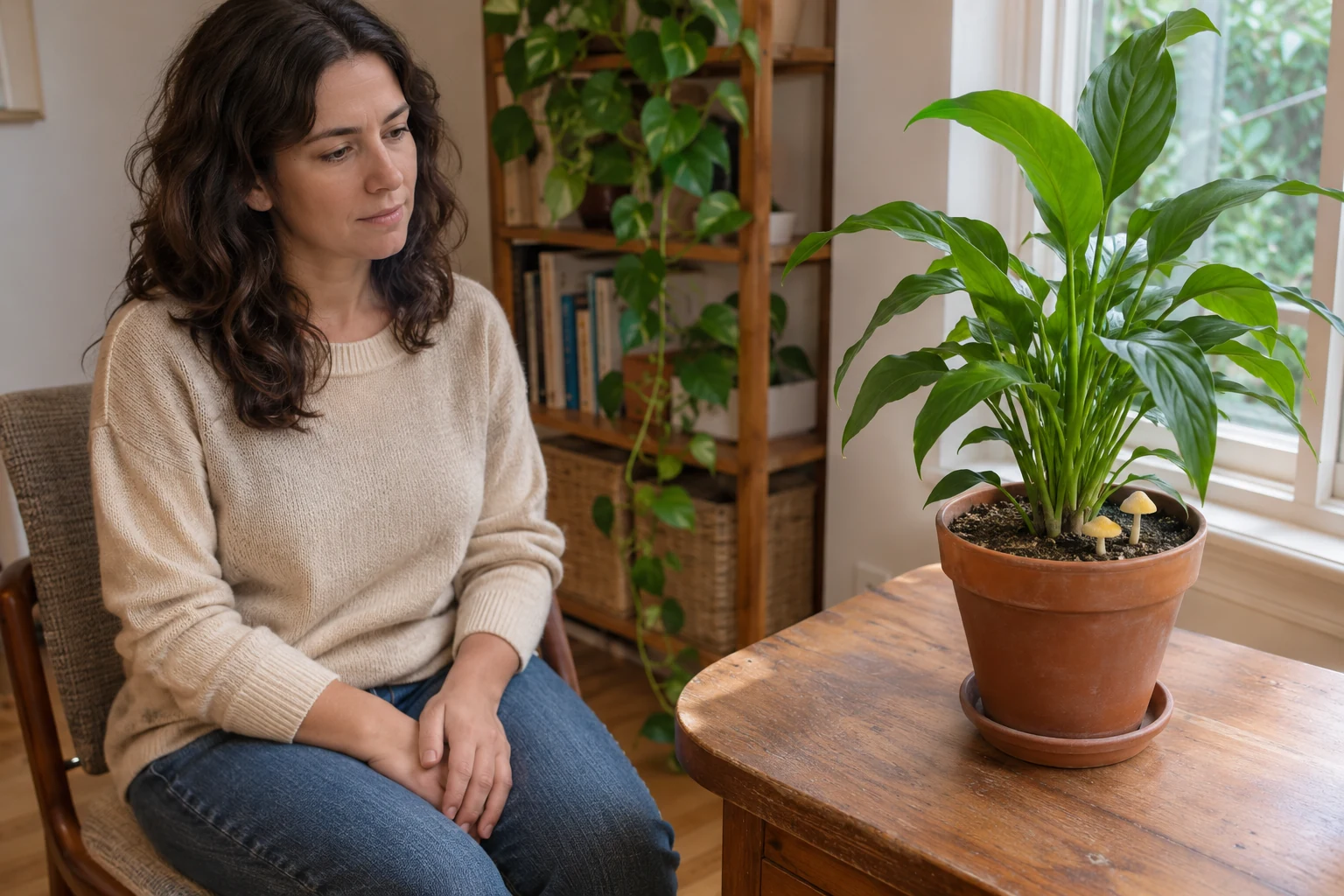
Illustrative mushroom enquiry; fungus identity, plant diagnosis and edibility are not established.
When investigating mushrooms in potting soil, separate the visible mushroom, the identity of the fungus and the reason for considering removal. An answer about one of those questions should not silently settle the others. This guide uses a named-species Extension example without identifying an unknown mushroom in your home.
Begin with the mushroom, not a diagnosis of the plant
A mushroom appearing beside a plant can prompt several different concerns. You might wonder what it is, whether the plant needs attention or whether someone could reach it. Identify which decision you need to make before choosing a product or repeating advice from another pot. The fact that the questions arise together does not mean they have the same answer.
Imagine an adult plant owner, Daniel, noticing a small mushroom in a container. He remembers a page saying that a particular fungus does not harm living plants. He has not established that the organism in his own pot is the one discussed there. Keeping that missing identification explicit changes how he can use the page.
Daniel can read the example for what it explains while leaving his own case unresolved. He does not need to call the plant diseased, announce that the mushroom is harmless or blame a bag of mix to begin investigating. Each of those statements would add a conclusion that the invented observation alone has not established.
Keep the named-species example attached to its name
Iowa State's FAQ says a small yellow houseplant mushroom is probably Leucocoprinus birnbaumii. “Probably” is part of that answer; it is not identification of an unknown specimen here.
Daniel should retain the qualification when sharing the reference. “This page discusses a possible example” and “an expert identified my mushroom” are different statements. Reading a name on a page supplies no expert assessment of his actual pot. This guide offers no photograph-based species identification or edibility assessment.
Likewise, a similar colour does not make the page an answer to every question about a mushroom. Daniel can ask what information an appropriately qualified person needs for identification, rather than choosing a name because it would make the rest of the advice convenient. He should explain that his initial comparison is only a proposal.
If someone sends him another article, he can check which organism it discusses before combining the accounts. A statement about one named fungus should remain attached to that name. Two pages can both be useful without describing the same organism or authorizing the same decision for his container.
Distinguish the visible body from the fungus
Iowa describes a mushroom as a fungus's reproductive structure; the underlying thread-like body is mycelium. It says introduction could occur through potting mix or an airborne spore.
This distinction matters when describing what has actually been removed. If Daniel later reports removing a visible mushroom, that statement should remain about the visible body. This article provides no method for proving that the underlying fungus has been eliminated. Do not relabel a limited action as complete eradication simply because the surface looks different afterward.
The source's two possible introduction routes also leave an important limit on a purchasing complaint. Daniel cannot establish that one specific bag introduced the organism merely by finding a mushroom in a planted container. Keep any actual order or label information available, but do not turn it into proof of a cause that has not been traced.
A supplier might answer a question about a mix's listed ingredients without identifying the organism in a used pot. An identification specialist might answer the organism question without assessing a particular transaction. Daniel can use either answer within its actual limits. Neither person has to provide a conclusion outside the question they assessed.
Plant harm and household exposure are separate concerns
For L. birnbaumii, Iowa says the fungus breaks down dead organic matter and does not harm living plants. That species-bound statement is not a finding about every fungus.
Daniel can therefore avoid two unsupported shortcuts. He should not infer a plant-disease diagnosis merely from the observation. He should also avoid taking a statement about a named fungus and presenting it as a guarantee for an unidentified one. The missing identification remains relevant whichever conclusion he hoped the page would support.
Iowa regards those mushrooms as poisonous to people and animals and advises removing them as they appear where pets or small children live. Plant harmlessness does not mean safe to eat.
Keep that warning with the reference rather than omitting it when quoting the plant-harm passage. This article supplies no eating, tasting or home identification test. Daniel can explain both the scope of the named example and the fact that his own specimen remains unidentified, without suggesting that the reader should experiment with it.
The reason for mushroom removal matters to the conversation. Someone asking about access by a child or pet is raising a different concern from someone asking whether the plant has an established disease. Daniel can name the concern directly instead of requesting an all-purpose assurance that the pot is “fine.”
Do not turn removal into an unsupported chemical treatment
Iowa says fungicide treatments are generally ineffective against mushrooms.
That statement gives Daniel no reason to invent a chemical sequence. If he wants advice about a proposed treatment, he can identify the actual product, intended use and unresolved organism question when seeking appropriate guidance. The word fungus alone does not establish that a product suits the proposed use.
Nor does this article prescribe replacing all the mix, disturbing roots or changing every plant's watering routine. Those would be separate tasks requiring applicable advice. The immediate observation does not establish which, if any, is appropriate for the actual plant and growing arrangement. Keep a proposal separate from a completed care recommendation.
Use fungus identification to define what remains unknown
The phrase fungus identification should describe an assessment you actually obtained, not the moment you found a similar photograph. Daniel can retain the page he consulted and explain why he thought it might be relevant. If the eventual assessment differs, he can correct his working explanation rather than defend the first name he encountered.
A useful response might identify the organism, ask for further information or explain why the available material is insufficient. Those outcomes differ. If the answer requests more information, do not record it as a positive identification merely because someone replied. Keep the unanswered part explicit while deciding whom to consult next.
Daniel can also distinguish a historical report from the present observation. Advice about a previous container may be relevant background, but it is not an assessment of this one. Provide the current plant and arrangement when asking a new question rather than attaching an old conclusion to a different pot for convenience.
Check what a proposed action would actually establish
Suppose Daniel's housemate says, “I would like the visible mushrooms removed before my family visits.” Daniel can clarify that request without rewriting it as a diagnosis of the plant or a promise to eliminate every fungus. The household can discuss the actual concern and obtain appropriate advice while retaining the limits of what has been identified.
Now suppose somebody suggests buying another bag because they dislike the appearance of the current container. That is a proposed preference, not a finding that the old product was contaminated. If the recommendation changes to a claim that replacement will solve a specific problem, ask what assessment supports that claim. A purchasing decision and a causal explanation need not be treated as the same thing.
Finally, imagine that Daniel reads a reassuring sentence aloud but leaves out the organism's name. His housemate may understand it as an assurance about their own pot. Daniel can correct that misunderstanding immediately by restoring the name and qualification. He does not need to reject the reference to acknowledge that the sentence was broader without its context.
Read the two actual mix offers without inferring contamination
The Black Gold 1423004.CFL001.5P offer, SKU 118605906, identifies one 1.5-cubic-foot bag. Its gallery shows Black Gold and SunGro packaging with printed raised-bed artwork. The illustrated vegetables and bed are not additional supplied stock.
The Gaia Green Living Soil offer identifies one 1.5-cubic-foot bag. Native catalogue brand UF URBAN FARM D & S GARDEN SUPPLIES accompanies Gaia Green packaging. Its promotional plants and root cutaway do not authenticate growth results.
Neither account identifies a mushroom in Daniel's pot or establishes that delivered material contained one. This article reports no cultivation, contamination test or treatment trial with either mixture. If he considers a new mix, he still needs a reason tied to his actual planting requirement rather than a conclusion borrowed from package imagery.
Keep neighbouring plant-care decisions distinct
The white-crust and potting-ingredients guide concerns deposits and ingredient questions. The dry potting-mix rewetting guide addresses apparent drainage that leaves dry media unwetted. Neither identifies a mushroom or establishes an eradication treatment.
Daniel may have more than one concern about the container. He can raise them separately without assuming they share a cause. Finding a useful watering reference would not settle the organism's identity, just as identifying a listed ingredient would not establish whether a chemical treatment is appropriate.
Keep a possible replacement order separate
If Daniel later considers ordering mix on Republeq.com, he can keep that transaction separate from the unresolved mushroom question. Before considering a crypto payment such as USDT, review the payment methods and instructions actually presented for the order. This article establishes no checkout option for either offer. Keep the exact item reference, stated bag amount and seller's current terms with the enquiry. A different offer needs its own reference even if a package photograph looks familiar. The native catalogue brand and pictured Gaia Green label should remain visible in any question about what would be supplied; this article authenticates no manufacturer relationship between them. Daniel can review delivery and return information before deciding whether to proceed. No payment address, network selection or transfer instruction is supplied here. If an order is eventually placed, retain its merchant reference for relevant follow-up. He does not need to share unrelated wallet information to ask about the bag or quantity. A relative offering to contribute can discuss the payment separately from whether a replacement is appropriate for the plant. An order confirmation would establish a purchasing step, not the cause of the mushroom or success of a treatment. If material later arrives, compare its identity and quantity with the actual order before assuming it is the intended item. Raise any discrepancy as a transaction question without presenting an untested plant-health explanation as established fact. Any revised order proposal should retain its own current reference and terms. This invented example reports no actual purchase, payment, delivery, organism identification or plant outcome.
End with the decision the evidence supports
Return to the question that prompted the investigation. A named-species example can explain why plant harm, household exposure and removal are different issues. It cannot replace an assessment of an unknown organism. Keep the source's qualifications when deciding which further advice is needed for your own container.
Daniel can finish by stating what is established and what remains open. Keep the remaining question explicit when asking for further advice. The next person can work from the actual observation rather than an assumed diagnosis or promised result.