Problem-Solving Articles
Check white crust on houseplant soil before replacing the mix
Organise an enquiry about a pale surface coating or ingredient, keep plant symptoms distinct, and confirm the actual package before ordering replacement growing medium.
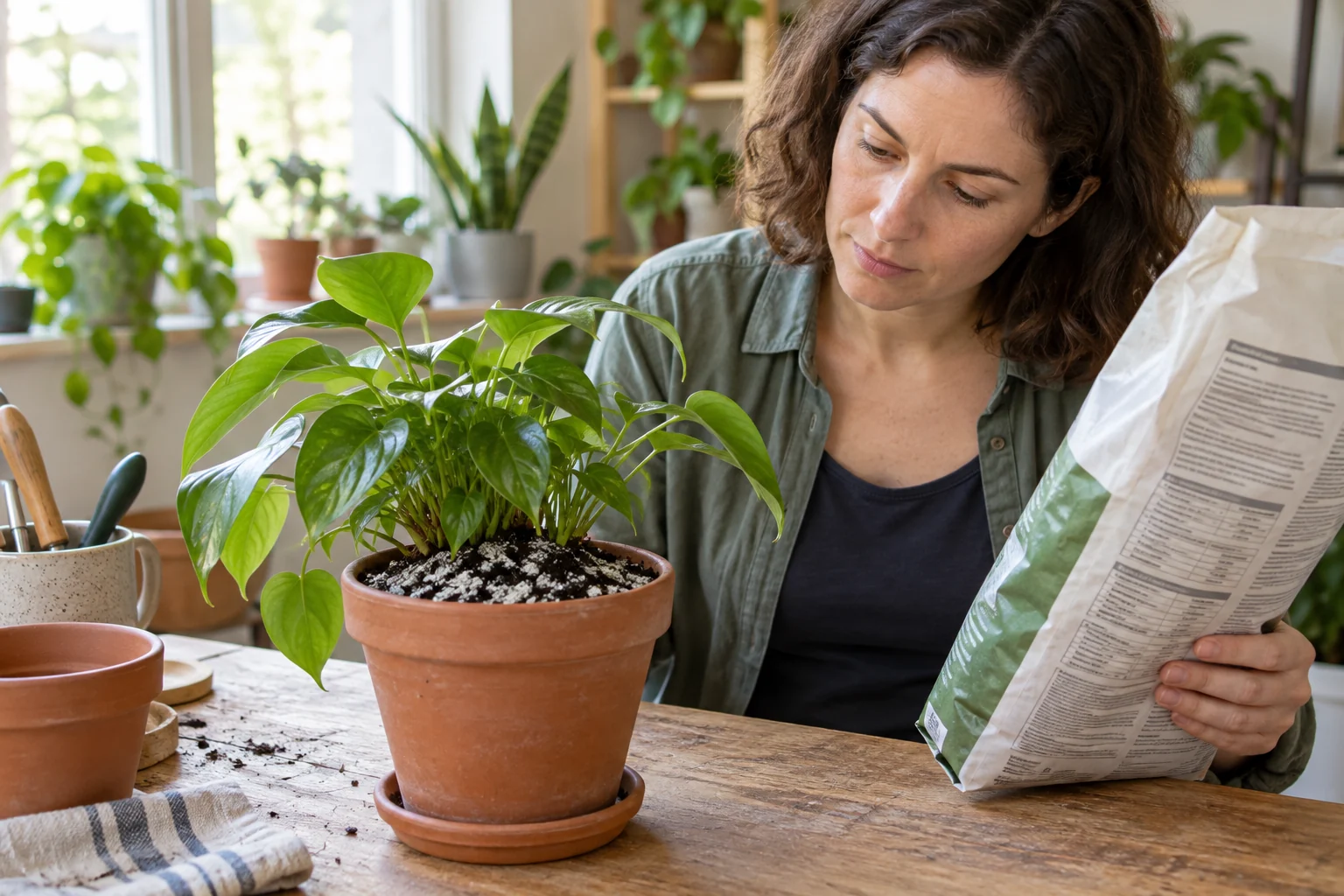
Before replacing a bag or repotting a plant because of white crust on houseplant soil, describe what you have found. Is it a coating across the surface, separate pale pieces among the other ingredients, or a change on the plant itself? Keep that question open while you collect the package information and the plant's history. This guide helps you prepare that enquiry. It does not identify an unknown material from its colour or provide a treatment for an unidentified plant problem.
Start with the particular pot that concerns you. Give it a name you will recognise in your notes, and record the plant's identity if you know it. Photograph the whole arrangement and the area that prompted the question. Write what you can see without giving it a diagnosis: a pale rim, scattered pieces, a surface coating, or a change on a leaf. If you do not know when it appeared, say so. There is no need to invent a starting date to complete the account.
What mineral deposits in potting mix can mean
University of Maryland Extension describes mineral and fertilizer salt deposits as white crystalline coatings on leaves or a white crust on growing medium or a pot. Its account distinguishes minerals introduced through hard water from salts associated with soluble fertilizers. It also explains that deposits can affect a plant's access to moisture and nutrients. This is a documented possible explanation for a crust, without identifying the material in your own container. The presence of something pale deserves a question tied to its location and history, rather than an automatic conclusion about its composition.
Make a separate note for each location. A coating on the outer pot and pale pieces inside the mixture can remain two observations until someone establishes their relationship. When asking about mineral deposits in potting mix, include any information you actually have about the water and fertilizer used. An unknown water source should stay unknown in the enquiry. Keep a current package or label available for the adviser who will assess the particular plant and material.
Read an ingredient list before naming the pale pieces
Iowa State University's discussion of potting-media components describes perlite as an expanded rock-like ingredient used to provide air-filled pores. It distinguishes those mineral components from materials such as peat, bark and coir. Processing and particle size matter to the properties of a mixture; an ingredient name is only part of its description. The article also cautions that dry perlite can be dusty. That information explains a legitimate ingredient role, while supplying no test that proves every pale particle in an unknown bag is perlite.
Maryland's seed-starting guide gives another bounded example. It describes perlite as small white pieces within typical soilless growing mixtures, alongside ingredients such as peat moss and vermiculite. That passage concerns growing media for starting seeds. It does not certify a mature houseplant's mixture, identify a surface coating, or establish what a particular retail package contains. Use the example to formulate a label question: does the actual mixture list perlite, and what does its supplier say about the material you are asking about?
Keep the Miracle-Gro offer attached to its own description
The selected ScottsMiracle-Gro Moisture Control Potting Mix offer describes a pallet containing eighty bags of one cubic foot each. It names AquaCoir Formula and container-plant uses. Those details identify the described offer; they do not establish the composition of an unknown white material or a treatment for your plant. The gallery shows branded potting-mix bags on a pallet and the wrapped pallet during delivery to a property. Ask the seller for the current ingredient label supplied with that exact mix before using package photographs to answer a question about its contents.
Keep the question specific when contacting the seller. Identify the potting-mix offer and ask for the ingredient information applicable to the goods being supplied. Keep that label with the exact offer and package reference. A photograph of a delivery pallet is not a sample analysis. This article has not tested that mixture, verified its water-absorption comparison, or established a guarantee against watering problems. Its listed package size is also a purchasing commitment to consider separately from the enquiry about one plant.
The Happy Frog description needs its own label check
The selected Unbranded Happy Frog potting-soil offer describes two bags of two cubic feet each. Its ingredients include aged forest products, sphagnum peat moss, perlite and fertilizer materials. The catalogue brand is Unbranded, while the photographs show FoxFarm Happy Frog packaging. One ingredient graphic also names bat guano, which the page's description omits. Ask for the current supplied label rather than silently combining the two accounts. The perlite entry is relevant to an ingredient enquiry, without identifying every pale feature in a used pot.
Retain the answer with the exact offer you asked about. If the seller supplies a different label, review that actual label before deciding whether it addresses your question. The pictured packaging does not authenticate an unknown bag already at home. Neither microbial marketing nor a harvest claim establishes the cause of a surface change here. Keep any question about the condition of delivered material separate from a question about changes that appeared after a plant had been growing in it.
Bring the watering history without turning it into a new schedule
Maryland's indoor-watering guide explains that dissolved fertilizer minerals can remain in growing medium as water evaporates. It describes crusting among the possible signs of salt accumulation. Its watering discussion also takes the mixture, temperature and humidity into account, with explicit exceptions to general guidance for plants such as cacti and succulents. The useful contribution to this enquiry is the history of the actual arrangement: which water and feed were used, and what you know about them. It supplies no universal interval for an unidentified plant.
In its separate account of overwatered indoor plants, Maryland notes that excess moisture can produce symptoms resembling other root problems or drought stress. It describes pot type, growing stage and environmental conditions among the factors affecting watering needs. A wilted plant therefore does not settle a question about the white material beside it. Include that change in the enquiry, but keep the observed symptom distinct from the explanation you are asking someone to assess. Buying a different bag does not establish which condition was present.
Include changes elsewhere on the plant
Iowa State's houseplant problem guide starts with whether the environment meets the species' requirements. It discusses several possible contributors to poor growth, including excess water and fertilizer. Its fertilizer discussion describes salts accumulating on the soil surface, saucers or porous pots, alongside possible plant symptoms. The guide treats conditions and care together. That wider account is a reason to report the whole plant's condition when seeking help, even when the surface of the mixture was the first thing you noticed.
The Royal Horticultural Society's houseplant health check similarly considers leaves, stems, light, temperature, water and the growing environment. Its examples keep white material on foliage within a wider assessment of plant problems; they do not turn a pale mark into one universal diagnosis. The Society recommends using the plant's label or an appropriate plant reference to establish its requirements. Bring that identity and the location of each change to the conversation. A question about a leaf can require different evidence from a question about loose material in a bag.
Write one enquiry that another person can answer
A suggested enquiry might begin: “This is the plant and pot I am asking about. The pale material is on the surface, and I first noticed it on this date. I have attached a photograph and the current mixture label. What further information would you need to identify it and advise me?” This is an example of how to organise a request, not an account of a real plant, an expert's diagnosis or a test result. Replace the example's details with your own observations and leave unanswered parts open.
You can add a second question about the purchase you are considering: “Would replacing the medium address the problem you have identified, and what mixture would suit this plant and container?” Ask that after providing the evidence for the assessment. Keep the answer about your plant with its actual identity. A response about another person's succulent or seedling is not an answer about your own arrangement. If a supplier can explain the package but cannot assess the plant, retain that distinction when deciding whom to ask next.
Choose a replacement for an established requirement
Iowa State's container-medium guidance explains why ordinary garden soil alone can compact in a container and drain poorly. It also notes that commercial mixtures vary in quality. That discussion supports examining the intended medium and its properties, without deciding that a larger bag or a familiar word on the front resolves a surface-material question. Obtain guidance for the actual plant and its proposed container before treating either selected offer as the replacement. This article provides no additive recipe or instruction to alter the mixture already in use.
Once replacement has been established as appropriate, the potting-soil quantity guide helps organise the separate purchase calculation. It keeps a container's intended fill requirement apart from package counts and stated amounts per bag. Use it to plan the quantity of an already selected suitable medium. Its arithmetic does not identify a deposit or decide whether the present contents should be discarded.
For a question about equipment, the watering-can guide separates a plant's watering needs from a vessel's capacity and delivery features. It examines what a rose and a capacity label actually describe. That is a useful companion when someone proposes another can as the solution. The equipment comparison supplies no analysis of the white material and no prescription for an individual plant.
Keep the answer with the observation that prompted it
Before closing the enquiry, check what the answer actually establishes. It may explain a listed ingredient, clarify which package would be supplied, identify further information needed, or give plant-specific advice. Record which of those questions was answered. If the material remains unidentified, preserve that uncertainty in your notes rather than writing a more definite label for convenience. A later adviser should be able to see the original observation and the basis for any conclusion that followed it.
Return to the proposed purchase with that answer beside you. Order a mixture because it meets an established requirement, and confirm the exact supplied product when the gallery leaves that open. Keep a recommendation about one container separate from the rest of your plants unless it actually applies to them. Investigating white crust on houseplant soil can end with a better question and a clear next action; there is no need to invent a diagnosis to make the enquiry appear finished.