Cooking & Food Prep
Check mixing bowl oven suitability before using heat
Match a standalone mixing bowl and its separate lid to their own heating-use information before treating either as ready for an oven task.
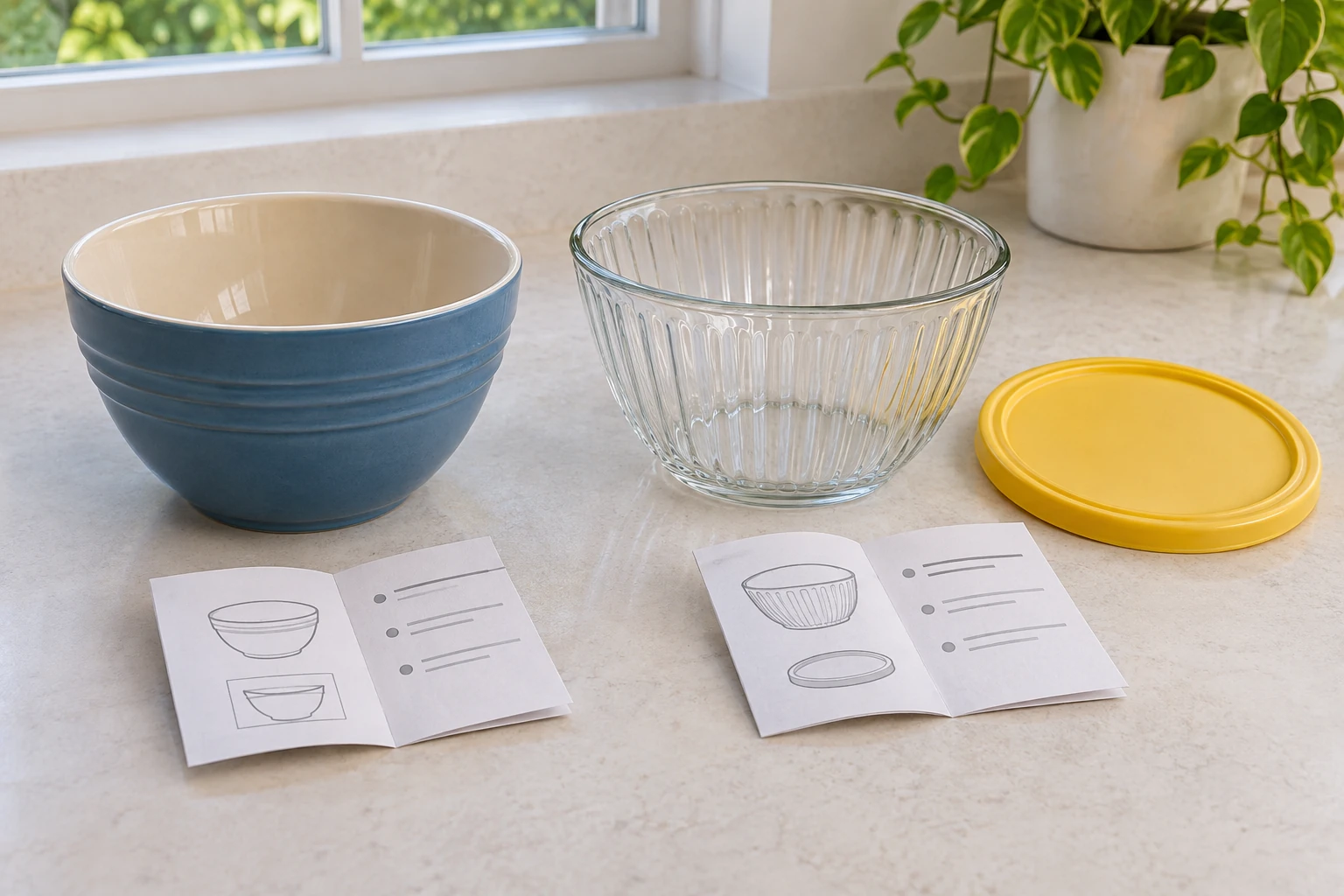
Keep the heating instruction with the exact bowl or lid.
A bowl can be ready for mixing while its next use still needs an answer. Before putting it in an oven, check mixing bowl oven suitability for the exact vessel you own and the heating task you intend. If a separate lid came with it, keep that part in the question. An oven statement beside a bowl does not automatically describe everything sold in the same package.
Start with the object in front of you, its identifying information and the instructions that apply to it. This guide uses two retail listings to show where a shopper's evidence can stop. It does not establish a heating procedure for either product. You should be able to say which component each instruction covers before treating your planned use as resolved.
Name the part and the heating task
Write a short description of the proposed use before searching for permission. For example, a fictional shopper might write, "I want to put this bowl in my oven, with this separate lid attached." That sentence exposes two components and a particular use. A different plan involving only the uncovered vessel needs its own answer. Keeping the question specific prevents a broad product label from answering more than it actually says.
Record the model shown on the item or its applicable documentation, and compare it with the account you are reading. A similar silhouette or matching color can help you navigate a product range, but those observations cannot settle which instructions belong to your item. If the identity remains uncertain, save the uncertainty with your question instead of quietly choosing the closest-looking result.
Keep the intended heating mode in the same note. An instruction naming one mode should be read within that mode, with any accompanying conditions. Avoid expanding a short statement to another appliance or use merely because both involve heat. This article deliberately supplies no temperature settings or sequence for heating a bowl; those details must come from applicable instructions.
Read the STAUB statement within its own account
The STAUB ceramic nested mixing bowl set listing identifies model 1029122 and states oven use up to 570°F. This retail statement gives a shopper a specific lead for checking mixing bowl oven suitability. The complete applicable operating instructions still need to be read.
The images show blue bowls with cream interiors and horizontal molded bands. Staged food and kitchen objects supply no heating instructions.
Copy the exact model and the relevant retail wording into your inquiry, then look for the applicable complete use information. Ask whether that information covers the object and intended mode you named. Keep any condition attached to its instruction as you read. A short shopping description should not be stretched into a procedure assembled from assumptions about the pictured material.
Keep the Pyrex bowl and yellow lid separate
The Pyrex sculpted glass bowl and yellow lid listing names 7402 and 7402-PC and describes bowls with separate lids. Its short description discusses mixing, preparation, serving and storage; it does not state oven permission. The gallery shows fluted clear bowls and detached yellow lids. These observations identify the components under discussion without establishing a heating use for either one.
The STAUB statement supplies no oven permission for the Pyrex pair. Find applicable bowl use instructions and resolve any separate lid question. The short description leaves heating permission open.
Keep model references beside the component they identify in the applicable documentation. If you cannot confidently map a reference to the bowl or lid, ask for clarification using both references and a description of your item. You do not need to infer the lid's material from its color, photograph or model suffix to formulate that question. The useful outcome is a supported component-level answer.
Find instructions that answer your actual question
When gathering bowl use instructions, make a small record with the exact item identity, where the instructions came from and the passage addressing the intended use. Keep surrounding conditions available rather than saving a clipped phrase alone. Someone reviewing your note should be able to see what the statement applies to and what remains unanswered without reconstructing your search.
Read the document as a whole before extracting an answer. A heading may describe a range, while a condition elsewhere narrows a use to a particular component. If a document leaves you unsure which item it covers, note that uncertainty explicitly. A support inquiry can then name the model, the planned heating mode and the unresolved component instead of asking a vague question about whether bowls are oven safe.
Save the response with the question you sent. Check that it addresses your exact item and use before relying on it. An answer about an uncovered vessel leaves a lid-inclusive plan unresolved unless it also covers the lid. If the reply points you to another instruction document, read that document and retain its applicable conditions with your note.
For separate lid limits, keep a separate line even when both parts were purchased together. That line can remain "not established for this planned use" while you investigate. This is a practical way to avoid filling a blank with the bowl's answer. It also makes a later clarification easier to place beside the right component.
When sending an inquiry, describe what you have already checked so the recipient can answer the remaining point. Include the item reference from your own bowl or documentation and distinguish a separate lid in plain words. Quote the passage that led to your question without turning it into a claim of permission. Ask which applicable instructions address the exact proposed use. If the response discusses a different model, keep that mismatch visible and follow up. This modest record is easier to review later than a remembered answer with no item identity or question attached.
Work through a bowl-and-lid assumption
Imagine a fictional shopper who has selected a bowl-and-lid set for a future meal. The shopper first writes, "The set should work in the oven," then notices that this sentence has no evidence attached to either component. Rewriting the plan as a question about the exact bowl and the separate lid exposes what must be checked before proceeding.
The shopper creates two entries. The bowl entry identifies the vessel and records any applicable heating-use statement with its conditions. The lid entry identifies the separate part and records its own relevant information. A blank entry stays blank while the shopper seeks clarification. Nothing in this example demonstrates that either component may be heated, and the fictional plan supplies no test result.
If the shopper changes the plan to use a different vessel, the evidence should move with the original item rather than being copied onto the replacement. Likewise, removing the lid changes the proposed use; it does not prove the uncovered bowl is suitable. The revised plan still needs its own supported answer. This keeps a practical planning adjustment from becoming an accidental permission claim.
Keep other kitchen decisions in their own place
A mixing bowl prep station addresses where ingredients and bowls can wait during preparation. That question is useful while arranging a counter, but a convenient landing place cannot determine heating permission. Keep your layout notes available without letting them answer the separate question of which exact vessel may be used for the intended oven task.
The guide to induction cooktop cookware disclosures examines a cooktop package and cookware-related disclosures. It addresses a different purchase decision from identifying applicable instructions for a standalone bowl and lid. A pan or appliance mentioned in another product account cannot supply missing permission for the objects on your counter.
This separation can shorten a search. When a result answers storage, preparation layout or an appliance-fit question, save it only if you need that decision too. Return to the unresolved component and intended use for the heating inquiry. A growing folder of related kitchen information is less useful than one applicable answer you can trace to the right item.
Keep payment decisions separate from use permission
If you are considering a purchase on republeq.com and want to pay with cryptocurrency such as USDT, inspect the actual checkout options available for that order before deciding how to pay. This article does not verify that a particular currency, network or payment route will be offered. Keep the payment question separate from the unresolved heating-use question: a way to complete an order does not establish that its bowl or lid may be used for your planned task. Before authorizing a transfer, read the recipient details, amount, currency and network shown in the actual payment instructions and check them against the order you intend to fund. Do not copy a destination from an unrelated message or assume that a familiar token name makes two network choices interchangeable. If the displayed instructions are unclear, resolve that uncertainty through the merchant's applicable support route before sending funds. Retain the order information and any actual payment confirmation so you can relate the transaction to the item you selected. This guide supplies no wallet address, quoted price, exchange rate, refund promise or delivery commitment. Any fees, conversion terms or refund conditions need to be checked in the information actually presented for your transaction. You can also leave the purchase undecided while you seek the missing component instructions. Keeping a payment record alongside your product inquiry can help you distinguish an order question from a use question later, but neither record substitutes for the other. Choose a payment method only after reading its applicable terms and deciding whether you understand the displayed transaction. The same item-identification work remains necessary regardless of how you pay.
Keep your inquiry short enough for someone to answer each unresolved point. You can separate an identity question from a use question if both remain open. When you receive a response, compare its wording with the plan you originally described and retain any remaining gap. Avoid rewriting an uncertain answer as a confident household note merely to make the record look finished. A note that clearly says what still needs clarification is useful when you return to the decision after a pause.
Leave a specific unresolved question
At the end of the check, write the result in language that matches the evidence. You may have identified the bowl while still lacking applicable instructions for the proposed mode. You may have a vessel answer while separate lid limits remain unresolved. Keep that distinction visible rather than collapsing it into a single judgment about the entire set.
Your final mixing bowl oven suitability note should name the exact vessel, the intended use and the applicable instruction source, with any separate lid question alongside it. If one of those pieces is missing, retain a precise inquiry for follow-up before heating. That gives you a concrete next action without pretending that a retail photograph or a neighboring product's rating has completed the check.