Crypto Commerce
Midea commercial microwave: dial timer versus home presets
The Midea commercial microwave deserves a closer look if you want to select power and time directly for repeated short heating tasks. Its description specifies a six-minute electronic dial timer with Auto Reset and five power levels. The Kenmore countertop model gives a home user different conveniences: preset cooking menus, one-touch starts, and defrosting by time or weight. Your choice should turn on which controls suit the tasks you actually repeat, followed by confirmation that the appliance fits its intended location and use.
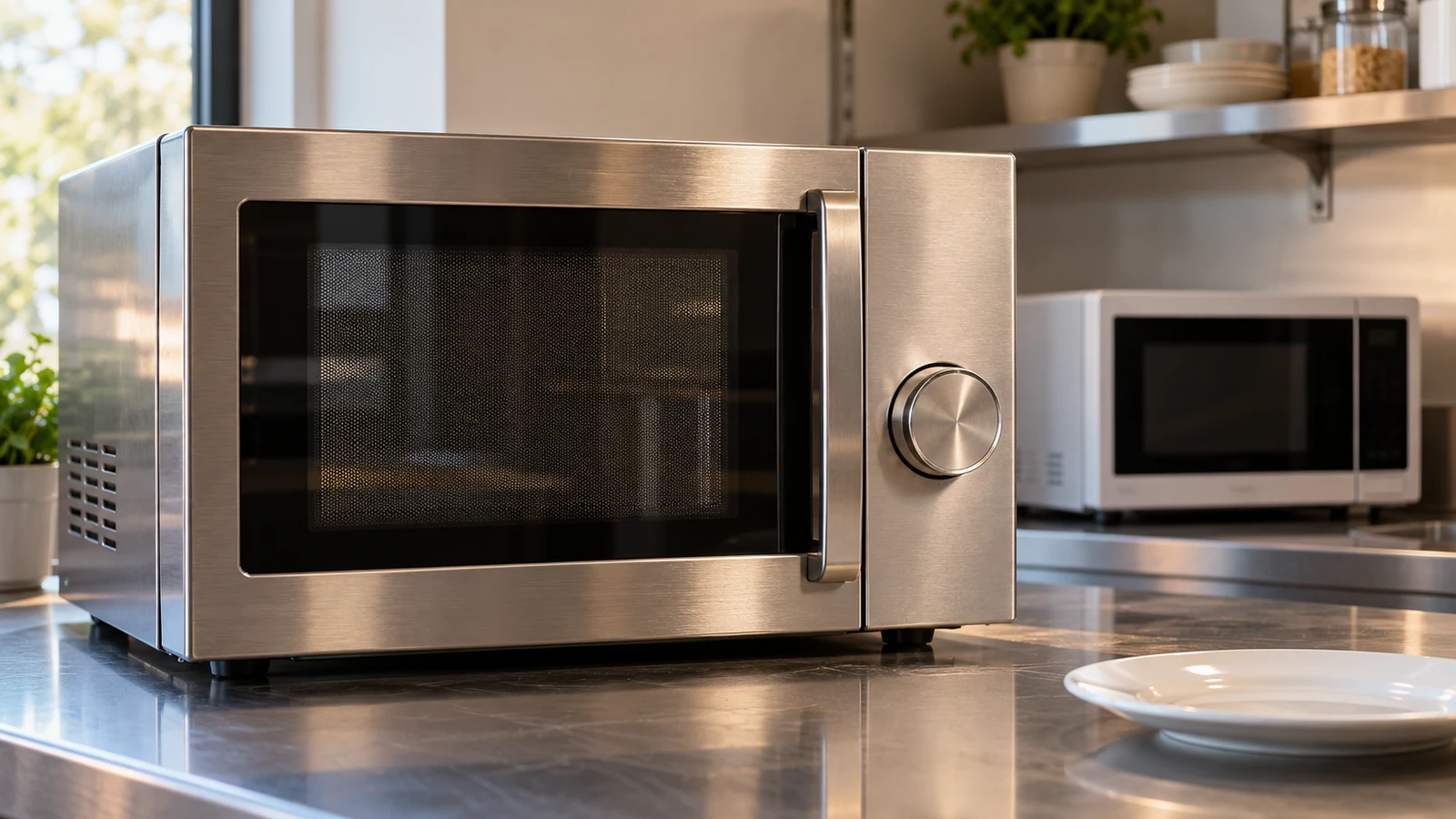
The Midea commercial microwave deserves a closer look if you want to select power and time directly for repeated short heating tasks. Its description specifies a six-minute electronic dial timer with Auto Reset and five power levels. The Kenmore countertop model gives a home user different conveniences: preset cooking menus, one-touch starts, and defrosting by time or weight. Your choice should turn on which controls suit the tasks you actually repeat, followed by confirmation that the appliance fits its intended location and use.
Neither description establishes which machine will produce better results with your food or withstand your particular workload. Midea's description refers to commercial food service, but it does not provide a quantified duty rating. Kenmore's description identifies several household-oriented controls without establishing suitability for a commercial setting. Treat those boundaries as purchase questions, especially if you expect multiple people to use the appliance throughout a working day.
For this comparison, picture the moment when a container is ready to go into the microwave. Do you already know the time and power you want to select, or do you usually reach for a named cooking function? That distinction makes the control comparison useful without assuming that either appliance has been tested under your conditions.
Kenmore Microwave Alternative: Compare The Actions You Repeat
The listed Midea commercial microwave is the 1034N0A. Its description states that turning the dial counterclockwise selects among five power levels. It also specifies 1000 watts of cooking power. These are concrete reasons to investigate it when your preferred routine involves choosing settings yourself, although the description does not explain the complete operating sequence or the increments marked on the timer.
Consider a shared preparation area where people heat individually portioned items using established instructions. A buyer could reasonably prefer a dial if the desired task is entering a known setting without choosing a food menu. Before making that choice, examine the actual control markings and operating instructions. Can each user identify the intended setting clearly? Does the dial offer the time adjustment the task requires? The supplied description does not answer those usability questions.
The six-minute timer deserves particular attention if your routine includes longer cycles. Compare its stated range with the instructions for the foods you intend to prepare. Do not assume that restarting a short timer is an appropriate substitute for a longer program, or that the machine supports a particular sequence of repeated cycles. Obtain the model's operating guidance before basing a working routine on either assumption.
Auto Reset is a named feature in the Midea description, but the supplied wording does not explain precisely what resets or when. If your buying decision depends on the setting left for the next person, ask for that behavior to be demonstrated or described in the manual. Avoid treating Auto Reset as evidence of stored recipes, automatic repeat cooking, or a particular response when someone opens the door.
The Kenmore microwave alternative has a description that names six preset cooking menus, one-touch starts for 30 seconds and one to six minutes, a clock, and a kitchen timer. It also names defrosting by time or weight. Those functions make it worth examining if your home routine includes selecting shortcuts and entering defrost information, rather than consistently choosing a manual power-and-time combination.
A household that mainly wants a short timed start may find that the two control approaches overlap more than the phrase “dial versus presets” suggests. Kenmore's stated one-touch starts are relevant even if its food menus hold little interest for you. Compare the specific action you would use most often. Counting every advertised function equally can give weight to buttons you would rarely touch.
Kenmore Microwave Alternative: Decide Which Presets Matter
The Kenmore description does not identify all six cooking menus or explain the choices within them. Before assigning value to those presets, find out which foods they cover and what input they require. A menu name alone would not establish that it accommodates your usual portion. If a particular preset is the reason you are choosing this model, confirm that exact function instead of assuming it is among the six.
Defrosting is a more specific point of comparison because the Kenmore description expressly supports both time and weight selection. Think about which method you would actually use and whether the necessary controls are easy for you to understand. The Midea description does not specify an equivalent defrost function. That omission leaves its defrost capabilities unconfirmed; it does not justify a claim that the appliance cannot defrost.
A useful shopping exercise is to write down one familiar heating task and one task that changes from use to use. For each, note the setting information you already have and what you expect the control panel to help you choose. Use those examples when reviewing the manuals or asking the seller about operation. This keeps the comparison tied to your habits without inventing cooking times or claiming that a preset will deliver a particular result.
Plan Oven Scheduling For Dishes With Different Finish Times: Choose The Microwave's Role
If a microwave will support meals prepared with another oven, decide what work you intend to assign to it. Perhaps you want direct control for a separately instructed heating task, or perhaps household members want convenient preset selections for their own food. That role helps explain whether Midea's dial or Kenmore's panel is the more relevant starting point. It does not establish how either appliance will perform alongside your other equipment.
For the separate question of coordinating the meal, see Plan oven scheduling for dishes with different finish times. Here, the purchase question remains narrower: whether the microwave's controls, physical capacity, and permitted use suit the work you want it to handle. A cooking shortcut should earn its place through a task you expect to use, not through the number of options on the panel.
The Midea commercial microwave description lists a 1.2-cubic-foot, 34-liter cavity and says it accommodates a 14-inch, 356-millimeter platter. Kenmore lists 0.9 cubic feet. Midea's platter statement is useful if serving ware is part of your intended workflow, but it does not establish clearance for every vessel with that nominal width. Handles, lids, and height still need consideration against the model's usable interior dimensions.
Choose the container you expect to use most often and record its outside measurements, including any protruding parts. Then seek the cavity dimensions and container guidance for the exact appliance. For Kenmore, the supplied description gives capacity without interior dimensions or a platter-fit statement. Avoid interpreting the capacity figure as confirmation that a particular plate or covered container will fit.
Counter space is a separate comparison. Kenmore's stated exterior dimensions are 19.00 inches wide, 13.56 inches deep, and 10.75 inches high. The Midea description supplied here does not give exterior dimensions, so its larger cavity cannot establish its counter footprint. Get those measurements before choosing a location or deciding that the two units could occupy the same space.
For either appliance, compare the exterior dimensions with the installation clearances in its own instructions. Leave the ventilation requirements and door-opening space as questions until you have that guidance. A counter measurement that matches the cabinet dimensions is insufficient for a complete placement decision. Also confirm that the intended surface and location meet the manufacturer's requirements.
Midea's stated 1000 watts is cooking power. The supplied descriptions do not establish either appliance's required electrical supply or input rating. Check the exact model documentation and electrical requirements before purchase, particularly when replacing another microwave. Do not infer plug compatibility, circuit requirements, or consumption from a cooking-power figure or from the fact that an appliance is described as a countertop unit.
Kenmore Microwave Alternative: Resolve Ownership Details Before Choosing
Midea's description names both a stainless steel cabinet and a stainless steel oven cavity. Kenmore's description names a stainless steel exterior but does not identify the cavity material. That difference matters when comparing what is actually documented. It would be inaccurate to describe both interiors as stainless steel or to claim that either surface requires less cleaning without further evidence.
Ask for the care instructions that apply to the exact model, including permitted cleaning methods and access to areas that need routine attention. Neither supplied description establishes a steam-cleaning program, dishwasher-safe components, or included cleaning accessories. If easy cleanup is important to you, use the instructions to assess the work involved instead of treating the exterior finish as a maintenance guarantee.
Midea also lists an oven cavity light and an EZ Grab's Go door handle described as having no moving parts. These are stated physical features, not independent evidence of visibility under all conditions or long-term reliability. If handle access is important in your intended position, inspect the available product details and confirm the space needed to open the door comfortably.
Package contents remain another open question. The supplied descriptions do not provide a complete inventory of included accessories. Before ordering, confirm what comes with the selected variant and whether anything needed for your intended, permitted use must be obtained separately. Keep that question distinct from cavity capacity: a claim that a platter fits does not say a platter is supplied.
For a workplace purchase, ask specifically about the documented duty rating and whether the intended use falls within the model's support and warranty terms. Midea's commercial food-service wording provides context, but it does not establish an allowable number of cycles, continuous-operation capability, or service response. The Kenmore description likewise provides no basis for promising commercial-use coverage. Get a model-specific answer if that distinction affects the purchase.
Current price and availability should be checked for the selected variant when you are ready to order. Confirm the product identity, condition, and applicable support terms on that same selection. A comparison of controls cannot settle whether a particular offer includes the coverage you need. If you are evaluating the extra expense of one option, connect it to features you expect to use and requirements the seller can actually confirm.
Read the payment and return terms presented for the order before paying. If choosing a cryptocurrency payment option, check the displayed currency and network instructions, total, and any stated deadline. Nothing in this appliance comparison establishes a current checkout amount, fee, or refund entitlement. Those details belong to the specific transaction and should not be inferred from the product descriptions.
Shortlist Midea when direct dial selection and its stated cavity size fit your intended routine, subject to resolving operation, placement, and duty requirements. Shortlist Kenmore when its documented one-touch starts and time-or-weight defrost are functions you expect to use at home. Before committing to either, obtain the missing model details that could change your choice, especially dial precision for short settings, the identity of the preset menus, and installation clearance.