Crypto Commerce
Plan oven scheduling for dishes with different finish times
To bring several dishes to the table together, work backward from serving time and give each dish its own sequence: preparation, oven use, any recipe-directed rest, and finishing. Then check where those sequences compete for the same oven space or your attention. Useful oven scheduling starts with those conflicts. Putting everything into the oven together rarely answers the more practical question of what should come out first.
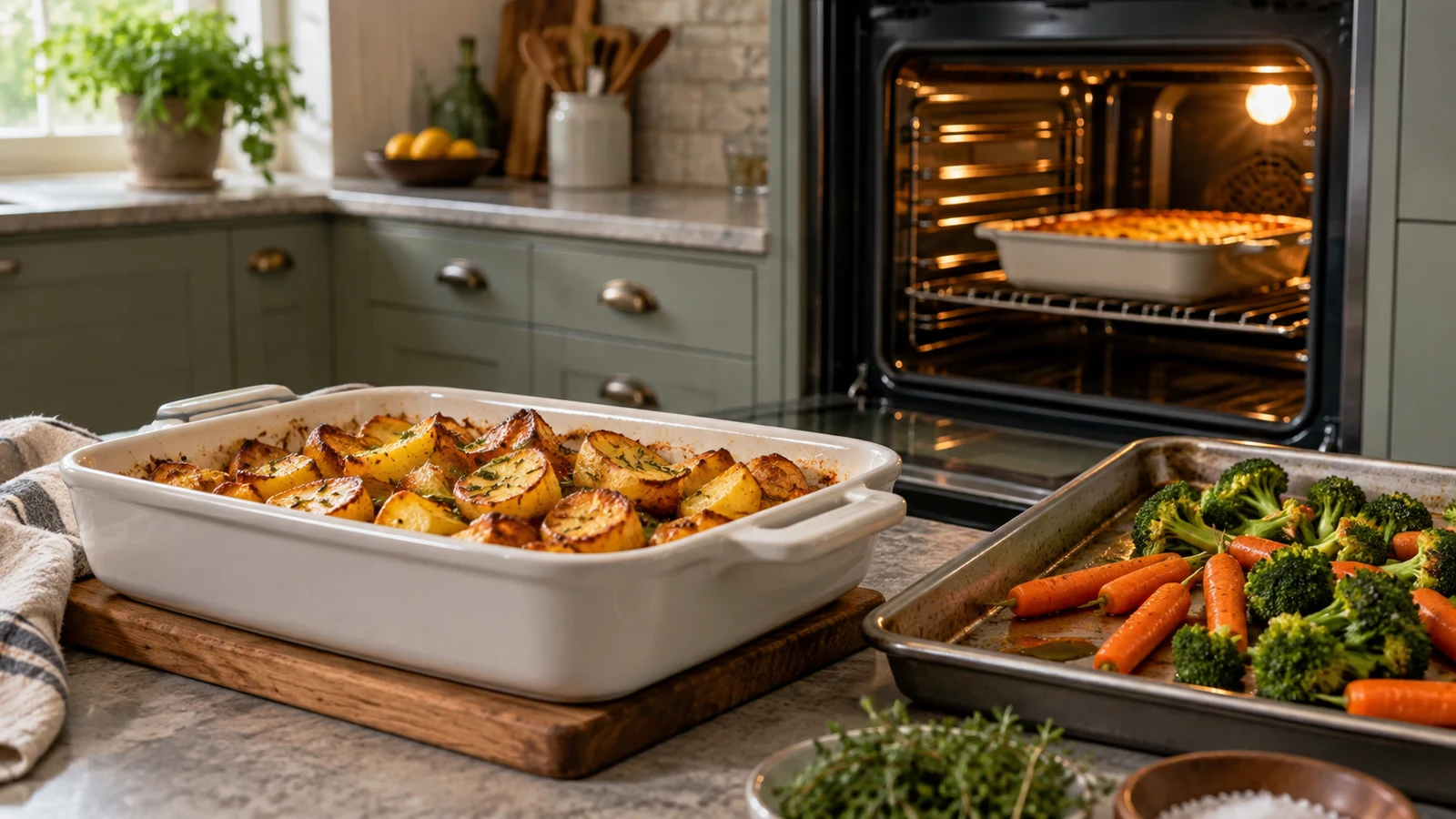
To bring several dishes to the table together, work backward from serving time and give each dish its own sequence: preparation, oven use, any recipe-directed rest, and finishing. Then check where those sequences compete for the same oven space or your attention. Useful oven scheduling starts with those conflicts. Putting everything into the oven together rarely answers the more practical question of what should come out first.
Keep your chosen recipes beside the plan. Their temperatures, methods, doneness checks, and resting instructions remain the basis for cooking; a timetable only organizes the work. If the sequence cannot accommodate them, change the order of service or the menu. The aim is a workable meal with clear decisions, without forcing a dish to match an arbitrary clock.
Define The Meal Before Appliance Installation Readiness
Choose what “ready together” means for this meal. You might want every dish plated at one serving time, or you might serve an opening course while another dish cooks. Those are different schedules. Write the intended serving moment beside each dish before calculating a start time. A dish served later does not need to compete for the same final oven slot as the opening course.
Next, separate the moment a dish leaves the oven from the moment you can serve it. Your recipe may call for a rest, a topping, or another finishing step. Put each required step on the page. If a dish leaves the oven at the planned serving time but still needs attention, the timetable has omitted part of the work.
Give each dish a short planning entry with the information you will actually use:
- The intended serving time or course.
- The preparation that must finish before the dish enters the oven.
- The recipe’s oven setting, expected cooking period, and doneness checks.
- The pan and oven space needed during that period.
- Any required work between removal and serving.
Leave uncertain entries visibly open. For example, if you have not established whether two pans can share the intended rack arrangement, do not reserve that space twice. An unresolved fit question changes the schedule. Treating it as settled can leave you with prepared food and nowhere to put it at the planned moment.
Keep equipment questions separate from the meal sequence. You can first find out whether your recipes create a genuine oven conflict, then decide whether different equipment deserves consideration. This prevents a second appliance from becoming the assumed answer before you know which part of dinner needs help.
Reserve Oven Space Before Adding A Countertop Pizza Oven
Draw a horizontal line for each oven cavity you can use. Mark a dish’s reservation from the time the oven must begin preparing for it through the time the pan comes out. Include preheating and any necessary change of setting as their own periods, using the appliance instructions and your established cooking experience to plan them. Do not fill every gap with another dish automatically.
A reservation needs more than a duration. Note the required setting and pan position alongside it. Two dishes that appear to fit into the same hour may still compete for incompatible conditions. Share a cavity only when the recipes and appliance guidance support the arrangement. Otherwise, draw separate reservations and see what must move.
If you are considering a range for oven scheduling, the linked LG listing describes upper and lower ovens. That gives you two possible cavity rows to investigate. It does not establish that every combination of settings, pans, and cooking modes will work together. Confirm the relevant operating details before building a meal around simultaneous use.
For an existing appliance, make the drawing match the arrangement you can actually use. Label cavities clearly rather than writing only “oven.” If a particular pan belongs in one cavity, record that restriction. A schedule that relies on moving the pan elsewhere needs to show that the alternative is suitable, rather than treating every empty space as interchangeable.
What A Countertop Pizza Oven Would Need To Take Over
Give an additional oven one defined assignment before deciding that it solves the overlap. The linked countertop pizza oven is described in the supplied catalog information as having baking, temperature adjustment, and an independent countdown timer. Those details make it a candidate to examine for a separate reservation; they do not establish suitability for your particular dish.
Check the dish’s requirements against the appliance instructions, usable dimensions, and supported cookware. Then redraw the schedule with that single assignment moved. If the main oven still has the same conflict, the additional appliance has not solved the problem you identified. You may need to choose a different dish to move or reconsider the serving sequence.
A separate timer also does not provide another pair of hands. If both ovens call for checking, removal, and finishing at once, the pressure has moved from oven space to your attention. Mark those tasks on the same timeline before accepting the revised arrangement.
Work Backward Before Appliance Installation Readiness Decisions
Use a serving marker, such as S, so you can calculate the sequence before committing to a clock time. For each dish, subtract the recipe-directed work after cooking to find the planned oven exit. Then subtract the expected cooking duration to find the planned entry. Preparation and preheating must finish before that entry.
Consider a symbolic example with two dishes, A and B. Suppose A’s recipe includes a rest and a finishing step, while B’s recipe calls for serving after removal. A’s planned oven exit belongs earlier than S by the time needed for its remaining steps. B’s exit belongs closer to S. The recipes determine those intervals; the letters simply help you see their relationship.
Now compare the reservations. If B needs the same cavity after A, B can enter only after A comes out and any required oven transition is complete. If that places B’s finish beyond S, you have found a conflict. Starting B at its calculated time is not possible just because that time looks correct in isolation.
Resolve the conflict by changing something explicit. You could move a suitable dish to another available cavity, select a recipe with a different sequence, or serve B as a later course. Record which choice you made. Avoid quietly shortening a cooking stage or assuming that an unplanned wait is acceptable.
Once the sequence works, replace S with the intended serving time and calculate the clock entries. Keep the recipe’s expected duration distinct from its doneness requirement. The planned exit tells you when you hope to remove the dish; the recipe’s checks determine whether it is ready.
Preparation Dependencies Before Appliance Installation Readiness
Read the timeline from the beginning as well as backward from dinner. A correctly calculated oven entry can still be impossible if the dish is not assembled. Link each entry to its preparation task, then identify any task that must happen before that preparation. Keep recipe-directed waiting stages visible instead of hiding them inside a single “prep” label.
Look especially for work that depends on another dish or on shared tools. If you plan to reuse a pan, that pan needs to become available before the next preparation step begins. If one recipe requires your continuous attention during another dish’s assembly window, assign those tasks different periods. The timetable needs to account for the cook as well as the cavities.
Set reminders for actions rather than unnamed elapsed times. “Check dish A as directed” and “begin dish B’s finishing step” tell you what the signal means. Keep the written schedule nearby so a reminder sends you to the right recipe and task, particularly when more than one timer is running.
Test Attention Conflicts Around A Countertop Pizza Oven
Review the final part of the meal at a finer level than the early preparation. Circle every moment that requires checking a dish, removing cookware, completing a finish, or serving. An apparently spacious timetable can become crowded here because several short tasks land at the same moment.
Try a rehearsal on paper: read each action aloud in order and name who will do it. If you are cooking alone, give yourself a sequence you can perform. If someone is helping, agree on a specific task and the signal that starts it. “Help with dinner” leaves the handoff unclear; “finish this dish after I remove it” identifies the dependency.
Plan where the work happens, too. A dish coming out of an oven needs an appropriate place for the next recipe step. Keep the necessary serving items ready before that moment. This is a practical part of the schedule because searching for a dish or clearing a work area can interrupt several actions that you placed close together.
Build flexibility around preparation and serving choices where the recipes allow it. Do not create flexibility by inventing holding periods or changing cooking requirements. If the only way to meet the original serving time is to rush several essential tasks, choose a less crowded sequence before you begin.
Revise The Meal Before Appliance Installation Readiness Becomes The Next Step
During cooking, update the plan when a dish’s progress changes. If A needs longer, identify every reservation and finishing task that depends on A leaving the oven. Move those dependent actions together. Shifting only the removal reminder leaves the rest of the timetable describing a sequence that can no longer happen.
For example, if B is waiting for A’s cavity, keep B’s entry tied to the cavity becoming available under the required conditions. Reconsider its serving time rather than compressing its cooking period. If another dish was intended for the same course, decide whether to revise that course or serve dishes separately, following the relevant recipe guidance.
Check whether a proposed recovery creates a new attention conflict. Moving B to a second oven may free the first cavity, yet still place both dishes’ final tasks together. A useful revision should resolve the whole dependency, including preparation and finishing. If it cannot, simplifying the meal may be the more workable choice.
If a separate oven remains part of your plan, use the related guide on appliance installation readiness for the placement and connection questions that sit outside this cooking timetable. Settle those questions before treating the appliance as an available resource. The meal plan can show what you need an oven to do, but it cannot establish that an appliance is ready for use.
For your next meal, write one complete oven scheduling plan using recipes you already intend to cook. Reserve each cavity, mark the tasks that need your hands, and identify the decision you will make if a dish finishes later than expected. Afterward, keep brief notes on where your timing assumptions differed from what happened. Use those observations to improve the next schedule while continuing to follow each recipe’s cooking and doneness instructions.