Troubleshooting & Repairs
Lint roller not picking up lint: check the exposed sheet
Identify an adhesive-sheet roller, check the exposed sheet and intended movement, and keep the garment requirements with the next action.
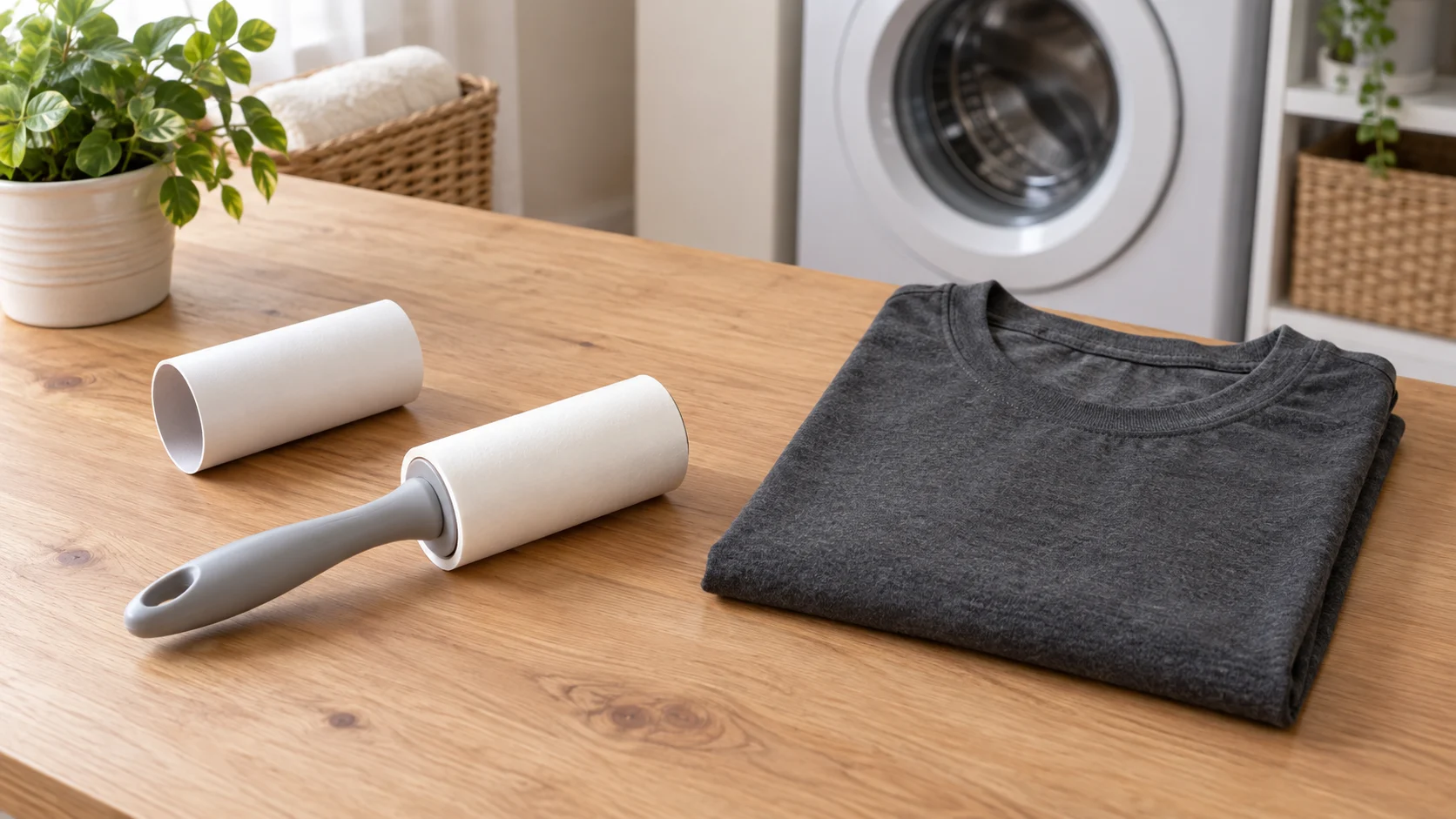
A lint roller not picking up lint can leave you making the same pass over a jacket without seeing the change you wanted. Before adding pressure or buying another tool, identify the kind of roller you have and look at its exposed surface. This guide concerns adhesive-sheet rollers. A washable reusable roller needs its own care instructions. Keep the garment's requirements alongside the tool's instructions before doing anything else to the material.
Consider Dev, an invented person preparing a jacket to wear. Dev has an adhesive-sheet roller in a drawer and notices lint still visible after an ordinary pass. The example has no measured pickup result or diagnosed fault. It gives the next check a practical purpose: determine whether the surface presented to the garment is the one the roller is intended to use. A roll with sheets, its protective covering and a reusable washable surface are different things to identify.
Identify the actual roller before changing its surface
Read the tool or packaging that belongs to the item in your hand. Look for its actual type and applicable use instructions. Do not infer a care method from the word reusable alone. A handle that accepts replacement adhesive rolls and a roller whose surface is washed can both appear in household searches. That shared shopping term does not tell you what to peel, wash or replace. Keep the actual product identity with the method you intend to follow.
Dev's immediate check stays with the roller already owned. If the packaging is missing and the surface type cannot be established, identify it before attempting a cleaning or repair method. A remembered brand name is not enough to select instructions for an unfamiliar design. This article supplies no solvent treatment, washing method, improvised adhesive or tool alteration. Finding the appropriate guidance is a useful next action when the item cannot yet be used with confidence.
Expose a fresh lint roller sheet when the instructions call for one
The February 2023 3M Scotch-Brite Everyday Clean technical sheet describes removing and retaining the printed cover, rolling with light pressure so the roll turns freely, and removing a used sheet when debris accumulates. It says to replace the cover after use. That is guidance for the named product range, rather than proof that every roller follows it. The distributor-hosted sheet does not establish an exact match to either retail offer discussed below.
Check what is actually exposed on the roller you have identified. Is the visible piece the intended working surface, a protective cover or a used sheet awaiting the change described in its instructions? Keep that distinction concrete. Dev does not need to declare the adhesive defective before answering it. If the original cover is still present, use the applicable instructions for that cover. Do not treat any unfamiliar outer layer as something to remove simply because another product has a peelable sheet.
To expose a fresh lint roller sheet, use the removal method supplied for your actual roll. Follow its intended sheet edge and perforation rather than cutting into the roll or dismantling the handle. Present the appropriate working sheet while keeping the tool in its intended form. If you cannot identify where the sheet is meant to separate, seek that product's instructions. Avoid pulling away several layers merely to make the surface look new.
Keep the discarded piece from becoming part of the next pass. The technical sheet describes folding a removed sheet onto itself to contain its debris. Follow the relevant disposal guidance for your actual supply. At the household level, Dev can have a place for the used piece before beginning the task. That avoids leaving it among the jacket and the supplies still in use. This preparation concerns where Dev puts the used material; the jacket still needs its own care decision.
Keep the lint roller turning during the intended use
To keep the lint roller turning as intended, watch what the actual tool does during the use allowed by its instructions. The movement of the roll is a different observation from whether lint remains on the jacket. If the mechanism does not move as intended, describe that problem accurately. This guide does not provide a dismantling method or permission to force a stuck part. Obtain the actual assembly or support guidance before treating a movement problem as a reason to increase pressure.
Dev can compare the task with the supplied instructions without claiming to have tested the roller's maximum performance. A familiar-looking tool may be held or assembled differently from one used before. Keep the exact design in view. If a replaceable roll has been installed, use the relevant fitting information for that handle and roll. A broadly similar refill description cannot establish compatibility. Do not trim a refill or alter the handle to make an uncertain pairing turn.
After an appropriate sheet change or other permitted correction, make only the ordinary use the product and material guidance allow. Observe what actually happens. Perhaps lint is collected; perhaps the issue remains. Neither possible outcome is reported as a result for Dev or the two offers here. If the expected change does not occur, stop repeating the same unexplained action and seek information about the actual tool, surface and material. An unresolved problem should remain visible instead of becoming a reason to improvise.
Read the two adhesive-sheet offers within their limits
The RUGED Gain Original Scent lint roller offer identifies ninety sheets for removing pet hair and dust. Keep RUGED as the actual listed brand. The Scotch-Brite 830LSRS-60 offer names thirty sheets and PK4 in its title; its short description calls it a large-surface lint roller. Those accounts identify supplies, without providing a cleaning trial on your clothing or a full operating procedure for each exact offer.
Do not convert a sheet count into a number of finished garments. The condition and intended task remain separate from the amount of consumable material in a package. This article has no basis for saying how many jackets one roll will finish or when your household will need another pack. Read the current package information if you are ordering supplies, and establish which exact handle or refill the order concerns. A headline quantity cannot resolve a movement or material-suitability problem.
Keep the garment's requirements in the decision
Decide whether the intended contact is appropriate for the actual item, following the garment and roller guidance. A general reference to clothing does not identify every fabric, trim or finish. Leave an uncertain item out of the attempt while that question is resolved. Dev may have another way to prepare for leaving home without experimenting on this jacket. The immediate need to look tidy does not require committing an unfamiliar material to a method whose suitability has not been established.
The fabric dye swatch test guide considers what a sample can represent before committing a larger item. It does not provide a lint-roller test, a dyeing instruction for this task or permission to cut a scrap from usable clothing. Keep that limit with the link. For the jacket in front of you, obtain the relevant adhesive-contact guidance instead of assuming that an unrelated material test approves the proposed use.
Also identify what you want removed. Loose debris, a mark or damage to the material need not be the same problem. A lint roller's description does not supply a method for every visible change on clothing. Do not add liquids or cleaning products to the roll in an effort to broaden its job. If the issue is something other than the intended debris, return to the item's appropriate care information. The fact that the roller is already in your hand does not make it the right tool for every task.
If Dev is preparing several garments, keep each item's care decision separate. Permission for one jacket does not automatically cover another's lining or embellishments. Identify the next item before continuing the routine. A suitable roller does not need to be used on everything in the pile, and leaving an uncertain garment untouched can be the appropriate end of that part of the task. Dev can put the items needing different guidance aside while finishing whatever work is already supported, without claiming the whole pile has been checked.
Separate a supply purchase from a cleaning result
The reusable lint roller cost guide uses hypothetical purchase schedules and useful-life assumptions. Its arithmetic does not establish equal cleaning results or provide care instructions for an adhesive-sheet roll. Use it for that separate spending question after you know what supply is actually suitable. Buying another pack can resolve an identified shortage; it cannot explain a roller that has not yet been identified or a method that does not suit the material.
If the next appropriate action is a supply order, begin with the product reference you actually need. At republeq.com, cryptocurrency is accepted for purchases, with USDT among the supported options. Confirm the choices displayed for your own basket before arranging payment. Nothing in the jacket example establishes a live selling price, an available quantity or an arrival date. First distinguish a complete roller from a refill intended for an existing handle, and obtain any necessary pairing information. Then decide the quantity you are willing to buy. An adhesive sheet, one roll and a package containing several tools describe different amounts of supply. None tells you how many finished jackets the household will obtain from the purchase. Dev can ask whoever orders the item to retain that distinction rather than sending only a photograph of a familiar-looking roller. A lint roller not picking up lint does not automatically call for a new pack: identifying the exposed surface or obtaining the right use guidance may leave no purchase to arrange. Where an order is justified, read its total and the actual transaction instructions carefully, including the requested asset and applicable network. No currency conversion, transfer charge or completion time has been calculated for this fictional routine. Check those matters in the real transaction instead of borrowing an amount or timing assumption from a previous order. If another person is obtaining the supply, agree who will place that particular order and retain the resulting receipt as needed. Once the order is complete, the incoming item still needs its applicable use instructions. Paying with USDT or any other available crypto option supplies no cleaning result and no permission to use adhesive on an uncertain garment.
Return the identified tool to its next use
Once the task is finished or paused, follow the roller's own storage guidance and keep its identity available. Dev can leave the jacket question unresolved without losing track of what was checked. The useful next step follows the actual observation: a cover or sheet needing its permitted change, a movement issue needing support, or a material requiring different care information. Keep the actual tool and the garment's requirements together when you return to the task.