Cost & Savings Articles
Reusable lint roller cost: when repeat purchases catch up
Compare reusable-kit outlay with recurring lint-sheet purchases using fictional prices, purchase schedules and replacement lives, keeping seller claims separate.
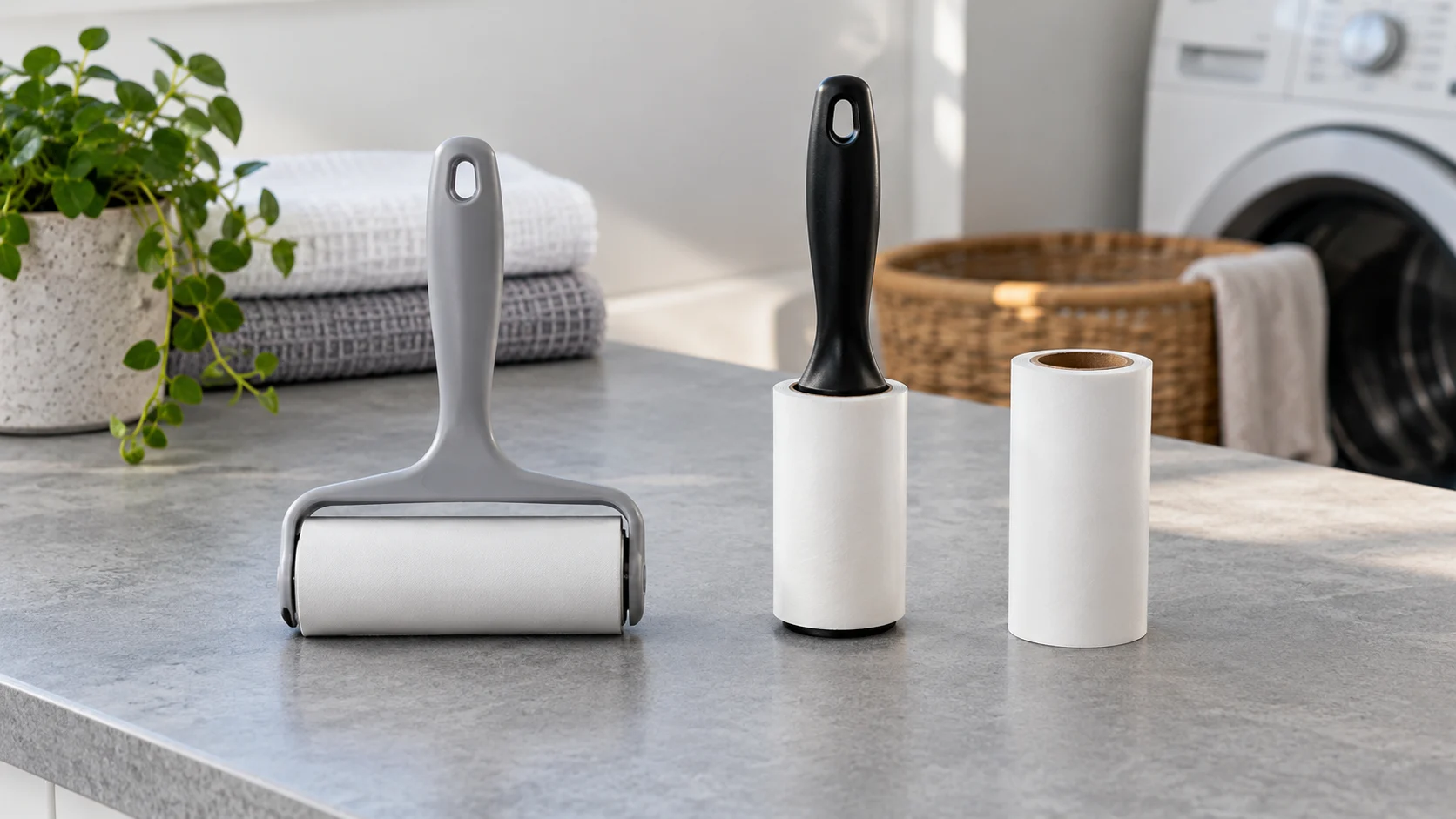
A reusable lint roller cost comparison needs more than the word reusable. An upfront purchase can be compared with recurring disposable purchases, but the result depends on how often replacements are bought and how long the reusable equipment remains useful. State those assumptions alongside any calculated saving.
The two offers here describe different packages: a zyler-listed Scotch Brite two-pack with a 140-sheet statement, and an Unbranded three-in-one kit containing a reusable roller alongside a rake and glove. The arithmetic below uses invented prices and purchase schedules. It does not report current prices or a cleaning trial of either product.
Identify the disposable package without doubling its sheet figure
The zyler Scotch Brite lint roller two-pack offer identifies SKU 17545908182. Its short description names 140 sheets, an ergonomic handle and daily-use wording. Keep zyler as the actual catalog brand and Scotch Brite as wording in this selected account.
The description does not say 140 sheets on each of two rollers. Do not turn the stated 140 into 280. It also supplies no number of garments, seats or household tasks that those sheets will complete. A sheet count identifies supplied consumable material; a replacement schedule needs its own basis.
Before comparing purchases, establish which package is being priced and what quantity that price buys. Retain the exact item reference with the quote. This article gives no refill-fit approval and does not assume that an unspecified replacement roll can be fitted to the selected handle.
The reusable offer is a three-tool kit
The Unbranded three-in-one pet hair removal kit identifies SKU 17378806608 and UPC 652190463679. Its description includes an adjustable carpet rake, reusable lint roller and static hair removal glove. Those are three named components, rather than three identical rollers.
The account says that the rake extends to fifty inches and attributes a cleaning-without-bending benefit to that feature. It says the glove lifts hair from clothes, furniture and car seats. Those are retail feature claims, without a handling or fabric-suitability test here.
Its roller is described as replacing disposable lint sheets, reducing waste and cost. The materials are described as intended for long-term use. Neither statement supplies a measured service life, number of completed tasks or complete care method. Keep the seller's cost claim separate from the conditional budget exercise below.
If the whole kit is the item you would buy, include its whole outlay in the comparison. Do not assign an invented share of its price to the roller and treat the rest as free. Someone who already owns a suitable rake and glove may value that package differently from someone who wants all three tools.
Disposable lint sheet spending follows the purchase schedule
For disposable lint sheet spending, begin with a fictional example. Imagine a budget price of six dollars per disposable package and eighteen dollars for the reusable kit. These invented dollar amounts are chosen for arithmetic. They are not quotations from either selected offer.
Now suppose the fictional household buys one disposable package in each of six consecutive months. It spends six dollars in month one, another six in month two and so on. The cumulative outlay after six purchases is thirty-six dollars. This is an assumed buying schedule, not a measured consumption rate for 140 sheets.
The reusable side begins with one eighteen-dollar kit purchase. In this first scenario, assume it remains suitable and available throughout the same six months, with no second kit purchase during that period. On those assumptions, its purchase outlay is eighteen dollars compared with thirty-six dollars for the disposable packages.
The eighteen-dollar difference is conditional purchase arithmetic. It excludes any unequal delivery charges, taxes or upkeep expenses that an actual quote or use would introduce. Write those exclusions beside the result. A narrow comparison can still be useful when it is clear which expenses it contains.
The reusable roller break-even point is a purchase count
For the reusable roller break-even point in that invented example, compare the upfront eighteen dollars with cumulative six-dollar purchases. After one disposable purchase, the disposable side has spent six dollars. After two, it has spent twelve. After three, its eighteen dollars equals the kit's assumed purchase outlay.
The fourth disposable purchase raises that side to twenty-four dollars. If the original reusable kit is still serving the intended task under the scenario's assumptions, its eighteen-dollar purchase cost is then six dollars lower. Equality at three purchases and a lower outlay after the fourth are different statements.
Keep the count attached to purchases. Three purchases might occur over three months, half a year or another interval. Converting that count into a date requires a buying schedule. The selected product descriptions do not supply one for your household.
An actual calculation would use the confirmed upfront total and the confirmed recurring purchase total. If those figures include different charges, compare them on a consistent basis. Do not carry the fictional six-dollar and eighteen-dollar figures into a recommendation about current market prices.
A slower replacement schedule changes the six-month result
Keep the same invented prices but change the schedule: one disposable purchase in months one, three and five. Over six months, that is three packages costing eighteen dollars altogether. If one reusable kit also covers the entire assumed period, the purchase outlays are equal at the end of that comparison.
The slower schedule has not changed either invented package price. It has changed the number of recurring purchases within the chosen period. That is why a headline saying the reusable option saves eighteen dollars over six months would conceal an important assumption from the earlier monthly-purchase scenario.
Use your actual past purchases when they are relevant and available. An order history may show how often packages were bought, although a stock-up order and the dates items were used can differ. Keep those facts separate when choosing which schedule represents the question you want to answer.
If the timing is unknown, compare several explicitly hypothetical schedules instead of selecting one as a fact. The monthly and alternate-month examples already show how the same prices can produce a lower outlay in one scenario and equality in another. Neither predicts what your equipment or household will do.
A replacement kit can remove the apparent advantage
Return to the invented six-month monthly schedule, but now suppose a second eighteen-dollar kit must be bought during that period. The reusable-side purchase outlay becomes thirty-six dollars. Six disposable purchases at six dollars each also total thirty-six dollars. Under this changed assumption, the purchase costs are equal.
This scenario does not claim that the actual reusable roller needs replacement at that point. It shows why service life matters to the comparison. The retail long-term-use wording supplies no calendar life that can be inserted into the calculation as a verified number.
A different hypothetical outcome might leave the first kit unsuitable for the intended task before the third disposable purchase would have occurred. In that case, an eighteen-dollar upfront expense has not yet been offset by three six-dollar purchases. The initial label reusable cannot settle that timing question by itself.
Keep suitability with the expense. A lower calculated purchase total does not establish equivalent results on a particular garment or surface. This article supplies no cleaning method, surface permission or comparative performance finding. Follow the applicable equipment and material guidance for actual use.
Choose the starting point before counting purchases
The six-month examples include the first disposable purchase inside the comparison. Month one therefore contributes six dollars. If someone instead begins counting only after buying an opening package, their list of future purchases starts from a different point. Make that change explicit before comparing the resulting total with the original eighteen-dollar kit figure.
Suppose an opening disposable package has already been paid for and the question is about new payments from today. That earlier payment is not another future purchase. The remaining material may also postpone the next order. Establish what is already owned before treating a monthly buying schedule as the next six payments.
The same reasoning applies to a reusable item already at home. A decision about continuing with existing equipment differs from deciding whether to buy the selected three-tool kit now. An eighteen-dollar fictional new-kit expense belongs in the latter example; it should not automatically be added to a question about making no new purchase.
Keep the two decision dates distinct when discussing the result with someone else. One person may be comparing complete purchases from the beginning, while another is comparing the next expenses after existing supplies are used. Their numbers can differ because their questions differ. Name the starting inventory and the proposed next payment before interpreting the difference.
Count what the household would actually buy
The reusable comparison concerns a complete kit, while the disposable account concerns the selected two-pack. If you would not buy the rake and glove separately, do not invent avoided purchases for them. If you do want those components, consider their actual usefulness as a separate part of the package decision.
Likewise, equipment already at home changes the purchase question. Someone who already owns a suitable item may be deciding about the next consumable order rather than choosing two entirely new systems. Keep the actual proposed expense in view. A past purchase need not be counted again as a new payment.
Include known additional expenses when the actual comparison calls for them. Identify a real delivery charge or replacement item from the relevant quote instead of assuming every option has identical extras. Keep unknown care requirements open rather than declaring upkeep free because no amount appeared in the brief description.
Use other cost guides for their particular assumptions
The yarn unit-cost guide separates the quantity bought from the material needed for an intended project. Its Sensy package lengths belong to those yarn offers. Here the question is whether a one-time purchase remains useful long enough to offset recurring purchases, rather than a price per length.
The SodaStream cylinder exchange-cost guide keeps an exchange commitment and a spare-cylinder purchase distinct. Its actual SodaStream and Soda Sense terms do not supply roller compatibility or a return arrangement here. The useful connection is comparing the obligation you would actually pay for.
Keep a conditional saving attached to its conditions
Before choosing, retain the actual quoted totals, the package identities and the replacement schedule used. State whether the comparison assumes one kit remains useful throughout the period or includes another purchase. Those details allow someone else to understand why the result changes when a different assumption is used.
A reusable lint roller cost comparison can show equality, a lower purchase outlay or a higher one under different conditions. Use the actual offers to identify what is being bought, and use clearly stated assumptions for what has not been measured. The seller's savings claim remains separate from that calculation.
A reusable lint roller cost comparison depends on purchases and useful life; this conceptual cover shows generic inactive cleaning tools without verified retail identity, surface suitability or a cleaning trial.