Cost & Savings Articles
Fabric dye swatch test: limit the material at risk
Use Rit's distinction between actual fabric, similar fibres and paper towel to decide what a colour sample can establish before committing a useful garment or batch.
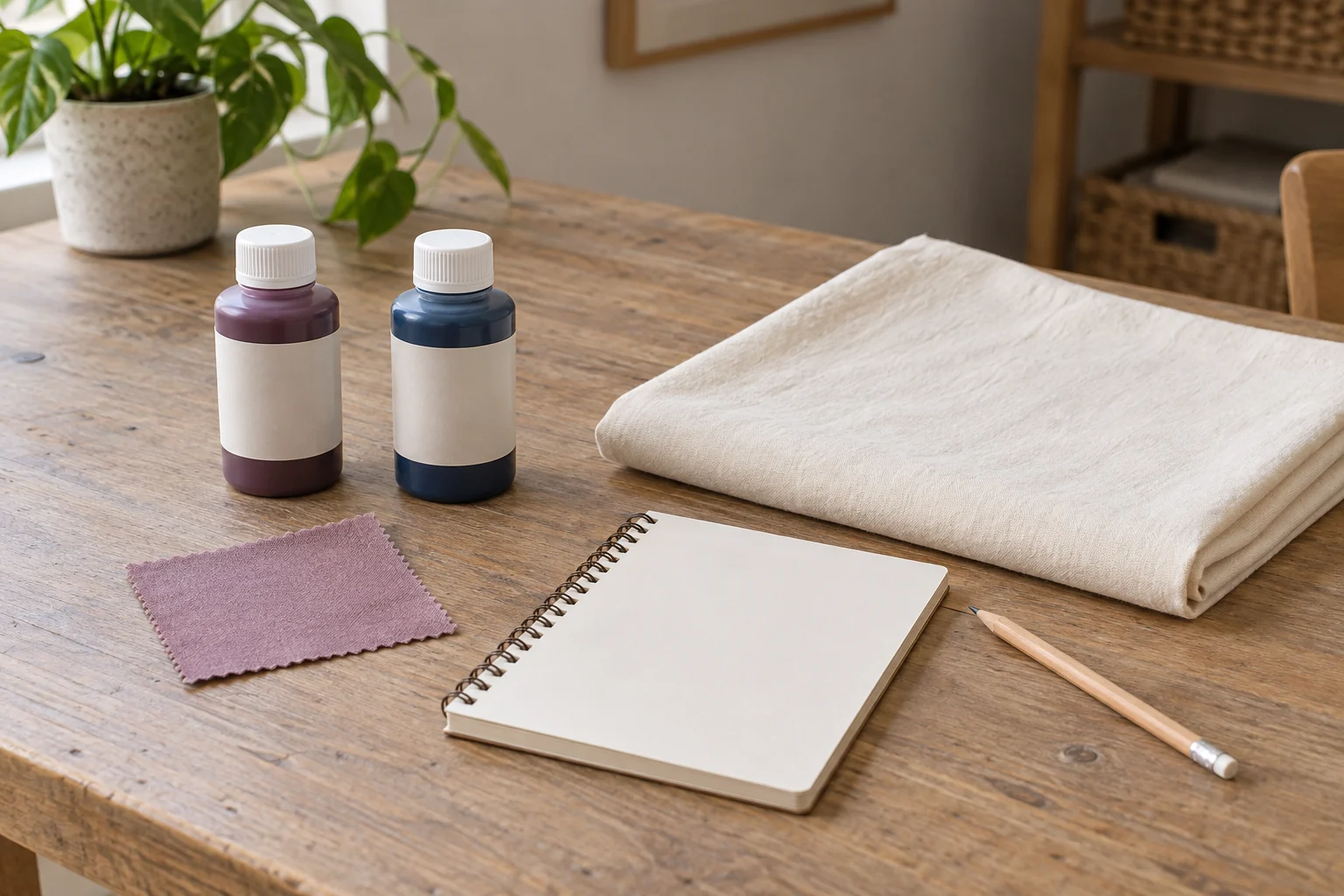
A fabric dye swatch test puts a small piece of material into the decision before you commit a whole garment or group of matching pieces. Its cost-saving purpose is to limit what you expose to an unwanted colour while you still have a choice. A result from the wrong test material can leave that larger decision unanswered.
This guide considers material you may lose and money you may choose not to spend, using Rit's colour-testing advice and invented household examples. It quotes no retail prices or measured savings. For preparing and using the dye, follow the complete instructions for your actual product, fabric and method.
Name the material you want to keep out of an uncertain result
Begin with the actual item or batch you are considering. A single garment, several matching cloth pieces and a length reserved for another project represent different commitments. Identify which material you would put into the proposed treatment. That gives the test a practical purpose beyond making an attractive coloured sample.
Ask what you are unwilling to risk before beginning. You may have a usable item you would prefer to keep as it is rather than accept an uncertain colour. Someone else may be content to experiment with an expendable piece. This guide sets no value for either person's belongings and makes no promise that an unwanted result can be reversed.
Keep the untreated material out of the test itself. In this proposed decision, the larger item waits while an appropriate scrap is assessed under the maker's instructions. If you put the whole garment into treatment before deciding what the sample means, the sample can no longer protect that garment from the initial commitment.
Read what Rit says a paper towel color check can show
In “How can I test the color of the dye?”, Rit calls a scrap from the fabric of the actual garment the most realistic All-Purpose test; paper towel fibres react similarly to cotton fibres. For DyeMore, it recommends an actual scrap, or similar fibre makeup if unavailable. It says paper towel will not closely represent a synthetic garment.
A paper towel color check therefore has a specific role. Liking the colour on paper does not establish that a synthetic item will have that colour. The decision concerns the material you intend to treat. Keep the test medium attached to the observation instead of reducing every result to “the colour looks right.”
Read the maker's full procedure before doing the test. This article has not reproduced the conditions for preparing or using either dye. A choice of test material is only part of the method. Do not invent a smaller chemical recipe from the size of the scrap or borrow the process for one dye type as instructions for the other.
Keep a colour reference separate from a fabric result
Rit's “How to Mix Colors” describes its formula colours as representing 100% cotton dyed for thirty minutes with All-Purpose Dye and 100% polyester with DyeMore Synthetics. It says a different material may achieve a different colour.
Use a reference to choose what you want to investigate. It can help you name a colour or identify a formula, while the sample answers a separate question about your material. If matching an existing item is essential, say so before choosing the test. A general preference for green and a requirement to match one particular green leave different room for an unwanted result.
Decide what an acceptable result would mean for the planned use. Someone experimenting with an expendable cloth may welcome a range of colours. Someone trying to complete an existing matching set may want a much narrower result. Neither preference establishes what the dye will do. It establishes the decision the sample needs to support. If the available test cannot answer that question well enough for you, keeping the useful material untreated remains an option. An appealing formula photograph does not remove that choice.
Keep the two offered dye types distinct
The Rit All-Purpose Liquid Dye offer describes twelve 8-fluid-ounce bottles and says multiple colours are available. The actual account does not select a particular colour for this comparison.
The Rit DyeMore Synthetic Fabric Dye offer describes twelve 7-fluid-ounce bottles, also with multiple colours available. It describes a stovetop method and says it cannot be used in a washing machine.
These package descriptions do not make twelve bottles a test requirement or tell you how much dye your project needs. Determine the appropriate product, actual colour and complete instructions first. The cost question here concerns material committed to an uncertain result, rather than a comparison of bottle quantities or a price per ounce.
Neither offered range chooses a fabric or an acceptable shade for you. Identify the actual material before relying on the applicable maker guidance. A broad catalogue phrase about natural or synthetic fabrics cannot replace the product-specific instructions needed for the item in front of you.
Use a sample that answers the project's colour question
If you already have a suitable offcut from the intended fabric, identify which piece it came from before treating it. A loose scrap that merely looks similar may leave its relationship to the project uncertain. The point of using a representative piece is to investigate the actual material decision, rather than to produce any successful-looking sample.
Do not cut into a usable garment on the assumption that making a scrap is automatically the least costly option. Consider what would be lost by obtaining that scrap. You can seek guidance about an appropriate test or decide to leave the item unchanged. This proposed activity does not require creating damage to obtain something called a free sample.
When using the maker's similar-fibre fallback for DyeMore, retain that description. A similar swatch is still different from a piece identified as coming from the garment itself. Keep the result within what that test can establish, and obtain clarification if the distinction changes your willingness to commit the larger item.
Also identify which part of the project the swatch represents. A sample of one known fabric does not identify another unconfirmed material beside it. Keep a lining, trim or separate item outside the conclusion unless the applicable information actually addresses it. The appearance of a matching colour is not a complete material identity.
Consider dyeing material loss before a matching batch
For dyeing material loss, consider Lee, an invented person with four matching cotton cloth pieces and an offcut from the same fabric. Lee wants to investigate a different colour, but would prefer to retain the four usable pieces if the proposed colour is unwelcome. No dyeing has been performed in this fictional example.
One option is to commit all four pieces immediately. The proposed alternative begins with the identified offcut under the applicable maker instructions, while the four pieces remain untreated. That arrangement leaves the larger decision available after Lee has a result to consider. It does not establish a particular colour or guarantee the eventual batch.
If Lee dislikes the tested colour, Lee can leave the four pieces out of that treatment. The claimed benefit is that they have not yet been committed to it. This is not a report of four items rescued from an actual failed bath, a calculated replacement bill or money already recovered.
If Lee likes the result, the decision still concerns proceeding with the real project under its applicable instructions. Do not enlarge the conclusion into approval for every other cloth item in the cupboard. Another item's material and requirements remain its own question, even if Lee would enjoy a matching set.
Do not let a pleasing proxy commit the whole item
Consider a second invented situation. Jo is planning a colour change for a known polyester fabric project and has seen a paper towel in a shade Jo likes. Jo's immediate question is whether that observation answers the colour question for the project material. Rit's stated limitation on the synthetic test medium matters before the whole piece is committed.
The attractive paper result does not supply the missing fabric result. Jo can investigate the actual or similar-fibre sample described by the maker, using its complete instructions. If an appropriate test or its interpretation remains uncertain, Jo can seek the missing guidance or keep the larger piece out of treatment.
Calling the paper sample a successful project test would hide the difference between the two materials. Keep the observation specific: this is the colour seen on this paper towel. It is not an observed result for Jo's fabric. The cost-control choice depends on refusing to turn that limited observation into an instruction to proceed.
Allow the small test to have a real cost
A preliminary sample can consume material, dye and time. This article assigns no amount to those inputs and does not claim that testing is free. Consider what you would actually use under the applicable instructions, alongside the larger material commitment you are trying to avoid making prematurely.
A small fabric piece does not by itself establish the amount of equipment or preparation needed. Use the maker's method to understand those requirements before choosing the test. If you cannot carry it out appropriately with the materials and setup available, that absence is a reason to reconsider the plan, rather than improvise a process that omits the maker's requirements.
Having purchased dye does not require committing every possible item to it. You can change or abandon the intended project after learning more. Keep the already acquired supply separate from the decision about whether the untreated garment or batch should enter the next stage.
Keep the result useful when you return to the project
Retain enough context to recognise the sample: the dye product and actual colour, the fabric it represents and the applicable method used. A brief note can be enough. A later person looking at an unlabelled coloured scrap should not have to guess whether it came from the project or was a piece of paper used for another check.
Record what you actually observed, including an inconclusive result. Do not rewrite an unclear colour judgment as approval simply because you want to begin the larger job. You can obtain advice, choose another project or leave the material untreated. No sample in this guide has supplied a real outcome for either selected offer.
The crochet-gauge guide concerns measured stitch and row counts. The small embroidery-corner guide concerns planning space and materials. Those separate craft decisions supply no dye-colour result.
Use a fabric dye swatch test to keep the larger material commitment open while you investigate the appropriate sample. Check what the test actually represents before deciding to continue. Its financial purpose is to avoid exposing useful cloth to a result you have not yet accepted, without promising a free test or a particular saving.