Problem-Solving Articles
Lettuce seeds not germinating: check conditions first
Identify the seed offer before asking for current lot information.
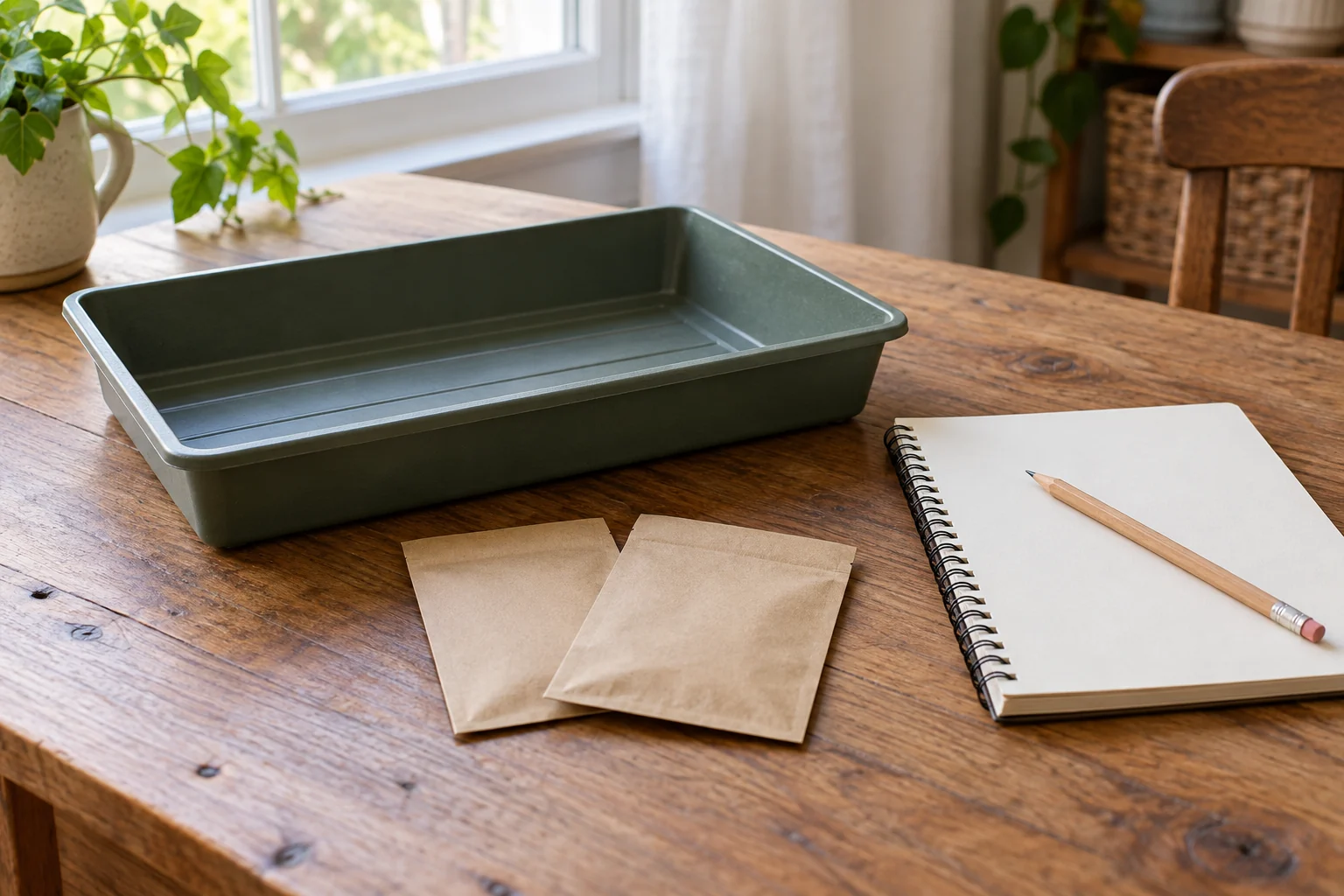
An empty sowing leaves a practical question: what would you need to know before trying again? Start an investigation of lettuce seeds not germinating with the seed you used and the conditions you can actually describe. Keep the purchase question open while you work through that evidence. Choosing another packet can be reasonable, but the choice should answer an identified need rather than stand in for an explanation of the empty space.
Read Iowa's direct-sowing lettuce entry
Iowa State University Extension's germination table lists lettuce under vegetables and herbs direct sown in the garden. Its lettuce row gives 60–70°F, a light requirement marked L, and seven to fourteen days to germination. The article defines the temperature column as ideal air temperature. It defines L as requiring light: press the seeds lightly into the germination medium without covering them. These definitions matter when reading a number copied out of the table. The days column concerns germination and emergence, while the separate weeks column elsewhere concerns growing transplants large enough to plant outside. A transplant timetable cannot replace the lettuce row's germination interval. Read the instruction with its crop and column headings intact. Iowa's lettuce entry is garden guidance; calling it an indoor instruction would change the stated setting.
Lettuce germination temperature: distinguish soil from air
Penn State Extension explains that viable seeds contain living embryonic tissue and that temperature, moisture, air and light affect germination. Its soil-temperature table gives lettuce a minimum of 35°F, an optimum range of 40–80°F, an optimum of 75°F and a maximum of 85°F. Those are separate columns describing soil conditions. They are not interchangeable with Iowa's ideal air-temperature range. Penn State also describes water uptake followed by internal activity and the emergence of the radicle, or primary root, before the shoot. That sequence distinguishes a seed beginning growth from a shoot becoming visible above the growing medium. An empty-looking surface cannot by itself identify which stage failed. The article explains that poor aeration from overwatering or compaction interferes with gas exchange around the seed. More water is therefore not an automatic answer to an empty sowing. When considering lettuce germination temperature, retain the kind of temperature measured and the condition of the medium, rather than choosing a number without its meaning.
Lettuce seed sowing depth has conflicting guidance
University of Minnesota Extension describes lettuce seed as tiny and warns that a bed with large clods can obstruct germination and emergence. It also advises against sowing too densely or too deeply. Its outdoor direct-sowing directions give a depth of one quarter to one half inch. This differs from Iowa's instruction to press light-requiring lettuce seed into the medium without covering it, even though Iowa also places lettuce in a garden direct-sowing table. The sources do not supply a single shared depth that can be recovered by averaging their instructions. Keep that disagreement visible when considering lettuce seed sowing depth. Check the actual packet's directions and seek locally applicable guidance for the method and setting you intend to use before repeating the sowing. Minnesota also distinguishes pelleted seed from ordinary seed: the coating makes individual seeds easier to handle. That distinction does not establish that either selected offer is pelleted. Confirm the form actually supplied rather than importing instructions for a different seed form because the crop name matches.
Checking stored lettuce seed needs a usable sample record
University of Illinois Extension's seed-testing article begins with a familiar situation: finding an older or partly used packet and wondering whether to plant it. It recommends labelling a germination sample with the plant name and date, checking it periodically and counting the seeds that germinate. Those records make a sample result interpretable. Its general folded-paper-towel method does not establish a validated protocol for light-requiring lettuce seed. Before testing, obtain conditions applicable to the crop and keep those conditions with the result. Checking stored lettuce seed also calls for its actual storage history. Illinois advises keeping leftover seed cool and dry; a remembered purchase year alone does not describe how the packet was kept. Do not convert a general longevity list into a fixed expiry date for this packet. A sample count can support a decision about that sample, but it cannot certify every seed in a bag. Keep the observed count, the test conditions and any unresolved lot information distinct when deciding whether another purchase is useful.
Read one sample percentage as one sample
For a fictional calculation, suppose ten seeds are placed in one clearly identified sample and eight are recorded as germinated. Eight divided by ten, multiplied by one hundred, gives eighty percent for that sample. The other two remain part of its original denominator. This example supplies arithmetic only; no trial was carried out for this guide. It does not establish how another sample would perform, certify an entire lot or explain why a previous sowing left no visible shoots.
Identify the Seed Kingdom Buttercrunch offer
The Seed Kingdom Buttercrunch offer identifies a five-pound package and UPC 752259849366. Its product category is Seed Gardening. Use the Buttercrunch five-pound listing to establish which offer you are considering before requesting information about the supplied seed. The package quantity describes an amount of product; it is not a count of seeds that will germinate or a planting area you can infer without other information. The captured offer does not disclose a current lot date, seed count or tested germination percentage. A cultivar name and an heirloom description cannot supply the missing lot result. Ask for the applicable packet or lot information rather than treating the listing as a certificate. If you already have seed at home, retain its identity separately from this prospective purchase. A record of what you intend to order cannot establish which packet was used in the unsuccessful sowing or how that earlier packet was stored.
Read the Everwilde quantity and package wording
The Everwilde Farms offer identifies model OLEBGRL-07 and UPC 707943690564, with a one-pound quantity in its product description. Its wording names Great Lakes Butterhead lettuce and GoldVault packaging. The product URL contains a reference to five hundred seeds, but that text does not override the actual one-pound description. Confirm the supplied quantity if the discrepancy affects your decision. The offer is currently categorized as Restored Tools; that category is not a germination instruction or a reason to rename the item in your records. Keep the Everwilde one-pound listing tied to its model while asking about the current package. The captured description does not establish a lot-specific germination result, pelleting or a current lot guarantee. It also does not demonstrate that this seed will solve the conditions behind an earlier empty sowing. Compare the information needed for your planned use before deciding between package quantities. Retain the seller's cultivar wording when asking a question instead of silently correcting the name into a botanical claim the offer has not established.
Recover the connection between the packet and the sowing
The guide to recovering a missing plant label starts by giving an unresolved container its own reference and checking which records still connect to it. That approach is useful when a germination investigation reaches a more basic uncertainty: whether the packet, sowing note and container actually belong together. Review the connection before treating a photograph or remembered name as confirmation. The earlier guide keeps conflicting accounts visible and checks whether an old photograph still maps to the present arrangement. Apply that distinction when someone has moved a container or when a label has been replaced. A new label can preserve a supported identity; writing a confident name does not recover missing evidence. Keep an unresolved reference available if the records do not settle the connection. Once an identity is supported, retain that connection when the arrangement changes. This is record recovery, rather than a test of seed condition. Knowing which sowing you are discussing improves the question you can ask, while leaving its germination outcome to the relevant observations.
Reconnect a new sowing to the seasonal plan
The spring seed-starting plan separates the crops you intend to grow, the space available for them and the transition to outdoor planting. Its calendar work and hardening discussion concern a seasonal plan. They cannot establish why one lettuce sowing produced no visible shoots. Return to the seasonal plan after identifying what is known about the present sowing, especially if you are considering a replacement order. The earlier guide asks readers to account for their own planting windows and growing space rather than assuming an assortment creates room for every included crop. Keep that planning question attached to the crops you will actually attempt. An expected outdoor date is not a measured germination result, and a revised calendar cannot establish the condition of an existing packet. If another sowing is appropriate, reconnect it to the available space and applicable planting window. Keep the failed sowing's record intact so that a new plan does not erase the observations that prompted the change. The two decisions can then remain understandable when you review them later.
Review a seed order before USDT payment
If you decide to order seed through republeq.com, review the actual checkout before choosing a payment method. If a crypto option is offered for that transaction, read the terms displayed there rather than relying on its mention in an article. USDT should be considered only if it is explicitly available for the order you are reviewing. Check that the item, quantity and recipient details still match your intended purchase before authorizing anything. A different payment method cannot answer a question about seed condition. Keep any unanswered product question with the order review instead of treating a successful payment as the missing answer. If required payment details are unclear, obtain clarification through the checkout's support route before proceeding. This guide supplies no transfer address, wallet instruction or network choice. A reference to USDT does not establish that a particular network will be supported at a later checkout. Read the delivery information and applicable return conditions for the actual transaction, and seek an answer where the displayed terms leave something material unresolved. Retain the order confirmation and the payment confirmation so that a later enquiry can identify the same purchase. If you change the selected item while reviewing checkout, revisit the order details and the payment instructions presented with it. Do not carry an earlier confirmation over to a different basket. You can pause the purchase while a question remains unanswered, then review the current transaction when you have the information you need. Keep the gardening decision and the authorization decision connected through the actual item, without asking either one to prove the other. A completed order records a purchase; the outcome of a future sowing still requires its own evidence.
Finish the investigation with a question you can act on. It might concern the conditions recorded for the sowing, a conflict in the applicable directions, an uncertain packet identity or missing information about a proposed replacement. Leave the answer open where the evidence is incomplete. For lettuce seeds not germinating, the useful next step is the one that resolves that specific uncertainty before another sowing or order.