Home & Living
Layering Christmas garlands on a mantel or photo backdrop
Give fuller pine greenery and a lighter snowflake chain separate routes so both remain visible on a mantel or photo backdrop.
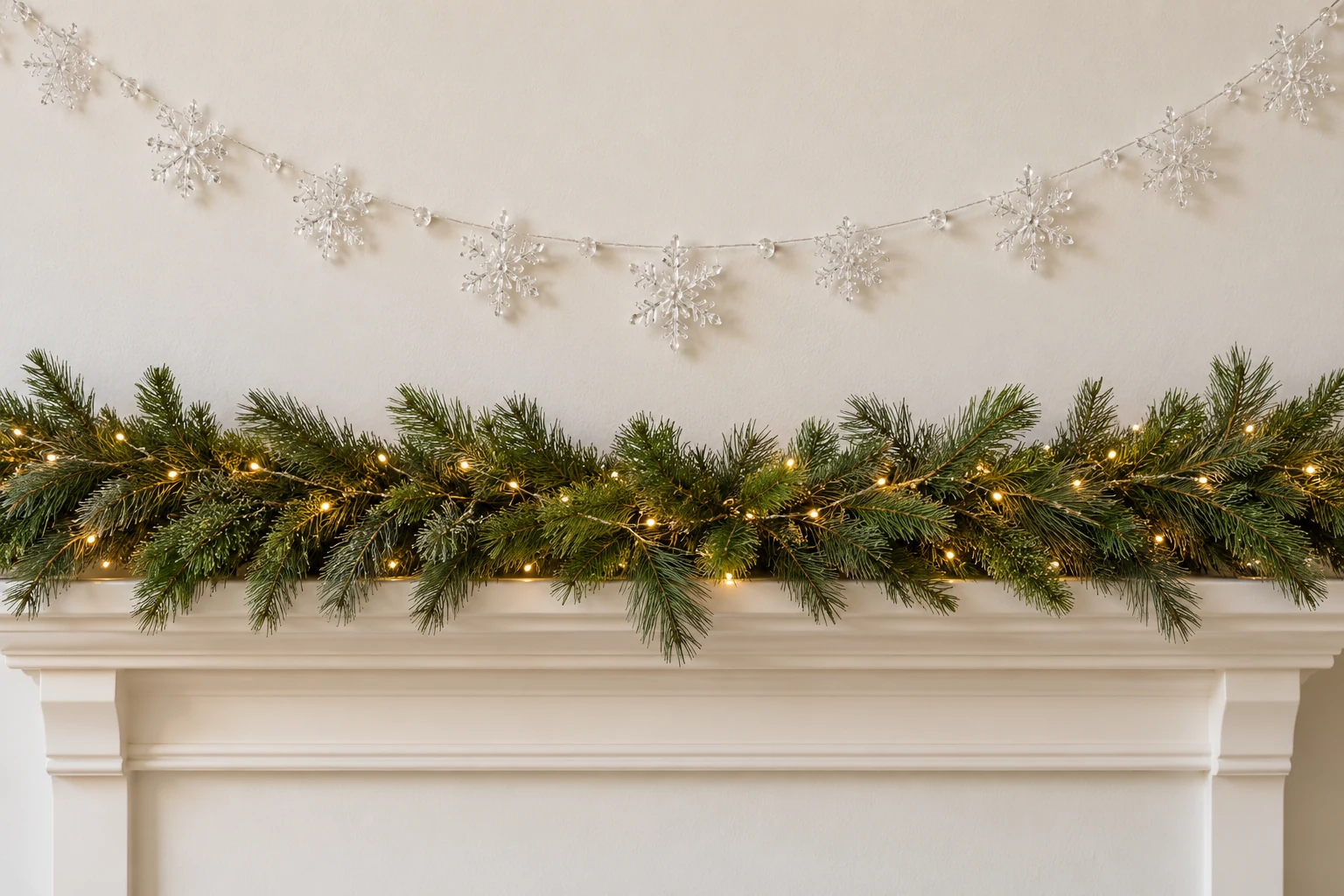
A holiday mantel can lose its shape when every garland is placed along the same line. A full pine strand makes a strong green border, while a narrow chain of clear snowflakes supplies small reflective points. If both cover the same edge from end to end, the finer strand may disappear. Give each one a job before hanging anything: the fuller garland defines the main line, and the snowflake strand marks a second, more open line nearby. A quick arrangement on a table or the floor will tell you whether the two lines remain visible from the part of the room where people will actually stand. Keep the display away from heat and follow each product's installation directions for its own material and lights.
Choose the main garland line
Begin with one surface that should carry the strongest visual weight. A mantel, shelf front, or photo backdrop rail can work if the surface and approved support method suit the selected product. Measure the route before buying or cutting anything, then decide whether its ends should hang down or finish near the corners. The Coolnut prelit pine garland is shown as a full artificial greenery strand with red berries and integrated lights. Its density makes it a plausible main border in a room mockup. The pictures also show several display locations, but they do not prove that any particular wall, rail, mantel, or fastener can support it.
Lay a paper strip or string along the intended route and stand back. A straight run makes the display look orderly; a soft dip can make it feel less rigid. Neither is automatically better. The important decision is whether the main line leaves room for the object below it, such as a mirror, family photograph, or the open center of a backdrop. Mark the point where the greenery should start and end. If the first mockup crosses a picture frame or blocks a shelf item you want to see, move the line before adding the snowflake strand. This prevents the second garland from becoming an attempted fix for an already crowded first layer.
Give the snowflake garland its own path
The Fuliko acrylic snowflake garland is a linked strand of small clear ornaments. The product page describes an assembled acrylic-and-metal chain, and the gallery shows it hanging in repeated vertical lengths beside a Christmas tree. A light-looking strand can still be easy to lose against a detailed background. Place a short section against the actual wall, curtain, or backdrop fabric and view it in both daytime and evening room light. Clear pieces may catch bright points of light without forming the broad line that pine branches make. That is useful for a second layer if you give the snowflakes an uncluttered background.
For a mantel, one possible layout is the pine along the front edge and snowflakes on the wall or mirror above, with a visible strip of background between them. For a photo backdrop, the greenery could frame the top while snowflakes hang in several separated vertical runs. These are placement ideas, not instructions to attach one product to the other. The products may need different supports, and the saved pages do not establish the weight or rating of a combined installation. Sketch the two routes separately and look for places where a hanging strand might tangle with the fuller greenery when people move nearby.
Test spacing before fastening
Use removable paper markers to outline the two garland paths. Leave a gap wide enough that each form still reads from a few steps away. The right gap depends on the backdrop and the size of the room, so judge it from the viewing position rather than copying a photograph's proportions. If the snowflakes disappear, move them onto a plainer surface or reduce the amount of greenery behind them. If the pine looks stranded by itself, shorten the visual gap or bring the smaller elements closer together on their own route. Make those changes during the mockup, before any mounting choice has been committed.
Check the ends of each route. A long strand can leave extra material after the visible section is arranged. Decide where that extra section will go without cutting or folding a product in a way its maker has not approved. The snowflake chain may have repeated units that make a regular pattern possible, but a loose coil at one end can spoil the intended symmetry. The pine strand may have a fuller end or visible battery housing. Look at the actual item and arrange its front-facing side before judging the balance of the whole display. Product photos provide a useful example, but the final route should be set by the real room.
A mirror or window changes this spacing test because it repeats part of the display. Hold a short section of each garland near the proposed line and look at the reflected shapes from several angles. If the acrylic snowflakes double into a dense pattern in the reflection, move their route a little higher or farther to the side. If the pine covers the edge of a mirror, decide whether that is the effect you wanted or whether a visible frame would help the room feel less crowded. Work with the mirror and daylight that already exist in the room; the seller's staged photos cannot predict the reflections in your space.
Keep the lights as one design choice
The Coolnut listing describes integrated lights, and its gallery shows the greenery both illuminated and unlit.
Decide whether the room needs the lights to lead the eye or whether they should stay quiet behind the snowflake pattern. Test the look with the room's usual lamps on. Bright points may make the nearby clear snowflakes more noticeable, but they may also compete with a photograph or mirror. Do not assume a product's advertised lighting modes, timer, power source, or weather wording has been independently tested for your installation. Read the exact instructions supplied with the item, use the intended power arrangement, and keep the display clear of heat sources and traffic.
A separate reflective strand does not need its own light source to contribute to the scene. Put the acrylic snowflakes where they can catch existing room light, then check them from the doorway and the seats where guests will spend time. If the clear shapes cannot be seen from those positions, changing the background or spacing may help more than making the pine lights brighter. Take a quick photo without a flash to see how the two layers read in an ordinary snapshot. The camera can expose a crowding problem that is less obvious when you stand close and concentrate on one ornament at a time.
Make the mantel or backdrop usable
Before hanging either strand, consider what people will do around the space. A mantel may hold cards, candles, or framed pictures; a photo backdrop needs a clear standing area and a camera sightline. Keep the garland outside the opening of any fireplace or other heat source, and leave access to anything that must be used while the decorations are up. If an item is moved daily, route the strand so it does not have to be lifted each time. A photograph of a decorated fireplace is a styling example, not a safe clearance specification for an active hearth. Follow the fireplace and product instructions for the real installation.
For a photo backdrop, stand where the camera will be and check whether the pine forms a frame around faces or cuts across them. The snowflake strand should remain visible without falling over a person's shoulders or the path into the scene. Mark a standing line on the floor while testing the arrangement. If you have a group photo planned, widen the test group rather than judging from one person in the center. A stable background with two readable garland layers usually photographs better than a busy arrangement whose main shapes overlap. Keep all hanging pieces out of ordinary walking paths and away from a place where they can be pulled accidentally.
If the backdrop will be moved between rooms, photograph the trial with the ends and supports visible. Then remove each strand in the reverse order of installation and keep the two pieces separate. A linked acrylic chain can tangle with the pine tips during handling, which makes the next setup harder to reproduce. Use the storage and care directions supplied with each product; do not assume that one tight box suits both materials or the lighted component. A simple label for “main line” and “second line” on your room sketch can save time when several people help with the next installation.
Plan actual length and support separately
This visual layout does not replace a measured route. The Christmas garland length guide covers the separate job of measuring one route before buying enough material. Use that method for the pine and snowflake paths independently. An advertised length does not tell you how much visible space remains after dips, corner turns, or vertical ends. Reserve a little planning room for those choices, but do not stretch a decorative strand beyond the maker's directions merely to reach a mark. Rework the mockup if a route is too long or too short for the actual piece.
The door-frame garland hanger guide addresses contact and support when a strand goes around a door. A mantel or backdrop has different support points, and these two product pages do not certify a universal attachment. Select hardware for the actual surface and item, follow its load instructions, and test the placement before leaving the display unattended. Keep electrical components accessible as directed by the product instructions. The visual plan should not hide a switch, battery compartment, or other part that the owner needs to reach during the season.
Review the scene from two distances
After a temporary setup, look from across the room and then from close enough to see individual branches and snowflakes. Across the room, the greenery should define the chosen main border while the second strand adds a distinct lighter rhythm. Up close, check for tangled pieces, awkward bare sections, and a snowflake chain that has twisted away from view. Adjust the spacing, not the product claims. A dense pine strand and a clear acrylic chain have different visual strengths; allowing each a separate background lets the viewer see both without making them compete for the same inch of wall.
Keep a photo of the successful trial and a note of the two routes. When the room changes for a gathering or when the decorations come down, those notes make it easier to return to a layout you actually liked. If the first attempt feels crowded, remove a strand and put it back on a separate line rather than piling more ornaments into the middle. The display is finished when the mantel or backdrop remains useful, the two garlands stay legible from the intended viewpoint, and every attachment follows the real surface and product instructions.