Home & Living
christmas garland length planning: buy for one measured route
A string mockup and a quick inventory check before buying another holiday garland.
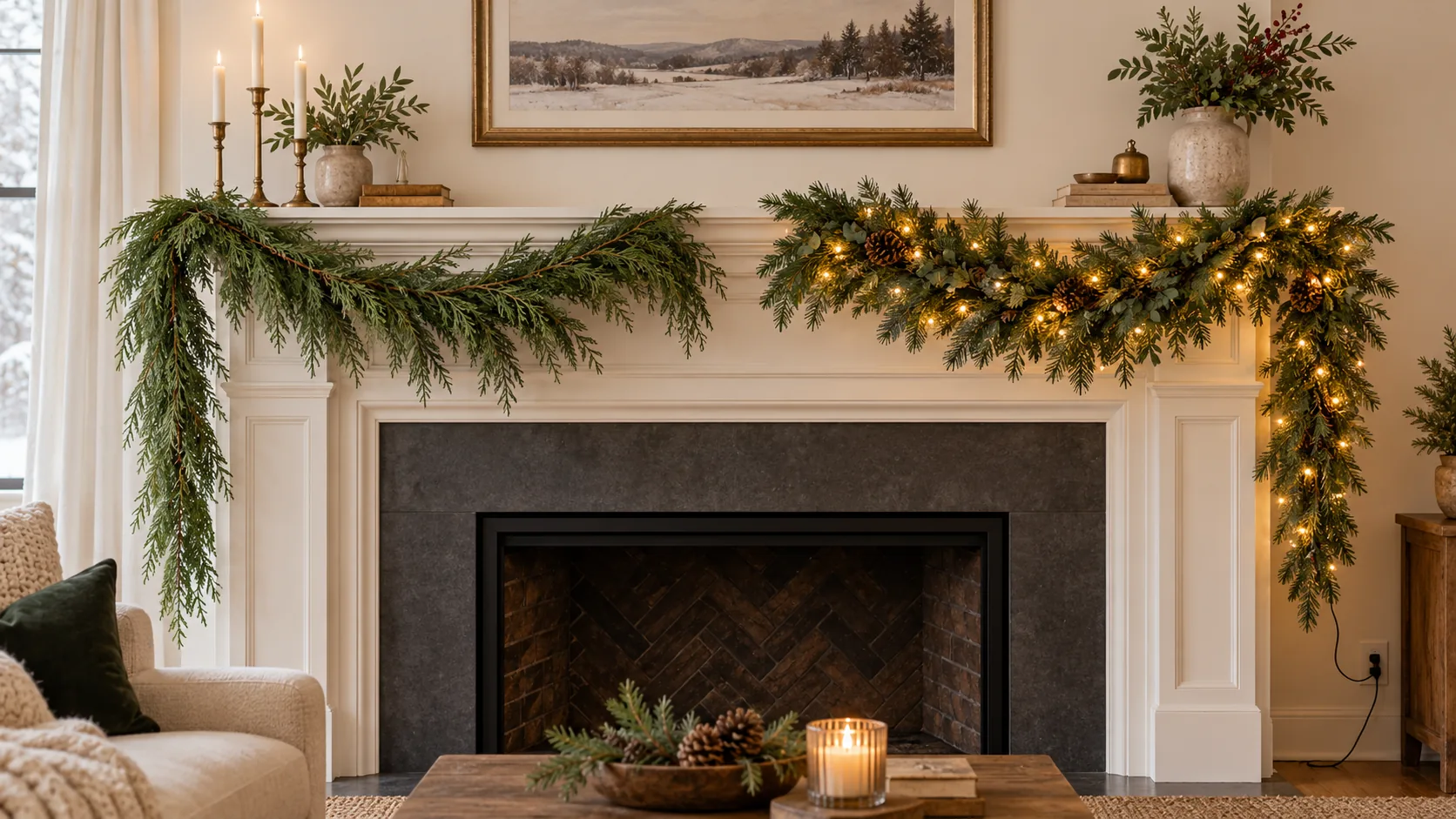
Buying another garland is an easy answer when the first one looks short in a photograph. The extra strand may be unnecessary if you plan the route before deciding how much greenery to put on it. Christmas garland length planning starts with the exact ledge, railing or doorway you want to decorate. Measure that route, allow for any hanging tails, then compare it with the length stated by an actual product. That simple order helps you avoid buying more material than the display can use.
Draw one route, not a whole room
Pick the one place that needs garland this year. A mantel run has a different shape from a doorway or stair rail. Sketch its beginning, end and any corners. Measure along the path the garland would follow, not a straight line across the room. On a mantel, mark the usable horizontal ledge between objects you intend to leave in place. At a doorway, include both sides if you want the greenery to run down them. The sketch makes it harder to buy for a vague idea of a "holiday room" instead of a specific route.
Decide whether the greenery should lie flat, make a shallow dip or hang in long tails. Each shape consumes a different amount of material. A strand listed as six feet long will not cover a six-foot horizontal line and also create two hanging ends. Use string to trace the shape you want, then straighten and measure the string. Do this before relying on a product image: the staged location and camera angle rarely reveal the actual distance between attachment points.
If you are decorating a mantel, move the objects that normally stand on it into their planned holiday positions before measuring. A framed photo or candle holder changes the useful route. Keep the tree, gift boxes and other displays out of this measurement unless the garland actually needs to pass through them. One clear route is enough to make a purchase decision.
Make a mantel garland route you can repeat
Place a piece of soft string along the intended mantel path. Leave a visible mark at each place where it turns or drops. If you like a central dip, lower the string until it shows the amount of hang you want. Take it down and measure it in sections: left run, center and right run. This is a practical estimate of the route. It is not a structural installation plan, and it does not tell you how a particular product should be attached.
Repeat the mockup from your usual viewing position. A very deep dip can cover the front of a mantel or overlap a display below it. A shallow dip might give you enough greenery without a second strand. If you shorten the hanging tails to fit one listed length, look from the doorway and decide whether the resulting shape still gives you the effect you wanted. That check can spare you an extra strand for a route you never really preferred.
Record the final string measurement in a note with a quick photo of the placement. Next season, you can use the same route again or see exactly what changed. The note helps when a garland is stored in a box and its packaging is gone. Avoid treating last year's memory of "about six feet" as a measurement of the current display.
Read two exact six-foot garland listings carefully
The DR.DUDU six-foot artificial Norfolk pine garland is a flexible greenery strand presented for indoor mantel and stair use. Its one complete native gallery image shows an unlit green drape across a mantel. The native name and description both state six feet. The image gives a useful sense of its loose foliage shape, but it does not measure the photographed mantel or show how much extra length was available for each side.
The separate AMERZEST six-foot prelit artificial Christmas garland is described as a lighted strand with a plug-in supply and remote control. Its one complete gallery image shows a decorated garland arrangement with visible lights and a remote. The exact native name and description agree on six feet. Its fuller ornamented appearance can change the look of a route, but a single image does not establish installed coverage on your mantel, the exact placement of a power connection in your room or any promised energy saving.
These are distinct products with the same stated length and different visible setups. Do not infer that one reaches farther because its listing photograph fills more of the frame. Put each six-foot statement beside your measured string route. If the route is longer, decide whether to reduce the dip, move the start point, or choose a different length before buying a second six-foot piece. A second piece also creates a joint you may need to plan visually.
Count what you already own before adding lights
Bring existing holiday greenery and lights out of storage before shopping. Check whether a usable garland already covers part of the planned route. If you own a separate light string, lay it beside the greenery to see where it could begin and end. The product pages here show a plain green strand and a prelit strand, but they do not tell you whether your existing lights fit either one or meet your preferred appearance.
Separate the greenery decision from the lighting decision in your notes. You might need new foliage but already have lights, or the reverse. A prelit option may make sense when the desired light placement is built into the exact product and the supply can reach the intended location. An unlit strand lets you use a separate lighting arrangement if you already own one. Count only the accessories you will actually use. Compare the two arrangements with the greenery and lighting you already own before deciding which additional items you need.
Check the condition of what you already own before assigning it to the route. A tangled or incomplete strand may not offer its advertised length in a usable shape. This is an observation you can make at home, not a judgment about the quality of either new listing. Put the pieces on the floor in the order they would appear. The resulting layout will show whether a purchase fills a real gap or duplicates something you can already place.
Run a garland quantity check
Write down the measured route length, the listed length of each usable strand you own and the length of the exact product you are considering. Keep the units the same. If your route includes a turn or dip, use the string measurement rather than the width of the shelf or doorway. Add a small amount for your preferred final arrangement only after you have tested that shape with the string. The goal is to make the planned look possible without accumulating unopened material.
For two places, make two sketches. A six-foot product assigned to a short mantel might leave a usable remainder, but you should not assume the remainder will automatically fit a stair rail. The strand may not divide cleanly, and the chosen arrangement may need its full length. It is better to complete the first route on paper, then decide whether a second exact product is needed for the second route. That prevents the word "set" or a staged photo from standing in for a layout.
If the route is close to the listed length, inspect the actual item when it arrives before planning a second purchase. The loose foliage can be shaped, and the finished drape may differ from a straight measurement. Do not stretch or alter a strand beyond its product instructions to force a fit. Keep a photo of the route you chose so a change in appearance is a deliberate choice rather than a response to a vague feeling that the display needs more.
Keep ornaments and small scenes separate
Ornaments, bows and nearby objects can make a single garland look more complete without extending its route. The Christmas ornament selection guide addresses what to bring back for another season. Use it for the ornament decision. In this article, those objects matter only because you may already have them and they occupy visual space on the greenery.
A mantel may also hold a small scene beside the garland. The holiday display planning guide covers that arrangement. Do not count its objects as extra garland length. Mark them on the route sketch, then measure the actual remaining path for greenery. Keeping the scene and the garland on separate lines of the plan makes the material list easier to check before buying.
If you prefer a plain green line this year, you may need fewer add-on decorations. If you want a dense decorated display, check the exact prelit product image and your own ornament inventory before buying loose accessories. The DR.DUDU and AMERZEST images show two different looks, but neither photograph establishes how many additions your room will need. Choose a specific result you can see on the mock route.
Check the result at the actual location
When the garland arrives, lay it beside the measured string without fastening it first. See where the foliage begins and ends, where any lights or controls sit, and whether your proposed dip still looks right. The listed six-foot measurement is a planning input; the installed shape is the final check. Keep packaging and care instructions available while deciding how to arrange it.
Look at the route with the room's ordinary objects in place. Can a nearby cabinet open? Does the garland cover an item you intended to display? If the prelit choice uses a plug, can it be arranged according to the product instructions without a cord crossing a route people use? These are location checks, not a claim that either product has been tested in your home. Change the layout when the actual item gives you a better answer than the listing image.
Photograph the final route and save the measurement with it. Before another holiday season, that record will tell you whether you already own enough greenery for the same display. It can also show why a second strand was or was not useful. The saving comes from buying for a measured route and an actual inventory, without guaranteeing a particular saving.
Buy for the measured gap
Finish with three lines in your note: the route measured with string, the usable garland length already owned and the new length still needed. Then choose the product whose actual physical role fits the remaining gap and whose lighting setup fits your room. The two exact examples are both listed as six feet, so the main difference in this guide is the plain versus prelit arrangement, not a claim that one covers more distance.
Christmas garland length planning is easiest when the route is small and specific. Mock up the dip or tails, decide what you can reuse, and inspect the delivered strand before buying another. A clear measurement and a photo can keep the decoration deliberate through this season and the next.