Home & Living
A label holder support note that starts too late
Kim and Noor correct a draft that falsely dates a fall to a later card change. Their original event notes keep both witnessed falls visible.
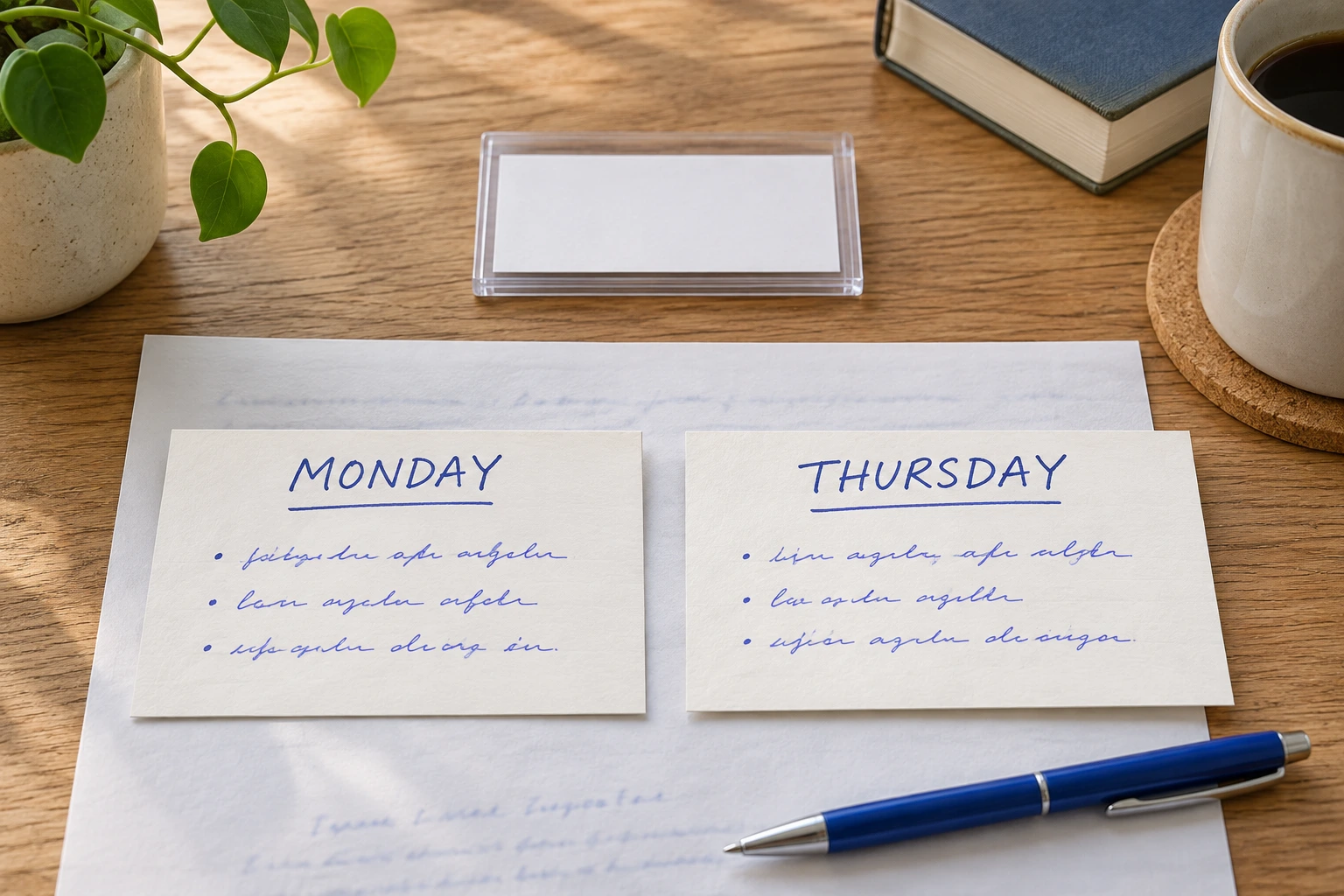
The sentence that leaves Monday out
A label holder support note can become misleading before it is sent. In this original fictional scene, Kim has written, “It first fell on Thursday after I changed the card.” Noor reads the sentence at Kim’s kitchen table. Beside the draft lies an older note about the same generic pocket holder. That note records Kim watching it fall on Monday. The people, holder and events are invented. The task here is to repair the draft’s account while leaving the physical problem unresolved.
Kim had opened her notebook to Thursday because that was the occasion she remembered most clearly. She had changed the wording on the paper and later watched the holder fall again. When she began the message, those two things arrived together in her description. She wrote them down and added “first” without looking back through the earlier pages. The unsent message now gives the later day a job that her own older note cannot support.
Read the earlier note as a whole entry
Noor asks whether the loose page beside the draft concerns the same holder. Kim says it does. They read the entry together. It says that Kim watched the pocket fall on Monday and put it on the table afterward. Kim remembers writing it before going out that afternoon. In the scene, the note records a witnessed event. It gives them something definite to retain when they revise the Thursday sentence.
Kim points to a short line beneath that entry about another errand. She had almost overlooked the page because she was searching for the new paper wording, which is written elsewhere. The older page belongs to an earlier part of her week. Once she reads the whole entry, the earlier observation is easy to recognize. She puts a small removable slip beside the page so she can return to it while working on the draft.
The Monday entry does not say what happened before Monday. Kim has no earlier account to add in this scene. They leave that part unwritten. A witnessed Monday event is already enough to show that the sentence placing the first fall on Thursday needs revision. Noor keeps the actual wording visible instead of asking Kim to replace it with a more complete story from memory.
Let Thursday keep its own events
On Thursday, Kim changed the words on the loose paper used with the holder. The story supplies no method for handling an insert, attaching a pocket or testing a magnetic surface. That later label change remains an event in Kim’s account. She can retain it without giving it responsibility for the earlier Monday fall. The later Thursday fall is another stated observation. Her draft needs room for both occasions.
Kim writes three short lines on a fresh page. The first names the witnessed fall on Monday. The second records the paper change on Thursday. The third records the later witnessed fall that Thursday. She keeps the original pages beside the new one. Each line points to the event she actually means, so Noor can read them in order without combining the paper change and every fall into one beginning.
When Kim reads the three lines aloud, she notices that she had been using “after” to carry more than timing. In her first sentence, the new paper had become the beginning of the problem. The earlier entry interrupts that account. Kim does not replace it with another explanation. She crosses out the first draft’s opening and leaves the physical question for information about the actual holder involved in any real enquiry.
Write the two observations into the draft
Her revised draft says, “I watched the holder fall on Monday. I changed the paper wording on Thursday and watched it fall again later that day. I do not know why it fell.” The words state only the events declared in this fiction. The Monday event stays visible. Thursday still contains the change Kim remembers and the later observation. Nothing in that account identifies a failed backing, unsuitable surface, damaged component or successful repair.
Noor asks Kim to read the first sentence without looking at the rough notes. Kim does, then checks it against the older page again. She has kept the witnessed event and its stated day. She has also removed the claim that Thursday was the first fall. The new sentence can stand beside the old entry without requiring Kim to explain why she previously began the message later in the week.
Kim leaves the crossed-out draft in the notebook. She wants to be able to see what she changed if she returns to the message tomorrow. Noor suggests copying only the revised wording onto the page she intends to use for the enquiry. Kim puts the older note with it. That way, the cleaner draft does not become the only record left on the table. Her earlier observation remains available in its own words.
Kim starts to fold the clean page, then stops because the notebook is still open underneath it. She places the draft inside a plain folder and slides the Monday page into the same folder without folding it. The Thursday wording stays in the notebook. Noor writes nothing on either original page. When Kim lifts the folder, the old crossed-out sentence is still visible on the table, so she puts that sheet behind the clean one. She leaves the folder beside her bag for the morning. The holder stays where it was while they were writing.
Two actual label-holder accounts
The APX-46M account calls its holder magnetic. Its sole image shows a clear front pocket with C-LINE-like rim embossing, without authenticating the catalog maker or model. The magnetic back is unseen, and the sparse description supplies no mounting method.
The 100 PCS holder account has a sparse description. Its single promotional image shows four name-card frames on staged lockers. The 100PCS text is uncounted. Lockers and keys are context, and the unseen backing supplies no demonstrated holding performance.
Kim’s generic holder is not assigned either retail identity. Her corrected note will need the actual item reference if she uses it for a real product enquiry. The fictional event entries cannot identify a model on their own. In the scene, she leaves a space for the reference she will obtain from the information for the item she actually owns, then puts the draft back beside the notebook.
Leave a technical answer for the actual item
Noor asks whether Kim wants to add a proposed repair to the message. Kim says she has no answer to write there. The holder is resting on the table while they work. They make no attempt to reproduce a fall or alter its parts. Their finished task is the wording of the account. A person reading it can see the earlier event without being asked to accept Kim’s first explanation of when the problem began.
Kim reads the question at the end of her draft. She wants to know what information is needed to assess her actual item. The question can remain that open. She has not received a reply in this story, and nobody has supplied a technical instruction for her to follow. She closes the pen and leaves it beside the paper. The revised chronology has given her a more accurate place to begin an enquiry.
Two neighboring troubleshooting questions
The door draft stopper damage guide locates a visible seam opening and keeps unseen layers unresolved. Kim’s particular draft instead needs an earlier witnessed event restored to its account of two occasions.
The floor doorstop guide distinguishes the moving part, contact path and mounting condition. Those physical checks supply no procedure for Kim’s generic pocket holder or a cause for its fictional falls.
Read the corrected beginning once more
Before Noor leaves, Kim reads the draft from its first line again. Monday is there this time. The Thursday paper change follows it, and the later Thursday observation follows the change. The original pages remain next to the clean draft. She can point to the record behind each sentence. Her account has become more precise without acquiring an account of the holder’s construction that she did not have at the start.
Noor moves her mug away from the notebook and hands Kim the loose page she had been using as a marker. Kim keeps it between the two entries. She realizes that she had remembered Thursday as the occasion that made her sit down to write. That explains her first choice of opening, but it does not make the earlier Monday entry disappear. She can preserve the reason she started the enquiry while correcting what the draft says happened.
Keep a possible purchase separate
If a later product decision leads you to consider a label-holder order on republeq.com, identify the actual selected item and the questions that remain about it. Kim’s invented report establishes no replacement requirement, compatible part, supplied accessory or purchase authority. A clear chronology is information for an enquiry, not confirmation that a different retail offer will solve a physical problem. Before making an order, review its exact option, quantity and current terms. If you prefer cryptocurrency, including USDT, check the methods actually presented for that particular transaction. This article has not verified that either linked offer provides a specific token or network route for every buyer. Obtain the requested asset, network, receiving destination and amount from the responsible checkout information before authorizing a transfer. A token name copied from another occasion does not establish those details for a new basket. Read the delivery, cancellation, return and refund information for the same intended purchase. An unanswered support question does not supply those terms or promise a particular result after delivery. If another person is helping with the order, distinguish a request for product information from authority to purchase. Keep any actual confirmation and payment response together. When an attempted transaction has an uncertain outcome, establish what happened through the responsible service before considering another transfer. Missing confirmation does not establish that nothing occurred. This conditional paragraph reports no completed payment and supplies no wallet address, exchange-rate estimate, token recommendation or guarantee of transaction protection. A real product receipt would identify a purchase event. It would not explain the earlier physical observation or settle the cause Kim has left open in this fictional note.
The earlier event stays in the note
The label holder support note ends with the earlier observation still visible. Kim has replaced a false later-onset claim with the events her declared notes actually contain. The later label change keeps its place without becoming the explanation for every fall. Her generic holder remains on the table, and the physical question remains open. She leaves room below the revised draft for information she can establish about her actual item.
Two fictional event notes keep an earlier witnessed fall visible beside a later card change.