Crypto Commerce
KitchenAid Artisan Mini 3.5-quart mixer — Artisan Mini or a 5-quart Fresh Prep bundle for regular batches
Compare KitchenAid Artisan Mini 3.5-quart mixer by batch yield, bowl space, attachments, and repeatable mixing routines.
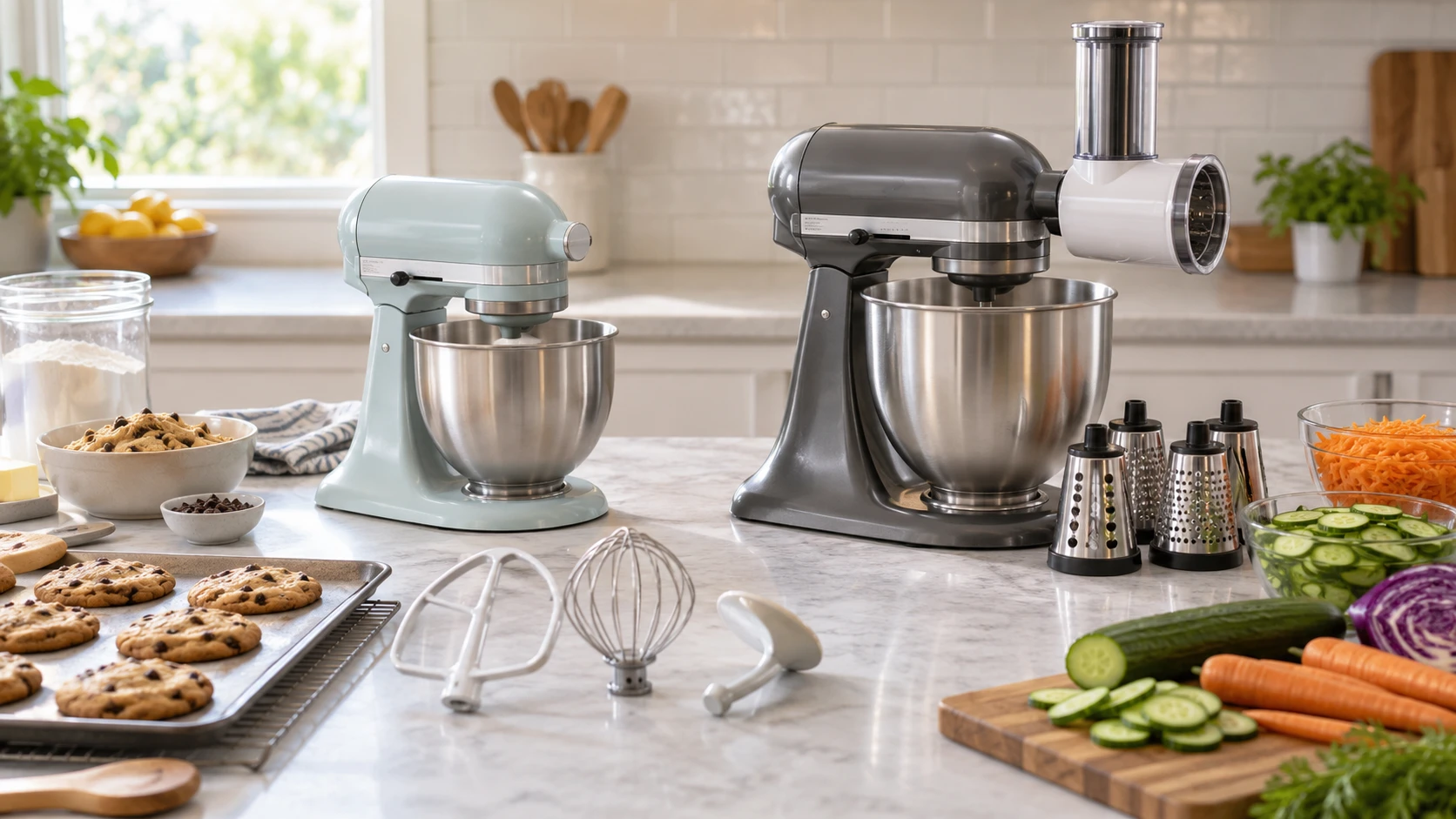
The KitchenAid Artisan Mini 3.5-quart mixer is a tilt-head stand mixer with a stainless-steel bowl, ten speeds, and the basic mixing tools. Its saved description says it can make up to five dozen cookies in one batch when using 28-gram dough pieces and the flat beater. The other product is a 5-quart Artisan mixer bundle with a Fresh Prep slicing and shredding attachment. Its listing claims up to nine dozen cookies under the same stated 28-gram flat-beater convention. A buyer should start with the size of the recipes actually made, then consider whether slicing vegetables belongs in the same appliance plan.
The published guide to recipe scaling for batch size is useful when adjusting a familiar recipe for a different bowl. Ingredient ratios and serving count need to be worked out before the mixing starts. The numbers on these product listings describe particular cookie batches; they are not universal fill limits for bread dough, whipped cream, or frosting. Keep the maker's bowl and attachment instructions beside the recipe as you test a new quantity.
The KitchenAid 5-quart Fresh Prep mixer bundle includes a handled stainless-steel bowl, pouring shield, flat beater, dough hook, wire whip, and the slicer/shredder parts named in its saved row. The product title names model KSM150FBER, while the description's package list calls it KSM150FB. Confirm the exact model and attachment list on the current Republeq's catalog page or box before purchase. That discrepancy matters when a particular accessory is the reason for choosing the bundle.
Size the bowl for the recipe you repeat — recipe scaling for batch size
The Artisan Mini's bowl is listed at 3.5 quarts and the bundle bowl at 5 quarts. The second number is about 43 percent larger as a container volume, but the usable batch size depends on the mixture. A dough that climbs a hook, a thin batter that splashes, and whipped cream that expands all leave different room in a bowl. Do not fill either bowl to the rim just because its quart rating sounds sufficient. Check the recipe and the model's current operating guidance for the attachment and ingredient quantity.
KitchenAid's saved Mini description bases its five-dozen cookie claim on 28-gram pieces made with the flat beater. The bundle uses the same piece size for its nine-dozen claim. That comparison gives a rough starting point for someone who regularly makes one particular cookie, but it says little about dense bread dough or a mix containing large chunks. Make one familiar batch in the intended mixer, note whether the beater reaches the ingredients cleanly, and record the finished number of pieces. That will show whether a second bowl load is part of the normal routine.
A cook who makes four dozen cookies each week may be comfortable with the Mini's stated ceiling and appreciate having less bowl to scrape and wash. Someone making eight dozen for an event may favor the 5-quart bowl if the recipe behaves like the listing's example. The larger bowl may still need a smaller test batch for a recipe that begins with a little butter or a few egg whites. The saved source does not specify a minimum effective load for either model; a very small amount may require stopping to scrape, even in the smaller bowl.
Scaling changes more than the volume in the mixing bowl. Ingredient temperature, order of addition, mixing time, and the size of a batch moved to the oven can change the outcome. For cookies, weigh the dough and divide it consistently before treating a dozen count as a capacity measure. For bread, check how the dough moves around the hook and whether the mixer stays within the manufacturer's duty and quantity guidance. If a recipe exceeds the approved batch, split it deliberately and write down how the two portions will be timed.
Compare the tools included with each box — KitchenAid 5-quart Fresh Prep mixer bundle
The Mini listing names one dishwasher-safe stainless-steel bowl, a Flex Edge Beater, coated dough hook, and six-wire whip. The Flex Edge tool can help bring some ingredients from the bowl wall into the mix, but the listing does not promise that every recipe can run without scraping. The tilt head gives access to the bowl for adding ingredients and locks in place during mixing. Check clearance above the counter so the head can rise fully under cabinets.
The 5-quart bundle lists a flat beater, coated dough hook, six-wire whip, and pouring shield with its handled bowl. The shield is useful when flour or liquid tends to scatter during addition. Its Fresh Prep housing comes with a slicing blade, coarse shredding blade, medium shredding blade, and a two-in-one food pusher. Those parts give the appliance a separate vegetable-prep role. If the household already has a slicer it likes, count the extra blades and storage space as part of the decision rather than assuming a bundle is automatically the better buy.
KitchenAid says both models work with more than ten available attachments sold separately. That broad platform claim does not mean every attachment is in either box or that a particular accessory is compatible with every revision. The Mini source describes pasta, burgers, vegetable noodles, and salads as possible uses of optional attachments. The bundle source mentions pasta, burgers, vegetable noodles, and ice cream. Check the exact attachment model and mixer compatibility chart before buying an accessory for either machine.
Both listings describe ten speed settings. The Mini example calls out speed 8 for whipping cream, and the bundle says its settings run from stirring to whipping cream at speed 8. These are examples of controls, not instructions to use one speed for every ingredient. Start and change speeds according to the recipe and current manufacturer directions, especially with flour or a heavy dough. A higher speed will not fix an overfilled bowl; it can make splatter or strain worse.
Plan for space, cleanup, and frequent use — KitchenAid 5-quart Fresh Prep mixer bundle
The Mini is described as lighter and requiring less counter space than KitchenAid's Classic mixer while having the same stated power as that Classic model. This is a comparison made in the Mini product row, not a measured comparison with the 5-quart bundle here. Neither saved row provides both models' footprint and weight in a way that supports an exact side-by-side measurement. Measure the intended counter, the cabinet clearance for a raised tilt head, and the storage space for the bowl and tools before ordering.
The 5-quart bundle adds a slicer housing, three blades, and a pusher to the usual mixer attachments. Those pieces must be stored where they can be found and cleaned after prep. Consider whether the vegetable work happens at the same counter as baking. If the blades are rarely used, they may take more drawer space than they save in prep time. If slicing and shredding are weekly jobs, keep the relevant blade and its safe storage method together so the bundle can earn its place.
The Mini row explicitly calls its stainless-steel bowl dishwasher safe. The bundle row names a stainless-steel bowl with handle but does not state a dishwasher instruction for every included part. The attachments have different materials and edges, so follow the current manual for washing each tool. Wipe the mixer body according to its instructions and keep the hub and head clear of flour before storing it. A routine that is easy to repeat often matters more than a bowl's maximum volume.
Think about who lifts and empties the finished bowl. A 5-quart bowl full of dough or batter can be less convenient for someone who needs to carry it across the kitchen. The handle on the bundle bowl may help, but the saved row does not give a filled weight. The Mini bowl is smaller; its row does not mention a handle. If grip or reach is a concern, handle both bowl styles in person and test the motion of attaching and removing them, with the machine unplugged, before committing to a high-frequency routine.
Build a batch test before choosing — recipe scaling for batch size
Pick the two recipes that justify buying a stand mixer. For each, note the ingredient weight, planned output, attachment, speed changes, and how much counter work happens before and after mixing. The Mini may be enough if those recipes sit comfortably below its listed five-dozen cookie example and the buyer wants a smaller machine. The 5-quart bundle is more compelling if the planned cookie batch approaches its nine-dozen example and slicing or shredding is already part of the week's food prep.
Use one normal batch to judge scraping and incorporation, then try the larger planned batch within the model's current limits. Look for dry flour at the bottom, ingredients stuck to the side, dough riding up the hook, and how easily the finished mixture can be removed. Record the result, since a product's advertised dozen count is only a starting point for a recipe with different ingredients. If the larger batch is awkward, two measured smaller batches may be easier to mix and bake consistently.
Finally, verify what is in the exact retail box. The Mini's listing specifies its bowl and three mixing tools; the Fresh Prep bundle names more parts and contains the KSM150FBER/KSM150FB naming inconsistency. Confirm the model number, included slicer blades, bowl, pouring shield, and warranty terms with the Republeq's catalog. That inspection keeps the decision anchored to the tools that will actually arrive and the batch routine they can support.