Educational & Explainer Articles
Kazoo sound: voice, membrane and kit quantities
Separate a kazoo’s voice-driven membrane principle from body material and package units, using actual Stagg and WORGEOUS descriptions.
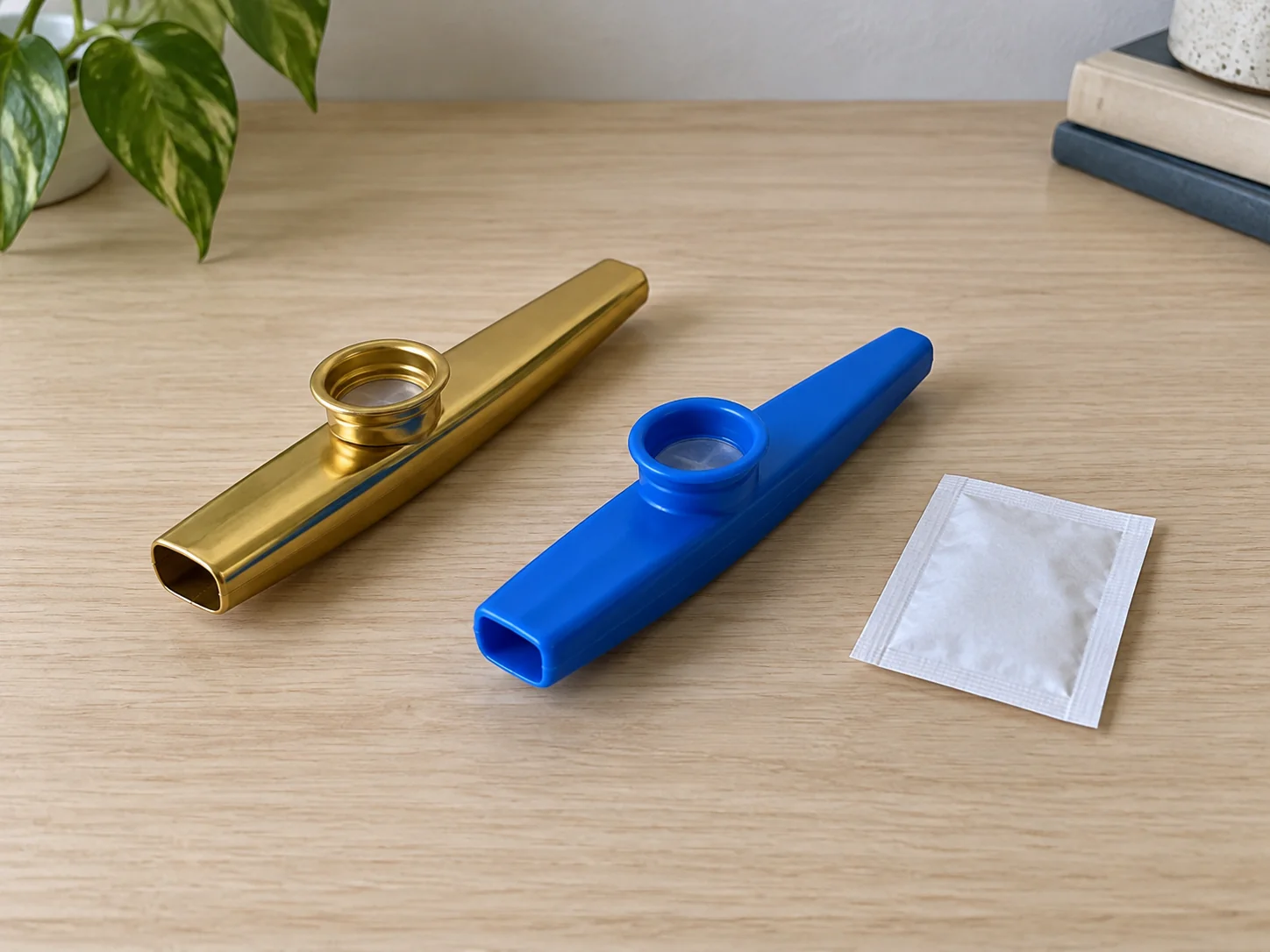
Kazoo sound begins with a voice and a vibrating membrane. The body, its finish and the quantity in a package are different pieces of information. A gold-colored instrument, a multicolor set and a large supply of spare parts can all raise useful questions, but none of those descriptions replaces an explanation of the basic sound-making principle.
This educational guide separates that principle from the actual Stagg and WORGEOUS retail inventories below. It reports no listening comparison, playing trial or replacement procedure. Read each number with its item label, and keep an unanswered question beside the offer it concerns.
How a kazoo makes sound starts with the voice
For how a kazoo makes sound, Kazoobie Kazoos describes the human voice causing a resonator membrane to vibrate. Its explanation calls this sympathetic vibration and places the kazoo in the mirliton family. The body helps project the resulting sound. Its published Michael Fink speech also distinguishes singing or speaking through the instrument from simply blowing through it.
That general explanation gives the membrane a role different from the outer body. The visible tube is not the whole account of the sound. Keep the input, vibrating part and body distinct when reading a description. The cited explanation's wax-paper wording does not establish the membrane material in either selected retail offer, and this article does not identify that material from a photograph.
A person looking at a kazoo for the first time may concentrate on the open ends because those are easy to see. An illustration can help identify the kind of object, but the description of the sound-making principle supplies information that its outline alone cannot. Check which instrument an instruction names before following it.
This is also why an equipment question and a musical question can need different answers. A missing component, an unidentified model and an unfamiliar playing instruction are different uncertainties. State which one you have before treating a quiet instrument as evidence that the body material is wrong. No fault diagnosis follows from this general explanation.
Read the Stagg box as thirty actual metal instruments
The actual Stagg Music Box offer names thirty metal kazoos and gives the color as Gold. Its actual brand is Stagg. The description repeats the color and material fields; those repetitions do not multiply the number of instruments in the stated box.
The words Music Box in this offer belong with the rest of its actual title and description. Here, the contents are thirty kazoos. Do not read those two words in isolation and assume a separate mechanical music-box mechanism or an additional powered instrument. Keep the complete supplied identity with any inquiry about the order.
The short account gives no dimensions, individual weight or counted spare-membrane inventory. A metal material field is not a measurement of loudness, a tested durability result or proof that a particular replacement part fits. Ask about the actual offered item when one of those details would affect the use you have in mind.
Thirty complete instruments can be relevant to a group purchase, but the count does not decide how a particular group should use them. Establish the actual occasion, requirements and applicable instructions separately. This guide supplies no shared-mouthpiece arrangement, hygiene treatment, age assessment or classroom learning claim from the package number.
Kazoo kit quantities name different kinds of contents
The actual WORGEOUS 20664110 Multicolor offer identifies SKU sku-15651051735. Its description lists five kazoos, five ropes, five kazoo heads and fifty replaceable diaphragms. Its brand is WORGEOUS. Keep those four content labels beside their separate quantities.
For kazoo kit quantities, the five instruments and fifty diaphragms are different counts. Fifty spare diaphragms do not mean fifty complete kazoos. Likewise, the five listed heads do not establish five additional complete instruments. The brief description does not settle which listed components are already fitted, separately packed or intended to be kept as spares.
The offer also uses lightweight, strong-resonance and adjustable-pitch-and-bass wording. Those are statements in its description, without a measured sound level, frequency range or adjustment trial here. The short account does not identify a documented adjustment sequence. Do not infer which part to turn, remove or replace from those words.
It names accompaniment for guitar, ukulele or other instruments. That is a proposed musical context, not a physical connection specification. The description does not establish an included pickup, cable or amplifier interface. A reader needing electrically amplified equipment should identify that requirement with the exact item information before treating accompaniment as a connection claim.
Compare like units before comparing the numbers
When the question is the stated number of complete kazoos, thirty and five are comparable quantities. Thirty divided by five is six. The Stagg description therefore names six times the complete-instrument count of the WORGEOUS description. That calculation compares the stated counts only; it supplies no price comparison, sound ranking or delivered-inventory verification.
When the question is the stated number of spare diaphragms, the two accounts do not provide equivalent entries. WORGEOUS gives fifty; the short Stagg account gives no spare count. An absent number is not zero. Leave the Stagg field unresolved instead of filling it with a value that makes the comparison look complete.
Fifty divided by five is ten, but that arithmetic does not prove that each WORGEOUS instrument is separately packed with ten spare diaphragms. The description gives package totals. A seller could arrange the stated contents in ways the brief account does not specify. Keep an allocation question separate from dividing the published numbers.
Similarly, adding five instruments to fifty diaphragms produces a numerical sum of fifty-five while discarding the difference between those units. It is not a count of fifty-five playable kazoos. Write the item labels rather than relying on one large combined total when deciding what the package actually supplies.
Keep the body material separate from the membrane question
Stagg explicitly names a metal body material. WORGEOUS's actual description does not provide a corresponding body-material specification. Multicolor is a color description, not a material. The two accounts therefore do not establish a complete metal-versus-plastic retail comparison, even if a generic illustration shows instruments made from different materials.
The conceptual cover accompanying this article shows whole generic inactive instruments and a closed blank packet. It does not picture thirty Stagg units, the WORGEOUS five-piece inventory or fifty supplied replacement parts. It also cannot establish the membrane material or a fitting procedure for either actual offer. Keep illustration and actual package information distinct.
If an item's material matters to your plans, ask the supplier about that exact item. Name the component you mean: body, head or diaphragm. A broad question about what it is made from can receive an answer about only one part. Retain the component name beside the answer so a later reader knows which question was resolved.
A replacement description needs its own identification. The general word diaphragm does not establish diameter, fitting style or applicability to an unrelated kazoo. This article supplies no substitute material, opening method or repair instruction. Keep maintenance decisions with the instructions and parts information for the actual instrument.
Choose instructions for the instrument being discussed
The C major harmonica scale guide connects numbered holes and breath directions with a confirmed C Richter-tuned harmonica layout. Its numerical route belongs to that instrument. A kazoo's visible openings do not turn those harmonica hole numbers into a kazoo note chart.
The recorder lesson method-check guide investigates a different issue: German and Baroque instruction can diverge at an identified lesson point. Those system names and fingering questions are not kazoo classifications supplied by either offer. The useful connection is identifying the actual instrument before carrying a lesson across to it.
A musical example heard elsewhere also needs its own context. A recording may demonstrate a particular performer, instrument and arrangement without identifying any of the hardware in a retail offer. Enjoy the sound while keeping a purchase question tied to the item you can actually identify. This guide makes no claim that either selected package reproduces a recorded performance.
For an unresolved question, preserve the model reference and the wording you need explained. Ask about the stated package quantity if the issue is contents, or ask for applicable instrument instructions if the issue is operation. A clear question lets the response address the uncertainty instead of answering a different question about a superficially similar object.
Read a short description without supplying its missing measurements
Imagine an adult reader comparing the two offers for an ordinary music gathering. The reader knows how many people are interested but has not chosen a package. They can write separate entries for complete instruments, spare diaphragms, other listed contents and unresolved dimensions. This is an original purchasing-information example, not a classroom plan or a report of either set in use.
The reader can then decide which missing detail would actually change the choice. Perhaps the thirty-unit count is more than the occasion needs, or perhaps the smaller package's spare inventory prompts a compatibility question. Neither observation requires guessing a sound level or inventing a learning advantage. One actual specification may be enough to ask about next.
For a concrete invented count, suppose six adults are interested in bringing their own instruments to the gathering. A package stating five complete kazoos is one below that six-person quantity. Thirty is twenty-four above it. These subtractions describe the stated inventory against an invented requirement; they do not establish that a package has been received, that every item is usable or that either order is necessary.
The fifty spare diaphragms do not fill that one-instrument gap. They answer a different inventory question. Keep “one more complete instrument” separate from “more replacement components” in the reader's note. Otherwise a large spare count can make a package appear to satisfy a requirement it has not actually addressed, even when every published number has been copied correctly.
If the group later changes to five adults, the quantity question changes with it. Keep the earlier six-person note recognizable as the earlier plan. A corrected requirement need not become a verdict on which product is better. The reader can update that field, retain any unresolved material or component question and make the next inquiry about the actual occasion now being considered.
Keep any answer with the same offer reference. An instruction sheet for another model may be interesting without resolving the selected item's material or component arrangement. If the proposed item changes, carry the open question forward rather than assuming the earlier reply covers the new package too.
Understand kazoo sound through the voice-and-membrane principle, then read the actual inventory on its own terms. Thirty instruments, five instruments and fifty diaphragms describe different purchasing information. Retaining their labels makes the comparison useful while leaving unprovided dimensions, materials and operating details open for an actual answer.