Crypto Commerce
JBL Bar 300 MK2 soundbar for a living-room TV
The JBL Bar 300 MK2 soundbar addresses a specific living-room preference: bass from an all-in-one bar without a separate subwoofer. Its description also names PureVoice 2.0 for dialogue clarity. Those are reasons to consider it if you want fewer audio components around the TV. If your priority is a particularly slim profile or coordinated playback with a compatible Samsung TV, the Samsung HW-S700D deserves comparison. Neither description alone settles whether the bar will fit beneath your screen.
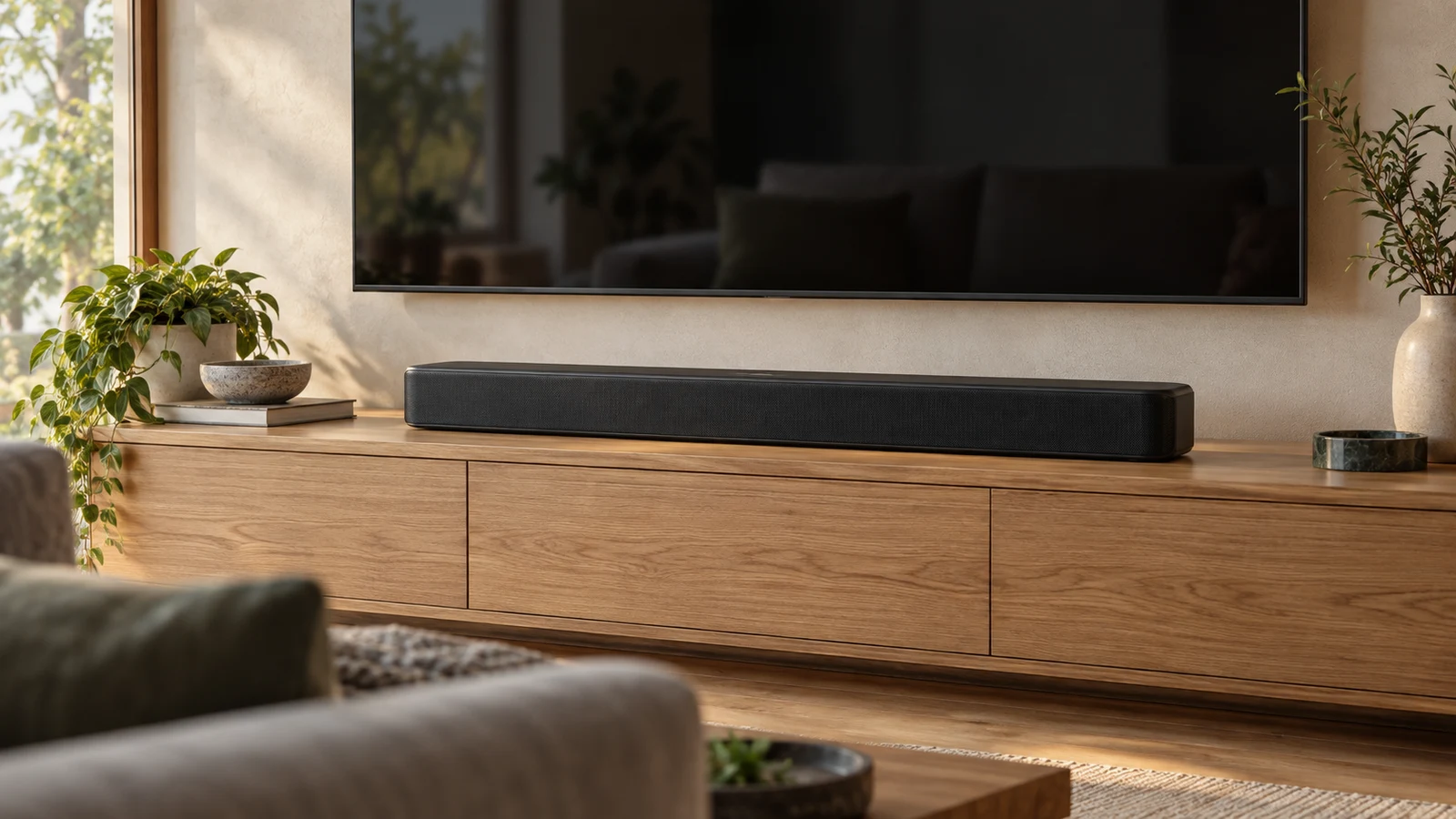
The JBL Bar 300 MK2 soundbar addresses a specific living-room preference: bass from an all-in-one bar without a separate subwoofer. Its description also names PureVoice 2.0 for dialogue clarity. Those are reasons to consider it if you want fewer audio components around the TV. If your priority is a particularly slim profile or coordinated playback with a compatible Samsung TV, the Samsung HW-S700D deserves comparison. Neither description alone settles whether the bar will fit beneath your screen.
Start by separating two questions that a product photograph can blur together. How much equipment do you want in the room, and how much space is actually available directly below the picture? JBL's stated bass-port design addresses the first question. Samsung's stated low-profile design addresses the second, although measurements are still necessary. A bar can suit your preference for fewer components while remaining too tall for the position you have chosen.
The model discussed here is the JBL BAR-300-MK2. Keep that identifier in any request for dimensions, connection details or installation instructions. Similar model names are not enough to establish the specifications of this particular unit. For a useful comparison, have your television's full model number ready too, along with the available space on the TV furniture. That gives a seller concrete questions to answer before you commit to either soundbar.
Samsung Speaker Alternative: Compare The Space Each Design Addresses
The JBL description attributes its low-end output to built-in bass ports and explicitly describes playback without a separate subwoofer. For someone who does not want to find another floor position for audio equipment, that is the most relevant stated feature. It does not establish how deep the bass reaches, how loud it plays cleanly or whether you will like its balance at your usual volume. Treat those as listening questions.
Picture a living room where the space beside the TV cabinet needs to remain clear. In that situation, the JBL arrangement has a practical appeal because its stated bass approach does not require a separate subwoofer. Now consider a different constraint: a screen that sits close to the cabinet surface. Removing a separate floor component does not resolve the gap beneath that screen. The height and depth of the bar still need to work with the television's stand.
Measure the usable surface, including any area occupied by the TV feet or central pedestal. Record the clearance beneath the visible picture from your normal seat, rather than relying on a view from directly above the cabinet. Ask for the JBL's exact dimensions and placement instructions before judging the fit. Its supplied description does not give those measurements, so there is no basis here for saying it will slide under a particular television.
Consider the proposed position in depth as well as width. If the bar would sit partly beneath the TV, ask whether that arrangement meets its installation guidance. If you intend to place it on a shelf, confirm the necessary clearance around its openings. Do not choose a tightly enclosed position simply because the outer casing appears to fit. The description establishes that bass ports are present, but it does not provide their required clearance or approved shelf arrangements.
JBL also lists Dolby Atmos and MultiBeam 3.0, describing the latter as using directed sound beams to distribute playback around the room. These statements explain the intended sound presentation; they do not predict a particular result from your sofa. When arranging a demonstration, describe where you sit and whether your proposed placement is open or enclosed. Ask to hear material similar to what you watch, at a volume you would actually use at home.
For spoken programmes, PureVoice 2.0 may be the more relevant feature to investigate. The description presents it as keeping dialogue clear and consistent. If you often adjust the volume between conversation and louder scenes, choose a familiar passage with both when listening. Pay attention to whether words remain easy for you to follow. A feature name provides a reason to test that behaviour, but it cannot establish your listening comfort in advance.
Evaluate the JBL Bar 300 MK2 soundbar against those separate requirements: acceptable physical placement and satisfactory listening from your usual seat. You may find the all-in-one bass design appealing yet still need a different position for the bar. Equally, an easy fit does not answer whether you prefer its dialogue treatment. Keeping the physical and listening assessments separate helps you avoid treating one successful check as proof of the other.
Samsung Speaker Alternative: When TV Pairing Deserves More Weight
The Samsung speaker alternative is the HW-S700D, whose description identifies an ultra-slim, low-profile design. That makes it relevant when visual clearance is a leading concern. The supplied description does not include dimensions, however, so it cannot establish a measured height advantage over the JBL. Request both sets of measurements and compare them with the same available space, using the installation instructions for each model.
Samsung's Q-Symphony feature introduces a different buying consideration. Its description says the soundbar and a compatible Samsung television can synchronize their speakers. The accompanying qualification specifies a compatible 2020-2024 Samsung TV. That wording does not establish support for every Samsung television from those years. Give the seller your exact TV model and ask whether Q-Symphony works with that combination before counting it as a reason to choose the HW-S700D.
The Samsung description separately lists Wireless Dolby Atmos, with compatibility limited to select 2022-2024 Samsung televisions. Keep that check separate from Q-Symphony eligibility. Confirmation of one named feature does not confirm the other. If avoiding a TV-to-soundbar cable is important to your room arrangement, ask specifically about Wireless Dolby Atmos with your television and intended viewing sources. Do not turn the word “wireless” into a promise that the complete installation needs no cables.
Samsung also describes SpaceFit Sound Pro as analysing the room and calibrating playback, while Adaptive Sound is described as adjusting audio to improve vocal clarity, including at low volumes. Those are distinct stated functions worth considering alongside JBL's MultiBeam 3.0 and PureVoice 2.0. They do not provide a measured ranking between the bars. If a demonstration is possible, use the same spoken passage for both and ask which processing settings are active.
For this choice, give Samsung's TV coordination extra weight only when your exact television qualifies and you want that function. Give JBL's bass-port arrangement weight when avoiding a separate subwoofer is a firm preference. There is no need to assign equal importance to every listed feature. A capability you do not expect to use should have less influence than a placement restriction you will face every evening.
Understand Bluetooth Audio Direction Before Pairing Devices: Resolve Connections Before Purchase
The JBL description supplied for this model does not specify its TV inputs or Bluetooth functions. That leaves the connection method unresolved, even though Dolby Atmos is listed. Before purchase, ask how your exact television should connect to the BAR-300-MK2 and what that arrangement supports. Include any external viewing device you intend to keep using, so the answer addresses your actual setup rather than a generic television connection.
Keep the request practical: you want to know which sockets or wireless functions to use, which accessories are needed and which settings must be selected. Ask whether the proposed arrangement supports the audio feature you care about, rather than assuming that successful basic playback confirms everything. This article's product descriptions do not establish the JBL's port inventory, supplied cables or supported control methods, so none should be treated as included on that basis.
If Bluetooth is part of your proposed arrangement, read Understand Bluetooth audio direction before pairing devices before requesting model-specific compatibility confirmation. That guide addresses a separate connection question. It is not evidence that either soundbar supports the particular Bluetooth use you have in mind. Keep your purchase decision tied to confirmation for the television and soundbar you will actually combine.
Daily operation deserves a question of its own. Ask how volume adjustment, muting and power control would work with your chosen connection. If other people use the television, consider whether the proposed routine is comfortable for them as well. You can describe your preference plainly, such as wanting to handle ordinary viewing with the TV remote, without assuming that either supplied product description promises that behaviour.
For example, a household watching mostly quiet conversation programmes may care more about understandable speech and straightforward controls than about the widest possible sound presentation. Someone choosing the JBL for its integrated bass approach may instead want to hear how music and film effects sound at moderate volume. Use your own viewing habits to choose the demonstration material. These are listening priorities to test, not predicted advantages established by the listing.
Once the physical fit and connection questions have answers, turn to the exact offer. Confirm the model being supplied and request a package inventory if you need a particular cable, bracket or other accessory. Do not assume an installation item is included because it appears useful for your planned placement. Get any necessary extras identified before comparing the total cost of the JBL setup with the Samsung setup.
Read the seller's current protection and service terms separately from the audio features. Ask who handles a problem, what coverage applies to the particular offer and what conditions govern it. Product-title wording alone should not decide those questions. Likewise, confirm the current return conditions and delivery arrangements before relying on them. The soundbar descriptions do not establish your eligibility for a return or promise a delivery date for your order.
If you choose a crypto payment option, review the current checkout instructions without inferring payment terms from the soundbar listing. Confirm the requested currency and network, the total and any displayed fees. Read what any deadline requires before proceeding. These checks belong after you have resolved the product choice; a payment method does not answer whether the bar fits your furniture or supports the TV connection you need.
To take the next step, open the JBL Bar 300 MK2 soundbar listing with your TV model number and placement measurements beside you. Request the missing dimensions and connection guidance for that exact combination. If the bar fits and the listening result suits you, its stated bass-port design gives you a clear reason to choose it. If Samsung's slim form or confirmed TV coordination matters more, compare the HW-S700D on those specific grounds before ordering.