Home & Living
Ironing board cover fit
Match the replacement cover or underlay to the identified board and its applicable size, shape and fastening guidance.
replacement ironing board underlay
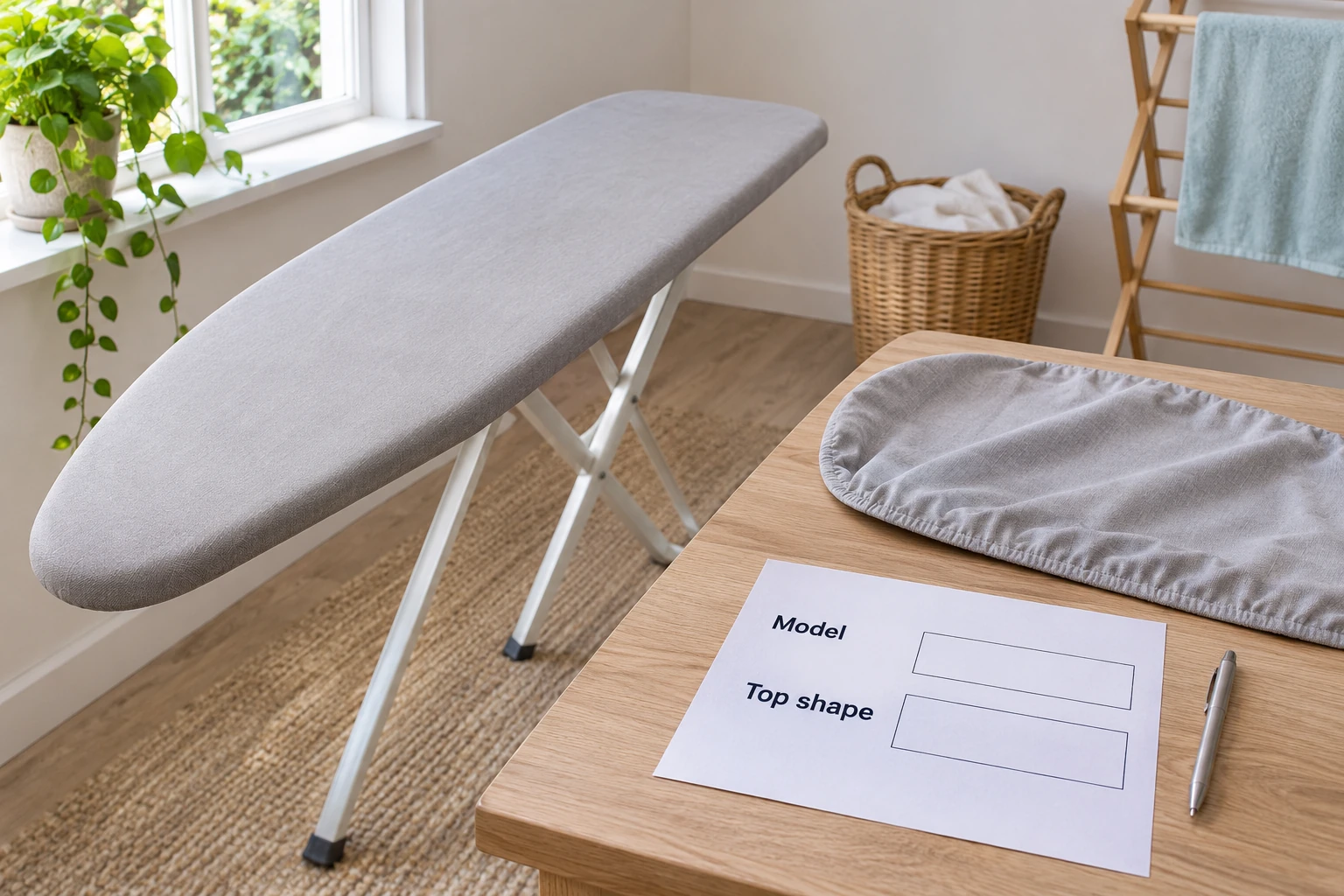
Ironing board cover fit starts with identifying the part you need to replace. A fabric top, a pad and a complete cover set can be different purchases. Find the board’s model information and the replacement instructions before treating a similar outline as a match. Keep the board unused and any iron disconnected and cool while gathering that information. This is a replacement-selection exercise, without a hot fitting test.
Brabantia’s cover-selection service article describes its cover as a top and bottom layer. It says that when only one part is worn, that part can be replaced, while replacing both calls for a complete set. A loose top layer will not supply a missing underlay. Apply that distinction to the system the article describes rather than assuming every board separates the same way. For a replacement ironing board underlay, ask whether the identified replacement includes the needed padding. Keep the answer beside the board reference. A product photograph showing fabric on a board does not establish everything the package contains. Record a missing layer explicitly before choosing a replacement set.
Read the stated board-surface limit
Leifheit’s Thermo Reflect L/Universal page identifies product 71608 and a maximum ironing surface of 140 by 45 centimetres. It also describes an elastic drawstring, side fastening and a tension clip. These statements belong together as information about that particular replacement. The number describes a board-surface limit, so it should not be copied into a shopping note as the dimensions of an unfastened piece of fabric.
Record the measurement name and its unit beside the limit. Then compare it with information for the top of the board you actually own. A board’s folded height or an overall length including a separate rest answers another question. If you cannot establish the relevant surface dimensions, obtain the applicable drawing or ask the supplier before choosing a size. Keep the named fastening arrangement with the same product reference. A bounded universal-size description does not establish that its fasteners accommodate every folding mechanism, unusual outline or ironing system. The exact equipment instructions still need to support the replacement you would use. Keep an unanswered fastening question visible beside the surface measurement.
Choose the actual cover variant
The captured Minky Easy Fit page describes a cover for boards up to 115 by 38 centimetres, while its options also show 122 by 38 and 122 by 43 centimetres. That page therefore needs a variant-aware reading. Do not combine the general description and the largest option into one fit promise. Identify which option you intend to order and confirm the board limit stated for that selection.
The page describes pre-tensioned elastic and felt backing. Those features help you identify what information to request about the chosen variant. They do not establish a replacement for an unidentified board simply because the fabric looks stretchable. Save the selected option together with its stated size, rather than retaining only the product-family name. If the basket or order description loses the variant, resolve that uncertainty before relying on the selection. Keep any answer about a particular size attached to that size when comparing another cover. A change of option can change the relevant fit question even when the page title stays the same.
ironing cover model and size
Joseph Joseph’s Pocket replacement-cover page names the Pocket ironing board and specifies 90 by 33 centimetres. It describes a cotton top layer, felt underlay and elasticated sides. This is a model-specific replacement account. A different board with similar published dimensions does not become a Pocket board, and the page does not verify an unrelated retail board as an approved substitute.
For ironing cover model and size, keep both pieces of information in the same note. A size without the applicable model can conceal an outline or fastening difference. A model-family name without the size can conceal a different version. If you own the named Pocket board, compare its identification with the replacement information and consult its actual instructions. If you own another board, use that board’s documented replacement route or obtain a specific compatibility answer. Also retain the care information for the cover you choose. The Pocket page’s wipe-clean and dry-before-folding directions belong to that replacement, rather than supplying a washing method for every ironing cover.
Keep named models separate from ranges
Addis’s FAQ distinguishes replacement routes within its own range. It says Deluxe and Shirtmaster boards have specifically designed covers and recommends its Easy Fit cover for Cirrus. For other boards, it describes medium or large Perfect Fit covers with maximum surface dimensions. The medium entry states 1110 by 350 millimetres, while the large entry states 1350 by 460 millimetres. Keep the units and the maximum-size wording with each entry.
That distinction provides a useful way to organize an inquiry. First establish whether the board has a named replacement. If you are considering a bounded-size alternative, identify the exact cover and the board information the maker requires. Do not replace a model-specific answer with a larger size simply because its dimensions look generous. A supplier’s response should identify what it covers, including any relevant version or fastening limitation. Retain the board reference, replacement reference and remaining question together. This keeps an incomplete answer visible when another person later orders the accessory, without turning a broad family description into a confirmed pairing.
Record the outline and fastening context
Laurastar’s cover guide separates the board top from accessories such as an iron rest, hanger or cord holder when describing measurements. It also distinguishes the widest part of the top and its shape. That helps define the information a cover inquiry needs. Record what the applicable product calls its dimensions, and keep the top’s outline visible in any drawing or photograph used to clarify the question.
The guide discusses adjustable cords, elastic ties and clips, and notes that vacuum, heating or blower systems affect cover choice. Those considerations call for the instructions of the actual equipment. Do not convert the guide’s general allowance or padding discussion into a universal rule for another maker’s fitted replacement. A named cover may already incorporate its required fastening and padding arrangement. If the board has an active system, obtain the approved cover information for that model before selecting by outline alone. A cover that appears to go around an edge has not thereby been verified for airflow, heat, folding clearance or use with an unrelated appliance.
Read the two board offers separately
The Costway board listing describes a fabric cover, sponge layer, mesh top and drawstring. Its gallery shows a continuous top above an X-shaped floor stand, with an integral iron rest. That account does not name a separately verified replacement cover.
The folding tabletop-board listing currently identifies Light House Beauty LI24068, SKU sku-428832707. Its description names a fabric cover, folding board and chrome-wire rest; its sole image shows a central fold and short wire legs. Keep that actual catalog identity, including the 43904 URL reference, when asking about replacements. Neither listing verifies a cover from the other maker pages discussed here. The pictured iron is context, without an established promise that it accompanies the board. Ask how the applicable replacement accommodates the identified top and folding arrangement before treating either offer as a cover specification. Keep a supplier’s replacement reference with each board, even if two covers share a similar blue pattern.
Keep purchasing and ironing questions apart
The published ironing-board working-length guide considers whether extra spending is justified by a confirmed support span. Its comparison separates the padded top from overall assembly length. That earlier buying decision does not identify a replacement cover. Here the question concerns an accessory for a particular board, including its layers, outline and documented fastening arrangement. A board chosen for its useful length still needs its own replacement information.
The compact-iron mode and contact guide addresses a different situation, where wrinkles remain during permitted ironing. Its garment-care and appliance-mode discussion supplies no missing cover model. Resolve the replacement selection while the equipment is unused. Then follow the actual board, cover, iron and garment instructions for any later work. A suitable-looking replacement does not authorize a higher heat setting or a new steam method. Keep the purchase note focused on the identified accessory and leave operating questions with the relevant instructions. This prevents a successful size inquiry from becoming an unsupported claim about pressing results. A later change of board requires its own accessory check, even if the iron and garment routine stay the same.
Keep the accessory identity with an order
If you later consider using crypto to order a replacement, retain the board reference and the exact accessory you have selected. Write whether the intended goods are a top cover, an underlay or a complete set. Keep the size option and any compatibility answer beside that description. Before considering USDT at republeq.com, read the payment choices and instructions actually presented for the particular order. This article does not establish that a specific asset, network or payment route will be offered. If a supported option is available and you intend to use it, compare the requested asset, network, receiving details and amount with the transaction you would authorize. A familiar token name alone does not settle those details. Resolve a material discrepancy through the merchant’s published support route before sending funds. Save the order confirmation and payment reference together with the accessory identification. They answer different questions if you later need help with the goods or the transaction. Read the current delivery, cancellation, return and exchange terms that apply to the selected item and payment method. Do not borrow terms from another seller or assume that a previous order used the same conditions. If you change the selected cover size or move from a fabric top to a complete set, review the basket description again before authorizing payment. The retained compatibility answer should refer to the goods you are actually ordering. Payment does not confirm a board model, establish a fastening arrangement or prove that a replacement will suit an active ironing system. When the parcel arrives, compare its identifying information and contents with the retained order and the applicable replacement guidance before use. Keep any unresolved difference attached to the order record for the relevant support process. If the chosen goods remain unclear, retain the inquiry and leave the purchase undecided until the accessory and its terms are clear. A later clarification should identify which question it resolves, rather than silently replacing the original product reference with a similar name. Retain the original question alongside the answer for reference.