Seed-Starting Equipment
humidity dome not fitting a seed tray: check the rim
Find whether a propagation cover misses the tray rim, sits unevenly, or lacks usable height before comparing multi-pack offers.
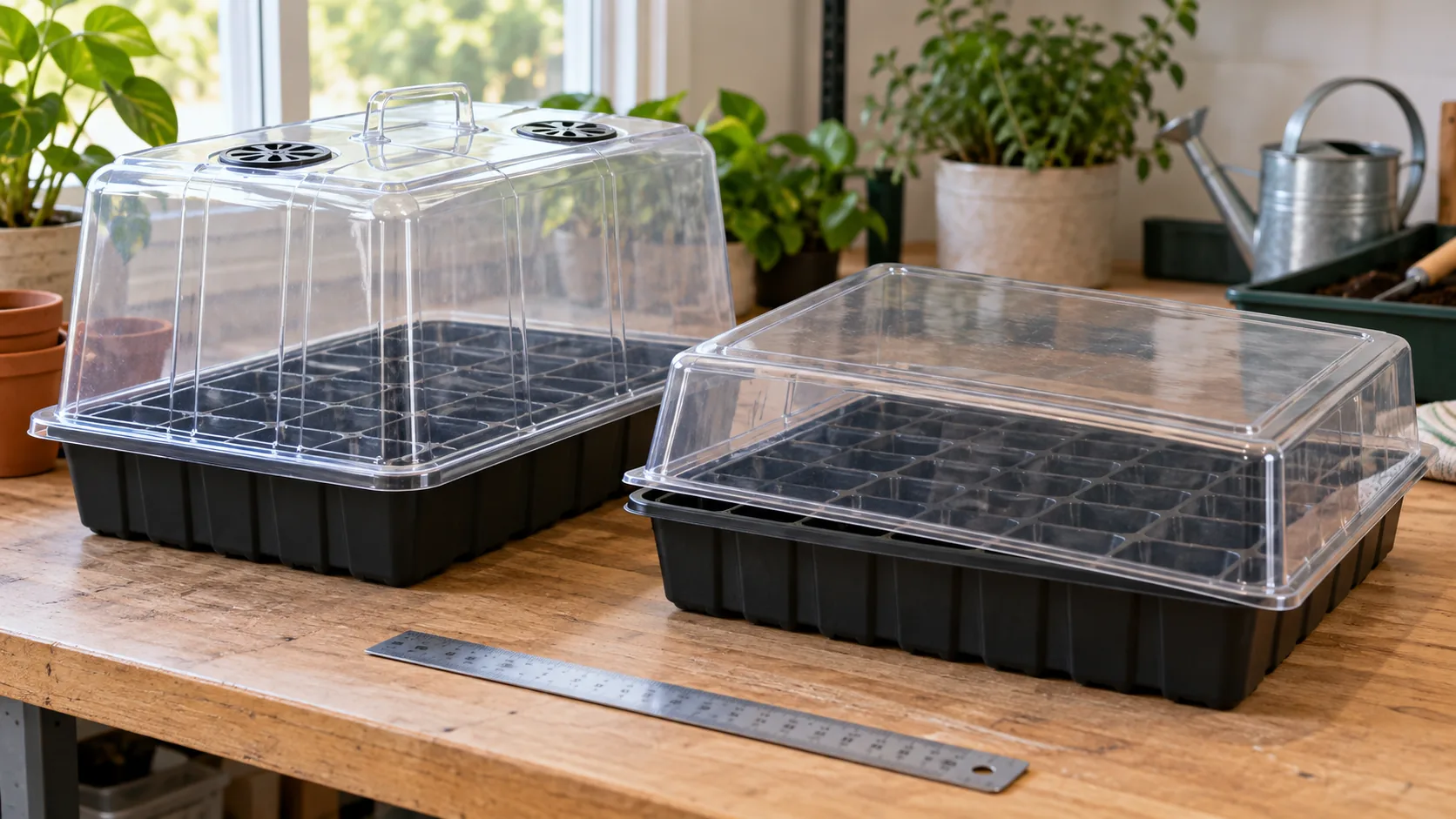
A clear humidity dome that will not sit on a seed tray can make the whole setup feel wrong. Start with the mechanical question before trying to fix the growing conditions: is the cover too long or wide for the tray rim, does its lower lip land outside the tray, or is there simply not enough height above the cells? Those are different problems. A listing's claim that a dome fits a “standard” tray cannot replace measurements of the two parts you own. This guide keeps the fit question separate from the plant's actual care requirements.
Find the point where the cover fails to meet the tray
Set an empty tray on a level table and lower the cover without forcing it. Watch all four edges. If one corner touches while the opposite edge floats, turn the cover once and try again. That small test can reveal that the two parts have different rectangular proportions or that a tray rim is uneven. Do not press hard enough to flex or crack either piece. A cover that merely rests at an angle is not a confirmed fit.
Measure the tray's outside length and width across its rim, then measure the opening or lower edge of the dome where it would actually land. Record both numbers, not just the nominal name of the tray. The base of a tray, its cell grid, and its top rim can each have different dimensions. The dome has its own lower lip. A 10-by-20 label may describe a product family without defining the exact mating surfaces of two unrelated brands.
If a dome sits squarely on the rim but appears too short above the cells, the issue is vertical clearance instead. Measure from the tray rim up to the top of whatever must fit beneath the cover, including any handle, plant label, or growing stem. Then compare that need with the usable interior height, which may be less than an advertised outside height. Do not turn an outside height into an interior clearance claim without a product drawing or an actual measurement.
Read the two offers as covers, not as universal tray systems
The seven-inch tall vented propagation dome listing describes a pack of ten clear covers with two round top vents and a top handle. Its first gallery image shows a transparent domed top and a circular vent detail, although that pale image does not establish the dimensions of its bottom lip. The description says it can match other plant trays; it does not identify every matching tray model or give a verified rim fit for the reader's tray.
The ShopSparkle shallow humidity dome listing describes a pack of twenty-five clear plastic covers measuring 20.5 inches long, 10 1/8 inches wide and 2 inches high. It says they fit standard 10-by-20 germination trays. Its first gallery image shows a low clear cover over a dark rectangular tray, but the photograph cannot certify a fit with a different tray. Use the listed dimensions as a comparison starting point and keep the mating lip question open until you see exact specifications or can try the parts together.
The difference in height matters only after the footprint works. Seven inches in one title and two inches in the other description do not answer whether the edges will seat on your tray. Likewise, the larger pack count does not improve a poor mechanical fit. Compare one cover to one tray first. Quantity is a separate decision once the parts you intend to use have been identified.
Make a quick rim sketch
Draw the tray as an outer rectangle and note its actual top-rim measurements. Inside that drawing, mark any raised ridge or channel that might catch a cover lip. Then draw the dome's lower edge as a second rectangle, using measured figures if available. If you have only a listing's overall dimensions, write “overall” next to them; do not silently relabel them as the opening. This sketch does not need to be elegant. It needs to keep the two physical boundaries from being confused.
Check the corner shape, too. A cover with rounded corners may not seat on a tray whose rim has sharper corners even when the long and short side measurements seem close. The reverse can happen as well. A handle or top vent has little to do with this lower-edge fit, so do not let visible accessories distract from the rim. If the product page does not show a bottom view, mark lip shape as unknown.
Once the dimensions look plausible, inspect the tray for warping or a damaged rim. Put it on a flat surface and see whether it rocks before adding the dome. That observation helps avoid blaming a new cover for a pre-existing tray shape problem. It does not tell you whether the tray was manufactured incorrectly, and the product listings here do not provide a repair method for a warped tray. Preserve the actual observation and choose a compatible undamaged pair.
Try this on a clean, empty tray before starting a growing cycle. It is easier to see the lip and corners when soil, labels, and plants are not in the way. Photograph the cover resting naturally from the side and from one corner if you need to compare it with a seller's dimension drawing later. A photograph can show the gap you observed, although it cannot replace a measurement because camera angle and perspective can hide a small overhang. Keep the ruler in one frame and write down which edge you measured. That small record prevents a vague “doesn't fit” description from sending you toward another cover with the same unresolved lip shape.
Keep clearance separate from the seal
A taller dome can provide more space above a tray, but it does not guarantee a tighter fit around the rim. Conversely, a shallow dome may sit neatly on a tray and still be too low for a label or seedlings at a later stage. Write two rows in your notes: “edge fit” and “usable height.” For edge fit, record where the lower lip lands and whether the cover sits evenly. For height, measure the obstruction from the tray rim and compare it with confirmed interior space.
Do not use plant height alone as a purchase formula. You may remove a cover at a stage determined by the plant's actual care instructions, and a current small seedling does not tell you how long a dome will be useful. The two product descriptions use general propagation language, but neither establishes the right cover duration for every crop. The immediate problem here is whether the chosen parts can sit together without being forced.
If the cover catches on a plant label, move the label only if doing so will keep the planting record clear and will not disturb the tray. If it catches on a lamp, cable, or another piece of equipment above the tray, that is a work-area clearance problem rather than a tray-rim problem. Leave enough room to lift the cover straight off. A setup that fits when assembled but cannot be opened without dragging across the workspace is not an easy working setup.
Use vents for their actual role
The tall dome description identifies two round openings at the top that can be opened or closed. Those are access points for ventilation; they do not fix a mismatch at the base. Its gallery shows a circular top detail, but the photograph alone does not establish how a particular vent operates. The ShopSparkle description focuses on a shallow clear cover and does not provide the same specific top-vent detail in the captured account. Do not infer identical vent hardware from the shared word “dome.”
Vent openings also do not supply a universal humidity target. The tall dome page makes broad temperature and humidity claims, but those statements are not a plant-specific recommendation for your seeds, room, or equipment. Read the seed supplier's instructions and observe the actual setup if you need to decide how a cover should be used. This guide does not turn a promotional percentage into a safe setting. It simply treats vents as a physical feature to identify after the cover fits.
Check the rest of the seed-starting station without mixing decisions
If the tray sits above a heating mat, measure that fit as a separate layer. The seedling heat mat layout guide owns the mat footprint, controller contents, and cord route. A dome that fits a tray does not prove the tray fits a mat, and a mat's advertised warmth does not settle dome-to-rim geometry. Sketch the layers from bottom to top so the separate contacts are visible.
If the tray has not been filled, the potting-soil quantity guide addresses container fill calculations. That is a different task from choosing a cover. Adding more medium cannot widen a tray rim or change a dome lip. Keep the gardening decisions connected in the workspace, but let each piece of equipment answer the physical question it actually controls.
Choose a next step from the failure you observed
If the cover is too narrow or short at its lower edge, compare exact lip and tray-rim dimensions or seek a cover specified for your tray model. If one corner alone will not seat, check orientation and whether either part is misshapen. If the rim fits but a label or seedling touches the top, check interior clearance and how long the cover is intended to remain in use under the crop instructions. If the parts fit but you are unsure about moisture or ventilation, that is a separate care question; do not change the physical-fit conclusion to answer it.
Keep a short record: tray model or measured rim, dome model or measured lower edge, observed seating at each corner, usable height, and any uncertain fields. The tall vented ten-pack and shallow twenty-five-pack are real offers with distinct shapes and quantities, but neither listing proves universal compatibility. The successful outcome is modest and concrete: a cover that rests evenly on the tray you actually own, clears what must sit beneath it, and can be lifted and used according to the relevant product and plant instructions.
Before ordering a multi-pack, repeat the check for every tray type you intend to cover. Ten covers or twenty-five covers are offer quantities, not a count of compatible trays in your room. One size of tray may be a good match while another uses a different rim or has a label that needs more headroom. Make the first physical match the example for a second tray only after confirming the second tray is actually the same model and shape. If you cannot verify the fit from the available listing and measurements, keep the purchase decision open. That is faster than dealing with a stack of covers that cannot sit flat on the equipment already on your bench.