How-To Guides & Tutorials
Where and how to set up a birdbath
A practical birdbath setup tutorial separating site choice, exact model instructions, water supply and cleaning, using two pedestal offers with their limits retained.
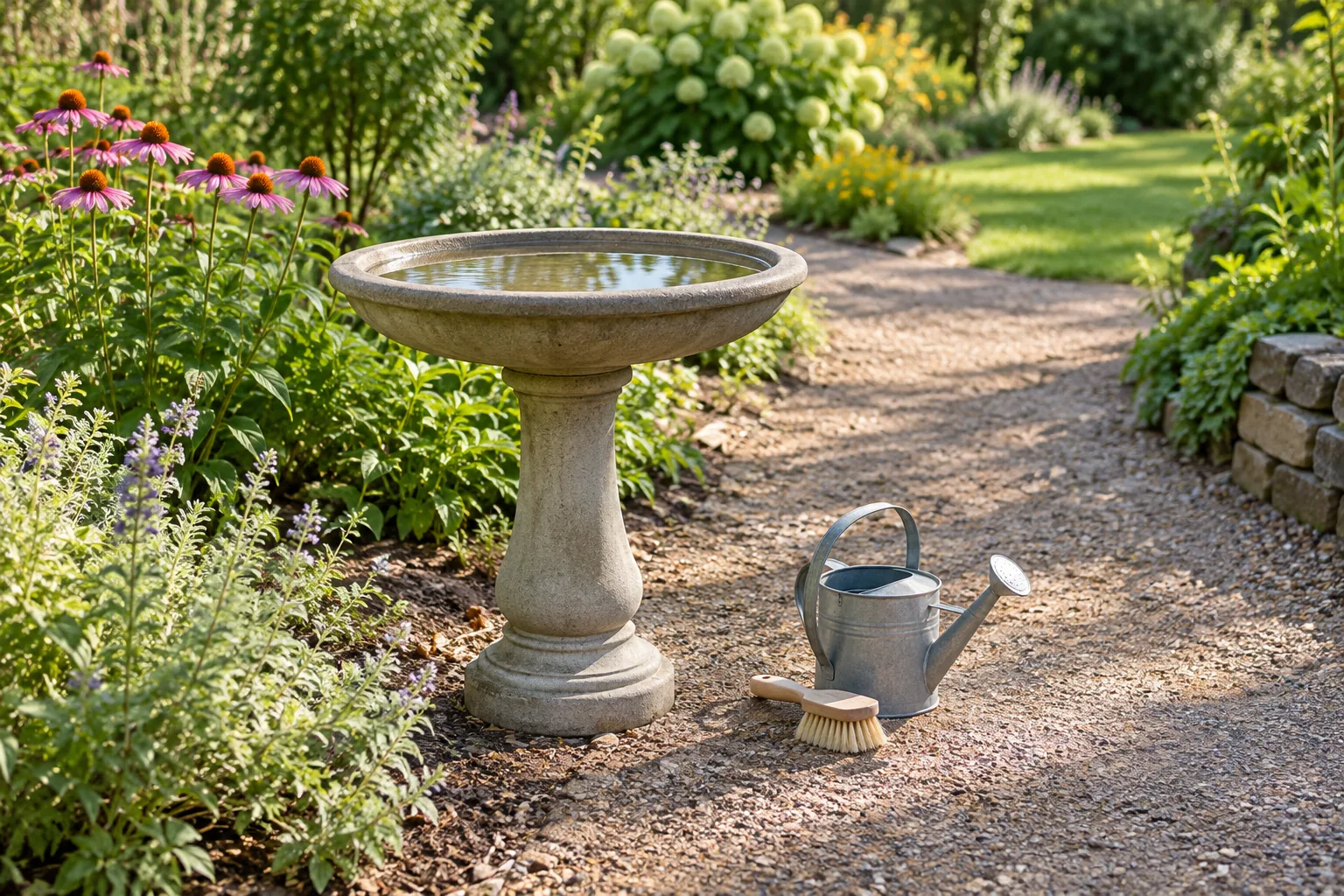
Learning how to set up a birdbath starts with choosing a place where you can replace the water and clean the bowl. The ornamental shape comes later. A bath that looks right from the kitchen window can still sit beneath falling debris, beside a cat's hiding place or beyond a comfortable route for carrying water.
This tutorial follows the installation decision for two pedestal baths: an Algreen red-marble design and a Gardman listing for a Peckish Secret Garden bath. Neither is presented as a tested winner. Their different construction and incomplete care details matter when deciding what to ask before assembling and filling either one.
Check birdbath placement before assembling the stand
Walk around the proposed position from ground level. Peckish's water guidance warns against vegetation and other places where cats could hide beside bathing birds. Audubon's cleaning article recommends a location near woody cover, but away from the area directly beneath it. Nearby shelter and a concealed approach immediately beside the bowl are different features.
Look above the proposed bowl as well. Audubon advises keeping baths away from positions directly under feeders or woody brush that can drop waste into the water. Moving a bath out from beneath a branch may address falling debris while leaving the surrounding garden intact. It does not establish that the remaining position is predator-proof.
For birdbath placement, compare the actual surroundings of two possible sites before carrying the whole stand outside. Identify the cover, overhead branches and route you would use to empty the bowl. There is no prescribed distance between the two candidate sites in this exercise, and no claim that moving between them guarantees particular visitors.
As an example, imagine a paved corner beneath a seed feeder and another open patch beside the same path. The corner is convenient to reach, but the feeder above it creates a separate debris question. The open patch needs its own assessment of stability and nearby cover. Neither wins merely because it is closer to the house.
Read the Algreen pedestal and bowl as separate parts
The Algreen 41550 red-marble birdbath listing describes a marbled bowl with a hand-painted base and rim. Its title gives a twenty-inch width and twenty-five-inch height. A dimension photograph instead labels the height twenty-four and a half inches, so confirm the supplied dimensions if a precise position depends on them.
Algreen's official red-marble variant identifies model 41550 and describes a composite made with natural stone and recycled materials. Its glazed-pottery appearance does not establish a ceramic construction. Keep that material distinction when asking about cleaning products, winter care or the handling of the separate bowl and pedestal.
The manufacturer's page says the pedestal can be filled with sand or stones. That feature does not give this article a complete assembly sequence or a wind rating. Obtain the applicable instructions before adding ballast or joining the parts. Decide how the chosen location will accommodate the supplied base using the confirmed dimensions.
The photographs show a broad bowl, but do not establish a working water depth for a particular bird. Bowl width, overall height and a decorative finish answer different questions. Ask for the bowl profile and applicable filling guidance instead of converting the twenty-inch width into a recommended depth or volume.
Keep the Gardman offer and Peckish assembly reference distinct
The Gardman 60051230X Peckish Secret Garden birdbath is described as metal, with a decorative leaf stem. Its listing gives a height of twenty-four inches and a width of fifteen-point-seven inches. A photograph labels the width sixteen inches. Keep the offered reference when requesting clarification about the supplied version.
Peckish's official Secret Garden page uses code 60051230 and lists a sixty-centimetre height. It describes connecting the base, stem and upper bath with screw joints, without tools. The shop reference has an additional X suffix. Confirm that the manufacturer's assembly information applies to the exact item supplied before using it as that item's instructions.
Once the applicable instructions are established, identify the base and the joints they describe before starting. Stop if the delivered parts or connections differ. This guide supplies no substitute fastening method, thread specification or permission to force a joint. A general claim of easy assembly cannot answer a mismatch between the instructions and the delivered bath.
The official page promotes a wide base and weather resistance. Those claims do not establish stability at every exposed site or rust-proof construction. Consider the actual surface and obtain the maker's applicable siting requirements. The bird photographs in the listing illustrate its intended use; they do not promise that birds will visit your installation.
Resolve the water source before the first fill
RSPB guidance recommends rinsing and replacing birdbath water daily. Its feeding guidance also gives a specific qualification concerning chloraminated tap water: check with the water company, and use an elevated bath or covered-butt rainwater for a ground-level arrangement under that advice. That qualification prevents a blanket instruction to use any tap supply in every arrangement.
These selected designs have pedestals. Their presence does not answer every local water-quality question, nor does it approve changes to a stand. Establish the water source and the applicable advice for your location. This tutorial does not prescribe a treatment additive, a drinking-water test or a formula for altering the supply.
Before filling, confirm how the actual bowl is meant to be emptied and handled. Neither short shop description supplies a complete cleaning or removal procedure. Keep the unresolved question attached to the relevant model; an answer about the Algreen composite bowl should not become permission to handle the Gardman metal assembly the same way.
If your filling plan includes existing hose equipment, the garden hose adapter compatibility guide explains why hose threads, pipe slip connections and quick couplings need separate identification. It does not approve those products for this bath or establish a water-quality rating. A bath purchase leaves the existing equipment's requirements intact.
Make birdbath cleaning specific to the material
For birdbath cleaning, obtain a method suitable for the actual finish as well as wildlife hygiene. Peckish's product page calls for regular cleaning of drinking equipment with a mild disinfectant, without supplying a complete dilution or contact-time instruction. That wording does not authorise an arbitrary household mixture on either selected bath.
BTO recommends regular cleaning and disinfection of birdbaths, giving weekly care as an example. Its hygiene guidance also calls for thorough rinsing and drying before refilling, with dedicated equipment kept and used outside. Read the disinfectant's instructions alongside the bath maker's restrictions before selecting a method.
Audubon's cleaning article includes a vinegar solution, while BTO discusses disinfectants diluted according to their labels. These are separate accounts. This guide does not combine them, transfer either recipe to an unverified coating or tell readers to mix cleaning substances. Material compatibility remains a question for the actual product and cleaner.
Keep the cleaning work outside food-preparation areas. RSPB's health guidance recommends gloves, separate utensils and handwashing after the job. A brush reserved for outdoor bird equipment belongs with that task. These precautions concern the work around the bath; they cannot certify that a particular chemical is suitable for its finish.
Emptying and refilling also need to be distinguishable from a completed clean. If visible dirt remains, adding fresh water has not removed it. Follow the established cleaning method rather than assuming that a full bowl is ready simply because its water level looks right from indoors.
Check the bowl again when the weather changes
Peckish's water guidance notes that hot weather can make water disappear quickly and that bathing can dirty it. Check the actual bowl rather than treating a planned daily refill as proof that usable water remains throughout a hot day. Its advice allows for more frequent changes when conditions require them.
In freezing weather, the same guidance says to remove ice and replace it with fresh water, and expressly warns against antifreeze or glycerine. That is no approval to pour hot water onto either selected finish. Obtain the bath maker's winter requirements, including any instructions to empty or store the product.
Neither selected offer establishes an included heater or pump. Adding powered equipment would introduce its own model, installation and electrical requirements. No heater fit or operating method is supplied here. A decorative metal bowl and a composite pedestal do not acquire accessory approval from a general article about keeping water available.
Work through a proposed site before committing to it
Consider a hypothetical choice between these baths for an existing garden path. The Algreen bowl's listed twenty-inch width and the Gardman listing's fifteen-point-seven-inch width would be separate measurements in that plan. If available space makes the difference important, obtain confirmed supplied dimensions before choosing. The example establishes no universal path clearance and gives neither bath an accessibility rating.
Suppose the preferred position later turns out to sit directly beneath the feeder. Reconsider the position before solving that problem with a different colour or pedestal style. If the alternative position leaves the assembly or maintenance requirements unanswered, leave the choice open. Changing products can change the material and dimensions; it cannot establish the missing information about the site.
BTO's wildlife-gardening principles place individual garden features within their surrounding landscape. Birds' use of a garden depends partly on where it is and the habitats around it. Keep expectations for a new bath within that context. A chosen position and an assembled stand do not establish which species will arrive or how often they will use the water.
Leave the bath empty when the circumstances require it
If sick or dead birds appear, seek current local wildlife advice and avoid diagnosing the cause from their appearance alone. BTO and RSPB both discuss leaving baths empty during disease concerns. Their pages give differing feeding-pause intervals, so this tutorial does not turn those separate recommendations into one universal reopening date.
RSPB also advises leaving a bath dry if it cannot be kept clean. That is a practical limit on the installation decision. An empty bowl can be the appropriate state while care or health questions remain unresolved. Refilling it should follow the relevant advice and completed preparation.
The backyard birdwatching feeder-care guide covers maintaining a feeding station and its surroundings. Food provision is a separate responsibility from this water-bowl setup. That article's feeder mechanisms and cleaning intervals should not be copied across as instructions for either bath.
Return to the installation with the specific unanswered questions resolved: the supplied model, its assembly and material-care instructions, the position and the water source. Keep those answers with the applicable bath. You can then assemble and maintain the actual product without relying on a similar photograph or another model's directions.