Lifestyle & Inspiration
Backyard birdwatching with feeders: build the care routine
Build a backyard birdwatching routine around the actual feeder, viewing location, cleaning access and practical household care responsibilities.
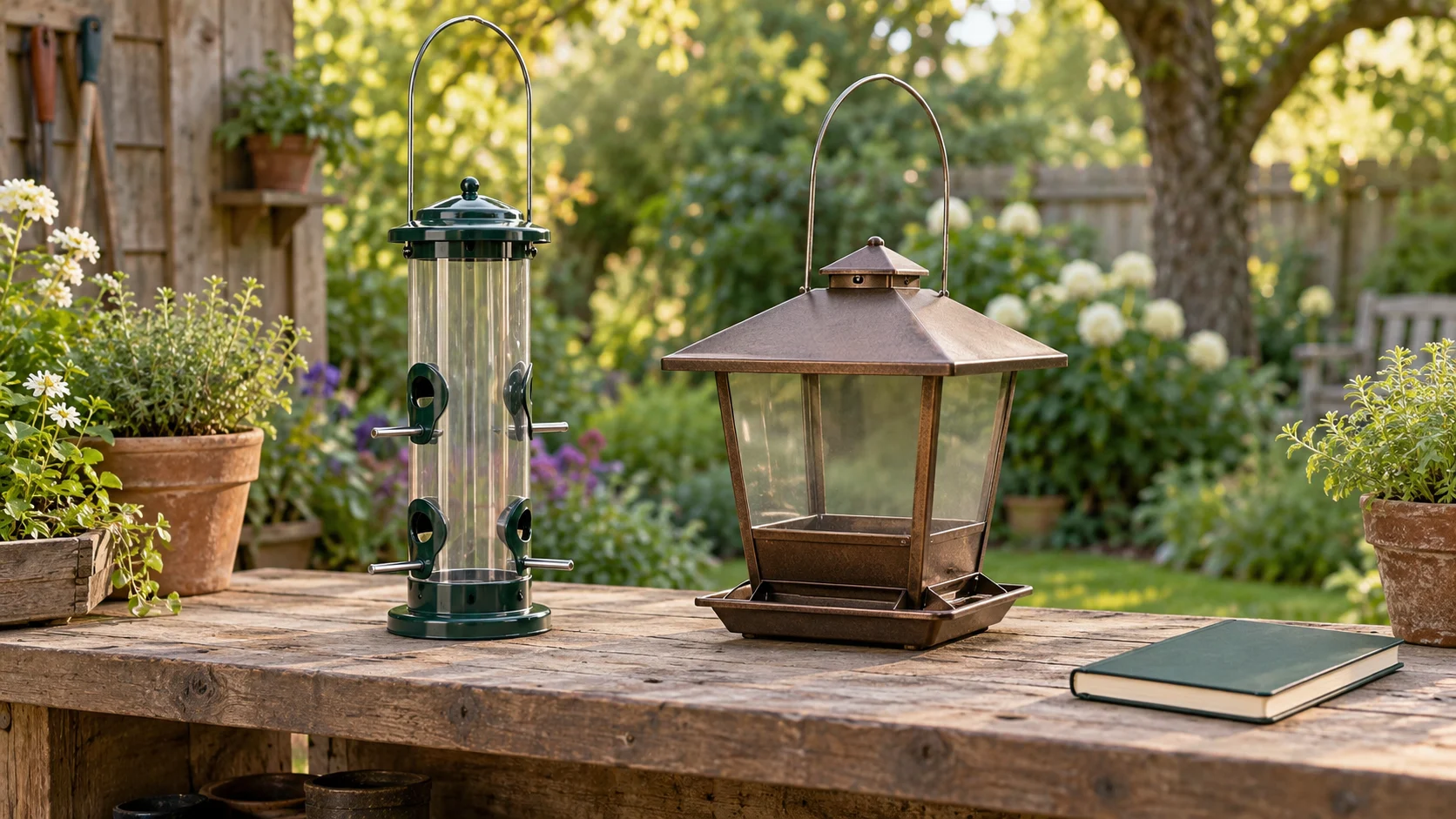
Backyard birdwatching with feeders can begin with a quiet place to sit and enough time to look after the feeding area. The useful purchase is a feeder whose location, filling and cleaning fit that routine. A large package or an attractive cover does not, by itself, establish that the arrangement will work in your yard.
The U.S. Fish and Wildlife Service describes both the enjoyment of watching birds close to home and the disease, predation and window-collision risks associated with feeding. Its account makes room for a thoughtful choice: maintain a suitable feeding station, improve natural habitat, or go where birds already gather. Choose the arrangement that suits the household.
Start with the view and the work you can sustain
Choose the place from which you would actually watch. It might be a room used each morning or an accessible outdoor seat. Look at the whole proposed feeding area from there, including the ground underneath. A view that hides the feeder's immediate surroundings may also hide the mess that needs attention.
Then consider how you would reach the feeder for ordinary care. Plan the route for removing it, carrying it to the cleaning area and returning it to service. The attractive view and the practical access need to work together. Do not choose a hard-to-reach location first and leave its maintenance to an unspecified later solution.
Begin with a routine that has a named person and a realistic place in the household calendar. Separate looking at the birds from checking the feeding area. Watching from a window may be convenient, while cleaning and removing discarded food still require a visit to the equipment.
If that work does not fit your circumstances, retain the birdwatching idea and change the arrangement. FWS discusses native plants as an alternative way to provide food and habitat. It also points readers toward wildlife refuges where people can observe birds without operating their own backyard station.
Read the actual Brome Squirrel Solution150 offer
The Brome Squirrel Solution150 feeder offer identifies a green cylindrical feeder with four perches and a removable seed funnel. Its native description names metal and plastic, tool-free disassembly for cleaning, and use with black-oil sunflower seed or seed blends. These are the selected offer's statements.
Brome's model brochure describes a shroud that closes access when a squirrel's weight acts on the feeder. It calls for at least eighteen inches, stated alongside 47 centimetres, of surrounding clearance so a squirrel cannot reach from a nearby foothold without loading it. Its disclaimer excludes juvenile red/Douglas squirrels and chipmunks from the deterrence claim.
Read the placement requirement and stated exceptions alongside the mechanism account. The product's squirrel-proof marketing is not a promise that every animal will stay out of the yard. Decide whether the actual location can accommodate the documented arrangement before treating the feature as useful there.
Keep the WoodLink hopper account within its actual description
The WoodLink NA32321TV hopper-style feeder offer has actual catalog brand WoodLink. Its short description calls it a durable metal and bronze feeder, already assembled and ready to use, with easy filling and cleaning. It gives a different offered format from the cylindrical Brome account.
Use the exact model reference when seeking the instructions or details needed for your location. The selected short description does not establish its mounting dimensions or a cleaning method. Obtain applicable information before deciding that the assembled product can go straight into the place you have chosen.
For either offer, compare the whole care routine rather than treating a convenience phrase as a completed task. “Easy to clean” describes the seller's presentation. The practical question is how you will reach, empty, clean and return the actual feeder while keeping its surroundings maintained.
Make the bird feeder cleaning routine part of the hobby
For a bird feeder cleaning routine, FWS relays Cornell Lab of Ornithology guidance to clean a feeder at least every two weeks. Keep that general interval with the applicable maker's care instructions. It is a recurring responsibility, not an action completed permanently by washing a new item before its first use.
Choose a reminder that leads to the actual work. Keep the feeder's instructions available and record when care was completed. If the job could not be done, retain that as an open task rather than marking the reminder finished because someone looked at it.
Use a cleaning method appropriate to the actual product. This guide does not assign dishwasher compatibility, a chemical dilution or a disassembly sequence to the sparse WoodLink account. The maker's applicable instructions should establish the permitted method and the preparation needed before returning the unit to use.
Care also extends to the ground. FWS advises sweeping up old, mouldy and discarded seed below feeders. That helps address disease risk and discourages rodents, raccoons and predators. A tidy-looking container above a growing layer of discarded food does not represent the complete feeding area.
Look at that area as part of each ordinary visit to the feeder. Note whether discarded food has accumulated and whether the access route still lets you do the necessary work. Keep filling and cleanup on the same household plan so that replenishing food does not routinely happen while the other task is deferred.
Plan backyard feeder placement around the actual surroundings
For backyard feeder placement, FWS recommends locating a feeder within three feet of reflective windows or addressing the windows with decals or screening. Its account links the collision guidance to Cornell. Treat the whole window and feeding arrangement as the question; no feeder in this article is presented as collision-proof.
Look for the actual glazing near the proposed site instead of relying only on the view from your seat. Bring unresolved placement questions to applicable bird-collision guidance. A convenient place for the observer and a suitable arrangement for the birds both need attention before a feeder is installed.
FWS also says to reconsider having a feeder if cats visit the yard. That is a reason to assess what actually happens around the proposed station. The label on a feeder cannot answer which other animals move through a particular property.
Keep the equipment's own placement requirements alongside those broader surroundings. A feeder mechanism, its support and its neighbouring features form an arrangement. Resolve the applicable installation information before using a branch, pole or other support simply because it appears convenient from the window.
Watch what happens without promising particular visitors
Make observation the enjoyable part of the routine. Keep a small notebook near the place you sit, and write down what you actually saw. A brief description of colour, size, movement or the part of the yard used is more useful than entering a species name solely because it appears in an advertisement.
You can leave an identification uncertain. Keeping the observation distinct from the name lets you return to it with an appropriate identification resource. There is no need to turn every visit into a completed checklist or to claim that the feeder attracted a bird you did not observe.
Note which parts of the arrangement required attention as well. If the feeder was out of service for cleaning, record that alongside the observation period. This keeps an ordinary household note honest without pretending that it is a controlled experiment about bird abundance or feeder performance.
If you already use binoculars, the binocular accessory-fit guide keeps lanyards, lens covers and storage bags tied to the actual equipment. It concerns those accessories; it does not establish a feeder's attractiveness or supply an identification of the bird in your yard.
Respond when the feeding area needs a change
FWS advises watching the birds at the feeder and removing the feeder if any look sickly, until those birds disperse. Keep that possibility in the household plan. Feeding is an activity you can pause when the observed circumstances call for it.
Describe the observation rather than trying to diagnose a disease from this buying guide. The article supplies no treatment or handling procedure for wild birds. Its purpose is to keep a feeding decision responsive to the actual condition of the station and its visitors.
A maintenance difficulty is also useful information about the arrangement. If the selected position repeatedly prevents the planned care, revisit that choice. Change the plan around the work that needs to be done instead of treating a filled feeder as evidence that the whole routine is functioning.
The weather-station readings guide distinguishes ranges, observations, totals and forecasts. Keep the same distinction in a birdwatching note: record the conditions you actually observed without converting a forecast or a sensor range into evidence of what happened during the session.
Make care understandable when someone else takes over
If another household member will look after the station, leave the applicable product instructions with the equipment rather than expecting them to reconstruct the routine from the view outside. Identify the feeder, the food intended for it, the last completed cleaning and the place where discarded material needs attention. These are useful details for an ordinary handover, without requiring the next person to become an expert in every visiting bird.
Show which tasks are open before you leave the responsibility with someone else. A full container may conceal an overdue cleanup, while an empty one may be deliberately out of service. Keep those states distinguishable in the note. Let the person taking over know where the original instructions and any supplier answers can be found, especially if a product question remains unresolved.
When you return to the routine, check what was actually done and what still needs attention. Retain the last cleaning date instead of replacing it with the date you resumed watching. That gives the next care decision a useful starting point. It also keeps the observation notebook focused on the birds seen, with equipment care recorded as a separate household task.
Leave room for habitat and other ways to watch
FWS describes a USGS wildlife biologist's yard planted with seed-producing native plants, fruiting plants, insect habitat and nesting cover. The example broadens the idea of a bird-friendly space beyond a filled container. It does not establish which plants suit every property.
Consider what your own site can support before copying a plant list from another region. You can keep a habitat question separate from the feeder purchase and obtain locally appropriate planting information. The feeder need not carry the entire plan for making the yard a place where you enjoy observing wildlife.
FWS also describes the bird-viewing area behind Santa Ana National Wildlife Refuge's visitor centre in Texas. Its account includes indoor viewing and seasonal feeding alongside native plants. That is an example of another way people can enjoy birds, including visitors who cannot walk far; it is not a current opening-hours or travel-booking statement.
Choose the arrangement you can maintain and enjoy. Keep the actual product reference, applicable care information and the observation place together. Keep the instructions and last cleaning date where the person doing the next care task can find them.