Crypto Commerce
Read a hose size comparison beyond length alone
A useful hose size comparison separates the distance along a hose from the measurements across it. Length, inside diameter, and outside diameter answer different questions. When one listing supplies all three and another supplies only length, you can compare their advertised lengths, but you cannot complete the missing diameter information by borrowing it from the better-documented product.
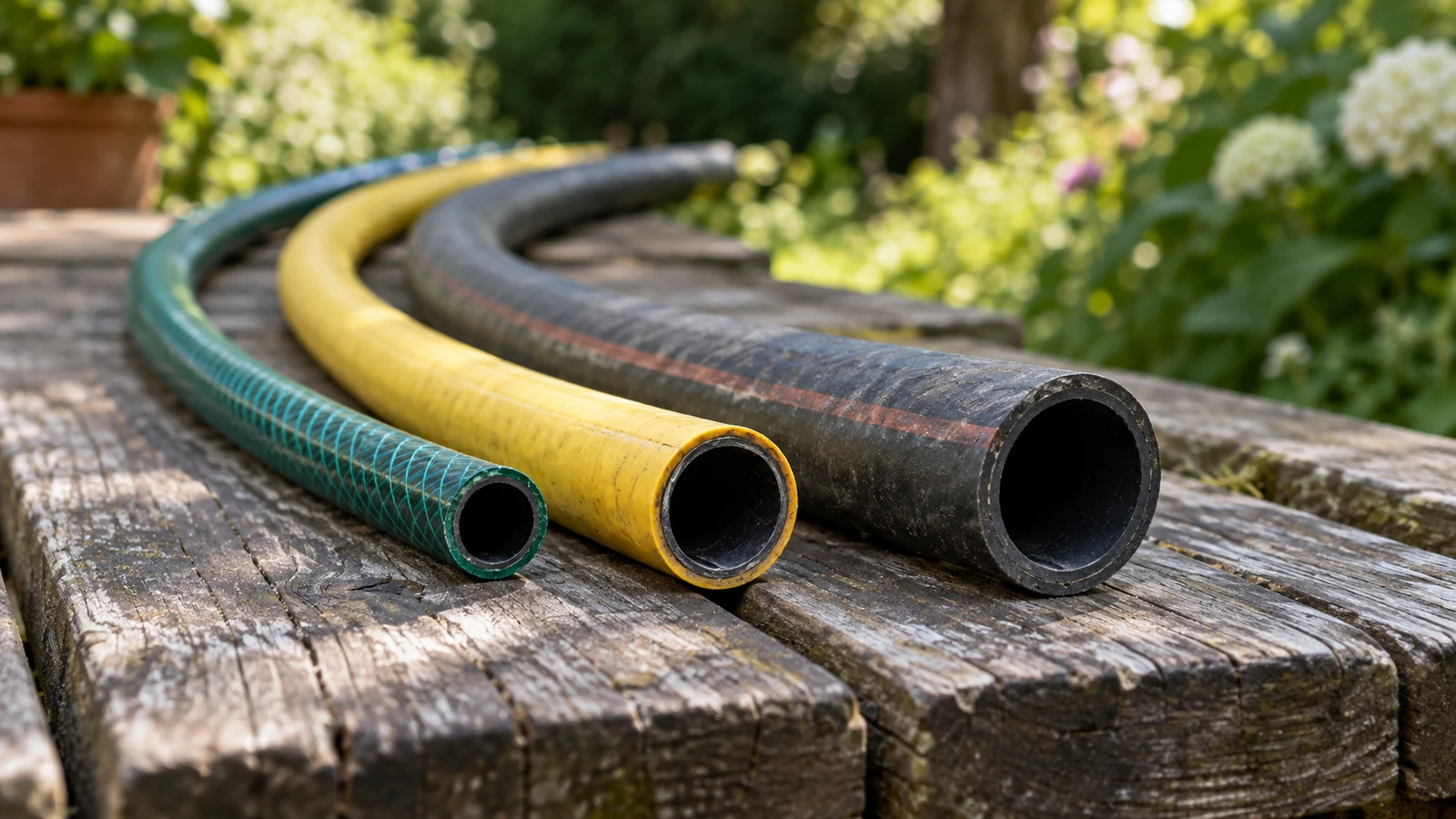
A useful hose size comparison separates the distance along a hose from the measurements across it. Length, inside diameter, and outside diameter answer different questions. When one listing supplies all three and another supplies only length, you can compare their advertised lengths, but you cannot complete the missing diameter information by borrowing it from the better-documented product.
Start by writing down what you want the hose to do and the reach the task requires. Keep those notes separate: reaching the intended location does not establish that a hose has suitable connections or is documented for the intended use. This distinction lets you read a long product title without treating every number as an answer to the same question.
The two Republeq listings considered here illustrate that difference. The supplied FOR water discharge hose description gives a 25 ft length, a 1 1/2 in inside diameter, and a 1 3/4 in outside diameter. The supplied FOR garden hose description gives a 100 ft length. These are examples of differently documented listings, not recommendations to substitute one hose for the other.
Before opening either description, make a short task note in your own words. Name the intended use, identify where the hose would need to reach, and record the required distance if you have established it. If you have only estimated the reach, label it as an estimate. An advertised length should not make an uncertain requirement look settled.
Read The Discharge-Hose Measurements Before Comparing A 100 Ft Garden Hose
The discharge-hose product provides the more detailed starting point for this hose size comparison. Its supplied listing identifies three measurements: hose length of 25 ft, inside diameter of 1 1/2 in, and outside diameter of 1 3/4 in. Preserve the labels when copying those figures. A note that says only “1 1/2 by 25” loses both the units and the meaning of the first number.
Length describes the dimension along the hose. In this listing, 25 ft belongs in a length field, where you can compare it with your required reach. It does not describe the width of the opening, the exterior width of the hose body, or the dimensions of an end connection. Keep the length answer confined to the length question.
Inside diameter, abbreviated ID, describes the width across the internal opening. For the discharge hose, the stated ID is 1 1/2 in. When reading the specification, mentally attach “inside” to that value each time. Dropping the label can turn a clear body measurement into an ambiguous reference to “hose size,” especially when you later ask someone about connections.
Outside diameter, abbreviated OD, describes the width across the outside of the hose body. The discharge listing states 1 3/4 in OD. This number is not a second advertised option for the inside diameter. Both values describe the same listed hose, but they refer to different boundaries: the internal opening and the exterior surface.
A simple reading aid is to imagine looking at a hose in cross-section. One measurement runs across the opening; the other runs across the exterior. The listed length runs along a different direction entirely. This mental picture helps interpret the labels without requiring a calculation or suggesting anything about the product's performance.
End connections need their own description. Although the supplied discharge-hose description uses connection wording alongside its ID figure, that wording does not identify exact end fittings, thread standards, or what is supplied at each end. Record the stated body dimensions, then leave the end-connection question open. Do not relabel the inside diameter as a confirmed fitting specification.
What The 100 Ft Garden Hose Description Leaves Unanswered
The supplied 100 ft garden hose description establishes its garden-hose identity and advertised length. Record those details independently of the discharge-hose entry. The supplied information does not establish an inside diameter, outside diameter, exact end connections, material, pressure rating, or included accessories. None of those blanks should receive a value from the other listing.
The product name can be useful without answering every specification question. Here, “garden hose” tells you how the item is described, while “100 ft” supplies its length. Neither phrase supplies the missing diameter figures. If your task requires a particular bore or an explicitly identified connection, you still need information tied to this exact product.
A photograph should not become a substitute for those missing specifications. Even if an end looks familiar, do not turn that impression into a recorded thread type or a compatibility statement. Use the image, if available, to formulate a question about what is shown and supplied. Keep the answer unresolved until the product information addresses it.
Missing information also differs from a negative specification. Writing “end connections not established by the supplied description” does not mean the hose has no end connections. Likewise, an unstated diameter is unknown, not zero and not necessarily unsuitable. This distinction keeps your notes accurate without dismissing a product solely because its short description omits a detail.
Compare The 100 Ft Garden Hose Only Where Measurements Match
Place the two advertised lengths beside each other: 25 ft for the discharge hose and 100 ft for the garden hose. Both entries describe length in feet, so they answer the same kind of measurement question. You can then compare each stated length with your own reach requirement without treating the longer listing as the better choice for every task.
The diameter comparison stops earlier. You have an inside and an outside diameter for the discharge hose, but neither is established for the garden hose. There is no supported comparison of their bores or exterior widths. A blank beside the garden hose is the correct result of reading these descriptions, even if you would prefer a complete comparison.
Units alone do not make two figures comparable. The discharge hose's ID and OD are both expressed in inches, but they measure different boundaries. If another description gives a diameter without saying which one, ask what the number represents before placing it beside either figure. Matching labels matters as much as matching units.
For example, imagine preparing a question that says, “Does the longer hose have the same diameter?” That leaves the recipient to guess whether you mean the opening, the exterior, or an end fitting. A more precise question names the missing measurement: “What is the inside diameter of this garden hose?” Ask separately about the outside diameter when that dimension matters to your task.
More detailed documentation does not, by itself, make the discharge hose more suitable. Nor does the garden hose's advertised length establish that it can replace the discharge hose. The descriptions provide different amounts of information about different hose types. Your comparison should preserve those differences rather than turn them into a ranking unsupported by the supplied details.
Keep performance questions outside the dimension comparison. These figures do not establish flow, pressure loss, bend limits, or operating conditions for either proposed use. If your task depends on such information, request the applicable documentation. There is no need to calculate an answer from the available dimensions when the necessary product specifications have not been established.
Ask About The 100 Ft Garden Hose And Discharge Hose Separately
Prepare one inquiry for each listing so that a reply cannot accidentally apply to the wrong hose. Identify the exact product and describe your intended task. Then name the unresolved point. For the garden hose, that may include both body diameters; for the discharge hose, those dimensions are already stated, so the inquiry can concentrate on connections and documented use.
A focused inquiry could read: “I am considering this hose for the task described below. Which end connections, if any, are supplied at each end? Please identify their exact specifications and the product documentation that establishes suitability for this task.” For the garden hose, add a request for its inside and outside diameters if you need those measurements.
Ask for information about both ends rather than assuming they are identical. Do not propose an adapter as a way to close the information gap. At this stage, the useful outcome is a clear description of what the listing includes and what its documentation supports. Choosing connection hardware would require information this comparison does not provide.
When an answer arrives, check which question it actually resolves. A response confirming the advertised length leaves a diameter question unanswered. A reply repeating “garden hose” leaves the exact end specifications open. You can acknowledge the information received while asking for the remaining detail; there is no reason to interpret a partial answer as a complete specification.
Keep Hose Questions Separate From High-Value Crypto Purchases
Finish your hose size comparison with an annotated entry for each product. Keep the supplied specifications alongside the questions still open, so neither the detailed discharge-hose title nor the longer garden-hose length dominates the decision. The following comparison records only what these descriptions establish and identifies where another answer is needed.
- FOR water discharge hose: the supplied listing states 25 ft length, 1 1/2 in inside diameter, and 1 3/4 in outside diameter. Exact end connections and suitability for your particular task remain to be established. The body dimensions do not settle those questions.
- FOR garden hose: the supplied listing identifies a garden hose with a 100 ft length. Inside diameter, outside diameter, exact end connections, and operating limits remain unresolved in the supplied information. Do not carry any discharge-hose specification into this entry.
- Your requirement: record the intended task and required reach separately from both products. Note whether reach is measured or estimated, and identify which missing specifications would prevent you from making an informed selection.
The annotations should tell you what to do next. If reach is still an estimate, establish the distance you need to evaluate. If the unanswered point is an end specification, request that specification for the exact listing. If intended-use documentation is missing, keep suitability undecided rather than allowing an adequate advertised length to stand in for it.
A separate spending decision may arise if the amount would be personally significant. The guide to high-value crypto purchases addresses that broader decision. It does not supply missing hose dimensions or connection details. Consider whether unresolved product questions justify postponing the purchase, without assuming either hose belongs in a particular price category.
Return to the product descriptions with your annotated comparison and ask only for the details you still need. A useful reply should let you replace a specific unknown with a product-specific answer. Until then, retain the distinction between a listed length, a known body diameter, and an unconfirmed end connection. Those separate entries are what make the comparison usable.