Outdoors & Mobility
Holiday ring toss stations: keep each game result separate
Holiday ring toss stations can share an invitation while keeping game-specific results separate from optional participation at a changing-arrival visit.
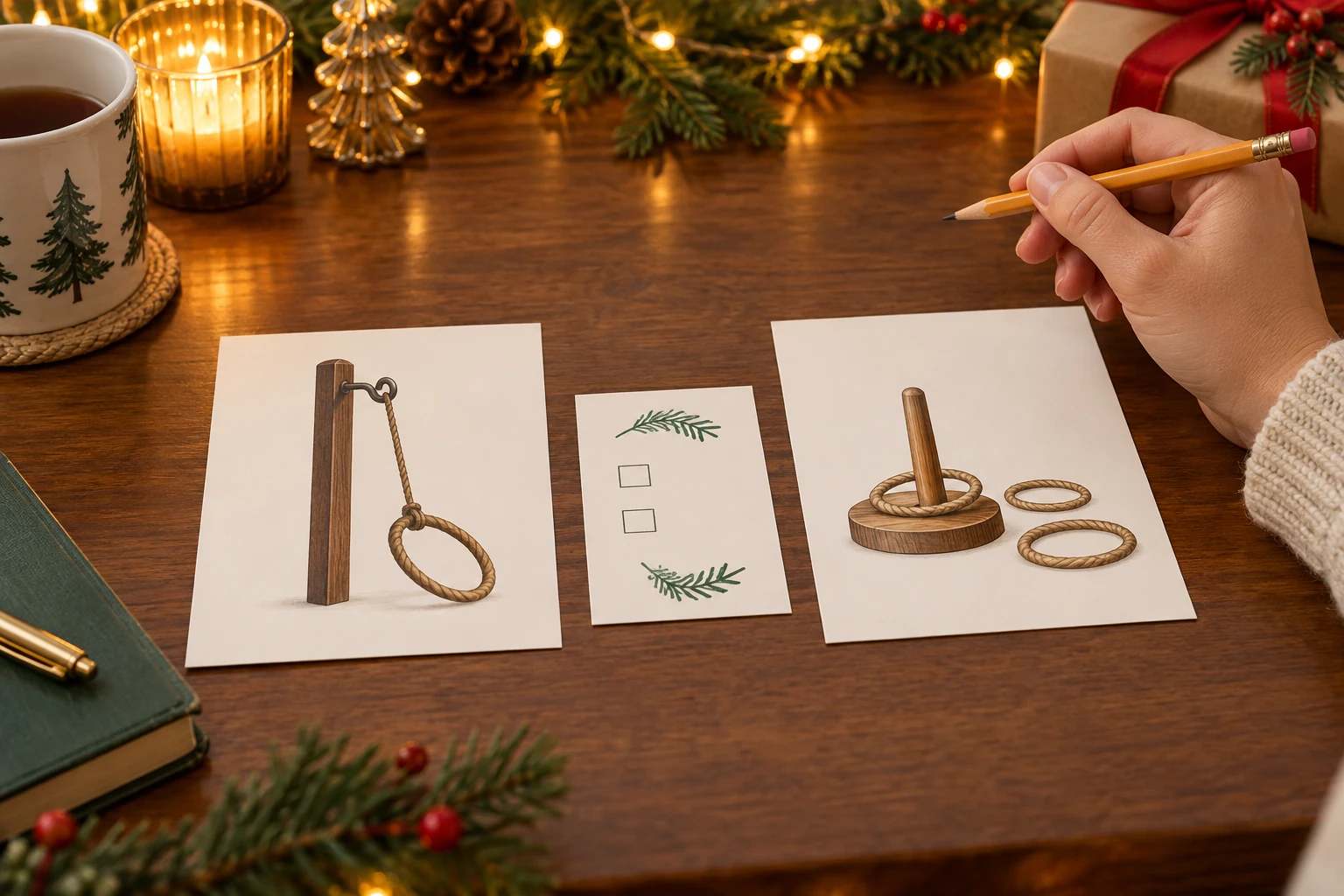
Two activities can share one invitation
Holiday ring toss stations can give an open house a shared activity without turning the whole visit into one competition. The useful distinction is between a result recorded for a particular game and a note that someone chose to visit a station. Keep those records separate. A guest who tries both stations has participated in two activities; that alone does not establish a better combined performance than someone who enjoyed one. This guide offers an original hosting plan for an adult holiday visit with changing arrival times, not a universal ring-toss ruleset.
Begin with the actual games already prepared by the responsible person under their applicable instructions. This article supplies no mounting, assembly, clearance or throwing advice. Each station needs its own identified game and rules before anyone plays. The host's task here is the social arrangement around those games: how guests understand the invitation, where each local result is recorded, and what happens when someone arrives during a game. Those choices can remain simple while preserving the differences between the equipment and rules at the two stations.
Keep the equipment references specific
The UNC ring toss game offer identifies an All American Tailgate product with a college-themed name. Its sole gallery shows a decorated target board, hook and tethered ring. That is a complete ring-target arrangement, not a source of universal scoring or mounting instructions. The short description supplies no detailed rules for this hosting plan. Obtain the applicable information for the actual game you will use; a holiday decoration or familiar logo cannot answer those practical questions.
The Treewant ring toss offer describes a loose-ring target, twenty rings and a carrying bag. Its gallery shows a crossed base with pegs and separate rope and plastic rings. The description and images also make safety, weather, educational and developmental claims that this article does not independently verify. Treat the complete apparatus as a second game reference, without transferring its advertised age ranges, setup promises or performance claims into an approval for your gathering. Follow the actual equipment instructions and suitability requirements for the people and place involved.
Give each station a distinct identity
Call the stations A and B in your planning notes, then add the actual game name beside each letter. The letter is merely a short reference for the host. It should not replace the game's identity or suggest that the stations share a scoring system. Place a separate game record with each station's responsible person. That record can identify the current players and the outcome under that game's rules. A visitor should not need to decode a combined leaderboard before understanding which activity they have been invited to try.
For the original plan below, keep the optional station-visit card separate from both game records. It has two spaces, one for each station, and records only a guest's chosen participation. It is not a ticket that must be completed before dinner or a test of skill. A guest may leave one space empty and still have taken part in the visit. Explain that meaning at the beginning so a harmless-looking card does not quietly become a requirement that someone feels obliged to finish.
Plan for arrivals around the meal
A holiday open house may include someone who comes before food is served and another person who arrives after it. Ask interested guests which part of the visit they expect to attend. Treat their answers as planning information, not a promise that everyone will remain until an activity finishes. Choose a point when the host will offer the two stations, then let people know whether the invitation remains open later. Keep the meal and the games understandable without claiming that every household needs the same timetable.
If a guest arrives while a local game is underway, introduce the available choices plainly. They can watch, wait for an appropriate next session, or visit the other station if it is available. Do not insert them into an existing game merely to fill their visit card. The current players have an identified game in progress. A later arrival can be welcomed without changing its meaning halfway through. This is a hosting choice for the example, separate from whatever the actual game's rules say about participation.
A fictional holiday visit
Imagine Mira hosts an adult holiday lunch and offers two properly prepared games afterward. This is a fictional scene, not a trial of either linked product. Arun arrives early, Tess comes near the meal, and Ivo plans only a short afternoon visit. Mira explains that the two station games remain independent. Anyone who wants to try both can mark the optional card, while someone who enjoys a single game can stop there. There is no prize for collecting marks and no overall winner assembled from the two local scores.
Arun and Tess choose the first station while Ivo watches the second. The responsible person at the first station identifies the actual game and its rules before the session begins. Mira records that a local game is in progress, leaving its outcome blank. At the other station, Ivo asks whether there will be another opportunity later. The host can answer that scheduling question without interpreting his interest as a commitment to play immediately. A station visit remains a choice, rather than a place on a roster someone else has filled for him.
Keep a local result local
When a game finishes, record the result in the manner appropriate to that game. Keep the station identity and players with the entry. The host does not need to convert the result into a common unit for the whole gathering. If one game's score has a different meaning from another's, adding the raw numbers would introduce a new comparison that the event has not established. Leave the two records separate unless you have deliberately chosen a different, clearly explained event format with suitable rules of its own.
In the fictional visit, Mira says that Arun and Tess completed their local game. Their result belongs on that station's record. If they later try the second activity, its result gets a separate entry there. A mark on the optional card means only what the host said it means: they chose to take part at that station. It does not erase a loss, create a win, measure improvement or allow the host to compare them with a guest who selected another activity. The card tracks participation by agreement, without pretending to be a performance scale.
An unfinished game stays unfinished
Suppose Ivo begins a local game but needs to leave before its ordinary ending. Ask the involved players and responsible person to describe its state under the actual rules and the arrangement they agreed. Do not invent a completed result for the host's record. The example can simply leave that local entry unfinished. A guest's departure may change the afternoon schedule without changing the facts of what occurred. There is no need to award an overall holiday title just to close every box on a sheet.
If the remaining guests want another session, identify it as a new local game with its own players. Keep the unfinished entry available so it does not later get mistaken for the new result. This is not a recommendation about how a particular manufacturer handles interrupted play. It is an instruction for the fictional host's notes: represent the session that actually occurred and the separate session the guests later chose. Where the actual game supplies an applicable rule, consult it rather than letting a convenient recordkeeping label replace it.
Use the neighboring guides for their own questions
The ring swing game night guide owns a smaller gathering centered on one ring-and-hook activity, including an unscored opening and game-specific scoring examples. Its social rotation is a different plan from this two-station open house. You can choose that simpler occasion if it better suits your guests. Do not borrow its maker-specific points or shared-piece movement for an unrelated target merely because both activities contain a ring. Identify the particular game whose rules govern each local result.
The ring toss game types guide explains loose rings and a tethered arrangement as different apparatus. It does not make two station scores comparable or settle the host's invitation. Here, the equipment distinction is already recognized; the remaining decision is how two independent games can sit within one holiday visit. Keep the educational apparatus question with that guide and the open-house participation question with this plan. Neither one certifies a location, installation or outcome for the other.
Let guests choose their second activity
After one station, ask whether a guest wants to try the other. Avoid automatically escorting them there because a space on their card remains empty. They may want to help with lunch, talk with someone they have not seen recently, or leave when they planned. The optional card should make those choices easier to communicate. If the host finds themself insisting on full completion, the event has changed from the invitation originally described. Pause and explain the new proposal rather than pretending nothing has changed.
Give people a way to decline a record as well as an activity. The hosting plan does not require a permanent attendance archive, public scoreboard or later recap. A guest can join a local game without wanting a card to keep. Ask what they prefer and keep only the information needed for the arrangement you are actually running. This article does not create a photography or sharing policy. If you want a separate recap, discuss that separately instead of treating participation in a game as agreement to every later use of the occasion.
Keep any purchase separate from participation
If a merchant's actual checkout offers USDT, review the current transaction and order terms directly before choosing a payment method. This article does not promise that either linked game currently offers that option. A payment label cannot establish that equipment is suitable for your guests or that both stations will be ready for a particular holiday. In the fictional plan, Mira keeps three questions separate: which games she has chosen, whether the actual arrangements meet their requirements, and whether she wants to make a purchase under the terms shown. A completed payment form answers none of the missing equipment questions. Retain the exact product selection with any order confirmation, and bring a changed variant back to the planning discussion before assuming it fills the same role. Read actual cancellation, delivery, return and refund terms rather than inferring them from the season or the payment asset. If a prior transaction attempt is uncertain, reconcile it through the responsible service before considering a second attempt. A host's activity sheet cannot prove whether money moved or an order was accepted. Never provide wallet secrets or recovery phrases in an equipment enquiry. If another person orders supplies, tell them which item is selected and which questions remain open; do not let a shopping suggestion become an accidental instruction to pay immediately. This paragraph supplies no wallet address, transfer sequence, fee estimate, exchange-rate forecast, asset recommendation or promise of financial recourse. It preserves a practical boundary: shopping and payment need their own direct evidence, while joining a holiday activity remains a separate guest choice. Nobody needs to buy equipment or complete a transaction merely to use the original two-station planning idea.
Tell the next host what remains available
If someone else takes over hosting while you clear the table, give a short handoff. Identify which local games are in progress, which have finished, and which guests have asked about a later session. Explain the limited meaning of the optional card. The next host should not need to guess whether a mark means a win or a visit. They can continue the invitation you actually offered, while consulting each game's own rules for anything that concerns play. A clear handoff preserves the event's meaning without requiring a long briefing.
Before closing the stations, tell the people involved what is ending. Ask about any active local game and record its actual state. Leave equipment handling and storage to the responsible person following its instructions. The hosting notes do not supply a packing method, a string adjustment or an approval to move a mounted target. You can finish the social plan honestly even when one station was more popular, one guest tried neither, or a final game remained unfinished. Those are possible outcomes of an optional visit, not defects to hide with a manufactured combined result.
End with the invitation you offered
Holiday ring toss stations work as this particular hosting idea when the two local games remain identifiable and the optional participation card keeps its modest meaning. Keep each result with its own rules, let later arrivals choose an available activity, and leave incomplete sessions truthful. The afternoon can include a meal, two independent challenges and guests who participate differently. Your final record needs to describe that occasion clearly; it does not need to turn unlike scores into one winner or an open invitation into a checklist everyone must complete.