Lifestyle & Inspiration
A ring swing game night with a few friends
Plan a ring swing evening with friends, an unscored beginning and clear game-specific scoring. Make room for turns, spectators and a relaxed final match.
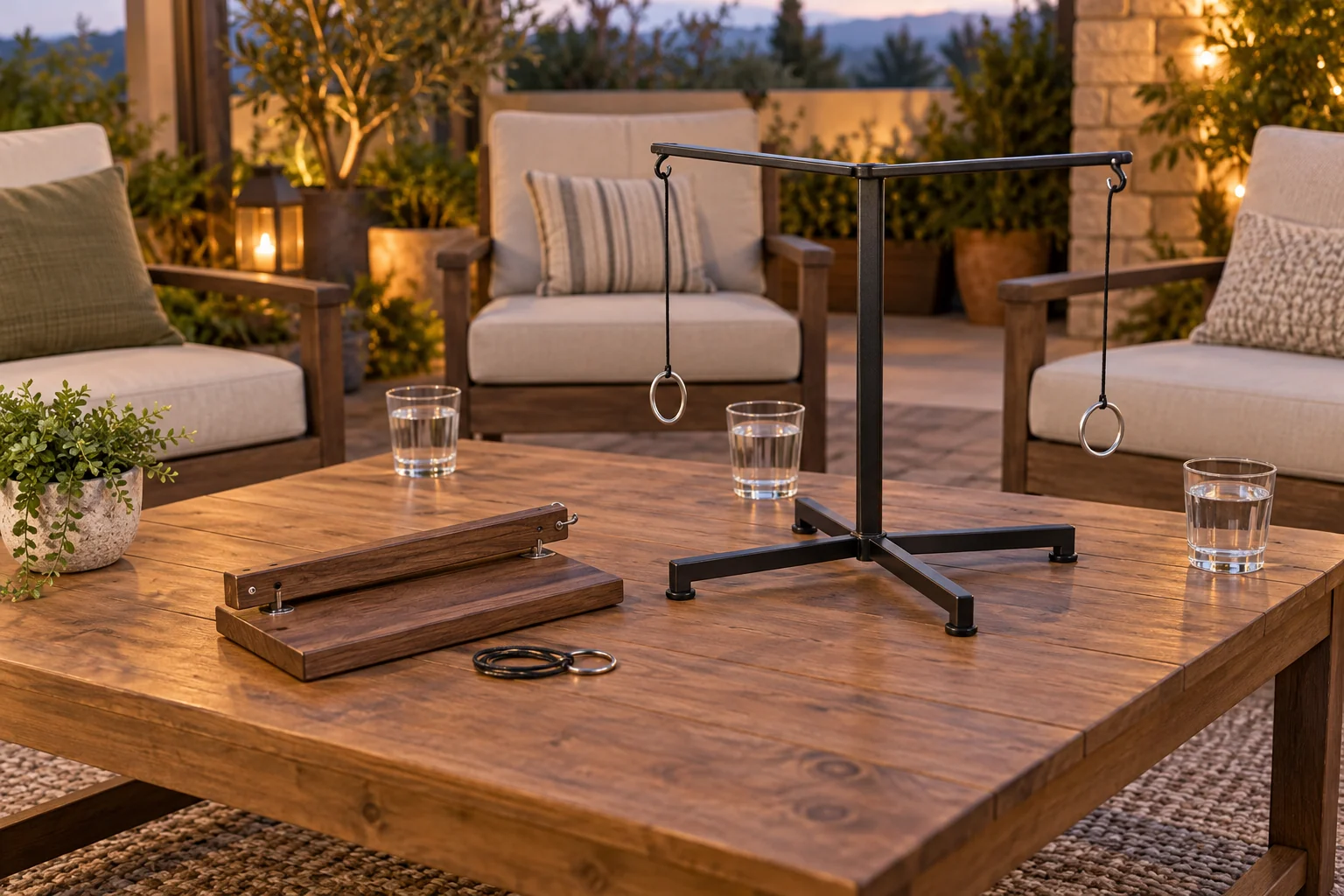
A ring swing game night can begin with a few friends gathered around one small challenge: can you land the ring on the hook? Give people a chance to try before asking them to win. Someone may enjoy chasing a score, while another person wants a turn between conversations. Decide how much competition the group wants as you play.
The invitation here is for an adult gathering with appropriate equipment already set up according to its own instructions. There is no wall installation, string adjustment or mounting advice in this article. The two linked games illustrate different arrangements and scoring systems. The fictional evening below uses generic equipment and imagined players, without reporting a trial of either product.
Invite people to play something small together
Ask a few friends whether they would enjoy trying a ring-and-hook game during a visit. Describe the activity plainly, especially if the name means nothing to them. They will be swinging a ring toward a hook and watching what happens. Say whether you are imagining a brief try during a visit or an evening centered on playing.
Keep the gathering comfortable for someone who wants to watch first. Put the game where the intended players can use it under its applicable instructions, with a place for others to sit outside the play area. The person watching can see which event counts before deciding whether to take a turn. They can also remain a spectator if that suits their evening.
Choose a moment when the game can hold people's attention. If dinner is about to be served, begin after the plates have been cleared instead of interrupting the first attempts. If someone has only a short visit, offer them an early turn. The equipment can be one part of the gathering without requiring everyone to commit the whole evening.
Make the first ring swing round unscored
For a first ring swing round, propose a short unscored beginning. This is a suggested arrangement for your gathering, not a manufacturer rule. Let each interested person take a turn with the actual equipment under its instructions. Leave the score alone while people identify the target and experience a swing. You can begin a match when the players say they are ready.
Watch the ring's actual result. Did it catch the hook, or did it pass without catching? That gives everyone a concrete event to discuss. If someone asks what counted, look at the applicable game rules together before scoring the next attempt. An enthusiastic shout from a friend should not become the only definition of a point.
Craggy Games' written play guidance describes a gentle release to the side in a smooth arc. When the ring catches, move the peg one space toward the opponent; pushing the piece off their end wins. Keep that guidance with the applicable HOOKS! game. It does not prescribe the release or scorekeeping for every other ring game.
Ask before offering advice. A player may want another attempt before hearing a running commentary about their hand or the ring. Someone else may welcome a reminder of the maker's instructions. Let them choose, and avoid promising that a particular suggestion will produce a catch. The result of the next swing remains to be seen.
Keep casual ring swing scoring with the chosen game
The GoSports Hook21 folding-arm game in Brown is a wall-style ring swing game. Its description names a solid wood board and built-in score trackers. GoSports describes a catch as a point and the first player to 21 as the winner. Use the full rules supplied with the actual game for the details of play.
Its folding arm offers a stated storage feature, and the description places outdoor use in a covered location. Those are product details to consider if you are choosing a place for an existing or future game. Folding does not turn a wall-style board into a freestanding tabletop unit. Set up the actual equipment through its own instructions before the social occasion begins.
The Craggy Games HOOKS! XPLR portable metal game is described as head-to-head equipment with collapsible arms and legs, a tieless string adjuster and a foldable Shot Ladder scoreboard. The stated Other color does not identify a particular current maker color. The retail wording supplies no observed durability result or measured learning benefit here.
For casual ring swing scoring, choose the system belonging to the game you are using. A race to 21 and a shared piece moving toward an opponent's end produce different scorekeeping tasks. Do not announce one system while moving a piece according to the other. If you prefer an invented house challenge, explain it as your own variation before anyone starts.
An imagined evening with four friends
Imagine Lina invites Dev, Anika and Owen for an early evening visit. This is an original fictional scene with generic, appropriately prepared equipment. Lina expects to play a match immediately, but Dev asks if he can try without a score first. Anika wants to see what a successful catch looks like. Owen takes a seat where he can watch without standing in the play area.
They agree to leave the score untouched during their opening turns. Lina goes first, then gives Dev room to try without explaining each movement. His ring misses. He asks to try again before hearing advice. When he is ready for a reminder, they return to the written guidance for their actual game instead of inventing a correction about his grip.
Anika takes her turn and watches the ring arrive at the target. In this imagined scene, it catches once. She asks whether that event would count during a match. They confirm the rule, then leave the warm-up unscored as agreed. Her catch can be part of the conversation without retroactively becoming a point the others were not trying to earn.
Owen now wants a turn. Lina had assumed he was happy only watching, so she asks whether he would like to join the first pair or wait for the next match. He chooses to play Dev. Lina and Anika sit down. The decision gives the two players a clear match while the others can talk without becoming unofficial judges of every attempt.
Let a completed match make room for the next pair
Before the first scored game, agree on how the next pair will be chosen. With four interested people, one simple arrangement is to let the waiting pair play after the current match finishes. This is a hosting choice, separate from the scoring rules. It avoids assuming that the winner automatically keeps the equipment for the rest of the evening.
Ask the waiting players whether they want to keep that arrangement. If one prefers watching, the next pair can change by agreement. Nobody needs to fill a place simply to make the numbers work. Keep the invitation open while respecting the person who has already said they would rather sit this round out.
In Lina's fictional evening, Dev and Owen finish their match. Anika and Lina take the next one, as planned. Owen asks Dev what he noticed about a particular swing; Dev answers only for his own attempt. Their conversation can remain about the moment they saw, without turning one completed game into evidence that either person has mastered the activity.
If your group wants to change partners after those matches, ask who wants another game. Two people who have not played each other can pair up. Someone who wants a pause can take one before rejoining. Leave a longer tournament for an occasion when the people there actually want one.
Give a missed swing somewhere to go
A miss can lead directly to another turn under the chosen rules. It does not need a joke at the player's expense or an explanation from everyone watching. If friends enjoy teasing, let the person playing set the tone. Someone who laughs at their own attempt has not automatically invited a roomful of commentary about it.
When a player asks what to change, distinguish the actual instructions from a friend's personal preference. You can say that a particular approach is something you enjoy trying without presenting it as the maker's required technique. Avoid changing equipment settings mid-session unless the responsible person follows the actual instructions. A social game is not a reason to improvise a string adjustment.
The guide to sharing a yo-yo hobby as a beginner makes room for asking when an explanation is welcome. Here, the friends can consult the game rules together while learning what to watch for. Its yo-yo equipment and return techniques have no role in this activity.
Leave room for people who enjoy watching
A spectator can enjoy the suspense of a ring approaching the hook without wanting their own turn. Invite them to participate once, then let their answer stand. They might prefer talking between games or asking how the score works. Avoid appointing them permanent scorekeeper just because they have chosen to sit down.
If someone volunteers to help with the score, confirm what they will track for the selected game. For the GoSports format, a point count has a different meaning from the position of a shared Craggy game piece. The players should be able to follow the same result. Resolve a disputed event before continuing instead of letting two different scores accumulate.
The album-side listening evening guide invites friends to participate through their choices and responses. Here, the shared focus is a playable target and an observed result. The comparison can help when someone wants to watch rather than perform: enjoying a friend's turn is also a way of being present at the gathering.
If a close match makes the group want a rematch, check the waiting players first. They may have been looking forward to their agreed turn. Finish that rotation, then ask about another game between the earlier pair. A rematch can be an invitation for later in the visit without silently moving someone else to the back of the queue.
Stop at an ending the players chose
Check whether another match sounds appealing when the current one finishes. A planned final game is easier to understand when the people about to play know it is the last one. If time requires stopping before a finish, agree whether to leave that game unfinished. An incomplete game does not need an invented winner.
In Lina's imagined visit, the friends choose one last pairing, then return to their conversation. Dev wants another unscored beginning next time; Anika wants to try the other scoring format on another occasion. Those are preferences for a possible visit, not claims about progress. A ring swing game night can end with one remembered catch and an invitation to play again.