Outdoors & Mobility
holiday light clip takedown: sort gutter clips for next season
A seasonal takedown routine for sorting and storing two distinct packs of plastic holiday light clips.
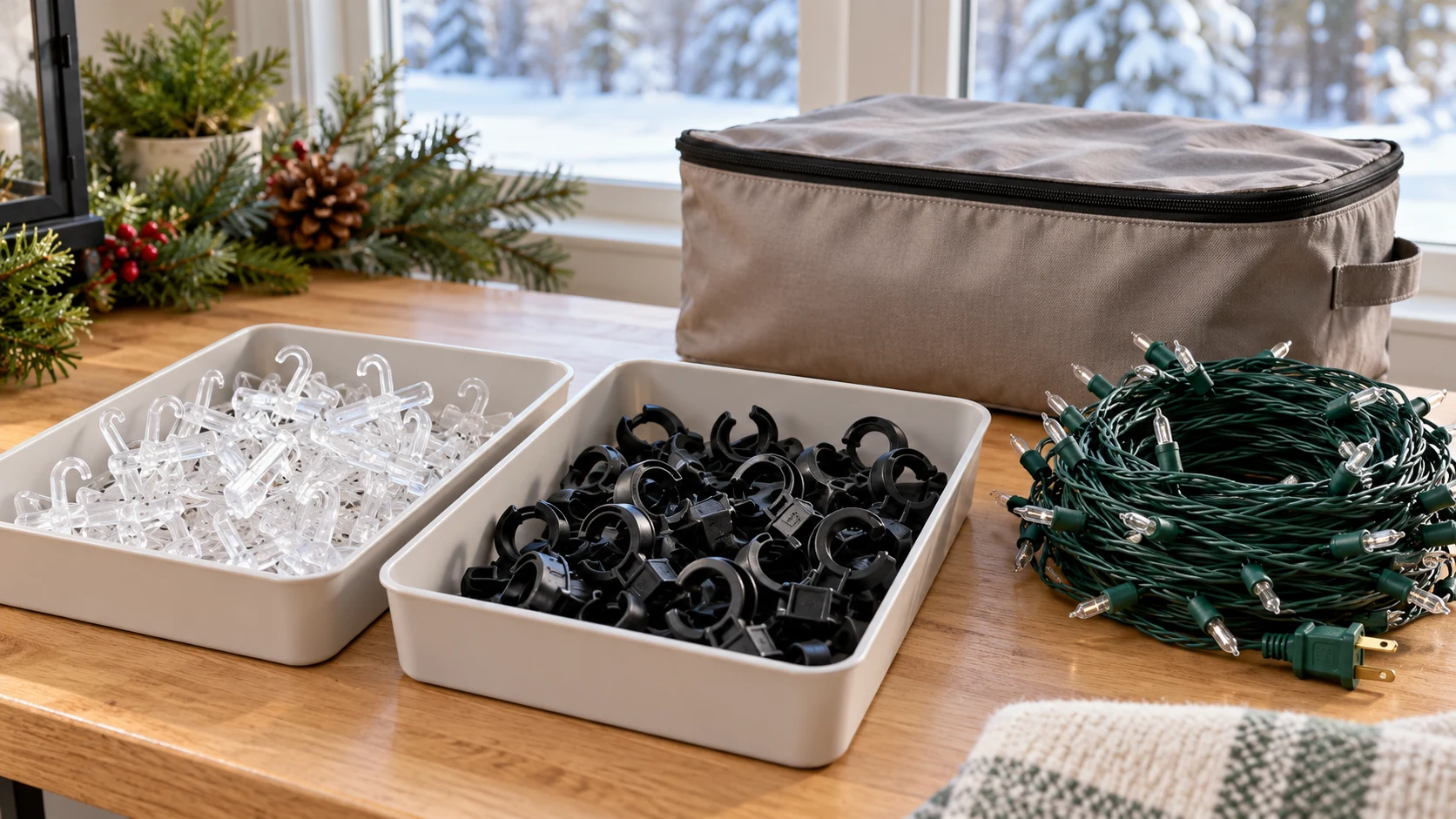
Holiday lights are easier to put away when the clips receive a little attention during takedown. A loose pile of clear and black hooks can hide broken pieces, mix different mounting shapes, and leave next year’s display short of the hardware that actually fit. Work from the display you used, rather than treating every clip as interchangeable. Take a quick note of which strand ran along which edge, remove each attachment without pulling on the light wire, then sort the reusable hardware before it disappears into a storage box. The aim is a clean record for the next setup, not a promise that every clip will survive another season.
Map the display before taking it down
Walk the route while the lights and clips are still in place. Identify the gutter run, any railing section, and each change in edge or mounting surface. Note the clip style used at those transitions. If several strands look alike, a simple label on the strand’s storage tie can preserve the route without needing a detailed diagram. This is especially useful when one part of a display uses a different clip shape or color. Once all the clips are tossed into one container, it becomes much harder to remember which hardware held which segment.
Take a photograph only if it helps capture the actual route. A wide shot can show the strand path, but a close view of one clip at a difficult corner may be more useful next season. The photo should record a physical arrangement, not substitute for checking whether the same surface and lights will be used again. Changes to a gutter, trim or strand can make last year’s fit irrelevant. Keep the note short enough that you will actually read it when decorating returns.
Remove the light strand and its clips deliberately
Disconnect the lights according to their own instructions before handling the strand. At each holding point, support the strand while freeing the clip from its edge. Pulling on the wire to release a stubborn hook confuses two separate jobs: detaching the hardware and moving the strand. If a clip resists, stop and look at how it grips the edge. A different angle or release path may be needed. Avoid forcing a piece until it snaps; a broken clip is harder to classify later and can leave a fragment behind.
Put removed clips into a small temporary container or tray as you go. This avoids scattering pieces along the route and makes it easier to count the hardware from each section. Keep obvious broken pieces separate from reusable ones from the start. If a strand crosses multiple surfaces, use a second compartment or label rather than mixing every holding point into one batch. The extra organization is small compared with trying to reconstruct the route from a box of anonymous hooks months later.
Keep the two clip designs distinct
The Qiyu Xu 240-piece Christmas light clips are shown as clear plastic gutter hooks. The native listing describes a 240-piece pack, names C7, C9, C6 and LED mini lights, and presents the clips for outdoor holiday lighting. Its sole gallery image is a montage of several clips plus an enlarged example; the image does not show all 240 pieces. The listing also describes saving them for the next year. Keep the actual clip type from this pack with the strand and edge where it was used rather than assuming every light format named in the listing makes every route equally suitable.
The Unbranded 120-piece reusable Christmas light clips are described as black hooks for attaching outdoor lights to gutters. Its single product image is a close view of one black clip, not a photograph of the complete pack. The seller’s 120-piece count belongs to that listing. The black hook has a visibly different shape from the clear clip in the first gallery. That difference gives you a reason to sort them separately during takedown. It does not prove that one design grips more strongly or works on every gutter profile.
Color can help identify a batch, but it is only a shorthand. Two clear clips can have different profiles, and two black hooks can differ in their gripping ends. When a piece comes off the display, compare its actual shape with the others in the container before grouping it. If you used a purchased pack for more than one edge, note the edge in the storage label as well. Sorting by visible form and known use is more reliable than sorting by color alone.
Decide which clips belong in the reusable group
Inspect each removed clip where it flexes, hooks or bears against the mounting edge. Look for a crack, a missing tab, a bend that does not return, or a rough point that was not present before the display. A piece that visibly changed shape should not be counted as an intact spare. A dirty clip is a different question: remove loose debris with a method appropriate for the material, then inspect it again. Do not assume a seller’s general durability language means a particular used clip remains sound after exposure and removal.
Keep a separate “uncertain” group if you cannot tell whether a clip is damaged. That is more honest than letting it disappear among pieces you trust for next year. You can compare it with an intact example under good light before storing it. If the latch or hook no longer looks like its matching pieces, do not force it back into the reusable set just to make the count look complete. The count should tell you what you have, not what the original package said when it arrived.
The two native offers both indicate new condition at sale. That says nothing about the condition of the pieces after a season on your house. The clear-clip listing makes broad material and weather-resistance claims for its own product; those statements should not be transferred to the black clips or treated as an inspection result for a used piece. A simple look at the actual hardware you removed is the useful evidence now. Keep the original product listing for identity and intended use, while judging reuse from each piece in hand.
Count by route, then store by route
Count the intact clips from each strand or mounting section before packing them away. If one run used twenty holders and only eighteen sound pieces came back, record that shortfall. You do not need to know why every piece went missing to know that next year’s route needs more hardware or a different plan. A small label such as “front gutter, clear clips, 18 intact” is more useful than a vague “Christmas hooks” note. It connects the saved pieces with the job they performed.
Put the clip group with the matching strand, or attach a durable label that points from one container to the other. Do not fasten small clips tightly around the light wire merely to keep them together unless the light maker’s storage instructions allow it. A small pouch or compartment can keep hardware nearby without putting pressure on the strand. If the display includes more than one clip design, use separate pouches even if both are labeled “gutter.” The next person opening the box can then identify the intended route without guessing from color and memory.
Keep the original package count separate from the reuse count. “240 pieces” and “120 pieces” describe the two native offers as sold; they do not tell you how many sound clips remain after installation, removal and storage. Save the count you actually made. If you later choose to buy more, compare the replacement’s physical profile and intended surface with the known successful pieces. A large pack number alone cannot restore a missing shape or guarantee it matches the edge where you need it.
Use a simple count sheet if the display has several runs: location, clip shape, intact quantity, uncertain quantity and any missing pieces. A handwritten note is enough. The important part is keeping the categories consistent as you move along the route. A clip that came from a different edge should not join a bag merely because it looks similar from a distance. Put it aside until its profile can be compared with a known example. This small pause during takedown prevents an uncertain piece from becoming a confident but incorrect label on next year’s storage box.
Leave next season a usable note
Write down one or two observations from this year’s display while they are fresh. A clip that repeatedly fell from an edge, a corner where the strand pulled across the hardware, or a section that required a different attachment belongs in the note. Keep those observations separate from a product claim. The related Christmas light clips for gutters and metal surfaces guide focuses on planning the route and matching clips to gutter or confirmed metal sections before setup. Your takedown note supplies evidence for that future planning step; it does not settle a changed surface or a new strand automatically.
If the display used solar lights on a porch railing, the solar Christmas lights for a porch railing guide addresses the strand choice and railing layout. Keep its strand decision separate from a gutter-clip inventory. A clip taken off one surface should be identified by its actual mounting role before it is placed with a different lighting kit. The article here concerns the small pieces that hold a completed display in place and how to preserve their identity after takedown.
Store the sorted clips where the material and the light strands can remain clean and dry under their applicable care instructions. Close the container only after checking that the pieces are free of obvious moisture and loose debris. Put the route label where it remains visible when the box is stacked. If the clips are separated from their original product packaging, include a short description of their shape or a photo of an intact example. That helps avoid mixing a black hook with a clear clip next year merely because both were once sold for Christmas lights.
At the next holiday setup, begin with the saved route note and the actual remaining count. Recheck each edge and strand before placing the clips, because the display may have changed. The Qiyu Xu clear clip pack and the Unbranded black hook pack are two distinct examples of reusable mounting hardware; neither listing can account for the condition of the pieces in your storage box. A careful takedown gives you a trustworthy starting inventory and a clear record of where each type worked. That is the part of the holiday display you can carry into next season.