Seasonal & Holiday Content
Holiday jigsaw storage before the table is needed again
Plan holiday jigsaw storage with actual VEVOR and Ayieyill board details, checking puzzle area, resting space, drawers and unresolved handling.
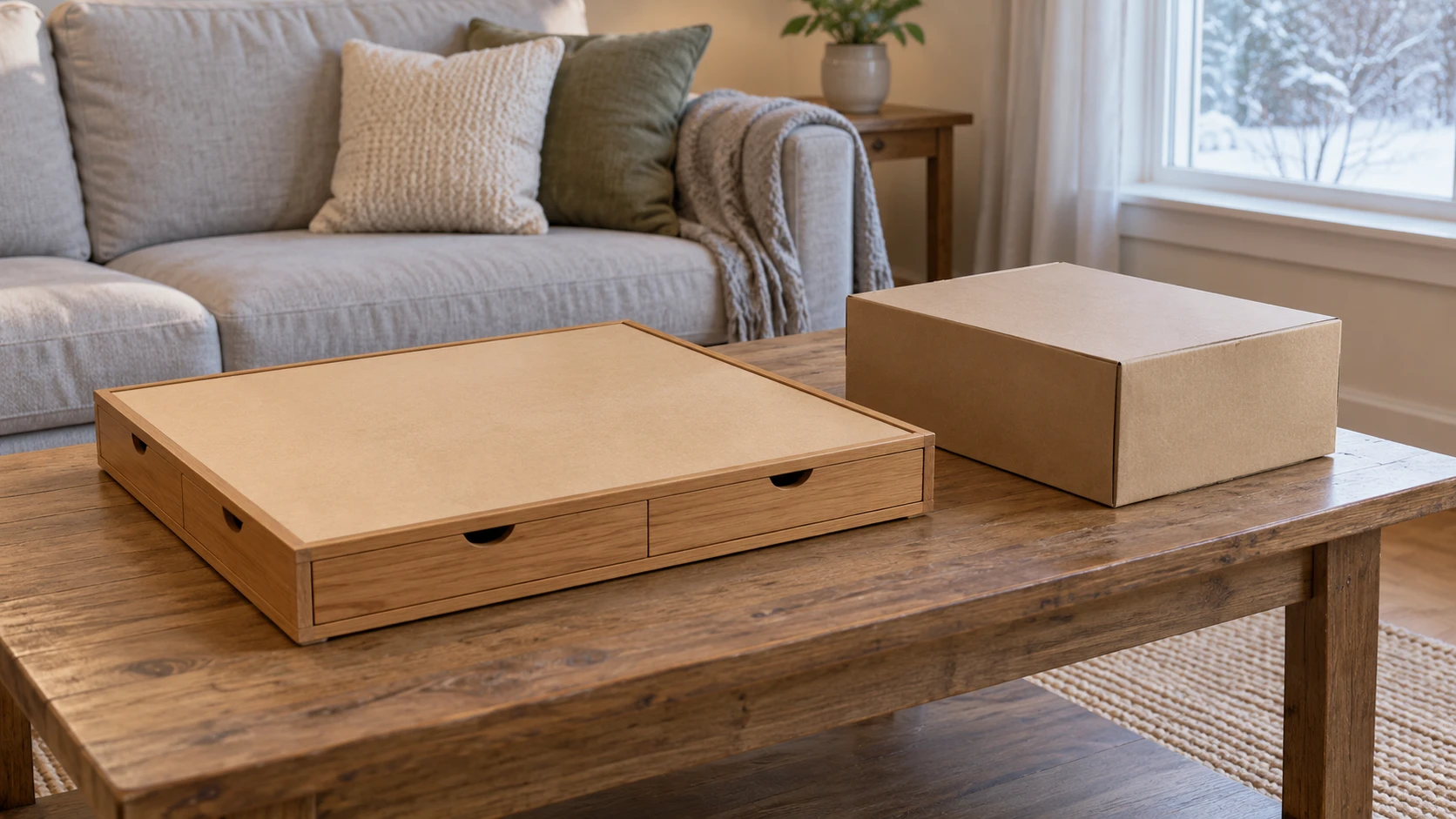
Holiday jigsaw storage is easier to plan before the dining table is covered with loose pieces and an unfinished picture. Decide where the activity can stay between sessions, when the household needs the surface again and what the actual puzzle support can accommodate. A board described by a piece count does not establish that every puzzle with that count will fit.
The selected VEVOR folding puzzle table and Ayieyill rotating board offer different surfaces, drawers and covers. Their descriptions help identify questions to answer before choosing a holiday arrangement. They do not supply a tested transfer method for your assembled sections, a guarantee against spills or proof that a particular space under the sofa is suitable.
Storing an unfinished holiday puzzle starts before opening it
Start with the next use of the room. A table may be available during an afternoon visit and needed for dinner later. Another household may have a surface that can remain dedicated to the puzzle throughout the holiday. These are different storage requirements, even if both groups choose the same box of pieces.
For storing an unfinished holiday puzzle, decide whether it can remain in its working position or needs a separately confirmed arrangement. Keep that decision with the actual surface involved. A plan that depends on moving the puzzle later needs appropriate information before the pieces are spread out, rather than an improvised solution when people are ready to eat.
Also decide whether the puzzle will continue after the visit. If nobody wants to keep working on it, you may prefer to put the actual set away according to its instructions instead of reserving a room surface indefinitely. An unfinished picture is a description of its state. It does not create an obligation to finish before the holiday ends.
A visit with several activities can still include a short puzzle session. Choose the arrangement around the time and space the household actually offers. A larger board does not create more hours before a meal, and a storage drawer does not establish where the whole support will go when the room changes use.
In one imagined household, the dining table is free until the evening meal and a separate low table remains available afterward. That second surface creates an option to investigate before the session begins. Establish its usable area and the support arrangement there. If the puzzle is started on a confirmed suitable support in that position, the dining table need not become its temporary home. If neither position is suitable, choose a different activity or another time. The fictional room description supplies no dimensions or product approval; it shows which space question needs answering before the pieces come out.
Match the actual puzzle dimensions to the working area
Read the finished dimensions for the actual puzzle. Keep those separate from its piece count and from the board's overall size. Piece counts describe inventory; dimensions describe space. Two puzzles with the same stated count need not have the same finished outline or proportions.
If the puzzle's size is missing, obtain it before relying on a close match. A seasonal image, a familiar brand or a box photograph is a different kind of information. Do not assume that another puzzle you completed last year establishes the dimensions of the one selected for this visit.
The Christmas jigsaw assembly guide names an eighteen-by-twenty-four-inch finished-size account for Bits And Pieces Winter Garden, while its selected Springbok title gives no finished dimensions. That earlier distinction remains useful: the supplied Winter Garden figures do not fill the Springbok gap or establish a universal size for five-hundred-piece puzzles.
Allow the actual activity to define its other space needs too. Loose pieces, the reference picture and the sorting arrangement need somewhere to remain. This article gives no universal margin to add around the finished image. Ask what usable surface the support provides and consider the arrangement you intend to use on it.
Read the VEVOR table's dimensions with their labels
The VEVOR fifteen-hundred-piece puzzle table describes a puzzle area of 865 by 635 millimetres, also given as thirty-four by twenty-five inches. Its overall dimensions are listed separately as 890 by 660 by 60/405 millimetres, with thirty-five by twenty-six by 2.4/16 inches alongside. Preserve the description's slash-height wording when asking which configuration those heights identify.
The table is described as natural pine with a felt surface, folding legs and six adjustable levels. It includes four puzzle drawers and one transparent PP cover. The description mentions hook-and-loop retention for closed drawers. Those features belong to this selected offer; they are not evidence about the construction or supplied contents of every VEVOR puzzle table.
Its title and body describe a folding table, while the shorter thirty-four-by-twenty-five figure names the puzzle area. Do not use that working-area measurement as the complete outside size for a storage opening. Ask for the actual overall dimensions in the configuration you intend to store, including any components that affect the required space.
The retail account describes the cover as protecting a puzzle during breaks and makes dust, water and pet-protection claims. No test has been conducted for this guide. Keep those claims separate from an assurance that a particular spill, animal or movement cannot disturb your puzzle. Obtain the applicable instructions for the actual cover and table.
Keep the Ayieyill board's size separate from its capacity label
The Ayieyill Gray Small-1000 board is described as twenty-one by thirty-one inches with a felt non-slip surface and reinforced rounded edges. Its native account names a Lazy Susan base for rotation, six sliding drawers with handles and a collapsible cover. SKU 14834067956 and UPC 085353444152 identify the selected listing.
The description says it holds a thousand-piece puzzle and can be used on a table or floor, then covered and stored under a couch or bed. Those are retail statements about the intended arrangement. The short account does not label the stated dimensions as clear puzzle area or supply the complete stored height and drawer-opening travel.
It also describes compliance with international children's toy safety standards without identifying a particular standard or certificate in the text. This article does not verify that claim or derive a child's age suitability from it. Keep the selected puzzle's own requirements and the support's applicable instructions with the household decision.
A rotating base is a feature of this Ayieyill account. The selected VEVOR description instead names adjustable levels and folding legs. Do not combine both descriptions into an imagined product with every feature. Choose an actual offer after establishing which arrangement answers the room and puzzle questions you have.
Choosing a puzzle board for holiday breaks
Choosing a puzzle board for holiday breaks involves both the working position and the resting position. If the puzzle remains on a dedicated surface, establish how the cover is intended to be used there. If the whole support must be stored elsewhere, identify that location and obtain the relevant dimensions and handling directions before making it part of the plan.
Measure the actual space beneath the bed before relying on that description. Record the actual opening, the usable space beyond it and anything that occupies the route. A nearby leg, a lower rail or stored belongings may matter to the question. Keep the relevant observations with the product you are considering rather than assuming a retailer's general storage phrase confirms your furniture.
The coffee-table layout and drawer-access guide distinguishes a furniture body's dimensions from the opening and movement needed for storage. Its Safavieh examples do not establish a gap for either puzzle support here. Use the distinction to ask for the actual stored dimensions and access your intended location requires.
Keep the next session in the plan as well. A resting place is more useful when you can retrieve the support under its applicable instructions and restore the intended working arrangement. A location that appears large enough in a photograph does not establish that retrieval, handling or the route through the room is suitable.
Keep drawers, loose pieces and the reference with one set
The four VEVOR drawers and six Ayieyill drawers are different supplied counts. Neither count establishes a capacity for every loose piece from every puzzle. Their native descriptions do not provide all internal drawer dimensions, so ask for those if the pieces or sorting arrangement depend on a particular usable space.
Choose how you will identify the set while it is paused. Keep the actual box or reference associated with its pieces, and avoid treating two open puzzles as a shared supply. Similar seasonal colours do not make their pieces interchangeable. A drawer used for one set should remain identifiable if another activity uses the room before you return.
Before relying on drawer retention, read the applicable instructions for the actual product. The VEVOR description's hook-and-loop statement does not describe the Ayieyill mechanism. This article supplies no fastening sequence or permission to carry a loaded board by a drawer handle. A feature intended for holding pieces needs its own proper use.
Decide where the reference picture will wait too. A closed support without its matching reference may leave the next visitor searching through several boxes. Keeping that reference identifiable is a simple organisational decision. It is different from assuming that the cover provides a pocket or that the package includes a separate storage case.
Pause the work without inventing a transfer method
If the pieces are already spread on a different surface, identify the present arrangement before deciding that buying a board will solve the immediate problem. Neither selected description gives a verified method for transferring your partly assembled sections from that surface. Ask for appropriate guidance or reconsider the room plan while the physical task remains unresolved.
Keep partly connected sections in the handling question alongside the loose pieces. This guide supplies no lifting, rolling, gluing or framing method and does not assume that a section can be moved unsupported. The selected covers are accessories for their respective supports, rather than a demonstrated way to make every existing assembly portable.
If your arrangement can remain in place, keep the next use of that space clear to the household. If it cannot, resolve the required handling before the table is urgently needed. That decision can be made without assigning a finishing deadline to the group or assuming that somebody else will know how to move the picture.
At the next session, begin with the actual state of the work. Confirm the set and reference before resuming assembly. A completed border and a group of loose pieces describe different parts of the unfinished puzzle. Storage has not solved their remaining connections or established how long completion will take.
Keep the support order tied to the actual puzzle
If a puzzle support purchase through republeq is part of your holiday plan and you are considering crypto such as USDT, keep the actual product and the unresolved space questions together before choosing a payment method. The VEVOR offer names four drawers and a transparent PP cover with a separately stated puzzle area. The Ayieyill offer names six drawers, a rotating base and its own cover account. Those contents belong to the separate listings. A preferred payment option cannot add one product's features to the other or confirm that either fits under your furniture. Read the methods presented in checkout for the selected order. Both retrieved product records list cryptocurrency among payment categories. They leave the token choice, payment network and future checkout arrangement unspecified. Ask for clarification if the method you want is missing or unclear before authorizing payment. This paragraph provides no transfer address, wallet setup or network instruction. Review the current delivery and return information, especially if you are hoping to use the support during a particular visit. No arrival date, refund or undisturbed-puzzle result is promised here. Keep any supplier answer about the working area, stored height or included cover with the exact product reference. Retain the eventual order confirmation so the delivered contents can be compared with the offer you chose. Successful payment concerns the transaction; the storage decision still depends on the actual puzzle, support and available location. You can keep the order open while missing dimensions are obtained. Choosing USDT, another available method or no purchase leaves the household's table-use and handling questions with the actual arrangement.
Plan holiday jigsaw storage around the next use of the room and the set you intend to continue. Confirm the working area, resting space and applicable handling before depending on a new board. The picture can remain unfinished while the household's plan for the table is settled.