Home & Living
Plan a holiday gift wrapping surface for a shared table
Plan a temporary wrapping workspace around the mat's actual instructions and the table's finish. Keep heat, cleanup and storage limits attached to their own products.
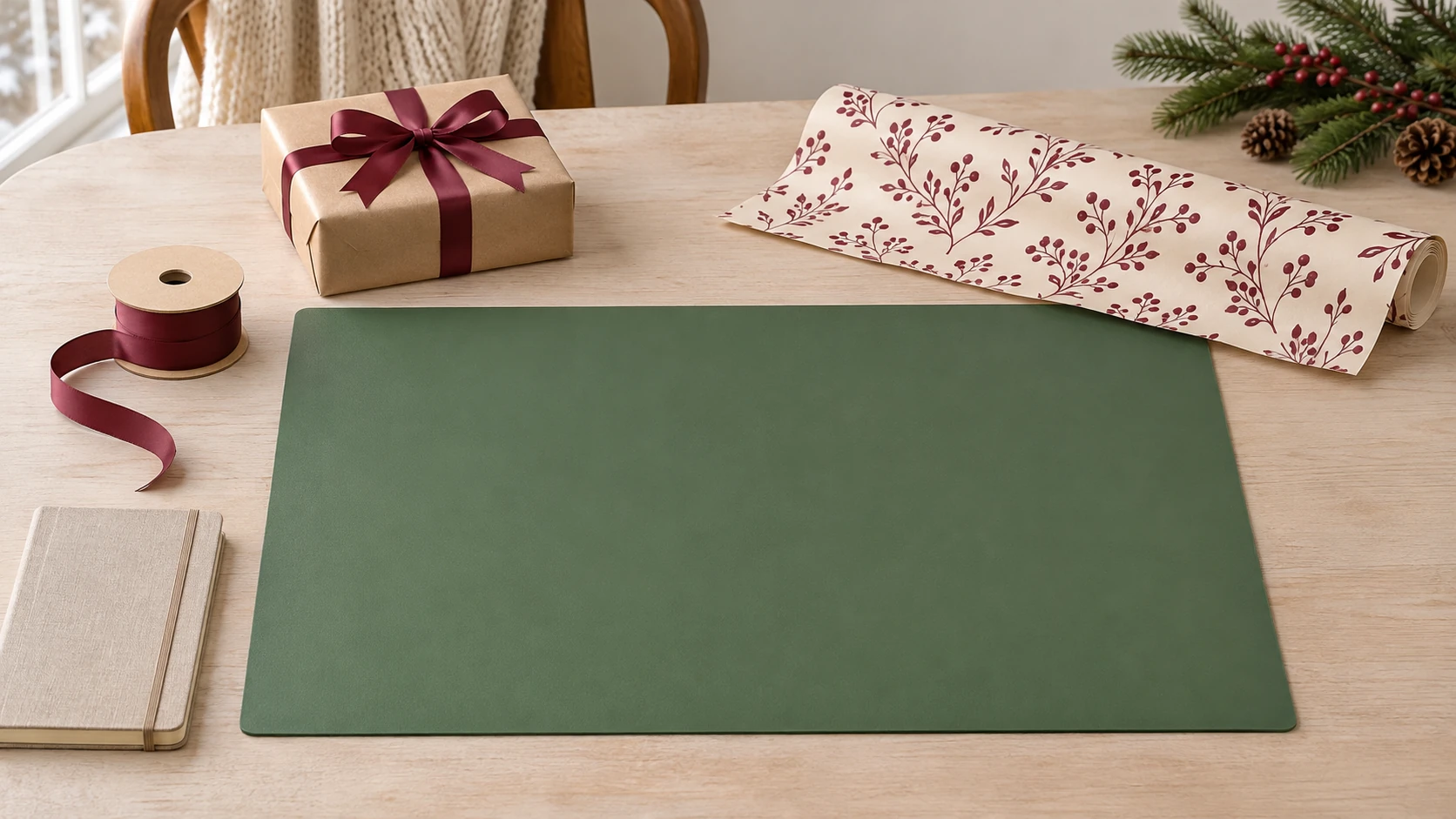
A holiday gift wrapping surface needs a plan for what happens when the table is wanted again. The next task might be a family meal, another person's project or simply putting the room back in order. Before spreading out paper and ribbon, find the care information for the actual table and the mat you intend to use. Keep those accounts separate throughout the session. A cutting-support description leaves the furniture's own requirements to be checked.
Find the table finish instructions
For the table finish instructions, begin with the actual product identity. IKEA's care-help page explains that different materials need different care and directs owners to find their particular product by name or article number. Its product page places material and care information under Product information. That is a useful example of locating the applicable account, without treating one furniture-care sentence as a method for every tabletop. Keep an identified finish with the product it actually describes.
For a borrowed table, ask its owner which instructions belong to it before planning craft work there. A familiar colour or wood-like appearance does not supply the missing document. Explain the intended temporary use and what you still need to establish. If that information is unavailable, leave the proposed location undecided while considering another suitable workspace. The wrapping supplies can remain packed during that choice; there is no need to turn a lack of information into an experiment on the table.
Read the two mat accounts within their limits
The Universal Tool cutting mat listing identifies XLSHCB-1 and describes a green, self-healing, double-sided mat measuring twenty-four by eighteen inches. Its single image shows one complete marked mat. The description also contains unexplained blade, head and handle wording, without identifying an expressly included cutter. None is pictured. Keep that uncertainty if supplied tools matter to the order. The catalog name does not authenticate a maker or model from the image, and the account establishes no furniture-finish compatibility.
The generically titled A1 cutting mat listing describes five PVC layers, recycled material and a two-sided grid, and says not to bend the mat. Its brand field is NOBRAND, while its sole image carries Elan wording. Those labels have not been established as equivalent maker identities. The picture shows a single flat mat; it does not independently verify the stated layers, material, environmental claims or grid precision. Its dimensions and self-healing description remain catalog statements, without a tested table-protection result.
Reserve room for the whole support surface
The Sewing and Craft Alliance's rotary-mat guidance specifies a hard, flat work surface at least as large as the mat, with the whole mat lying flat. It also asks readers to consider both working and storage areas when choosing a size. That supplies a planning question for the temporary workspace: can the actual mat be supported as its applicable guidance requires? It does not identify the finish beneath it or establish that a particular mat and tabletop are an approved combination.
The same guide distinguishes storage arrangements by mat construction. It describes flat storage and certain hanging arrangements that support the mat, while warning against leaning mats against a wall or rolling them unless their instructions allow it. Retain those qualifications. A flexible mat, a rigid surface and a product designed to fold should not acquire one universal storage rule from a short summary. The guide also covers rotary-cutting techniques; no blade-use sequence is transferred here.
Include the table's later use in the layout before bringing out the gifts. An adult working alone may need a clear place to set the unfinished parcel while the main surface is cleared. Several adults sharing the room may need to agree when wrapping ends. Make that agreement about the actual household task. It should leave someone able to put supplies away without asking another person to balance an unfinished gift on the edge of the table.
Keep cutting mat care with the mat
For cutting mat care, OLFA's FAQ and maintenance article give instructions for its own mats. They call for flat storage, warn against temperature extremes and direct sunlight, and say not to iron on the mat. The FAQ also warns against heated items and says a warped OLFA mat cannot be flattened again. Those are specific care limits to retain when reading that manufacturer's account. They are not independent testing of either catalog offer above.
OLFA also describes its mats in relation to its cutters and gives its own cleaning and surface-maintenance advice. Keep that relationship intact. A shared self-healing label does not establish identical construction or care across brands. Before using or storing the actual mat, obtain its applicable instructions. This article provides no cleaning mixture, alteration, blade-changing method or attempt to restore a damaged mat.
Keep the temporary craft session distinct from whatever the table must do next. A planned meal can involve serving equipment with its own instructions. Decide where those items will go after the wrapping materials are removed. If an instruction you need is still missing, keep the proposed arrangement open. A photograph of a tidy gift table would not answer that question, and finishing a parcel would not document what the table or mat can tolerate.
Use the furniture maker's actual material scope
Herman Miller's Wood and Veneer Care and Maintenance document illustrates why the actual finish matters. It distinguishes its finished wood and veneer products from specified oiled Eames products, which receive their own care account. Within the finished-surface guidance, it warns against prolonged vinyl-binder contact and notes that some compounds in rubber equipment feet can leave permanent marks. These are limits in that manufacturer's document, rather than proof that either selected mat will mark another table.
The document also discusses lifting objects rather than dragging them and using suitable protection for particular contact situations. Its separate oiled-finish instructions should stay with the specified products. No oiling, polishing, steel-wool treatment or scratch-removal method is offered here. Read the applicable care scope before choosing an action for an actual surface. A protective item has its own material and contact relationship to consider; its presence alone does not settle every furniture-care question.
Kinnarps likewise separates wood and veneer, laminate, linoleum, plastic and metal in its hard-material care recommendations. Its questions and answers warn that tape and other foreign substances can soften a coating or cause colour loss, and note that rubber feet may leave marks requiring cleaning. Keep those statements attached to its material guidance. They provide a reason to identify the actual table-care account, without predicting the outcome of an untested mat on an unrelated finish.
The Kinnarps page gives different material-specific cleaning limitations and cautions about dragging hard objects across a tabletop. A wrapping session should not turn that document into permission to apply an arbitrary cleaner to borrowed furniture. Its linoleum guidance rejects alkaline or alcohol-based cleaners; that instruction remains material-specific. If adhesive residue or an existing mark needs attention, use the applicable surface instructions and obtain the help required for the actual problem. No stain-removal result is promised.
Walk through the seasonal handback before starting
Imagine Cora and another adult preparing presents before a holiday visit. This is a fictional household example, without a claimed product test. Their dining table will be needed again later. Cora first gathers the table's identifying information and the instructions for the mat they actually own. She leaves the unopened wrapping materials aside while checking those accounts. The example gives her a preparation task, not a reason to treat the two photographed catalog mats as the equipment in her home.
They agree on a place for an unfinished gift to wait when the session stops. Cora keeps that parcel distinct from presents ready to hand over. Her companion puts the remaining paper and ribbon with the other wrapping supplies rather than leaving them spread across the dining area. Their agreement can be simple and specific to that room. Their arrangement identifies the unfinished parcel and the supplies still needing to be put away.
Before the table is wanted, they allow for the actual putting-away work. The mat's instructions govern its storage, while the furniture's own care account governs any work on the tabletop. If a suitable storage location has not been established, that remains part of the preparation. They do not improvise a rolling, folding or leaning method merely because a convenient corner is empty. The example promises no restoration of a curled mat or removal of an existing furniture mark.
If the session is interrupted earlier than expected, Cora identifies the remaining work before leaving the room. A parcel may still need decorative finishing, and the table may still need to be cleared and cared for under its instructions. Those tasks can have different next steps. She tells the other adult which item remains unfinished rather than calling the whole room ready because the visible top of a present looks complete.
On returning, they inspect what is actually left on the work surface. They can resume the particular gift or complete the table's handback without reconstructing the session from memory. The useful result is a clear account of the remaining household work. Nothing in this invented scene verifies a material pairing, a cleaning treatment or a safety outcome for the reader's equipment. Its decisions remain tied to the actual items and their applicable instructions.
Keep the related wrapping and equipment tasks distinct
The existing cutting mat role guide distinguishes a manual work surface from machine holding sheets. Its central question concerns the item needed for a particular equipment setup and whether another offer serves that role. Use that discussion when the uncertainty is about mat type or machine requirements. The household session here concerns the actual work surface, its care limits and the table's later use; it supplies no machine-fit approval or substitute-mat recommendation.
The holiday gift box wrapping guide follows a different task: paper around a rectangular box, its overlap and end folds, followed by recipient identification. Those stages belong to the decorative parcel. They do not establish the care of the support beneath it, authorize a cleaner or provide shipping protection. Choose an appropriate workspace before beginning the actual wrapping method, and keep an unfinished parcel's next step separate from returning the shared table to ordinary use.
Keep the order with its payment terms
If you decide to order wrapping equipment on republeq.com, check the payment methods shown for the actual order before planning to use USDT. A general reference to cryptocurrency does not establish that a particular asset is available at checkout. Keep the proposed product and its unanswered care questions with the order you are considering. Choosing how you would like to pay cannot establish whether the actual mat's instructions cover your intended work or whether the furniture's finish permits the proposed contact. If another person is arranging the purchase, send them the exact offer link and explain which equipment or care details still need an answer. They should not have to infer the intended item from a general search or an earlier household order. Read the current delivery, return and warranty information before proceeding with that transaction. This article gives no arrival promise, return approval or assurance about what a particular package will contain. A remembered crypto purchase supplies no current confirmation of payment options for a different order. If the offer changes, review the replacement offer's own details and checkout information. The seasonal deadline does not resolve a missing product specification. Keep any seller response attached to the question and product it actually addresses. An order confirmation records the transaction; it does not document a furniture-contact test or demonstrate that a cutting surface has been used successfully. This paragraph provides no wallet setup, token-transfer steps, network selection or assurance about transaction security. Retain the actual order information so you can consult it later, while keeping the household workspace decision tied to the equipment and instructions that belong to it.
Leave the table and supplies with their own next steps
Plan a holiday gift wrapping surface around the actual household handback. Find the relevant care accounts, establish the proposed work and storage locations, and allow time to put the materials away. Keep any unanswered equipment or furniture question visible. A finished gift can be ready for its recipient while the table still has its own work remaining. Complete that work using the instructions that belong to the actual surface.
Conceptual holiday wrapping materials with an inactive generic craft mat; no exact retail mat, blade use or confirmed furniture pairing is demonstrated.