Seasonal & Holiday Content
Wrapping a holiday gift box: overlap and close both ends
Wrap one rectangular holiday gift box with a checked overlap and both ends closed, preserving actual paper-listing limits and the intended recipient.
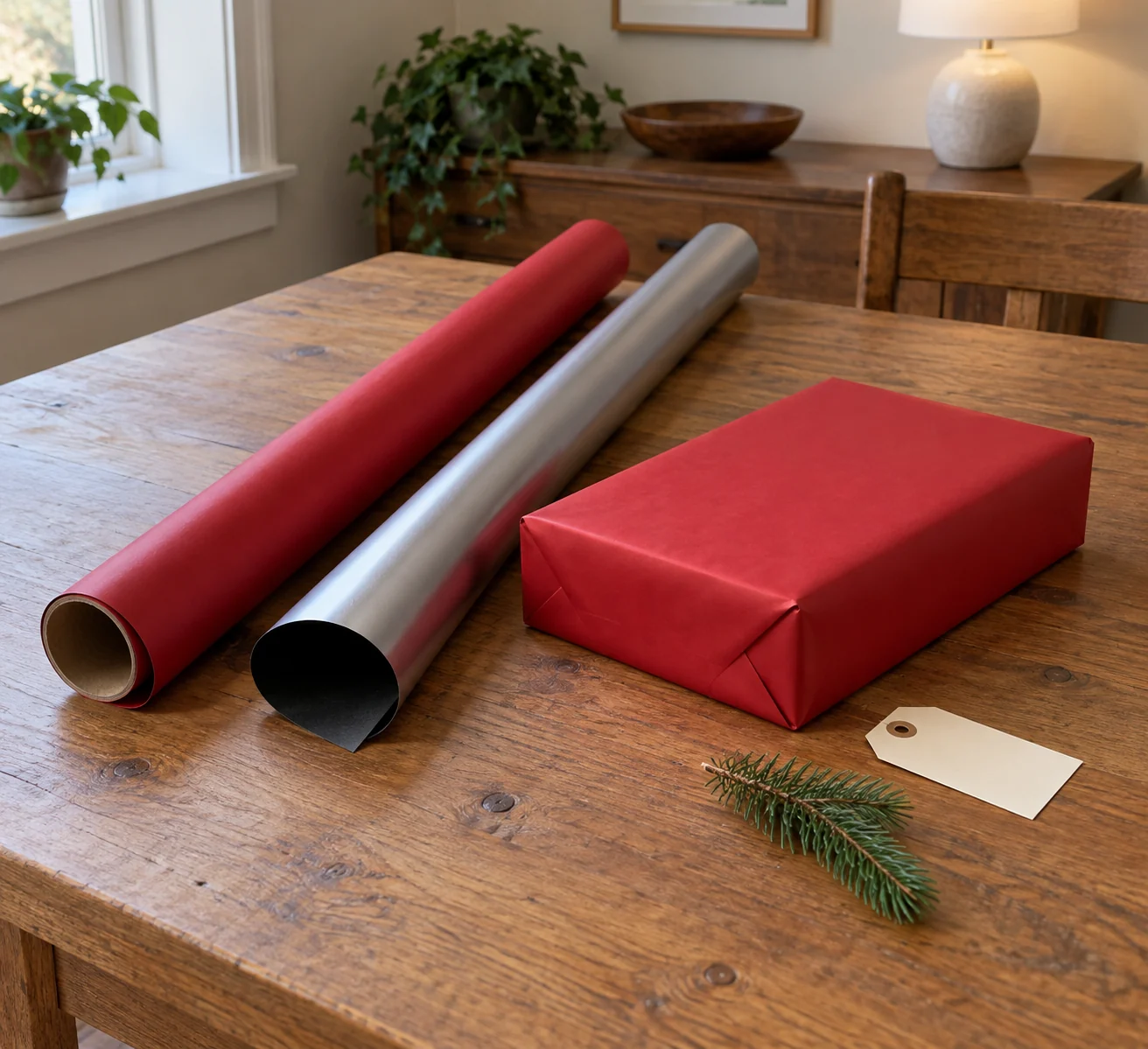
Wrapping a holiday gift box becomes a concrete task when the actual box sits on the paper. Check how the paper reaches around that box, close the long overlap and then fold the two open ends. Work with one parcel through those stages so the finished present still belongs to the person you intended.
This adult wrapping session uses a plain rectangular box and a brief method from Hallmark's illustrated present-wrapping guide. It is decorative wrapping for a gift you plan to hand over. It does not establish protection for shipping, cushioning for the contents or suitability for an item that needs special packaging.
Bring one boxed present to the holiday table
Choose a gift already in an appropriate rectangular box, with its contents ready for the recipient. Keep the person's name beside the box while you work. If you have not settled which present belongs to whom, resolve that before covering the identifying packaging. Paper can hide the clue you were relying on.
Clear enough table space for the box and the paper to lie out together. Put tape and scissors where you can reach them without dragging a blade across the box or holding the gift against your body. Use ordinary scissors in the usual controlled way, with the paper on the working surface and hands clear of the cutting path.
Decide which face of the box you want the recipient to see first. That face becomes the top when you turn over the finished parcel. For an unmarked plain box, choose a face and keep track of it while wrapping. This is a presentation choice, without a claim that turning a boxed item changes its allowed storage orientation.
Choose the paper face before making a cut
The JAM Paper matte red wrapping paper offer identifies model 277013524bWM. It describes a smooth matte texture, protective cellophane and gift use for holidays and other occasions. Its native account also lists size 2.5x10 without giving a unit beside that size field. Do not silently add one.
The JAM title names 25 square feet and a six-pack. Its description instead specifies six rolls with 37.5 square feet per roll and 225 square feet in total. Those statements disagree. Keep the conflict attached to the selected offer and ask the supplier which quantity applies before relying on the order's stated coverage.
The Jillson Roberts two-sided black and silver wrapping paper title states a quarter ream measuring 208 feet by 30 inches. Its sparse description calls it two-sided paper, says it is tightly wound on a three-inch core and names Italy as its origin. The core size describes the roll, not a gift-box dimension.
For the Jillson paper, choose which stated color face you intend to show before measuring a piece. For the JAM offer, the stated matte red appearance can suit the holiday presentation you prefer. Neither source confirms a printed measurement grid, included tape or supplied gift tags. Bring those materials independently if your session needs them.
Checking paper before cutting: use the actual box
For checking paper before cutting, use the actual rectangular box and a piece large enough to try around it. A package's total area does not establish whether one particular remaining piece can cover all the faces. A narrow leftover and a broad sheet can contain similar area while meeting your box differently.
Hallmark's illustrated method leaves paper reaching roughly two-thirds up each end, with enough length to go around the other four faces and overlap by a couple of inches. Center the box across the end allowances, top downward. Check the intended folds before cutting and creasing. These are the source's starting proportions, not a predicted yield from either selected roll.
If your piece cannot make the intended overlap while preserving the end allowances, stop before taping. Choose another suitable piece rather than hiding the shortfall under a bow. Moving the box may change the allowances on both ends, so check both whenever you change its position. Leave that parcel unfinished until the paper covers its faces.
Close the long overlap before the ends
Following Hallmark's sequence, bring the first long section over the box and tape its edge down. Bring the opposite section over it and secure the overlap. Keep the box in place as you check the join. The long wrapping section is now closed, while the two ends still extend beyond the box.
Pause there to look at what you have actually made. A loose end remains an unfinished stage even when the broad faces look wrapped. If someone helping asks whether this parcel is ready, tell them which ends still need closing. Leave the recipient's name with this box until you have completed the final identification.
If you chose the Jillson two-sided paper, check that the visible face is the one you intended before continuing. You may like black outward for one person's present and silver outward for another. That choice does not create a requirement that each color correspond to a different household or holiday tradition.
Fold each end against the box corners
Hallmark folds the upper end flap down, creases the corner shapes and folds the side sections inward. Lift the remaining lower flap and tape it closed; repeat at the other end. Finish by creasing along the box edges. Keep this short sequence tied to an ordinary rectangular gift box, rather than applying it to an uncovered irregular object.
Look at the first end before turning to the second. You should be able to identify which paper sections folded inward and which flap closed over them. If the paper has shifted away from a corner, inspect the fold while it remains accessible. Do not assume the second end will compensate for an uncovered area at the first.
When both ends are closed, turn the parcel to the presentation face you chose. Check the visible edges with the actual box in front of you. Decide whether the actual seam needs another fold before putting the parcel aside. This guide promises no professional finish, tear resistance or fixed strength from either listed paper.
Finishing a wrapped holiday parcel: identify its recipient
For finishing a wrapped holiday parcel, add the identification you actually intend to use. Read the name against the note you kept with the uncovered box. If two gifts now look alike, settle that distinction before moving them together. Write the name before placing identically wrapped boxes together.
A gift tag or card can hold a short message if you want one. The postcard writing afternoon guide uses specific memories and a particular recipient to develop a personal note. Its Compulabel and Avery card accounts do not establish that either wrapping-paper order contains stationery or that a separate card will fit under a ribbon.
Choose the greeting for the person receiving this parcel. A familiar family greeting may be enough for one parcel, while another person might appreciate a line about why you thought of them. You do not need to explain the paper selection in the message. The recipient's name and your actual words can finish the gift without an elaborate topper.
Keep two similar boxes distinguishable while wrapping
Imagine a holiday visit with two same-sized plain boxes, one holding a book chosen for a cousin and the other a different gift for a friend. This is a planning example, without an assumed box measurement or paper allowance. Bring the first box through the wrapping stages and identify it before putting the second on the paper.
If you uncover a mistaken name before the gift leaves the table, correct it against the actual contents you know. Do not infer the contents from the outward paper color once that association has become uncertain. Ask the person who prepared the gift, or check the item through an appropriate opening of its packaging, before presenting a guess as settled.
When someone joins the session, offer a clear job with the actual parcel visible. They might write the confirmed recipient's name while you finish an end fold. Agree which box they are labeling. Point to the particular box before the helper writes its label.
Keep the folding task separate from supply planning
The Christmas gift wrapping plan considers the actual WRAPAHOLIC bundle and Hallmark Plaid paper inventory, with supplies grouped around coming gift-giving occasions. Use that wider planning discussion if you need to decide which presents to prepare for a visit. Return to the box whose overlap and end folds you are completing.
The earlier guide's grid and finishing-item statements belong to its selected packages. They cannot establish the contents or reverse printing of these JAM and Jillson offers. Similarly, the Hallmark illustrated folding source shows its own paper. A measurement aid visible in its photographs is not evidence of a grid on a different supplier's product.
Once you cut a piece, keep an offcut distinct from an untouched roll. You may later find a use for it, but do not assign it a future gift before checking that gift's actual shape. The finished parcel shows that this piece covered this box; it does not establish how many more parcels either retail package will provide.
Keep an irregular gift outside this box method
A bottle, soft bundle or exposed irregular object does not provide the same rectangular faces and corners used in the illustrated sequence. If another holiday present has that shape, leave it for a method appropriate to the actual item. The fact that a roll still has paper remaining does not establish how to wrap every present on the table.
Likewise, putting an item into a box is a separate packaging decision. Choose packaging appropriate to its contents before beginning the decorative paper folds. This article supplies no cushioning material, load limit or protection test. A box that looks convenient for the folding method has not thereby become suitable for an especially fragile or unusually heavy gift.
If your remaining gift needs different packaging, record that specific unfinished task beside its recipient. You can still finish the ordinary rectangular parcel already in front of you. Keep the completed one identifiable and leave the other gift visibly awaiting its own packaging decision, without pretending that the seasonal wrapping session covered both.
Leave an interrupted parcel at an honest stopping point
If you need to stop after the long overlap, keep that box separate from parcels whose ends and identification are finished. Leave a plain note saying which part remains. The next person should not have to infer progress from the top face alone, especially when the open ends face away from the room.
On returning, inspect the box rather than repeating the whole wrapping operation from memory. If one end is already closed, continue from the actual remaining end. Keep the recipient note with the work until the gift has its final label. Finish the parcel you can verify before starting another similar box.
Wrapping a holiday gift box leaves a visible result you can check: paper around the broad faces, both ends folded closed and the intended recipient identified. Put that parcel with the gifts for its actual handover. The next box begins with its own paper check, even when you choose the same roll again.
Wrapping a holiday gift box combines paper checks, end folds and a recipient note; this conceptual cover shows generic rolls and a plain wrapped parcel without a step diagram or verified retail-package contents.