Crypto Commerce
Hisense U7 TV vs SANPTENT rolling screen: fixed or mobile
The Hisense U7 TV is the more relevant starting point for a television that stays in one viewing area, with a listed 55-inch 4K display and dedicated picture and gaming features. SANPTENT's 32-inch rolling touchscreen addresses a different need: bringing a display closer, changing its position and interacting with it directly. Choose between them by deciding where the screen should be during an ordinary evening and whether anyone needs to reach it. Their descriptions support different uses, so screen size alone cannot settle the purchase.
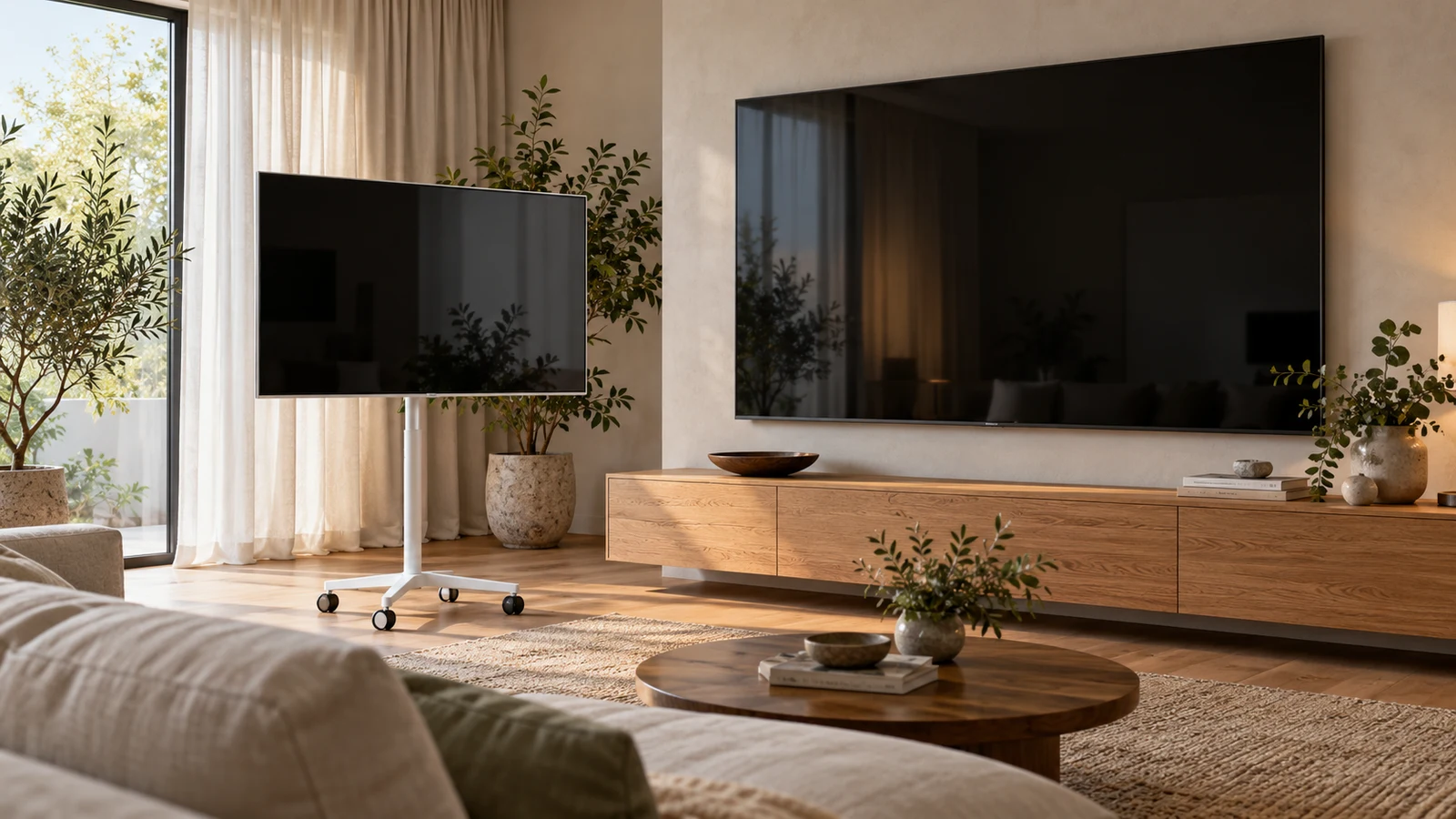
The Hisense U7 TV is the more relevant starting point for a television that stays in one viewing area, with a listed 55-inch 4K display and dedicated picture and gaming features. SANPTENT's 32-inch rolling touchscreen addresses a different need: bringing a display closer, changing its position and interacting with it directly. Choose between them by deciding where the screen should be during an ordinary evening and whether anyone needs to reach it. Their descriptions support different uses, so screen size alone cannot settle the purchase.
A household that watches together from a sofa has a different brief from someone who wants a screen beside a chair, then elsewhere for a video call. Both are reasonable needs. The useful comparison is how much of your routine happens around a permanent viewing position and how much would genuinely benefit from moving the display. Start with the use that happens most often, then consider the occasional one.
SANPTENT Television Alternative: Decide Where Viewing Happens
Imagine the place where you last watched something for more than a few minutes. Were you settled into a seat, with other people facing the same direction? Or were you changing activities and wishing the picture could come with you? This distinction gives the two products a concrete job to compete for. It also prevents an appealing feature, such as wheels or a higher stated resolution, from deciding a purchase before you know whether you need it.
For a fixed viewing area, the Hisense U7 TV listing describes the 55U75QG, a 2025 U7 Series model with Mini-LED ULED technology, 4K UHD resolution and Google TV. That is the specific product considered here. Treat fixed placement as the proposed use in this comparison; it does not establish which stand, wall mount or installation hardware comes in the package.
The SANPTENT television alternative has a listed 32-inch touchscreen with 1920x1080 resolution, wheels and an integrated battery. Its description also identifies an adjustable screen and a detachable charging base. These features make it worth considering when the screen's position needs to change during use. Whether that movement is practical in your home depends on the assembled dimensions and the spaces it must pass through.
Consider a hypothetical evening in which one person wants to watch beside an armchair while someone else uses the usual television area. A movable display could create a separate viewing spot, provided there is somewhere suitable to park it. Now consider a household that gathers in the same seats for a film. In that situation, the ability to roll a screen elsewhere may contribute little to the main activity. Neither example predicts how these products perform; each helps identify which design serves the intended routine.
SANPTENT Television Alternative: Give The Base A Place To Live
A rolling display still occupies floor space when nobody is watching. Before choosing SANPTENT, identify its resting place as well as its viewing positions. Ask for the full base dimensions and assembled height, then check those measurements against furniture spacing. Leave room for people to walk past without having to move the display each time. A screen intended to make placement easier should have a workable home between uses.
Trace the actual movement between those positions. Note doorways, floor transitions and any step that interrupts the route. The supplied description names wheels, but it does not establish suitability for your flooring, clearance over thresholds or safe handling on stairs. Those are questions for the product instructions or seller. Avoid turning a room-to-room plan into an assumption that the assembled unit will be easy to carry or move across every surface.
The description gives battery use as up to eight hours between charges. Treat that as a stated upper limit, with operating conditions unresolved here. If a long session away from the charging location is essential, ask what runtime applies to the brightness and activities you expect to use. Also clarify charging time and whether your intended use while charging is supported. Plan a charging location that does not leave a cable across the route people use.
Compare Screen Aspect Ratio Before Fitting Content To A Display: Plan The Viewing Position
Once you have chosen likely positions, assess the screen from the seats people will actually use. The listed 55-inch Hisense and 32-inch SANPTENT are different physical screen sizes, as well as different display configurations. Avoid assuming that moving the smaller screen closer will suit every viewer or that the larger one will fit the available furniture. Obtain the complete installed dimensions for each candidate before making space for it.
For Hisense, check the proposed installation from every regular seat, including any position off to the side. Note whether furniture, a doorway or the planned screen height creates an awkward view. For SANPTENT, check the location of the base relative to your feet and the space needed to approach the touchscreen. This is a placement exercise you can do before purchase; it does not require assuming an ideal viewing distance or an undocumented adjustment range.
Content shape is a separate question from where the display sits. If your intended material needs closer examination, Compare screen aspect ratio before fitting content to a display before finalizing the setup. Keep this purchase decision focused on the position and interaction you need. A content-fitting preference does not, by itself, establish that either screen will work comfortably in the proposed location.
SANPTENT's description says the screen can move up and down, rotate left and right, and tilt. Those stated adjustments are useful reasons to investigate it for changing positions, but no numerical adjustment limits are supplied here. Ask for the lowest and highest screen positions if seated reach matters. If you expect a particular orientation or automatic content rotation, confirm that separately instead of treating general rotation wording as a promise about software behavior.
SANPTENT Television Alternative: Match Features To Your Actual Use
After placement, compare the features that support the activity you have chosen. The Hisense U7 TV description names Full Array Local Dimming, QLED Color and support for Dolby Vision IQ, HDR 10+Adaptive, HDR 10, HLG and Advanced HDR by Technicolor. It also identifies an anti-reflection coating. These are documented feature claims, not results from a viewing test, and they do not establish how the picture will look beside SANPTENT in your room.
Hisense's listed gaming features include a native 165Hz panel, a variable refresh rate of 48Hz to 165Hz, AMD FreeSync Premium Pro and Auto Low Latency Mode. The description also names a Game Bar for adjusting settings. If gaming is central to the fixed setup, these details justify closer investigation of that model. Confirm the connection requirements for your particular source and intended mode; the supplied description does not resolve every input or device combination.
The same description lists a 2.1.2 audio system, including a subwoofer and two up-firing speakers, with Dolby Atmos processing. Google TV is described as organizing entertainment and apps. For a seated viewing routine, those are relevant parts of the package to evaluate. They do not establish measured sound quality, availability of every service or whether a subscription is included. Check your must-have services individually before relying on the smart TV platform.
SANPTENT's description identifies Android OS 13, 8GB of memory and 128GB of internal storage. It includes an external HD camera, a remote and a stylus pen. The touchscreen and supplied controls offer different ways to interact with the device, which matters if you expect to approach the screen during use. The stated memory and storage figures do not establish how quickly a particular app will run or how much storage will remain available after setup.
Picture a video call from a chair where you want to reposition the display before sitting down. SANPTENT's listed external camera and movable base are relevant to that plan. You would still need to confirm that your chosen calling service works on the device and that the camera can be positioned suitably. The description does not identify specific calling apps or establish microphone performance, so those details should remain open questions.
SANPTENT also lists wired and wireless screen projection for phones, tablets and computers. If you intend to share content from a device you already own, ask about that exact pairing, including the required connection method. Do not assume that every app will project or that touching the display will control the source device. These are separate behaviors. A clear description of your intended interaction will produce a more useful answer than asking whether the screen is broadly compatible.
Keep the comparison honest where the descriptions differ in detail. SANPTENT's supplied text does not establish a refresh rate, HDR format support or an audio configuration comparable to the Hisense specifications. The Hisense text does not establish touchscreen operation or a battery-powered rolling setup. Missing information is not proof that a capability is absent, but it cannot support a buying promise. Base the shortlist on documented features and leave unresolved requirements visible.
SANPTENT Television Alternative: Confirm The Package Before Choosing
Once one design fits your routine better, review the exact selected product and package. For Hisense, match the 55U75QG model identifier and screen size to the item you intend to order. Check what supports the television, what installation hardware is included and what must be purchased separately. If you plan a wall installation, establish the mounting requirements from the applicable documentation before selecting hardware. The feature description alone does not settle those installation details.
For SANPTENT, compare the package information with the described external camera, remote and stylus, and clarify how the base and charging components are supplied. Ask what assembly is required and how the screen should be secured in its intended position. If touch use is important, check the instructions for stable placement during interaction. Avoid assuming that wheels include a particular locking arrangement when that detail is not established in the supplied description.
Then compare the current total cost of the setups you would actually use. Include any confirmed installation equipment or connection accessories your plan requires. Check current price and availability for the selected variant, since a catalog snapshot is not a promise about a later order. Read the applicable delivery and return terms, particularly any conditions that could matter after assembly or installation. No delivery date, warranty coverage or return eligibility is established by this comparison.
If you choose a cryptocurrency payment option, review the currency and network presented at checkout and the complete requested amount before proceeding. Read how any displayed deadline applies to that payment. Keep this separate from the product decision: a payment method cannot resolve an uncertain package or an unsuitable viewing position. There is no need to choose a screen until its everyday use and purchase terms are clear enough for you.
Choose the fixed Hisense setup if your main need is shared viewing from established seats and its documented television features match your priorities. Give SANPTENT closer consideration if moving the screen and reaching it for direct interaction are regular parts of the intended use. Before ordering, settle the one practical question most likely to change your choice: whether the complete screen setup fits the place where you will use it most, including its support, controls and access to power.