Problem-Solving Articles
Resolve hanging file folder fit by separating paper size and support
Resolve hanging file folder fit questions by separating paper size, stated capacity and support dimensions for Jimin and Smead folder offers.
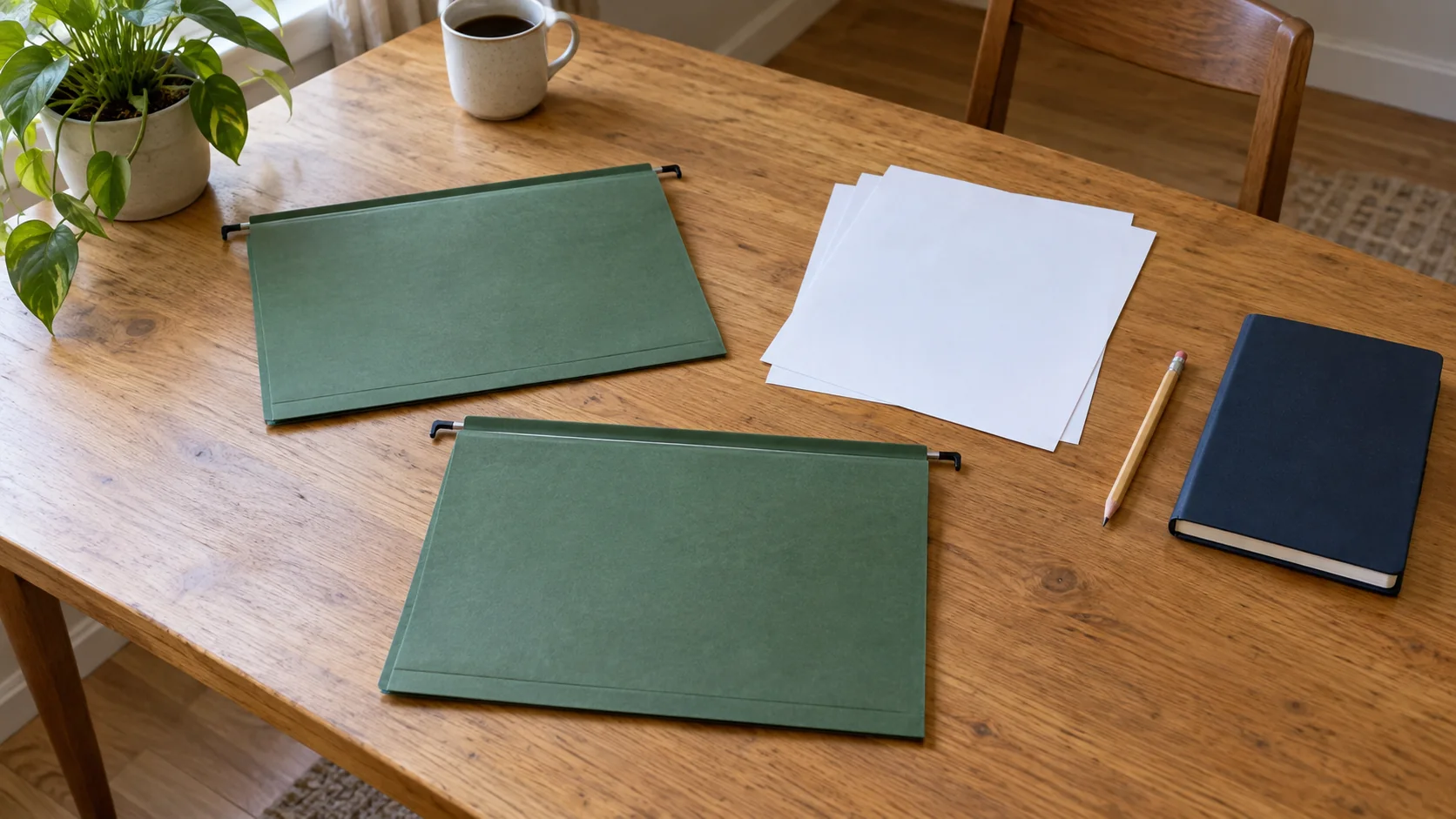
A hanging file folder fit problem can concern the papers, the amount being stored or the way the folder is supported. Describe which part did not match before ordering another box. A letter-size document label and a three-inch capacity statement answer different questions; neither alone gives the support dimensions of the cabinet or container you own.
The Jimin letter-size green hanging folders and Smead SM33303 legal-size box-bottom folders provide two specific source examples. Jimin describes folders for 8.5-by-11-inch documents and names rod tips for use in metal file cabinets. Smead identifies legal size and a three-inch capacity box bottom. Their descriptions do not establish compatibility with every drawer, rail arrangement or paper stack.
Name the fit problem you actually observed
Write down what did not match in the existing arrangement. Papers extending beyond the available space are a different observation from a folder that cannot be supported as intended. A folder holding too much material presents another question. Keep the visible result specific instead of treating each situation as proof that the folder's size label is wrong.
Use the information already available about the event. Do not force a folder onto a support or repeat a failed arrangement to make the description more precise. If you do not know which part prevented the fit, leave that uncertain. Begin the inquiry with the folder, storage item and observed result.
A drawer, a portable file box and an open support frame can have different folder requirements. The general word hanging does not establish a common support arrangement. Obtain the applicable folder requirements for the actual storage item before treating a replacement offer as suitable.
Three observations that lead to different questions
Suppose a folder sits on its supports, but one original projects beyond the paper area. Describe which edge projects: the top, a side or the bottom of the paper group. Keep the original's actual dimensions with that observation. Replacing the folder with another item carrying the same general label may leave the problem unchanged if the troublesome original has a different size from the rest of the group.
In a second example, the papers themselves appear to have room, but the folder does not sit as intended in the drawer. The document-size statement is then an incomplete lead. The next useful comparison concerns the storage system's folder requirements and the proposed folder's support arrangement. A three-inch capacity statement would not answer that question, even if the folder otherwise looks roomy.
A third example concerns bulk. The paper format is familiar and the support relationship has already been confirmed, but the particular group includes additional material. Describe those contents rather than converting a capacity label into a sheet count. A group of loose pages and a group containing other items are different inquiries. This article assumes no thickness or number of sheets for either example.
Use a known-working reference without copying its limits
If the same storage item already holds a folder successfully, its exact reference may help the supplier identify the required type. Explain what that existing item actually accommodates and what differs in the proposed use. A folder that works for one paper group is a useful reference, but it does not demonstrate the capacity of a different model or confirm space for an unusual original.
A photograph of the existing arrangement can make the question easier to understand. Show the relationship that matters and describe it in words: paper extending above the folder, for example, or a support that does not sit as intended. The image provides context rather than a measured drawing. Any required dimension still needs its own stated meaning and a reliable source.
Document size and hanging folder capacity
When reading document size and hanging folder capacity, ask which object the stated measurement describes. The Jimin green letter-size hanging folders are described for documents measuring 8.5 by 11 inches. The account does not present those figures as an outside folder dimension or a measured distance between its supporting tips.
Document size answers the paper-format question. It leaves the supporting span unanswered; the paper dimensions cannot stand in for that measurement.
Jimin's description also names adjustable one-fifth-cut tabs, blank label inserts and rod tips for use in metal file cabinets. These identify supplied or stated features. The description supplies no complete adjustment or fitting procedure here. A tab label does not establish rail spacing, and the mention of metal cabinets does not certify every cabinet made from that material.
The offer identifies SKU 13611669128 and describes 100 folders per box. Keep that quantity with the purchase inquiry, not with the fit specification. A larger supply of identical folders would leave an unresolved support mismatch unresolved. Confirm the physical requirement before using a box count to decide how many replacements to order.
Keep Smead's legal-size and capacity statements distinct
The Smead SM33303 legal-size hanging folders are described with a three-inch capacity box bottom. The account identifies green folders, 25 per box, SKU 1869887308 and UPC 758218794326. These are the actual identifiers and quantity statements attached to this offer.
The three-inch figure is presented as capacity. It is not a stated rail span, outside folder width or weight rating. Do not substitute it for one of those measurements when trying to explain a fit failure. The short description does not give a complete document-size, support-dimension or installation account for this particular folder.
Smead's legal-size wording needs the precise dimension relevant to the problem. Jimin's letter-document figures cannot supply it. Neither account provides a tested comparison for your contents.
A capacity label also gives no universal count of sheets. The source does not define the paper, inserts or other contents behind that figure here. If the issue concerns a thick group of papers, describe that actual group and obtain the applicable capacity guidance. Do not translate three inches into a guaranteed number of records or assume the box bottom permits every loading arrangement.
Checking the actual folder support arrangement
For checking the actual folder support arrangement, identify the storage item's model and its stated folder requirements. Keep its documentation with the inquiry. Ask which folder format and supporting dimensions apply to the actual cabinet, box or frame. A familiar shape in a photograph is not enough to establish that the folder will sit correctly.
Then identify the matching information required from the folder supplier. Jimin mentions rod tips but supplies no tip-to-tip span in this account. Smead's short description gives no support measurements. Keep those questions explicit if they are what the storage item's requirements need. An answer about paper size would leave the support-dimension question unanswered.
If you have a documented measurement, preserve its labels and the part it describes. An overall outside width, an internal opening and a supporting span should remain separate entries. This article does not supply a measurement or adjustment procedure for an unidentified storage system. Use its applicable instructions to establish how its requirements are defined.
If the required supporting dimensions cannot be matched, resolve that relationship before ordering. The descriptions give no alteration or adjustment method for an unverified pairing.
Return to the papers when the support question is settled
If the support arrangement has been confirmed, revisit the actual documents involved in the original problem. Record their known sizes and whether the group includes folders, envelopes or other material requiring its own allowance. Keep an unknown size unknown. A label describing a standard document format does not establish the dimensions of every item in a mixed group.
Separate a paper-format question from a capacity question. A group might contain a differently sized original even when its total amount is modest. Another group may use one stated format but need a different documented capacity arrangement. The visible symptom and the actual contents should guide the next inquiry, rather than a larger pack or a larger-sounding title.
The Brother ADS-1350W and DS-740D paper-batch guide starts by identifying where paper arrives and what kinds of originals are involved. It distinguishes ordinary document sizes from long-original capability in the actual scanner accounts. That inventory question belongs before assigning a mixed group to a folder. Scanner media limits and feed methods do not become folder dimensions or storage instructions.
The Epson DS-410 and ES-500W II paper-backlog guide likewise separates a uniform paper batch from receipts and other unusual originals, including the ES-500W II's stated long-document capability. Its actual paper-mix discussion explains why a general office-paper label can leave a particular original's needs unresolved. No scanner length allowance establishes that either hanging folder can hold the same original.
Keep labels and supplied quantities in their own roles
Jimin's adjustable tabs and blank inserts may matter to identifying paper groups after the fit question has been resolved. They do not settle the supporting dimensions or the contents the folder can accommodate. Ask separately about tab supplies if those matter to the order; the description gives no tab-fitting procedure.
The Jimin paper account states 100 percent recycled fiber, including 60 percent post-consumer fiber. That is an attributed material statement. It provides no load rating, durability ranking or evidence that a particular support arrangement will work. Smead's green color and 25-per-box statement likewise supply no missing rail dimensions.
After the fit information is established, the stated 100-folder and 25-folder box quantities can inform the order. Give the person buying the confirmed product reference and its applicable requirements.
Ask for the answer that resolves the observed mismatch
A support-fit inquiry can name the actual storage item, the exact folder and the observed failure to sit as intended. Ask for the compatible format and the supporting dimensions required to confirm the pairing. Retain the reply with the source it addresses. A general statement that the product is a hanging folder does not settle that particular relationship.
A paper-size inquiry should instead identify the actual document or contents needing space. For Jimin, keep the stated 8.5-by-11-inch document account in the question. For Smead, retain the legal-size label and ask for the precise information still missing. Do not merge these inquiries simply because both products are green and sold under Filing Products.
If a reply settles one field, record that result and leave the others open. A confirmed support span may not establish an allowance for a thick group of materials. A document-size answer may not identify the actual cabinet pairing. Check the remaining requirement before treating the pairing as suitable.
Close the inquiry around the confirmed pairing
Save the actual folder reference, storage-item requirements, document account and the answer addressing the observed mismatch. If the proposed product changes, recheck the fields that belong to it. Jimin's stated letter-document size remains with that offer; Smead's three-inch capacity remains with SM33303. Neither replaces the other product's missing information.
A hanging file folder fit question is resolved when the applicable information addresses the actual papers and support arrangement. If the evidence remains incomplete, name the next missing dimension, capacity condition or compatibility answer. Keep that specific question with the order rather than guessing a modification or choosing a larger box of unconfirmed folders.
A hanging file folder fit inquiry keeps document format, stated capacity and the actual storage support requirements in separate entries.