Office Supplies & Stationery
hanging file box wobble: isolate the surface, base, and load
A practical fault check for a hanging-file box that rocks or twists: compare an empty box on two surfaces, inspect its construction, then test a small even file load.
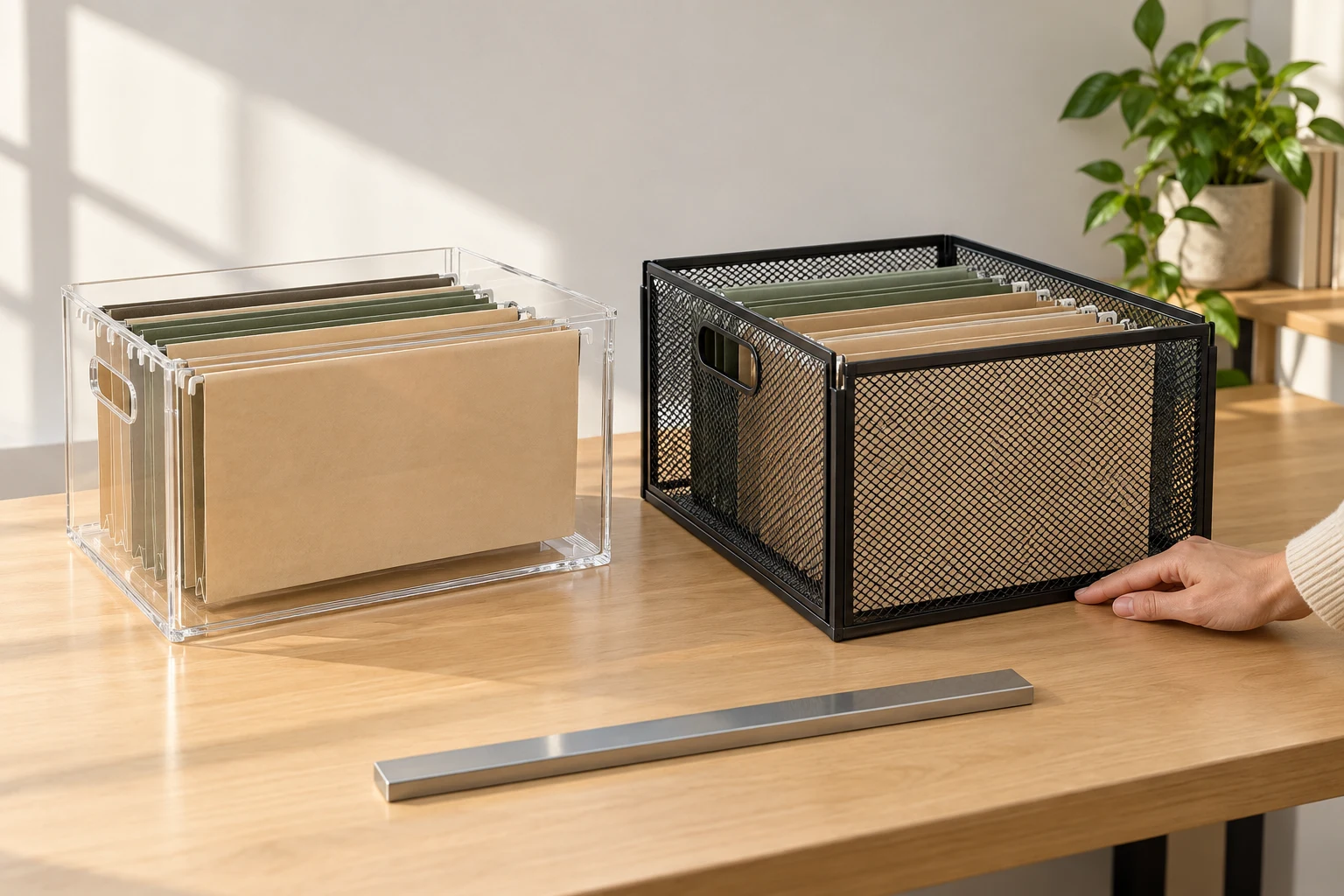
A hanging-file box should sit steadily while you pull a folder forward. If it rocks on the desk or twists when you lift one side, begin with the box empty. A hanging file box wobble can come from the surface beneath it, a base that is not seated, or a load pulling harder on one side. Those causes call for different next steps. Do not press a bent frame into shape while it holds records.
Find the movement with the box empty
Remove the folders and set the box on a cleared, firm surface. Push gently near each corner, one at a time. Note whether a corner lifts, the box flexes, or the entire work surface moves. You are identifying the movement, not testing how much weight the box can bear. Stop if a side is cracked, a joint is loose, or a handle pulls away from the body.
Move the empty box to another flat, stable surface that you can check independently. If the same corner rises in both places, inspect the box. If the movement follows only one desk or shelf, check that surface and anything trapped beneath the box before blaming the container. A folded paper, cable, or raised seam can hold one edge off the surface. Clear the obstruction and repeat the empty check. Avoid stacking other containers on top while you investigate.
Keep a short record of what you see: which corner rises, whether the box flexes, and whether the result changes on the second surface. A photograph of the empty box from floor level may make an uneven base visible. It cannot establish a load rating or explain why a hidden joint has failed.
Check the surface with a separate straight object if you have one, following its own safe-use directions. A desk can be firm yet have a raised edge strip or a worn patch where the box rests. Turn the empty box a quarter turn in the same spot and repeat the gentle corner press. If the raised corner stays at the same place in the room, the surface deserves closer inspection. If it rotates with the box, look at the corresponding corner of the container. This small comparison gives you a better description for the seller than a guess about the material.
Take care with a box that sits near the edge of a worktop. Move it inward before testing; a rocking container can shift when a folder is pulled. Keep loose papers away from the feet or base edge so they do not create the very tilt you are trying to diagnose. If the box has been carried from another room, let it rest empty on the new surface before concluding that carrying caused the problem. The observation should be repeatable in the same position.
Identify the construction before touching the base
The Hyjoy clear acrylic hanging-file box is a rigid open container in its native gallery. The listing describes an acrylic organizer with integrated handles for letter papers and hanging folders. Its visible base is not a fold-out panel. If this design rocks when empty on two flat surfaces, look for a chip, crack, distorted bottom edge, or material caught under it. Do not try to fold the walls or tighten imaginary assembly hardware. The saved listing and photograph do not provide a repair procedure.
The Hidove metal mesh hanging-file crate is a different structure. Its listing describes a foldable metal organizer and smooth handles; its gallery shows open mesh crates holding hanging folders. A foldable frame may have seating points that a rigid acrylic box lacks. With the crate empty, compare its current shape with the supplied assembly instructions and check whether its base and sides are fully in their intended positions. Do not force a bent section or assume every visible tab is adjustable. If the instructions and delivered parts differ from the listing, ask the seller to identify the exact item.
These pages show products for sale, not tests of a damaged box. Neither gallery proves that a particular unit will be level after delivery. The dimensions in a listing describe size; they do not tell you whether a corner of the box in your hands is sound. Use the actual item and its instructions for the mechanical check.
Compare the two sources only where their construction makes the comparison useful. The clear acrylic box can be inspected through its sides and at its fixed bottom edge. The metal crate has mesh panels and a foldable arrangement, so the delivered instructions matter to its setup. A small gap at one point may have different meanings in those designs. If the item received looks unlike the native gallery or its own instructions, record that mismatch before doing anything that could conceal it. A photographed listing is no substitute for confirming the actual model in front of you.
Do not infer from the word "metal" that the mesh crate will stay square at any load. Likewise, a rigid acrylic wall does not prove its bottom sits flat. The listings do not report a flatness tolerance, a maximum folder count, or a test with the particular papers in your office. Those unknowns make a gentle empty-box check and a small trial load useful. They also set a limit: if the structure seems damaged, a home repair tip cannot establish that it is sound.
Add a small, even file load
Once an empty box sits still, place a few folders across the support path rather than loading one end first. Check whether the base stays in contact with the surface. Then move one folder at a time as you normally would. If rocking appears only when most folders sit at one end, redistribute them and repeat with a smaller group. This comparison can show that the current arrangement is involved. It does not prove a safe maximum load or promise that a damaged frame is usable.
Look at the folder hangers while you work. A hanger hooked over the outside of a rim, or a folder pushed against a side, can tug the container as you pull. Return the folder to the intended support points according to the box and folder instructions. If you cannot identify those points, pause and check the delivered product information. Do not use the handle to drag a full box across the desk as a substitute for finding the cause.
When the folders are spread evenly, try the one you reach for most often. Pull it only as far as you would during ordinary use. Does the box move before the folder does? Does one side flex? Put that observation beside the empty-box result. A box that rocks empty needs attention to the surface or structure. One that moves only during a particular pull calls for a closer look at that folder's position and the current load. Keep the test modest; the two saved listings do not give an independently verified working capacity.
Repeat the motion from the opposite end with a comparable folder. If only one end pulls the container, inspect that folder for a mispositioned hanger and check whether nearby folders press against it. If both ends move the box while the empty test was stable, reduce the trial load and examine how the folders are distributed. You are observing the current combination of folders and container. You have not measured the design's limits by pulling harder. Force can damage a folder hook, scratch an edge, or tip an open box.
Some files are thicker than others, and a small number of crowded folders can behave differently from a larger number of thin ones. Try the folders you actually use, beginning with a few and adding them gradually. Leave enough space to see whether each hangs from both intended supports. Avoid using a neat staged gallery as evidence that your full archive will move freely. If you need storage for more papers than the box remains stable with in your ordinary use, divide the files or seek a product with a documented capacity suitable for that use.
Check the carrying motion separately
A box may sit flat on the desk yet twist when lifted by one handle. Test any carrying motion only with an empty box first, over a clear area and according to the supplied instructions. Look for a handle shifting independently of the wall or a foldable side moving out of its intended position. Put the box down if either happens. The saved pages mention handles, but they do not prove a safe carrying load for your delivered unit.
For an in-use box, the safest diagnostic may be to remove the records and carry it empty. A full box can pull differently at each side, especially when folders are clustered at one end. If carrying produces the movement while desk use does not, keep that result separate from the flat-surface wobble. Record whether both handles were used, whether the box was empty, and which panel moved. Do not stretch a handle to see whether it can take more. The seller or maker can use a clear description and images to advise on the actual item.
Decide whether use should stop
Stop loading a box if its base remains uneven on a known flat surface, a wall is cracked, or a joint will not stay seated as the supplied instructions require. Remove the papers before examining it or contacting the seller. Describe the exact product URL, the condition of the empty box, and what changed on a second surface. That is more useful than saying only that the box feels unstable.
A wobble that disappears after clearing the surface or seating a foldable frame can be checked again with a small file load. If it returns, leave the box unloaded and seek the maker's or seller's instructions. The native product pages do not authorize bending metal, gluing acrylic, drilling a new fastener, or claiming a safety rating. A damaged container may need replacement under its actual terms.
If you contact the seller, keep the question narrow. State whether the box rocks empty on two flat surfaces, whether its corner contact changes when rotated, and whether a small even load changes the result. For the foldable crate, note the step in the supplied assembly directions that seems unresolved. For the acrylic box, point to the fixed edge or panel that appears damaged. Include the exact listing and order identity. This helps the seller distinguish a setup question from a different item or a damaged shipment without asking you to guess what is inside a joint.
Before returning records to the container, confirm that the chosen surface remains clear and that ordinary folder pulls do not shift the box. Check again after moving it to its regular location; a stable trial on one worktop does not prove every location is equally flat. If the problem appears only in the final location, investigate that location. If the same defect appears everywhere, leave the box out of service while you resolve it. The aim is a repeatable observation and a usable filing setup, not a dramatic stress test.
The separate collapsible file storage box fit check helps choose a box for shelf clearance and folder dimensions before purchase. This troubleshooting check begins with a box already in use and a specific movement to locate. Record the empty and small-load results before deciding whether the surface, the setup, or the product itself needs attention.
After the box is stable in its regular location, the file box retrieval map addresses how to find and return stored papers. Keep that filing task separate from a mechanical problem: a better label will not steady a rocking container.