Computers & Gaming
Collapsible file storage box fit check for shelves and folders
Measure shelf access and folder fit before choosing a collapsible hanging-file storage box.
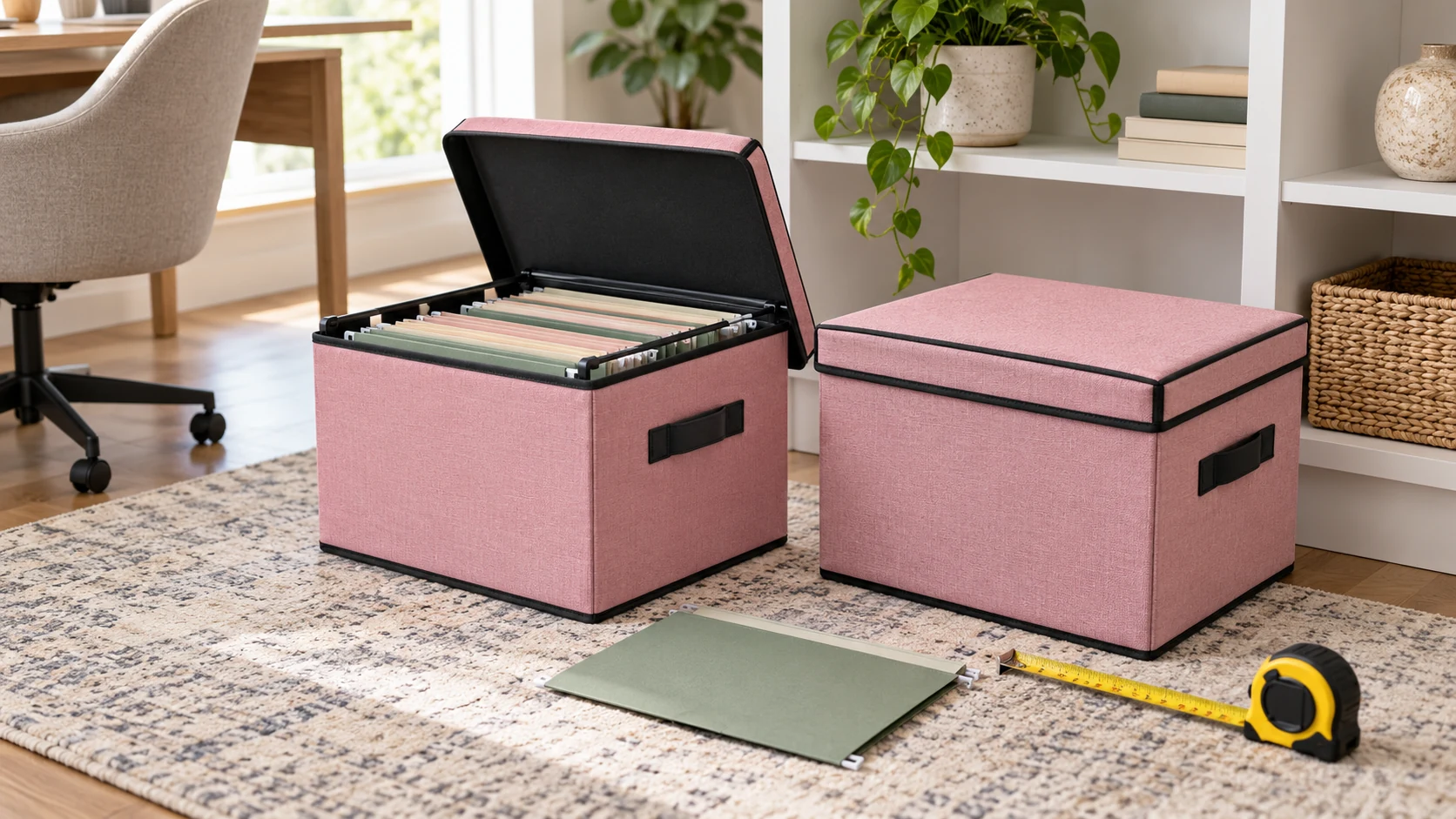
A folding file box can look ready to organize a shelf, yet still be too tall for that shelf or too narrow for the folders you already own. Make a collapsible file storage box fit check before choosing one. The two Hidove listings here describe closely related pink boxes with lids, side handles, label areas, and rails for hanging folders. Their shared appearance is a reason to verify the exact offer, not a reason to assume that either will fit your furniture or paperwork.
Start with the job the box must do
Write down what needs a home: loose sheets, hanging folders, thick project folders, or a mixed archive. A box used for documents you reach every day needs an accessible position and a lid you can open without moving other things. A box used for occasional records may fit in a less convenient spot. Decide which job matters before considering the product photographs. A picture of neatly arranged folders does not tell you how much room your own folders need.
Choose the shelf, closet floor, or other location first. Measure width, depth, and usable height, including any lip at the front. The outside dimensions of a box matter for that placement. The inside dimensions matter for files. Keep those two measurements separate in your notes. A box can fit the shelf while its hanging folder rails fail to fit a particular folder, and a compatible folder can still sit in a box that blocks the shelf above.
Consider access from the front and above. If a shelf is just tall enough for the closed box, you may need to pull the box out every time you open its lid. A storage spot that requires moving several other items each time can turn a useful file system into a pile. Try the motion with a cardboard template or a similarly sized empty box before ordering. Allow space for your hands as well as the product.
Read the two offers as separate listings
The Hidove foldable file organizer box listing describes a collapsible document box with side handles, a label area, a lid, and rails intended for hanging folders. Its gallery shows pink boxes with black trim, an open top box holding colorful hanging folders, and separate rail pieces. That image supports the broad physical layout. It does not establish the count of delivered boxes or prove that a particular folder size fits.
The Hidove linen file storage box listing describes a collapsible box with a reinforced cardboard interior and base, a lid, side handles, a label area, and hanging-folder rails. Its gallery also shows pink boxes with black trim and separate rails. The two listings look very similar and describe much of the same construction. Do not treat the different titles as evidence of two distinct designs. Check the current offer details and package contents for the exact URL you intend to buy.
The second listing gives inside and outside measurements, but the first listing's dimensional text is incomplete in the saved native description. That is an unresolved detail, not an invitation to fill in a missing number from a photograph. If the first offer interests you, get its complete current measurements from the seller before deciding that it fits. Even for the second offer, compare the stated measurement convention with the physical space you have: an outer dimension and a rail opening describe different things.
Neither product page is a test of the loaded box on your shelf. The pictures show boxes staged for display, with folders positioned tidily and the lids open. They do not show your shelf clearance, the weight of your files, or how often you will move the box. Use the native listings for what they actually say, then use measurements and a local trial to answer what they cannot.
Test shelf clearance before folder capacity
Measure the shelf opening at more than one point if a frame or door narrows it. Check the distance from the shelf surface to the one above, then consider whether the lid can be lifted in place. If the box must be pulled out first, leave room for that motion on the floor or desk in front. Do not stack a second box on top until you know whether the lower box can be accessed safely and whether the maker permits that load.
Use a paper rectangle or an empty cardboard box to mark the proposed footprint. Include handles and the way your hand will grip them. A box that is technically narrower than the shelf can still be frustrating if its handles catch the side or your fingers cannot get around it. Try sliding the template in and out. For a closet, check the door swing and any track at the bottom. These small constraints decide whether the storage spot works in daily use.
If the chosen surface is a high shelf, consider how you will take the box down. The listings mention handles, but handles do not establish a safe loaded lifting capacity. The heavier the archive, the less attractive a difficult overhead lift becomes. Put frequently needed records where you can reach them without a strain. If you cannot comfortably move a representative load, choose a lower location or divide the documents into smaller groups.
Check the folders you actually use
Take one empty hanging folder and one filled example from your current files. Measure across the folder's hanging hooks and the thickness of its contents. Compare those dimensions with the seller's stated rail spacing and internal opening, where those values are available. Do not assume that a general claim about letter or other folder sizes covers every tab, hook, or overfilled folder. A folder that hangs when empty may bind when it is packed.
The gallery images show rails and folders, but they do not verify every rail part or the assembly order of the delivered package. When the box arrives, compare the rail count and form with the listing and instructions. Install the rails as directed before testing a full folder. A rail that is loose or installed in the wrong position can make a compatible folder seem unsuitable. If the instructions or parts differ, resolve that identity issue before loading the box.
Try several folders in sequence, including the one with the widest tab and the one you open most often. They should slide without snagging, and you should be able to read the labels at the location you chose. Leave room for the folder you plan to add next month. A box filled to the point that folders cannot move is a poor filing tool even if every folder technically fits inside it. The useful capacity depends on your papers, not only the product name.
Keep loose documents in their own folder or sleeve if they would fall beneath the hanging rails. A large box can conceal a small stack of unfiled papers at the bottom. Decide whether the box is primarily a hanging-file holder or a mixed storage container, then arrange it accordingly. The listings mention books and other items, but that broad use claim does not prove that a mixed load will preserve folder movement or box shape under your conditions.
The file storage box quantity plan helps decide how many containers an archive needs. This article assumes you have chosen a location for one box and asks whether that box can fit, open, and hold your hanging folders there. A plan for several boxes does not answer the shelf-clearance question. Test one representative space before multiplying the same purchase across a closet.
Check the assembled box and lid
A collapsible product saves space while empty, but it must be assembled before it can do the filing job. Follow the included instructions and verify that the base sits flat, the sides hold their intended shape, and the lid closes without pressing on folder tabs. The galleries show the boxes open, so they do not prove the lid will close over your fullest folder. Test that with the files you intend to keep, before you place the box deep in a closet.
Read the delivered material and care instructions before choosing a damp or dusty storage area. The second listing describes linen on the outside and cardboard reinforcement inside. Neither listing establishes waterproof or fireproof protection for these particular folding boxes. If a document requires special protection, select a storage method with verified specifications for that need. Do not infer protective performance from a lid, a fabric exterior, or a staged product photograph.
Check where the label will face once the box is on its shelf. Both galleries show a front label area. A label turned toward the wall or hidden behind another container cannot help you find a file. Write a short category name that you can read from the normal approach. If more than one box will share the shelf, decide which categories deserve separate containers before assigning labels; matching pink boxes can be hard to distinguish when only their sides are visible.
Consider how the box moves when partly full. The listings show handles, but you should still lift and carry the delivered box according to its instructions and your own comfort. Do not drag it by a handle across a rough shelf or assume that the fabric and cardboard construction tolerates every load. For records you need to move often, test a modest representative load and observe whether the box stays square and the rails remain seated.
Make the purchase decision from a short fit record
Record the exact shelf opening, the box's verified outside dimensions, the folder and rail measurements, and the current package contents. Add the URL of the offer that supplied each claim. If one listing leaves a decisive dimension unclear, ask the seller for that measurement or choose a better documented option. Do not let the nearly identical gallery images substitute for missing detail. The fit record is more useful than trying to remember which pink box was pictured on which page.
Use a three-part decision: does the closed box fit its intended location, can you open and move it there, and do your filled folders hang and slide on the delivered rails? A “yes” to only one part is not enough. If the lid cannot open on the shelf, revise the placement. If folders bind, check their size against the actual rail opening. If the delivered parts differ from the chosen listing, resolve the order before building a filing system around them.
The file box retrieval map explains how to name boxes and folders so a stored document can be found and returned. That work becomes useful after the container has a workable place to sit. Here, first confirm that the closed box fits the shelf, its lid can open, and the delivered rails support your folders. A clear label cannot compensate for a box you cannot reach.
Once the box is assembled, file a small sample and use it for several days in the intended location. Notice whether you can reach it, read its label, lift its lid, and move folders without disturbing the whole stack. If that trial fails, change the placement or folder plan before filling the container. The right box is the one that remains usable in your actual room with your actual papers.