Kitchen & Appliances
Hamilton Beach 4 Quart vs Betty Crocker 3.7-Qt stand mixer: plan the first cake batch
Compare two small stand mixer offers by cake batch, bowl access, supplied beaters, scraper care and cleanup before choosing the current $31.50 price gap.
Start with a cake you already bake when comparing Hamilton Beach 4 Quart vs Betty Crocker 3.7-Qt stand mixer. Write down the ingredient amounts, the mixing stages and the stops you normally make to scrape the bowl. Then compare those jobs with the actual tools and controls in these two offers. Hamilton Beach lists a four-quart bowl, seven speeds and an aqua finish. Betty Crocker lists a 3.7-quart bowl, ten speeds and a flat beater with scraper. Both descriptions name a 300-watt motor and planetary mixing. Those shared numbers and claims do not establish equal results with your batter.
The current Hamilton Beach four-quart stand mixer offer is $136.49. The Betty Crocker 3.7-quart stand mixer offer is $104.99, making the listed gap $31.50 before any applicable delivery or checkout charges. These are current offer prices rather than a forecast of ownership cost. The lower amount helps only if the selected machine suits the recipe, fits the counter and comes with the parts you expect. Confirm the delivered model and present terms before ordering; neither product description supplies an independently measured comparison of mixing quality.
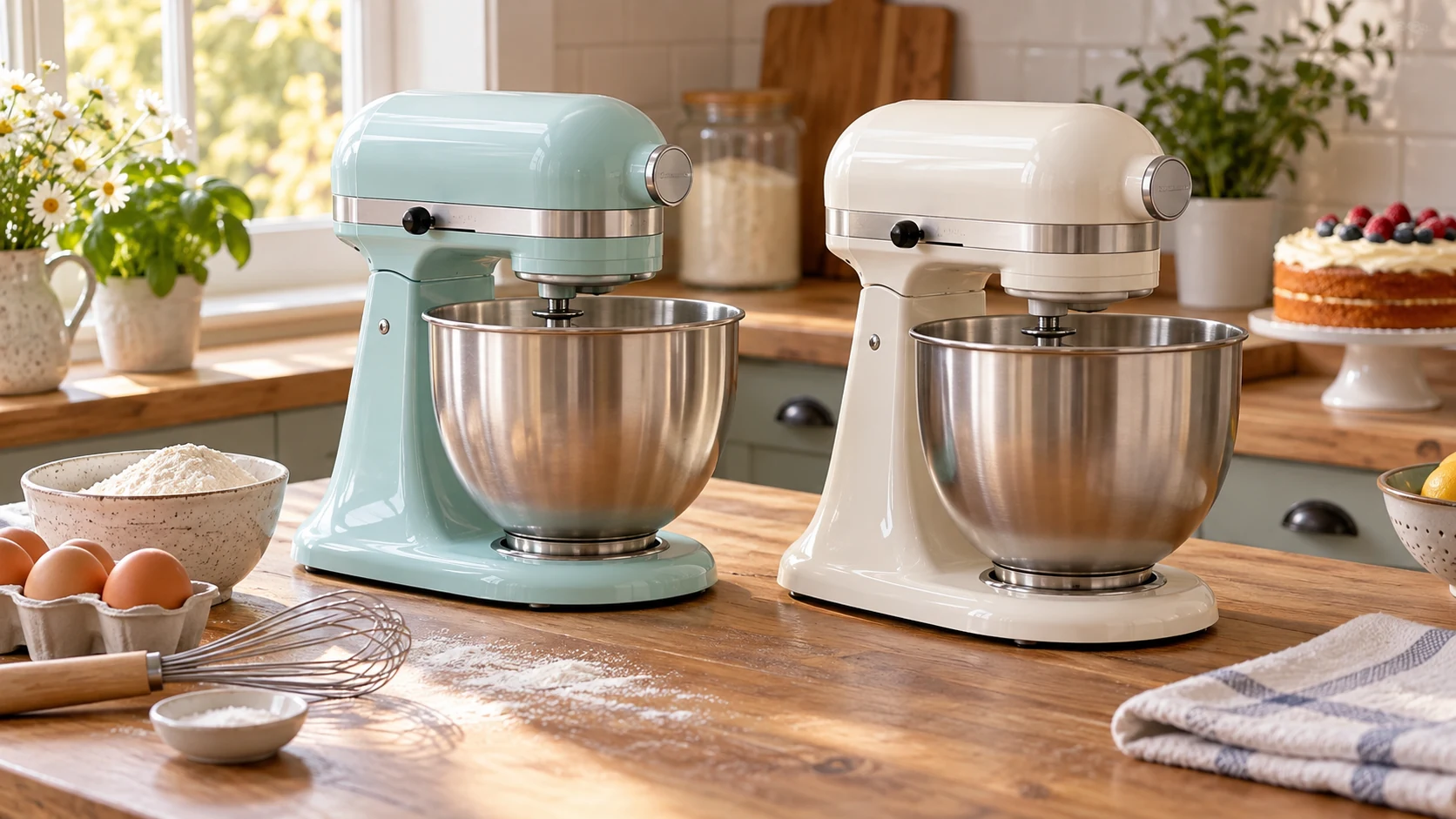
Conceptual editorial cover for Hamilton Beach 4 Quart vs Betty Crocker 3.7-Qt stand mixer: generic household mixers and baking ingredients, not photographs of either retail model or evidence of tested mixing, included accessories or bowl capacity.
Stand mixer bowl and recipe checks
Begin stand mixer bowl and recipe checks with the cake's quantities, rather than how many cakes you hope a bowl might hold. The printed four-quart and 3.7-quart volumes differ by 0.3 quart. They do not say how much flour, finished dough or expanding whipped mixture each machine may safely handle. A bowl needs working room above the ingredients, and a mixture can change volume during a recipe. Ask for the exact manual's approved batch guidance and compare it with the recipe you know. Avoid filling to a guessed line just because a nominal bowl volume seems generous.
For a small cake, tool reach can matter more than the larger bowl number. A modest amount of butter and sugar may sit below part of a beater's path; a small quantity of egg white may need a different bowl and whisk arrangement. Neither description establishes a minimum workable batch or an adjustment procedure. Ask how the supplied tools contact the intended ingredients in the delivered bowl. If the recipe is routinely small, a demonstrated small batch or an applicable return opportunity is more useful than multiplying the bowl capacity into servings.
The actual comparison of KitchenAid KSM96IC and Cuisinart SMD-50CRM stand mixers develops this same buying decision with different products: stated bowl volume must be checked against the actual mixture, and small batches need appropriate tool reach. Its cookie example cannot become a bread limit, and neither can a quart rating. Apply that distinction when checking these Hamilton Beach and Betty Crocker offers. Do not transfer the other machines' timer, attachment compatibility, bowl size or capacity claims to this pair.
A familiar cake also exposes the pauses a larger recipe could hide. You may cream ingredients, add eggs in stages, stop to scrape and then incorporate dry ingredients. Record those steps before shopping so the seller can answer concrete questions about the supplied beater and speed control. A recipe that requires a bowl scrape halfway through mixing needs easy access at that point. It does not become suitable for an uninterrupted run because a product description promises thorough coverage. Keep the recipe's method separate from the machine's allowable operating instructions.
Compare the documented mixing arrangements
Hamilton Beach describes attachments rotating around the bowl while spinning at the selected speed. Its description calls this planetary action and claims complete bowl coverage. It also says the motor maintains constant speed through thick or heavy ingredients. Those are product claims, with no matched recipe, duration or independent measurement supplied here. They establish what to ask about, rather than permission to try an arbitrary stiff dough. If your intended cake includes a heavy mixture, obtain the exact manufacturer's guidance for that mixture before relying on the claim.
Betty Crocker also describes planetary mixing and claims even, consistent results for whipping, beating and kneading. Its ten adjustable speeds and variable control are documented features; the description does not provide the actual speed range or behavior under a particular load. The seven versus ten setting counts cannot rank low-speed flour incorporation or high-speed whipping. Ask whether the first usable setting suits your recipe and how the control changes between settings. The answer needs to concern the actual machine, rather than a general demonstration of another mixer in the brand's range.
Both sources name 300 watts. Equal input-power labels do not demonstrate equal dough handling, mixing time or electrical consumption over a full baking session. The duration of a task and the way the machine behaves under load remain unmeasured. Bowl geometry and the selected attachment also affect the job. If you compare the two offers in person, use the same permitted recipe and quantities under each machine's own instructions. This guide supplies no result from such a test and does not award a performance winner from the wattage number.
Think about the control when a cake needs a stop between additions. You should be able to identify the required setting and stop promptly according to the manual. Ask how the head lock and controls are arranged, and verify the model's instructions before handling the bowl or tool. Neither description gives a full operating procedure or a documented timer. Missing timer language is a reason to ask, rather than evidence that a timer cannot exist. Do not plan unattended mixing from a broad promise of consistent results.
Included mixing tools and cleanup
The Hamilton Beach description lists a dough hook, whisk and flat beater. It also names a stainless steel bowl and removable splatter shield. Betty Crocker lists a dough hook, whipping whisk and flat beater with scraper, plus an anti-splash cover and stainless steel mixing bowl. These are similar core tool sets for household baking, but the words do not establish interchangeable parts. Confirm each exact box's contents and the replacement identification for its bowl and tools. A spare beater from another machine should not be assumed to fit merely because it performs the same named task.
With included mixing tools and cleanup, inspect what Betty Crocker's scraper means for the cake you intend to make. The source names a flat beater with scraper but does not specify a silicone edge, complete wall contact or a guarantee that manual scraping becomes unnecessary. Ask for the tool's actual construction, approved care and replacement part. Check batter around the bowl as the recipe and manual require. A scraper description can identify a useful feature to examine without promising that every ingredient will reach the center automatically.
The product comparison of Hamilton Beach Professional and BENTISM stand mixers separates supplied mixing tools from optional powered attachments and examines a documented scraper's care. Use those distinctions to check the tools included with these smaller offers. The other guide's BENTISM silicone-edge statement and Hamilton Beach Professional hub compatibility belong to those exact products. They do not establish an edge material or accessory hub for either machine here. Verify those questions separately if future pasta rolling or grinding is part of your purchase decision.
Cleaning language also needs to stay attached to the component it describes. Hamilton Beach places “Dishwasher safe for easy cleanup” after its bowl and removable shield description; ask which exact parts that statement covers. Betty Crocker explicitly describes the 3.7-quart stainless steel mixing bowl as dishwasher safe, while its attachment paragraph says the tools are stainless steel. A stainless appearance alone does not settle dishwasher suitability. Obtain the supplied tool and cover care instructions before choosing a cleanup routine, especially for the scraper assembly and attachment joints.
Map cleanup after the cake, including where the bowl will be carried and where the tools will dry. A sink crowded with pans may make a large bowl awkward even when the machine fits comfortably on the counter. Check the bowl's actual dimensions against the sink and any dishwasher rack you plan to use. Neither description gives those dimensions or a confirmed bowl handle. The practical question is whether you can remove, carry and clean the actual pieces under their instructions without finding a new place for them after every bake.
Check head access and counter placement
Both offers identify a tilting head, so plan space with the head raised as well as lowered. Mark the overhead cabinet, back wall, outlet and the place where the bowl will sit during removal. The descriptions do not give raised-head height, machine weight or full exterior dimensions. Ask for those measurements for the exact delivered model. A product photograph on an open counter does not tell you whether you can change the beater beneath your own cabinet, or whether moving the base forward is manageable each time.
Betty Crocker states that suction pad feet help keep the machine in place, including during heavy mixing. That remains a product claim; no surface-specific grip measurement or vibration test is provided. Confirm the manual's placement requirements and the appropriate surface in your kitchen. Do not infer that suction pads permit a larger batch or eliminate the need to stay close. Hamilton Beach's source does not document the same foot design, which is an unanswered question rather than proof of poor stability. Compare actual approved placement information for both.
If the mixer will be stored in a cupboard, measure the shelf opening and the route to the counter. A bowl volume cannot tell you the base's footprint or how comfortable the machine is to lift. Ask for the weight of the complete appliance and any carrying guidance. Also allocate storage for the whisk, hook, beater and shield so they are easy to identify for the right machine. Keeping tools together can prevent a hurried substitution with a similar-looking accessory whose fit has never been checked.
The aqua finish is part of Hamilton Beach's named offer and may suit a counter where the mixer stays visible. Betty Crocker's source name here does not establish a particular finish to compare. Confirm the exact color and package before ordering if appearance matters. A conceptual cover showing generic aqua and cream mixers is an illustration of a baking setting, not a color or product-identity guarantee. Use the actual offer's current photographs and the delivered model information for those choices.
Work through the first cake before buying
Bring the recipe and your counter measurements to the seller's model-specific questions. For the creaming stage, ask about the supplied flat beater and the recipe's amount. For adding dry ingredients, ask about the low-speed guidance and the shield opening. For a scrape or tool change, check the stopping and head-access instructions. Then verify the approved maximum operating time and any required rest. Neither saved description supplies these limits. A seller's general statement that the mixer handles cake batter does not answer them for your actual batch.
Do the same for a recipe you might make later, but keep it realistic. If bread is only an occasional plan, obtain the model's dough limits and permitted hook settings before counting that use as value. Do not convert the cake batch, nominal bowl volume or 300-watt label into an approved bread quantity. If the main job is whipping a small amount of cream, prioritize confirmed minimum batch behavior. The machine should be checked for the work you will repeat rather than selected for an imagined largest possible bowlful.
Compare the present $31.50 difference after the practical answers arrive. Hamilton Beach's larger stated bowl and seven documented speeds may suit the cake and counter you know. Betty Crocker's lower current offer and documented flat beater with scraper may deserve examination if its actual tool reach and care match the recipe. Neither comparison establishes a lifetime saving, superior durability or a shorter mixing time. Include any verified necessary accessory or delivery charge in your own total instead of assuming the price gap buys equal working arrangements.
Read the current return and warranty terms for the exact purchase, including eligible seller, covered parts, delivery requirements and any return costs. The two offers do not provide a complete manufacturer warranty statement in their descriptions. Ask how an incorrect bowl or damaged tool is handled and how replacement parts are identified. If testing a permitted familiar recipe is part of your decision, check the applicable return conditions before doing so. Keep the packaging and instructions in the manner the seller requires; this guide cannot promise a particular return outcome.
For Hamilton Beach 4 Quart vs Betty Crocker 3.7-Qt stand mixer, check one ordinary baking session: a confirmed model, an approved batch, the correct supplied tool, accessible controls and a workable cleaning route. Record the answers beside your recipe so the first cake uses the chosen machine's instructions. If a seller cannot confirm a necessary limit or part, keep that question open before checkout. Select the offer whose actual arrangement you can use and care for on the counter you measured.