Crypto Commerce
KitchenAid KSM96IC stand mixer vs Cuisinart SMD-50CRM for everyday baking
Compare KitchenAid KSM96IC stand mixer by bowl size, controls, included tools, counter access, and batch needs.
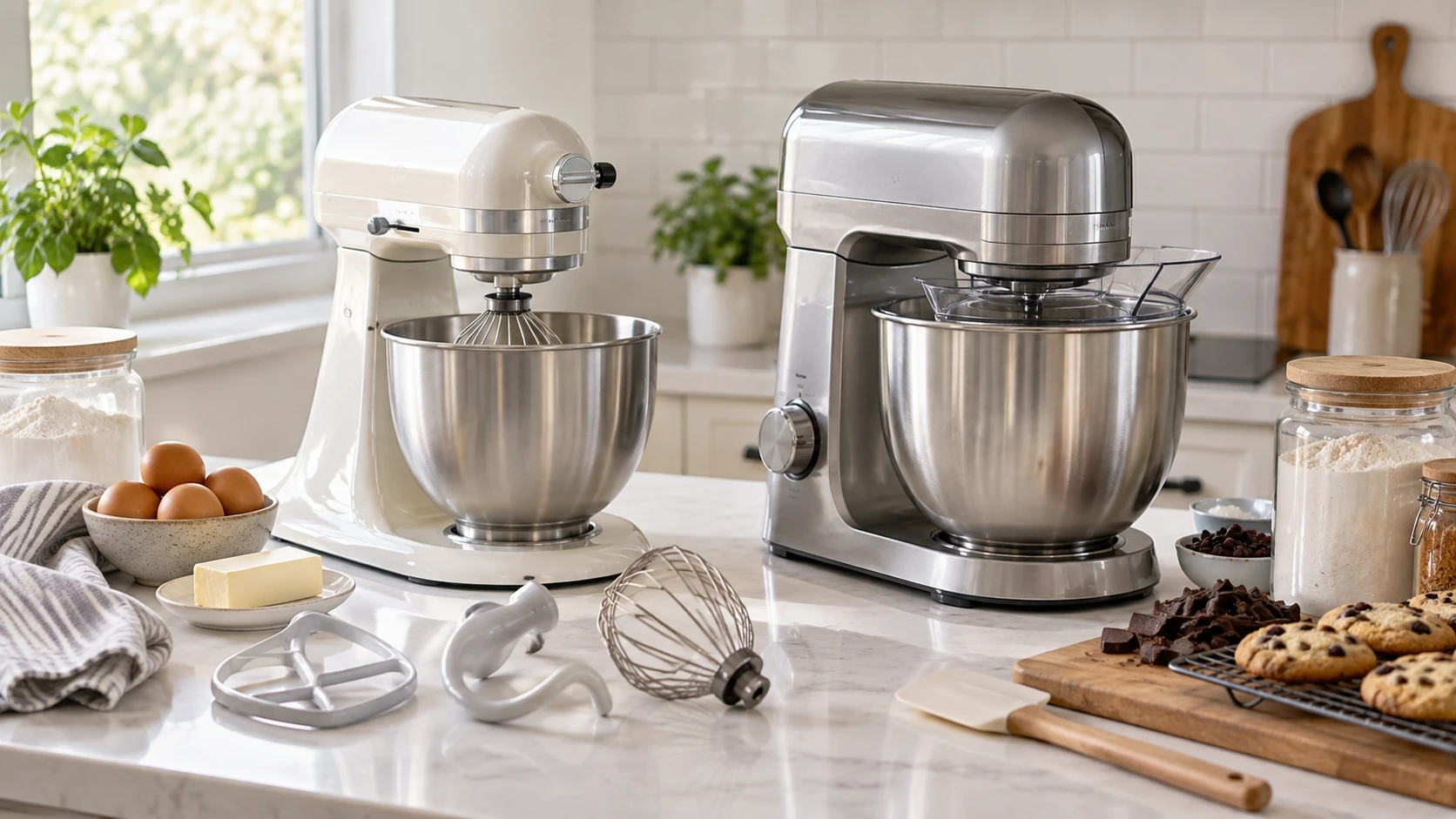
A stand mixer earns its counter space when its bowl, controls, and included tools suit the batches you actually make. The KitchenAid KSM96IC has a 4.5-quart bowl and ten speeds. The Cuisinart SMD-50CRM has a 5.5-quart bowl, twelve speeds, a digital timer, and a splash guard. Those specifications point to different daily routines, but neither product row establishes how either machine handles a particular dough or batter. Start with the recipe and the available counter space, then inspect the exact model before buying.
The KitchenAid KSM96IC stand mixer listing describes a metal, tilt-head machine in a Clear finish. Its stainless steel bowl is described as dishwasher-safe. The supplied tools are a coated flat beater, a coated S-dough hook, and a six-wire metal whip. The listing says the bowl can hold a batch of up to eight dozen cookies; that is a Republeq's catalog capacity claim, not a test of every cookie recipe. A stiff dough may demand a smaller batch than a loose cookie batter.
Cuisinart's saved product description gives the SMD-50CRM a 500-watt motor, die-cast metal construction, a polished stainless steel bowl with a helper handle, and a tilt-back head. Its supplied set includes a chef's whisk, dough hook, flat mixing paddle, and splash guard with pour spout. The listing also names a digital display, illuminated dial, countdown timer with automatic shutoff, and preprogrammed recipe features. It gives no program list or measured performance result, so check the manual for exactly what those features do.
Choose a bowl for your regular batch — Cuisinart SMD-50CRM mixer
The extra quart on the Cuisinart can matter if you routinely double a recipe or make dough for several loaves. The volume printed on a bowl, however, does not tell you the maximum workable amount of every mixture. Dense bread dough, whipped cream, and thin cake batter behave differently around a beater. Look for model-specific guidance on flour and dough quantities, then compare it with the recipe you make most often. A Republeq's catalog cookie count cannot be converted into a bread capacity.
A smaller bowl can be convenient for a single cake or a small household's weekly cookies. It can also leave less room when a recipe expands or needs several ingredients added while mixing. If you already use a hand mixer and want a stand mixer primarily to free your hands, the KitchenAid's 4.5-quart size may cover the batches you know. If you regularly scrape an overfilled bowl, the Cuisinart's 5.5-quart bowl deserves a closer look. Neither saved listing gives a reliable minimum batch size. Ask whether the whisk reaches the small amount you usually whip.
The KitchenAid row says its bowl is dishwasher-safe. The Cuisinart row describes a polished stainless steel bowl but does not state whether the bowl or included tools are dishwasher-safe. That difference in documentation matters if cleanup is part of your buying decision. Check the current manuals for which pieces can go in a dishwasher and which require hand washing. A coating on a beater is another reason to follow the maker's cleaning instructions rather than assume all metal-looking parts take the same treatment.
Work through head access and counter clearance — stand mixer bowl access guide
Both machines open at the head to expose the bowl. KitchenAid says its tilt head locks in place during mixing; Cuisinart describes a tilt-back head. Measure height with the head raised, not only the body at rest. A mixer that slides beneath a wall cabinet may still need to be pulled forward each time you add flour or remove the bowl. Leave room to hold the bowl steady, attach a tool, and scrape the sides without striking a shelf.
The published stand mixer bowl access guide concerns another KitchenAid model, so use it as a checklist for clearance and bowl handling rather than as a dimensional specification for either mixer here. Check each exact machine's diagram and raised-head height. If your counter is narrow, mark the rear wall, upper cabinet, power outlet, and mixing position with a tape measure. This takes more uncertainty out of the purchase than a photo of a mixer on an open island.
Also decide whether the mixer will live on the counter. Both descriptions mention metal construction, and the Cuisinart explicitly says die-cast metal. Neither saved row gives a shipping-independent weight or carrying grip. If the machine must move from a cupboard for every use, inspect its listed weight and the path to the outlet before deciding. A bowl with a helper handle may ease lifting a filled bowl, but it does not make the mixer base easier to carry.
Compare the controls you will use — Cuisinart SMD-50CRM mixer
Ten speeds on the KitchenAid and twelve on the Cuisinart are selectable settings, not a direct measure of torque or mixing quality. The useful question is whether you can begin dry ingredients slowly enough to keep flour in the bowl, then adjust smoothly for the recipe. Ask for a manual or demonstration of the speed control, particularly if you often make small batches. The number of stops on a dial alone cannot predict how a dough moves under load.
Cuisinart's countdown timer and automatic shutoff may help when a recipe calls for a timed mix and you are tending the oven. The listing does not specify how the timer behaves after a pause, which speeds allow it, or what its preprogrammed recipes contain. Read the exact instructions before making those features a deciding factor. It is still sensible to stay nearby when mixing a heavy dough, because a timer does not measure whether the dough is climbing the hook or the bowl needs scraping.
The Cuisinart listing calls out a 500-watt motor. KitchenAid's saved row gives no comparable wattage. Even if both figures were available, electrical input power would not establish which machine kneads your bread better. Bowl geometry, mixing tool, duty limits, and the dough itself affect the result. If bread is your main reason to buy, find the makers' limits for your flour and hydration, then compare those with your usual loaf. Avoid choosing on a wattage number alone.
Account for tools and additions — Cuisinart SMD-50CRM mixer
Both products include three core mixing tools: a whisk, a dough tool, and a flat mixing tool. KitchenAid names a coated S-dough hook and coated flat beater; Cuisinart names a dough hook and flat mixing paddle without describing a coating in the saved text. Do not infer that the hooks are the same shape or that either coating has the same care rules. Look at the actual tools, their fit in the bowl, and their cleaning instructions. Ask how replacements are identified for the precise model if an accessory wears or is misplaced.
Cuisinart includes a splash guard with a pour spout in the saved description. That may help when adding dry ingredients, although the listing gives no measured reduction in mess. KitchenAid's row does not list a splash guard among the included pieces. Confirm the current box contents rather than assuming one comes with the mixer or that a guard from a different model will fit. If you add flour gradually while the head stays down, check where the guard's opening sits relative to your cabinet and dominant hand.
KitchenAid says the KSM96IC works with more than ten optional attachments, including pasta and ice cream options sold separately. Cuisinart says it has one power outlet for optional attachments but gives no compatibility list in this saved row. Treat each optional tool as a separate purchase. Check exact attachment model numbers, required adapters, storage space, and the current price before counting future pasta or ice cream making as part of the mixer value. An attachment ecosystem is useful only when the tool you want fits the machine you buy.
Make a buying check from one recipe — Cuisinart SMD-50CRM mixer
Pick a familiar recipe before comparing sale prices. Write down its ingredient amount, the tool it needs, mixing duration, and whether it requires a bowl scrape or a mid-mix addition. For bread, compare dough guidance in both manuals with your flour quantity. For cakes and cookies, consider whether the bowl leaves enough room to cream, add ingredients, and scrape without dumping batter across the counter. If the recipe uses a small amount of cream or egg white, ask about tool reach near the bottom of each bowl.
Then map the full routine. Raise the head under your cabinets, lift the filled bowl toward the sink, and decide where the tools will dry. Find the outlet and allow a safe cord path away from the bowl and wet surfaces. Inspect the exact manual for operating time, rest periods, cleaning, and any required setup. The saved product rows do not supply those details. A return period may be your best opportunity to test the recipe that prompted the purchase, so keep the box and check the Republeq's catalog current terms.
The Cuisinart SMD-50CRM mixer offers the larger stated bowl and a documented timer, automatic shutoff, helper handle, and included splash guard. The KitchenAid offers the documented dishwasher-safe bowl, ten speeds, and a stated range of optional attachments. Choose the features you will use on a normal baking day, and verify the manual's capacity and clearance limits for the exact model before placing either on a crowded counter.